Benjamin Moore Edgecomb GrayvsBenjamin Moore Balboa Mist
Why this comparison: Balboa Mist is the grayer twin; Edgecomb Gray reads warmer once it’s on big walls. Edgecomb Gray and Balboa Mist are very close (ΔE 2.21). The difference shows up most in side-by-side comparison and under specific light.

Built from our full reviews of both colors — same measured data, same real-room photos. About the testing process →
The Numbers
Balboa Mist is slightly lighter (LRV 66 vs 63, 3-point delta).
What Each Color Really Is
A light warm greige — a gray with real beige in it, not a gray with a hint of beige. The measured hue sits in the orange-tan part of the wheel at 23 percent saturation, which is more color than a true neutral carries. That is why it never looks cold, and also why it can look tan on a big sunny wall instead of the soft gray people expect from the chip. The chip fools people because it is small and surrounded by white card stock; the wall shows the beige.
LRV 63 is the number that decides whether you will like it. Revere Pewter sits at 56, and that seven-point gap is exactly why so many people move here after seeing Revere Pewter go heavy in a hallway. But 63 is not bright — Pale Oak is 67 and Classic Gray is 74, and both of those look noticeably airier on the same wall. Edgecomb Gray is light enough to keep a normal room open and dark enough to go dull when the light runs out.
On paper Balboa Mist is a warm light gray — a greige, gray with warmth mixed through it. What the numbers do not tell you is which way the gray leans, and this one leans very slightly violet. That is the whole story of this color. In good daylight the violet stays hidden and you get a soft, sophisticated neutral. In cool, flat, dim light the violet steps forward and the wall picks up a lavender or pink-gray cast. Both versions are the same can of paint.
At LRV 67 it reflects a lot of light, so rooms stay open and bright. Put it next to Classic Gray OC-23 at LRV 74 and Balboa Mist looks like the one with actual color in it. Put it next to Sherwin-Williams Agreeable Gray SW 7029 at LRV 60 and Balboa Mist looks almost like an off-white. That is the useful range to hold in your head: it is a real color, but a very light one, and in a bright south room at midday it can lose almost all of it.
Specs Side by Side
| Spec | Edgecomb Gray | Balboa Mist |
|---|---|---|
| Brand | Benjamin Moore | Benjamin Moore |
| SKU | HC-173 | 1549 |
| Hex | #D9D3C4 | #DAD6CC |
| RGB | 217, 211, 196 | 218, 214, 204 |
| LRV | 63 | 66 |
| Undertone | red-orange / warm | red-orange / warm |
| Family | Neutral | Neutral |
How Light Changes Them
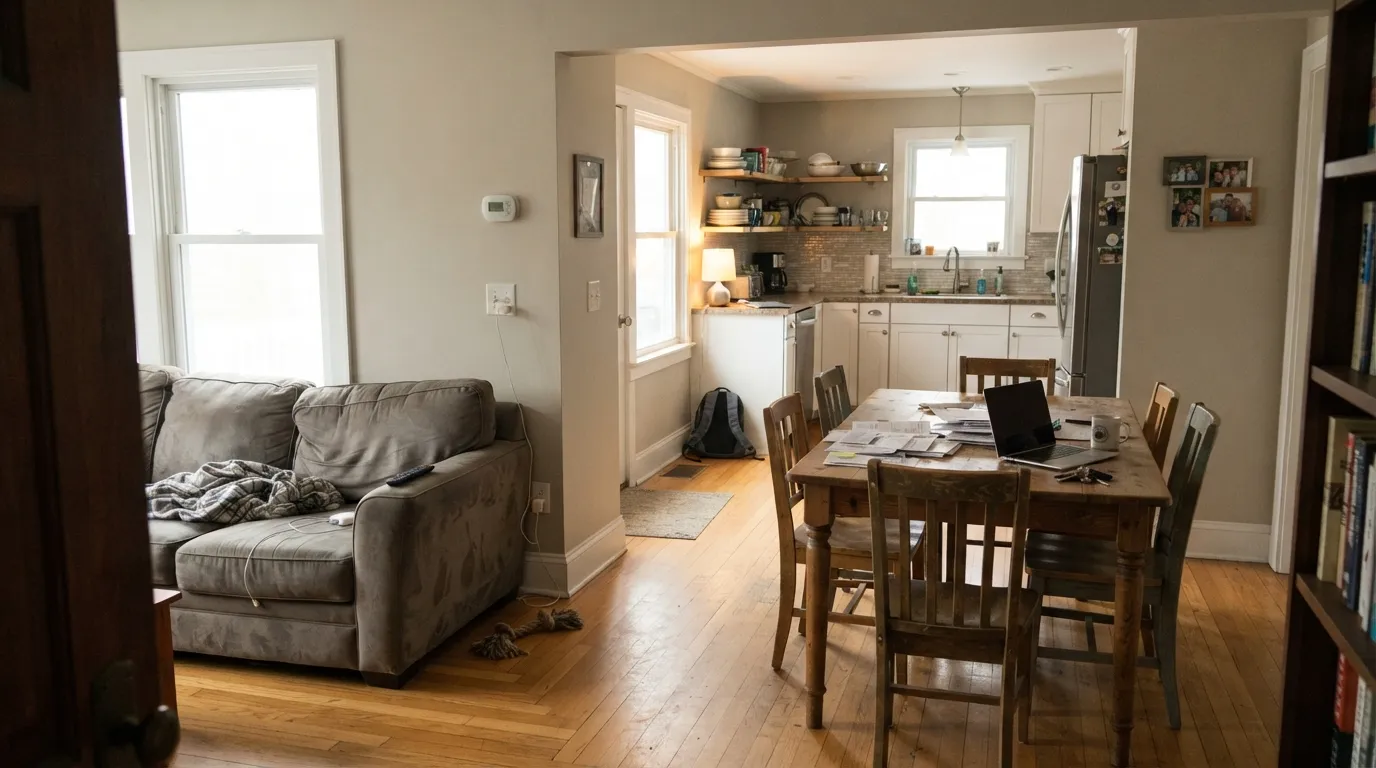
Steady warm light all day keeps it soft and creamy — the version everyone photographs.
Cool flat light drains the warmth and the gray-green side comes forward. Dim north rooms go drab.
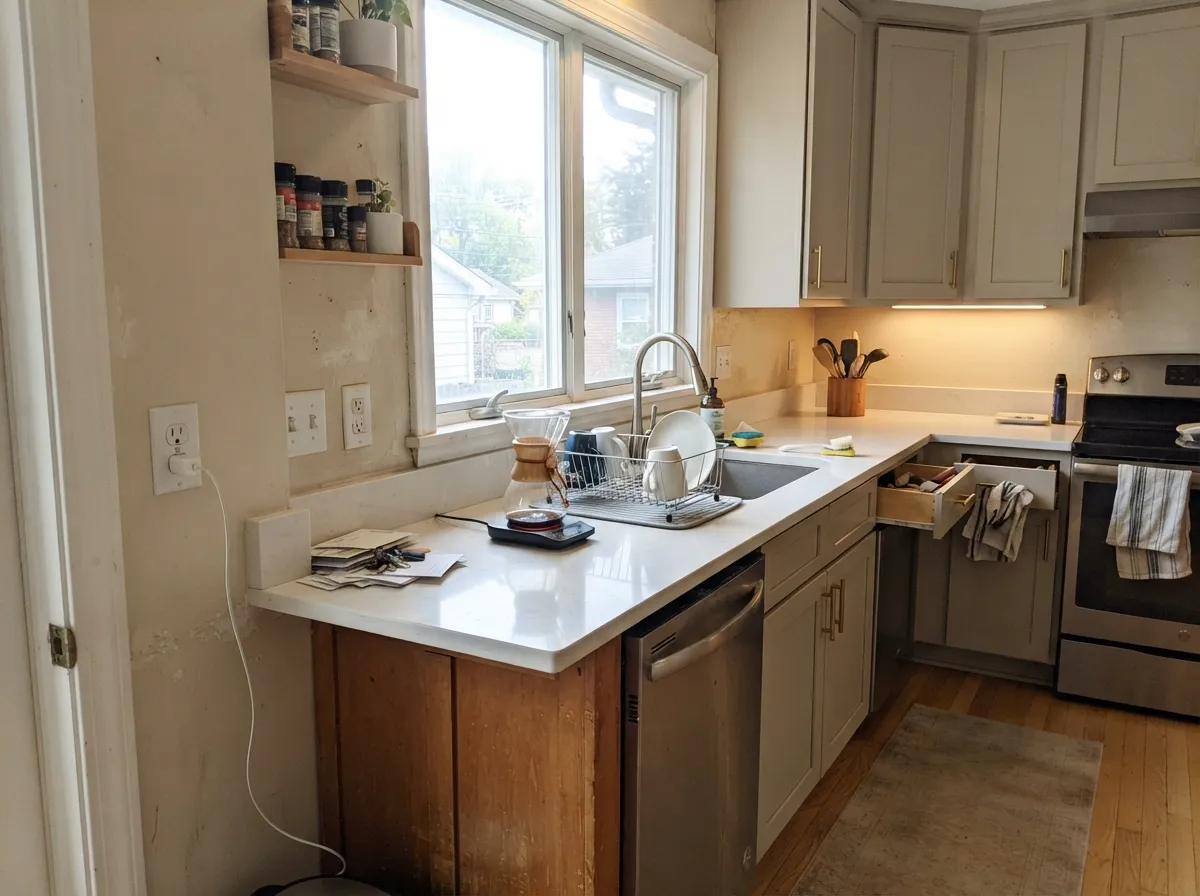
Golden and tan at the sun hours, quiet gray after. West rooms can tip peach at sunset.
2700K bulbs push it to plain beige. 3000K to 3500K keeps the gray in it. Swap bulbs, not paint.
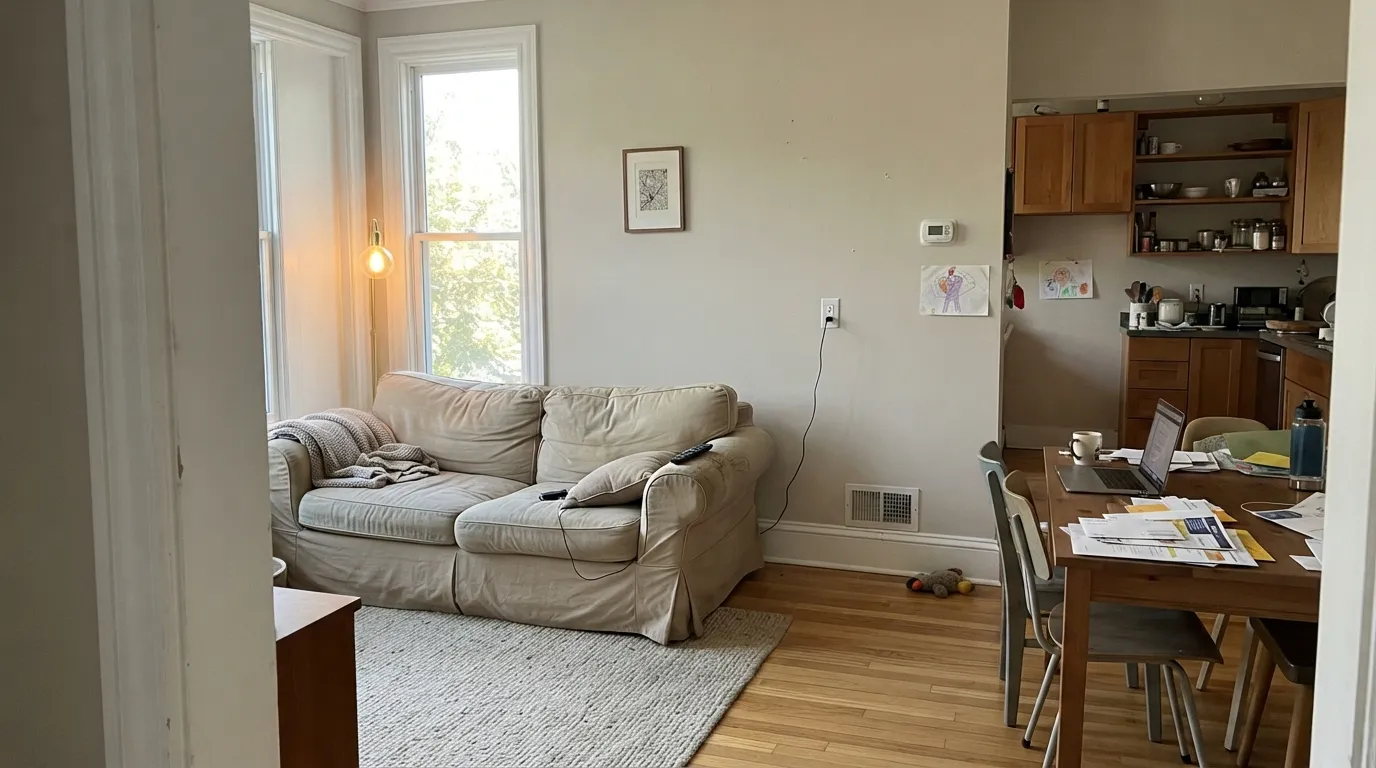
Cool flat daylight pulls the violet forward. Lavender-gray walls, darker than the chip. Test big.
Peak sun bleaches it toward off-white. The greige only comes back late in the day.
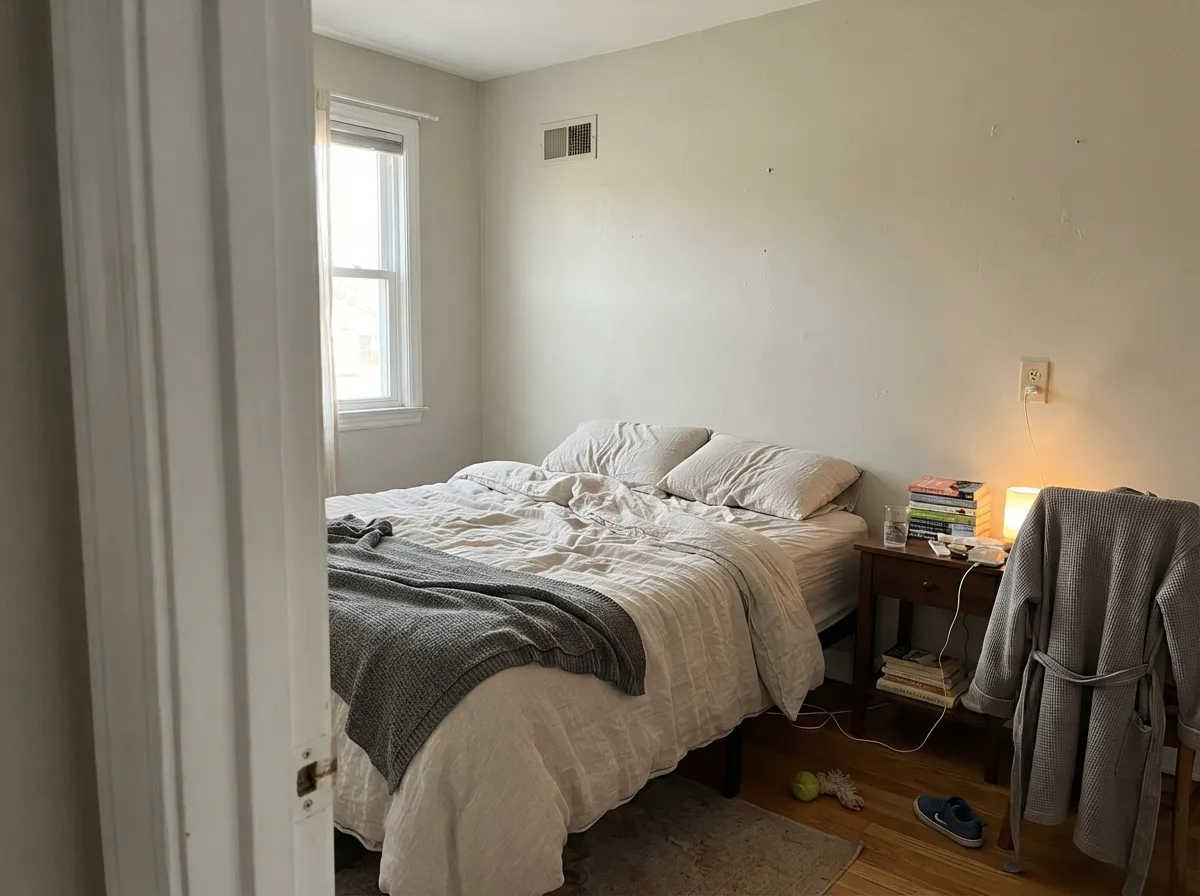
Moderate daylight is where it behaves — soft, warm-gray, exactly the color on the chip.
Cool 4000K LEDs turn it lavender. 3000K warm-white is the sweet spot; 2700K pushes it pink.
Both Colors in Real Rooms
Photos from our full reviews — the same rooms and captions, so you can judge each color where it actually lives, not on a chip.
When to Pick Which
Whole main floors with several windows · homes full of oak, beige tile or cream trim · kitchen cabinets with brass or black hardware · anyone who found Revere Pewter too dark
Your room has one small north window · your trim is a bright white and stays that way · you want a clean, cool gray · your counters and tile are cool blue-gray
Bedrooms and living rooms with moderate daylight · open plans mixing warm wood and cool stone · walls beside crisp white trim · anyone who wants greige to actually read gray
Your room is north-facing and dim · your cabinets or tile are cream or almond · you run cool LED bulbs everywhere · you want the color to be obvious
No comparison page can see your light. Upload one photo of your room and try both colors on the same walls, seconds apart.
Edgecomb Gray vs Balboa Mist FAQ
Which is lighter, Edgecomb Gray or Balboa Mist?
Balboa Mist is lighter: LRV 66 vs 63. Balboa Mist is slightly lighter (LRV 66 vs 63, 3-point delta).
Which is warmer, Edgecomb Gray or Balboa Mist?
They share the same undertone family — both read red-orange / warm. The difference between them is lightness and depth, not temperature.
How similar are Edgecomb Gray and Balboa Mist?
Edgecomb Gray and Balboa Mist are very close (ΔE 2.21). The difference shows up most in side-by-side comparison and under specific light. The only reliable test is seeing both in your own room and light — a side-by-side on a screen or chip flattens the difference.
Can I use Edgecomb Gray and Balboa Mist together in one house?
Not in the same room, and be careful in the same house. At ΔE 2.21 they are so close that two walls in each will read as a tinting mistake, not a design choice. Pick one, or keep them on different floors where they are never seen together.
Ask a Question