Product review · Zinsser · Updated August 7, 2026
AllCoat ExteriorZinsser paint review
7.8/10A genuine one-can multi-surface exterior paint — worth the import only when your elevation mixes timber, metal and plastic.
Availability check · Aug 2026Zinsser AllCoat Exterior is a UK and Europe product - it lives on Rust-Oleum's European Zinsser site, and it has never been part of the US Zinsser line-up sold at Home Depot or Lowe's. The sellers you'll find are British paint shops or eBay import listings, so buying it here means international shipping and a wait. If you want something similar from the shelf in the US, look at Zinsser's own US exterior products like Perma-White Exterior, or an exterior masonry and multi-surface paint from a US brand.
One water-based can for wood, metal, masonry and plastic, and it really does grip old gloss without sanding. The catch is that there is no clean US retail path and it flashes off before it levels on a warm day.

Mark Thompson · Pro Contractor & Field Editor · Updated August 7, 2026
22 years running residential and light commercial repaints across the Midwest, most of it exteriors, prep and primers. Mark still takes side jobs so the numbers in his reviews stay honest. About the testing process →
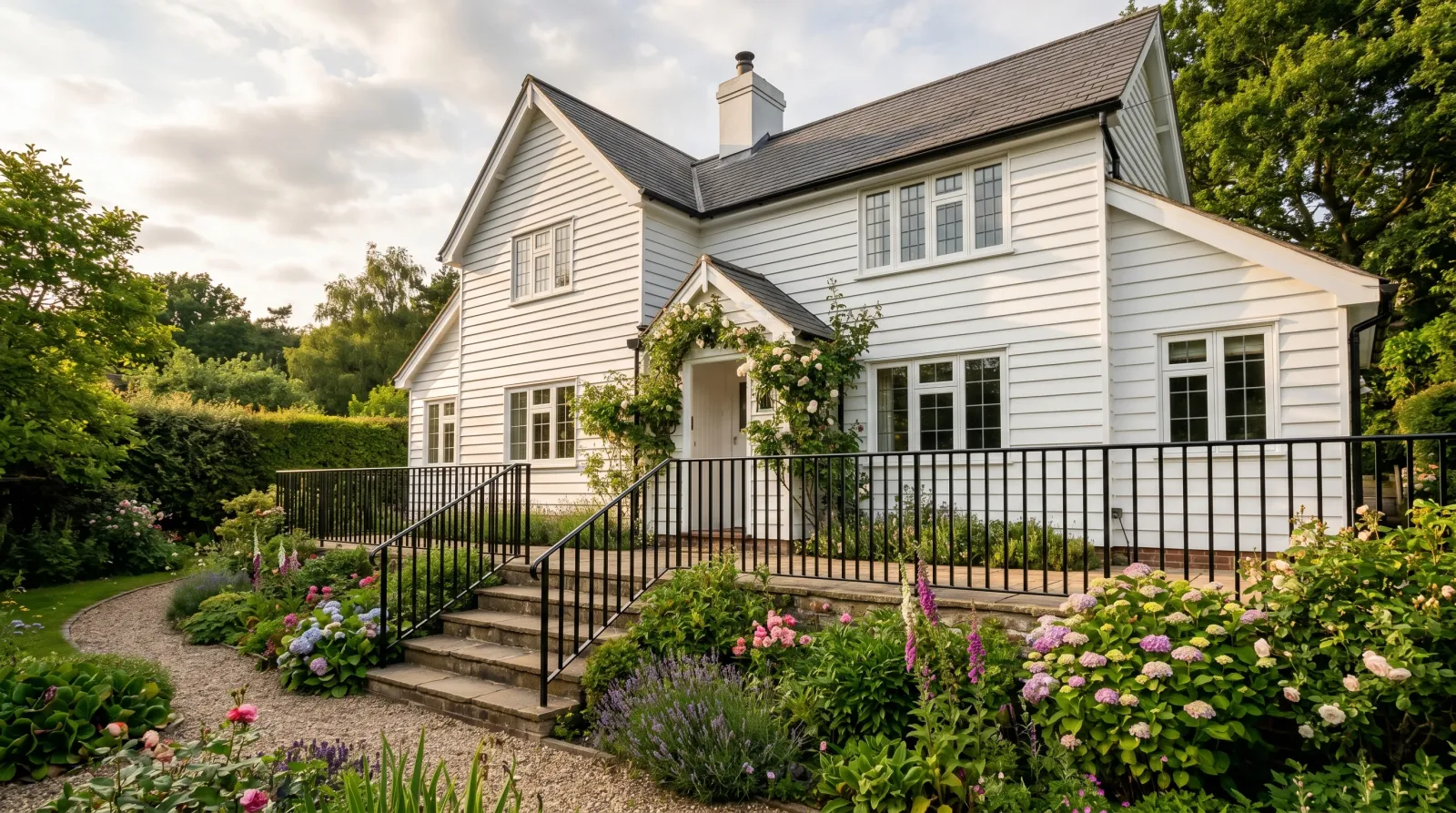
Zinsser AllCoat Exterior3 sheens
CoverageUp to 490 sq ft / gal per coat on a smooth
Recoat1 hr
VOC80 g/L
Full cure7 days
Sheens MattSatinGloss
Read this first
The Fast Verdict
Buy it only if your job mixes materials. For a US buyer this is a $65–90 specialty import, and the one thing it does that a hardware-store gallon cannot is put wood, metal, masonry and plastic under the same can. It is at its best in a dark shade over tired UPVC and metal, sprayed rather than brushed. For a plain wood or fiber-cement house, a US-stocked exterior paint does the same work for less money and no import wait.
Best for
Mixed timber, metal and render elevations · Dark shades over tired UPVC · Doors, frames, soffits and rainwater goods · Spray jobs · Coastal and exposed properties · Shaded north walls that grow green
Skip if
Plain wood or fiber-cement siding · You need paint in your hand this weekend · Anything that gets knocked, kicked or slammed · Brushing a big sunny elevation in July · You want a US store you can drive to
What it's good at
- One can across wood, metal, masonry, render, brick, plastic and UPVC — no separate metal primer, no separate masonry coat
- Gripping previously-painted gloss without the sanding step, as long as you clean and degrease
- Flexing with timber that swells and shrinks, where rigid masonry paints crack at the joints
- Dark shades over tired white or brown UPVC — doors, frames, soffits and rainwater goods, with no fade reported at two years
- Spraying, by a wide margin over brushing — good opacity, good adhesion, oil-gloss look
- Low odor at 80 g/L with water cleanup, and a 1-hour recoat that fits two coats into one day
- Built-in biocide that keeps the green off a shaded north wall or a damp render face
What it's not good at
- Being available in the US — specialty importers and resale listings only, no Home Depot top-up on a Saturday
- Price for a US buyer at $65–90 per gallon-equivalent before shipping
- Sold in liters, so you are doing metric math and a shipment wait if you order short
- White and pale tints, which want two coats and often three
- Brushing on a hot day or a sunny south wall — it flashes off before it levels
- Taking knocks; windows chipped inside a month and pros switch to a 2K product for high-stress surfaces
- Living up to the 15-year claim on sun-blasted UPVC, where pros see the film breaking down at five to seven years
Same shelf, different cans
Which AllCoat Are You Looking At?
Zinsser sells more than one paint under the AllCoat name, and the labels look alike from across a counter. This review is the water-based Exterior line. Grab the wrong tin and the dry times and the cleanup both change.
AllCoat Exterior, Water-Based (this review)
BaseWater-based, solvent-free, 80 g/L
SheensMatt, Satin, Gloss
Recoat1 hr
Buy it if
Default pick for most homeowners. Outdoor wood, metal, masonry and plastic, low odor, water cleanup, two coats in a working day.
Avoid if
You are working in cold or damp shoulder-season weather and rain is coming before the film can shrug it off.
AllCoat Exterior, Solvent-Based
BaseSolvent-based, white-spirit cleanup, higher VOC
RecoatSlower than the water-based
Buy it if
Same surfaces, but you need tougher early-rain resistance in cold or damp weather.
Avoid if
You want low smell and a hose-and-bucket cleanup, or you are painting in an occupied yard.
AllCoat Interior
BaseDifferent formula, indoor use
Buy it if
Indoor walls and indoor multi-surface work only.
Avoid if
Anything outside. It is not the same paint and it is not rated for weather.
Numbers, not adjectives
Spec Sheet
- Coverage
- Up to 490 sq ft / gal (12 m2/L) per coat on a smooth, sealed surface
- Sheens
- Matt, Satin, Gloss
- Touch dry
- 1 hr
- Recoat
- 1 hr
- Full cure
- 7 days
- VOC
- 80 g/L (water-based, solvent-free)
- Primer
- Self-priming on sound surfaces; prime bare ferrous metal, chalky masonry and tannin-prone timber
- Surfaces
- Wood, metal, masonry, render, concrete, brick, plastic, UPVC, aged gloss
- Sizes
- 1L, 2.5L, 5L, 10L (roughly 0.26, 0.66, 1.3 and 2.6 US gallons)
- Durability claim
- Up to 15 years; resists cracking, blistering and flaking
- Price
- $65–90 per gallon-equivalent as a US specialty import, before shipping
Application Settings That Work
- Brush
- A soft natural-bristle brush suits the consistency better than a cheap synthetic. Work small sections, lay off once, and leave it. From May to September add Floetrol — Penetrol or Owatrol in the solvent version — or the film sets before it levels and you are dragging a skin around.
- Airless
- This is the way to buy the finish. Pros who put it through a gun report good opacity, good adhesion and call it a dream to spray, and it is the route to an oil-gloss look on doors, railings, gutters and shopfronts. Test a panel before you shoot the front of a building.
- Thinning
- Roughly 10 to 20 percent for spraying. Nobody agrees on an exact ratio, so start low and test on a spare panel.
- Primer
- Self-priming on sound gloss, sound timber, sound non-rusting metal and stable masonry — no sanding needed there. Prime anyway on bare ferrous metal, chalking masonry and tannin-rich cedar, oak or redwood. Two coats of Zinsser 123 under two coats of AllCoat satin is the combination that held on metal at two years.
Recoat Is an Hour, Hardness Is a Week
The tin sells the 1-hour recoat, and that part is true — touch dry at an hour, second coat at an hour, two coats in a working day in decent weather. Full cure is 7 days, and that is the number people ignore. A door finished today has to be shut tonight, so go gentle for the first several days. Most of the early-chip complaints read like items put straight back into normal use inside that window: windows chipped within a month at four coats, a bed frame with three coats badly chipped after three weeks. Give it the week before anything rubs, latches or gets leaned on.
Mid-project panic
When It Goes Wrong, and How to Fix It
Brush marks and tramlines on a warm elevation
Why it happens. The fast recoat and the short open time are the same property. Decorators independently report brush marks and tramlines on hot days and sunny south walls, a stringy drag under the brush, and paint thickening in the kettle mid-job in summer. One says the dry rate is sometimes too quick even when temperatures are mild. Brushed onto a sun-heated wall in July it flashes off before it levels.
The fix. Keep Floetrol on the van from May to September, or Penetrol and Owatrol in the solvent version. Work small sections, lay off once, and do not go back over what you have just brushed. Paint sun-heated metal early in the morning, not at two in the afternoon. If you can spray the job instead, spray it — the brush-mark problem goes away completely.
It peeled off slick old gloss
Why it happens. This is where the repeat failures cluster, and it is the surface the paint promises most. A buyer who took the paint-straight-over-gloss line literally watched 5L of gloss white peel off the next day. An exterior plywood job in a sheltered spot flaked at three months, was sanded back and recoated, and failed the same way again. Garage doors that were sanded, degreased and given Peelstop still cracked and flaked a few months on.
The fix. Prime the slick stuff anyway. The Screwfix posters still happy two years on ran two coats of Zinsser 123 under two coats of AllCoat satin on metal. That is a few dollars against a redo. Clean and degrease first either way, and test a small panel on any hard, flat, high-wear surface before you commit a whole elevation to the self-priming claim.
White or pale tints not covering
Why it happens. Pale colors over a dark or patchy base do not hide in one pass. The UK forums are full of people surprised that white took three coats, and decorators say the same thing outright — white lacks opacity while the dark shades simply perform better. On an import you are paying $65–90 a gallon-equivalent for, a surprise third coat is real money and real lead time.
The fix. Budget two coats minimum on white and often three, and order the paint accordingly before it ships. If the color choice is open, take the job in a dark shade — anthracite and black over white or brown UPVC is where this paint is happiest and where owners report no fade at two years. If you must go pale over a dark base, an opaque primer coat underneath saves you a topcoat.
Rust ghosting, tannin stains or a topcoat lifting with the chalk
Why it happens. Self-priming is a convenience claim, not a fix for a bad surface. It holds on sound previously-painted gloss, clean sound timber, clean sound metal that is not actively rusting, and stable masonry. It does not hold on bare ferrous metal that is flash-rusting, on chalking or powdery old masonry, or on tannin-rich woods like cedar, oak and redwood that bleed brown through a water-based topcoat.
The fix. Match the primer to the problem. Rust-inhibiting primer on bare ferrous metal, a binding primer on chalky render so the topcoat does not lift with the chalk, and a stain-blocking primer under cedar, oak and redwood. Zinsser makes primers for exactly these three problems, so this is not an expensive detour. Skip them and you get rust ghosting or tannin stains inside a season.
The finish chips where it gets used
Why it happens. It weathers better than it takes knocks. Windows chipped within a month at four coats. A bed frame at three coats was badly chipped after three weeks of use. Pros keep it for soffits, gates and frames and reach for a 2K product on anything under physical stress. On sun-blasted UPVC they report the film breaking down at roughly five to seven years, not the fifteen on the tin.
The fix. Pick the surfaces to match the film. Soffits, fascia, gates, frames, rainwater goods and cladding are the right jobs. Handles, latch edges, furniture and anything that gets kicked or slammed are not — use a 2K product there. Where you do paint high-touch trim, respect the 7-day cure before it goes back into service, and expect a touch-up cycle on the south and west faces sooner than the north.
Side by side
AllCoat Exterior vs Behr Premium Exterior vs SW Emerald Exterior
These three come up in the same conversation, but only one of them is a multi-surface paint. The choice is really whether your elevation is all siding or a mix of timber, metal and plastic.
| Zinsser AllCoat Exterior | Behr Premium Exterior | SW Emerald Exterior | |
|---|---|---|---|
| Price per gallon | $65–90 gallon-equivalent as a US import, before shipping | $40–48 | $95–110 |
| Where to buy | No clean US retail path — Amazon import listings or a UK retailer that ships | In stock at every Home Depot | SW stores nationwide, with contractor support behind it |
| Surfaces it covers | Wood, metal, masonry, render, brick, plastic, UPVC, aged gloss | Siding and trim; railings and gutters still want a metal primer | Wall and trim, not metal and plastic |
| Self-priming | Yes on sound surfaces, including old gloss with no sanding | Yes, a self-priming exterior paint in its own right | Not the reason people buy it |
| Sold in | 1L, 2.5L, 5L, 10L tins | US gallons | US gallons |
| Where it wins | A mixed metal-timber-plastic elevation from one can, especially a dark shade you can spray | A standard wood or fiber-cement house where you are not chasing the multi-surface trick | A forever-home repaint where you want the deepest color and the easiest local supply |
Price per gallon
Zinsser AllCoat Exterior$65–90 gallon-equivalent as a US import, before shipping
Behr Premium Exterior$40–48
SW Emerald Exterior$95–110
Where to buy
Zinsser AllCoat ExteriorNo clean US retail path — Amazon import listings or a UK retailer that ships
Behr Premium ExteriorIn stock at every Home Depot
SW Emerald ExteriorSW stores nationwide, with contractor support behind it
Surfaces it covers
Zinsser AllCoat ExteriorWood, metal, masonry, render, brick, plastic, UPVC, aged gloss
Behr Premium ExteriorSiding and trim; railings and gutters still want a metal primer
SW Emerald ExteriorWall and trim, not metal and plastic
Self-priming
Zinsser AllCoat ExteriorYes on sound surfaces, including old gloss with no sanding
Behr Premium ExteriorYes, a self-priming exterior paint in its own right
SW Emerald ExteriorNot the reason people buy it
Sold in
Zinsser AllCoat Exterior1L, 2.5L, 5L, 10L tins
Behr Premium ExteriorUS gallons
SW Emerald ExteriorUS gallons
Where it wins
Zinsser AllCoat ExteriorA mixed metal-timber-plastic elevation from one can, especially a dark shade you can spray
Behr Premium ExteriorA standard wood or fiber-cement house where you are not chasing the multi-surface trick
SW Emerald ExteriorA forever-home repaint where you want the deepest color and the easiest local supply
Painting a plain wood or fiber-cement house: buy Behr Premium and keep the $25 a gallon. Painting the house you plan to keep, and you want color depth plus a store twenty minutes away: Emerald Exterior. AllCoat only earns the import when the same elevation has timber, metal, render and UPVC on it and you would otherwise be buying three products to finish one porch. That is a narrow job, but on that job nothing else on this list does it from one can.
If not this one
Honest Alternatives
BP
Behr Premium Exterior$40–48 / gal
Half the price, in stock at every Home Depot, and a self-priming exterior paint in its own right. It is a siding-and-trim paint rather than a true paint-everything-including-bare-metal product, so railings and gutters still want a metal primer. The right call for a standard wood or fiber-cement house.
SW
Sherwin-Williams Emerald Exterior$95–110 / gal
SW's flagship exterior. Better color depth and a longer proven track record in US climates, sold at SW stores nationwide with real contractor support. It is a wall-and-trim paint, so it loses AllCoat's multi-surface angle. Buy it for a forever-home repaint where local supply matters.
Full review →RO
Rust-Oleum Universal All Surface Spray$10–14 / can
The easier US buy for the metal-and-plastic side of AllCoat's pitch on small parts. Self-priming on metal, plastic and wood, sold everywhere, and the spray gives a smoother finish on railings and furniture than a brush. It will not do a whole rendered wall, but for the gates-and-gutters slice it is the cheap, available pick.
Full review →Questions people actually ask
AllCoat Exterior Questions, Answered
Is Zinsser AllCoat Exterior worth it?
Only for a mixed-material job. It is a US specialty import at $65–90 a gallon-equivalent, and what you buy is one can that covers timber, metal, masonry and plastic instead of three separate paints. It is at its best in a dark shade over tired UPVC and metal, sprayed rather than brushed. For a plain wood or fiber-cement house, a US-stocked exterior paint does the same work for less money and no import wait.
Is AllCoat Exterior actually one product for every surface?
Close to it. The same can goes on wood, metal, masonry, plastic and UPVC, which is the whole pitch. The catch is prep. Bare rusty steel and chalky old render still want the right primer first. On sound, clean surfaces the self-priming claim holds. On problem substrates it does not, and that is true of every multi-surface paint, not just this one.
Does AllCoat need a primer?
On sound wood, sound metal, sound masonry and clean gloss, no. It bites without sanding and that is its best trick. On bare ferrous metal, chalking masonry, tannin-heavy timber like cedar, or anything releasing underneath, prime first. Self-priming is a convenience claim, not a fix for a bad surface.
Can I get AllCoat Exterior in the US, and how much is it?
Not easily. AllCoat is a UK and Europe product. In the States it shows up through specialty importers and resale listings, usually $65–90 for a gallon-equivalent, often more after shipping. Home Depot and Lowes carry other Zinsser products but not this one. Budget for import friction and lead time.
How does AllCoat compare to a US exterior paint like Behr or SuperPaint?
Different jobs. AllCoat is a multi-surface paint that does timber, metal and plastic from one can. SuperPaint and Behr Premium are wall and trim siding paints, cheaper per gallon and far easier to buy here. If you are painting a whole house exterior, buy the US paint. If you need one paint for a mixed metal-and-timber railing-and-cladding job, AllCoat earns the import.
How long does AllCoat last outside?
Zinsser claims up to 15 years and resistance to cracking, blistering and flaking, backed by a flexible film. Fifteen is the lab number on ideal substrates. In real weather, expect strong color hold and gloss for the first several years and a touch-up cycle on the south and west faces sooner than the north. On sun-blasted UPVC pros report the film breaking down at roughly five to seven years, and prep decides the back half of that number either way.
Should I brush or spray AllCoat?
Spray it if you can. Pros who put it through a gun say the same thing unprompted — good opacity, good adhesion, a dream to spray — and it is the route to an oil-gloss look on doors, railings, gutters and shopfronts. Brushed, the short open time works against you on a warm day and hands you tramlines. Thin roughly 10 to 20 percent for spraying, and test a panel first because nobody agrees on an exact ratio.
Why did my AllCoat peel off old gloss?
Slick old gloss is where the early failures cluster, not the rusty steel and chalky render the label already warns about. One buyer took the paint-straight-over-gloss line literally and watched 5L of gloss white peel off the next day. An exterior plywood job flaked at three months, was sanded back and recoated, and failed the same way again. Clean and degrease, then prime the slick stuff anyway — two coats of Zinsser 123 under two coats of AllCoat satin is the combination that was still holding at two years.
How many coats of AllCoat does white need?
Two at minimum, and often three. Pale colors over a dark or patchy base do not hide in one pass, and the UK forums are full of people surprised by the third coat. Decorators put it plainly — white lacks opacity and the dark shades are the stronger product. Order the extra paint before it ships, because you cannot top up locally.
What brush and roller should I use with AllCoat?
A soft natural-bristle brush suits the consistency better than a cheap synthetic. For rolling, use a woven sleeve, not foam — foam swells and loses its shape in this paint. Work small sections, lay off once, and do not go back into what you have just brushed. From May to September keep Floetrol on the van, or Penetrol and Owatrol if you are using the solvent-based version.
Keep exploring
Zinsser brand guide and product line-upBest multi-surface paint round-upWhat VOC numbers actually mean
We may earn a commission when you buy through the retailer link above. It never changes the score or the verdict.
Ask a Question