Product review · Rust-Oleum · Updated August 7, 2026
Stops RustRust-Oleum paint review
8.6/10The cheapest way I know to shut down rust for a decade — if the job can spare two days.
An oil alkyd that goes straight over light surface rust with no separate primer, and stays put for years. What you pay for it is time — and one recoat window that ruins the job if you land in the middle of it.

Mark Thompson · Pro Contractor & Field Editor · Updated August 7, 2026
22 years running residential and light commercial repaints across the Midwest. Mark keeps a quart of rust enamel on the truck for the railings and gates that come with every exterior job, and he still takes side work to keep the numbers honest. About the testing process →
Rust-Oleum Stops Rust4 sheens
Coverage80–175 sq ft / qt brush-on
Dry / RecoatTouch 2–4h
VOCAbout 340 g/L standard oil-based
Sheens Glosssemi-glosssatinflat
Read this first
The Fast Verdict
Buy it for metal that lives outside. At $13 to $18 a quart it is a rust-inhibitive oil alkyd that goes straight over light surface oxidation with no separate primer, and the film stays hard on railings, gates, and patio furniture. What you pay is time: 24 hours between brush coats, 8 to 12 hours to handle, days to a real hard cure. Never put it on galvanized. Never in a white you want to stay white.
Best for
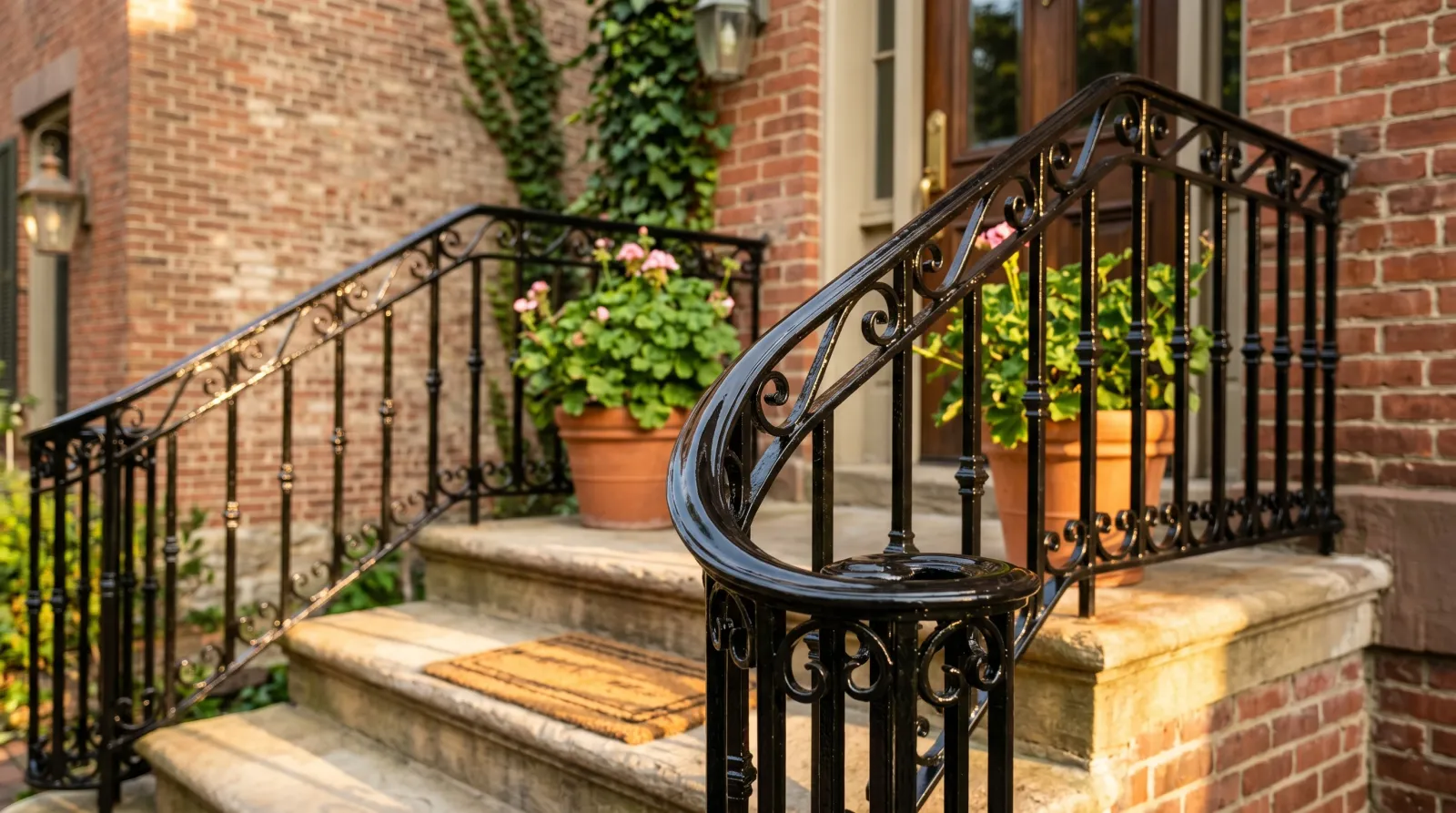
Railings and gates · Fences and posts · Patio furniture · Mailboxes · Lightly rusted steel · Workbench and shop metal
Skip if
Galvanized steel · You need a same-afternoon recoat · White that has to stay white · No ventilation for the fumes
What it's good at
- Stopping rust with no separate primer on metal with light surface oxidation
- A hard alkyd film that shrugs off a gate banging shut or chairs stacking
- Self-leveling under a natural-bristle brush — reads sprayed from six feet
- Range: 50-plus colors across four sheens, plus hammered and metallic
- Hammered greens and bronzes hiding pitted, tired metal without bodywork
- Being on every hardware store shelf in the country for $13 to $18 a quart
What it's not good at
- The recoat window — spray at hour four wrinkles the coat underneath
- Galvanized, where it saponifies and peels in sheets inside a season
- Whites and creams, which drift yellow in two to three years
- Speed — handle at 8 to 12 hours, hard cure days out, two-day job minimum
- High-gloss outdoors, which chalks and flattens before a waterborne would
- Low odor and easy cleanup; it is mineral spirits and real fumes
Same shelf, different cans
Brush-On or Spray: Pick Before You Pay
Same enamel, two formats, and they do not follow the same rules. The recoat clock in particular is completely different, and that is where most Stops Rust jobs go wrong.
Stops Rust Protective Enamel, brush-on quart
BaseOil-based long-oil alkyd
SheensGloss, semi-gloss, satin, flat
HardnessHeaviest film of the two; takes knocks best
Recoat24 hr, not before
YellowingWhites and creams drift yellow in 2 to 3 years
Buy it if
Railings, gates, mailbox posts, anything you want a thick, durable film on. It self-levels under a natural-bristle brush and reads sprayed from six feet.
Avoid if
The piece is all spindles and tight corners a brush cannot reach.
Stops Rust Protective Enamel, 12 oz spray
BaseOil-based long-oil alkyd
SheensGloss, semi-gloss, satin, flat, plus metallics and hammered
HardnessThinner film; chips a touch sooner than the brush-on
RecoatInside the first hour, or wait a full 48
YellowingSame as the brush-on — whites go cream
Buy it if
Chairs, fence pickets, intricate shapes. Two light coats beat one heavy one.
Avoid if
You cannot get all your coats on inside the hour and cannot leave it two days.
Low-VOC brush version (100 g/L)
BaseOil alkyd reformulated for CARB states
Buy it if
You are in a CARB state, or the smell of the standard 340 g/L can is a problem where you are working.
Avoid if
You need it today — it is not stocked everywhere the standard can is.
Numbers, not adjectives
Spec Sheet
- Coverage
- 80–175 sq ft / qt brush-on (practical, 15% loss); about 10–15 sq ft per 12 oz spray
- Sheens
- Gloss, semi-gloss, satin, flat; 50-plus colors, plus metallics and hammered
- Dry / Recoat
- Touch 2–4h · handle 8–12h · recoat brush after 24h · full dry 24h
- Film build
- 1.0–2.0 mil DFT per coat (2.0–4.0 mil wet)
- VOC
- About 340 g/L standard oil-based; a 100 g/L low-VOC brush version exists for CARB states
- Primer
- Self-priming on light rust; Rusty Metal or Clean Metal Primer for bare or heavy rust
- Surfaces
- Bare and rusted metal, wood, concrete, masonry. NOT galvanized
- Conditions
- Apply 50–90°F, humidity below 65%
- Sizes
- 12 oz spray, half-pint, quart
- Price
- $13–18 / qt; roughly $45–55 per gallon equivalent
Application Settings That Work
- Brush
- Natural-bristle brush. The slow open time is the one gift this paint gives you, so let it work: lay it on, let the marks flow out as the solvent flashes, and stop fussing it. Two coats, 24 hours apart. Cleanup is mineral spirits, not water.
- Primer
- Scuff the surface, wipe it clean, and go straight on over light surface rust — no primer needed, that is the whole selling point. Bare shiny steel wants Clean Metal Primer. Rust you cannot grind off wants Rusty Metal Primer. Galvanized wants a self-etching or galvanized-metal primer and is not optional.
The Recoat Window Is the Whole Game
Read this before you open the can. On the spray you recoat inside the first hour or you wait a full 48. Hit hour four and the solvent in the fresh coat lifts and wrinkles the half-set coat under it. The brush-on is cleaner about it but still wants a full 24 hours between coats. After that, touch dry is 2 to 4 hours, handle is 8 to 12, and a real hard cure is days out. So a two-coat railing is a two-day commitment, minimum. There is no shortcut, and every gummy alligatored Stops Rust job I get called to look at is somebody trying to find one.
Mid-project panic
When It Goes Wrong, and How to Fix It
The second coat wrinkled and lifted
Why it happens. You recoated in the dead zone. The first coat had skinned over but was nowhere near cured, so the solvent in the new coat reached down and softened it. Spray at hour four is the classic. The surface looked dry to a finger, which is exactly why people trust it.
The fix. There is no rescue for a wrinkled film. Let it dry hard, sand it back flat, and start the coat over. Then work the real rule: all your spray coats inside the first hour, or walk away for 48. On the brush-on, 24 hours between coats and do not test it with a fingertip and talk yourself into 12.
Paint peeling off gutters or chain-link in sheets
Why it happens. The surface is galvanized. Oil-based alkyd saponifies against a zinc coating — it turns soapy right at the bond line — and the film releases in sheets inside a season. The label says not for galvanized steel and it means it.
The fix. Strip what has lifted, then prime with a self-etching or dedicated galvanized-metal primer and topcoat over that. If you have not started yet and the metal is galvanized, buy the primer at the same time as the enamel.
Rust creeping back through within a year
Why it happens. Stops Rust is self-priming over light surface oxidation only. On shiny bare steel, or over heavy flaking scale you did not remove, there is nothing for the rust-inhibitive pigment to protect and the corrosion keeps working under the film.
The fix. Take the loose scale off first. Over rust you cannot fully remove, use Stops Rust Rusty Metal Primer. Over clean bare steel, use Clean Metal Primer. Then two coats of enamel. On lightly oxidized metal that has been scuffed and wiped, the enamel alone is genuinely enough — that is the part that works.
The white railing has gone cream
Why it happens. It is oil. Whites and pale colors amber as the alkyd ages, faster in sun, and there is no cleaner that reverses it. Darks, greens, and the metallics do not have this problem.
The fix. Repaint is the only fix. If white metal that stays white matters more than film hardness, use a waterborne enamel instead — you give up some hardness and get the color hold. Otherwise pick a dark or a metallic and the issue disappears.
High-gloss dulled and chalked after a season outside
Why it happens. High-gloss on an exposed railing chalks and flattens outdoors sooner than a waterborne would. It is a known limit of the film, not a bad can.
The fix. For a long fence run or a railing where gloss retention matters, step up to Rust-Oleum Professional High Performance Enamel — thicker build, more pigment, better gloss hold outdoors, at $25 to $35 a quart. For a consumer gate that gets recoated every few years, Stops Rust is still the value pick.
Side by side
Stops Rust vs Professional High Performance vs Store-Brand Rust Enamel
Three cans on the same shelf, all oil alkyds, all claiming to stop rust. The difference is pigment load and how long you need the gloss to hold.
| Stops Rust | Professional High Performance Enamel | Store-brand rust enamel | |
|---|---|---|---|
| Price per quart | $13–18 | $25–35 | $10–13 |
| Pigment load and film build | Rust-inhibitive load that works direct to lightly rusted metal, 1.0–2.0 mil DFT per coat. | Thicker build, more pigment. The heavier hitter of the three. | Similar alkyd chemistry, lighter on the rust-inhibitive pigment. |
| Gloss retention outdoors | Darks hold for years. High-gloss chalks and dulls sooner than a waterborne. | Better outdoors than Stops Rust — the reason to pay the extra. | Fine on a low-stakes surface; not what you buy it for. |
| Sizes | 12 oz spray, half-pint, quart | Sold in gallons for bigger jobs | Quart |
| Where it wins | Railings, gates, patio furniture — the job most people actually have. | A long fence run or a commercial railing where one product has to last. | A basement support post or a shop bracket nobody looks at. |
Price per quart
Stops Rust$13–18
Professional High Performance Enamel$25–35
Store-brand rust enamel$10–13
Pigment load and film build
Stops RustRust-inhibitive load that works direct to lightly rusted metal, 1.0–2.0 mil DFT per coat.
Professional High Performance EnamelThicker build, more pigment. The heavier hitter of the three.
Store-brand rust enamelSimilar alkyd chemistry, lighter on the rust-inhibitive pigment.
Gloss retention outdoors
Stops RustDarks hold for years. High-gloss chalks and dulls sooner than a waterborne.
Professional High Performance EnamelBetter outdoors than Stops Rust — the reason to pay the extra.
Store-brand rust enamelFine on a low-stakes surface; not what you buy it for.
Sizes
Stops Rust12 oz spray, half-pint, quart
Professional High Performance EnamelSold in gallons for bigger jobs
Store-brand rust enamelQuart
Where it wins
Stops RustRailings, gates, patio furniture — the job most people actually have.
Professional High Performance EnamelA long fence run or a commercial railing where one product has to last.
Store-brand rust enamelA basement support post or a shop bracket nobody looks at.
For a railing the neighbors see, spend the extra three bucks over the store brand — the rust-inhibitive pigment and the color range are the difference. For a long fence run or commercial metal where you want one product to last, the Professional High Performance can is worth the double price. For everything in between, which is most consumer metal, Stops Rust is the right can and has been for a hundred years.
If not this one
Honest Alternatives
GH
Generic hardware-store rust enamel$10–13 / qt
True Value, Ace, and store-brand oil enamels use similar alkyd chemistry and hold up fine on a basement support post or a shop bracket. Stops Rust pulls ahead on rust-inhibitive pigment and color range.
RO
Rust-Oleum Professional High Performance Enamel$25–35 / qt
Same brand, heavier hitter. Thicker build, more pigment, better gloss retention outdoors, sold in gallons. Worth it on a long fence run or commercial railing where you want one product to last.
RO
Rust-Oleum Stops Rust Rust ReformerSame aisle as the enamel
Not a topcoat — a converter. Where rust genuinely will not grind off, it turns the corrosion into a stable black paintable surface, then you topcoat with the enamel over it.
Questions people actually ask
Stops Rust Questions, Answered
Is Rust-Oleum Stops Rust worth it?
On metal that lives outside, yes. At $13 to $18 a quart it is a hard, rust-inhibitive alkyd enamel that goes straight over light surface rust with no separate primer, and railings I coated three winters back were clean metal under the film. What you pay for it is time: 24 hours between brush coats, days to a hard cure, and a recoat window on the spray you cannot ignore. Skip it on galvanized, and skip it in white if you want white that stays white.
Do I need a primer under Stops Rust?
On lightly oxidized metal, no. The enamel has enough rust-inhibitive body to go straight on. On bare steel, heavy flaking rust, or galvanized, prime first. Use Stops Rust Rusty Metal Primer over surface rust you cannot fully remove, or Clean Metal Primer over shiny bare steel. Skip the primer on bare metal and rust creeps back through in a year.
How long before I can recoat Stops Rust?
Recoat the brush-on after 24 hours, not before. With the spray, recoat within the first hour or wait a full 48. The middle zone is the trap: spray a second coat at hour four and the solvent in the fresh coat wrinkles the half-cured coat under it. That is the number-one Stops Rust failure I see, and it is avoidable.
Can I use Stops Rust on a galvanized fence or gutters?
No. The label says not for galvanized steel, and it means it. Oil-based enamel saponifies against the zinc coating and peels off in sheets within a season. For galvanized, use a galvanized-metal primer or a dedicated direct-to-galvanized product first, then topcoat.
Is the brush-on or the spray can better?
Brush-on for railings, gates, and anything you want a thicker, more durable film on. The quart lays down a heavier coat and covers 80 to 175 sq ft. Spray for chairs, fence pickets, and intricate shapes where a brush cannot reach. The spray film is thinner and chips a touch sooner, so two light coats beat one heavy one.
Does Stops Rust yellow over time?
White and pale colors yellow, yes. It is an oil-based alkyd, and that is the price of oil. A white railing in a sunny spot drifts toward cream in two to three years. On black, dark green, and the metallics it is a non-issue. If you want a white metal finish that stays white, a waterborne enamel is the better call.
How long before I can use the piece?
Touch dry is 2 to 4 hours, handle is 8 to 12, and a real hard cure is several days out. Rehang a gate the next day if you have to, but do not stack chairs or drag anything across the film for the first few days. The film keeps hardening long after it stops feeling wet.
Can I use it on wood or concrete?
Yes. Stops Rust is listed for bare and rusted metal, wood, concrete, and masonry. The rust-inhibitive pigment is wasted on wood, but the hard alkyd film is not — it is a reasonable choice for shop shelving or a concrete step edge. Apply between 50 and 90°F with humidity under 65%.
What is the difference between Stops Rust and Rust Reformer?
Stops Rust Protective Enamel is the finish coat. Rust Reformer is a primer-stage product that chemically converts rust into a stable black paintable surface — it is what you use on a heavily pitted gate before the enamel, not instead of it. If you bought Reformer expecting a finish, you bought a step, not a topcoat.
Keep exploring
Rust-Oleum brand hub and product lineupWhat a rust encapsulator actually doesBest paint for radiators and metalLatex vs oil enamel, head to head
We may earn a commission when you buy through the retailer link above. It never changes the score or the verdict.
Ask a Question