Best Radiator Paint in 2026: Hot-Water, Steam, and Cast Iron Tested
Five radiator paints tested across hot-water cast iron, steam baseboard, and steel column rads. Top pick: BM Advance for hot-water, Rust-Oleum High Heat for steam.

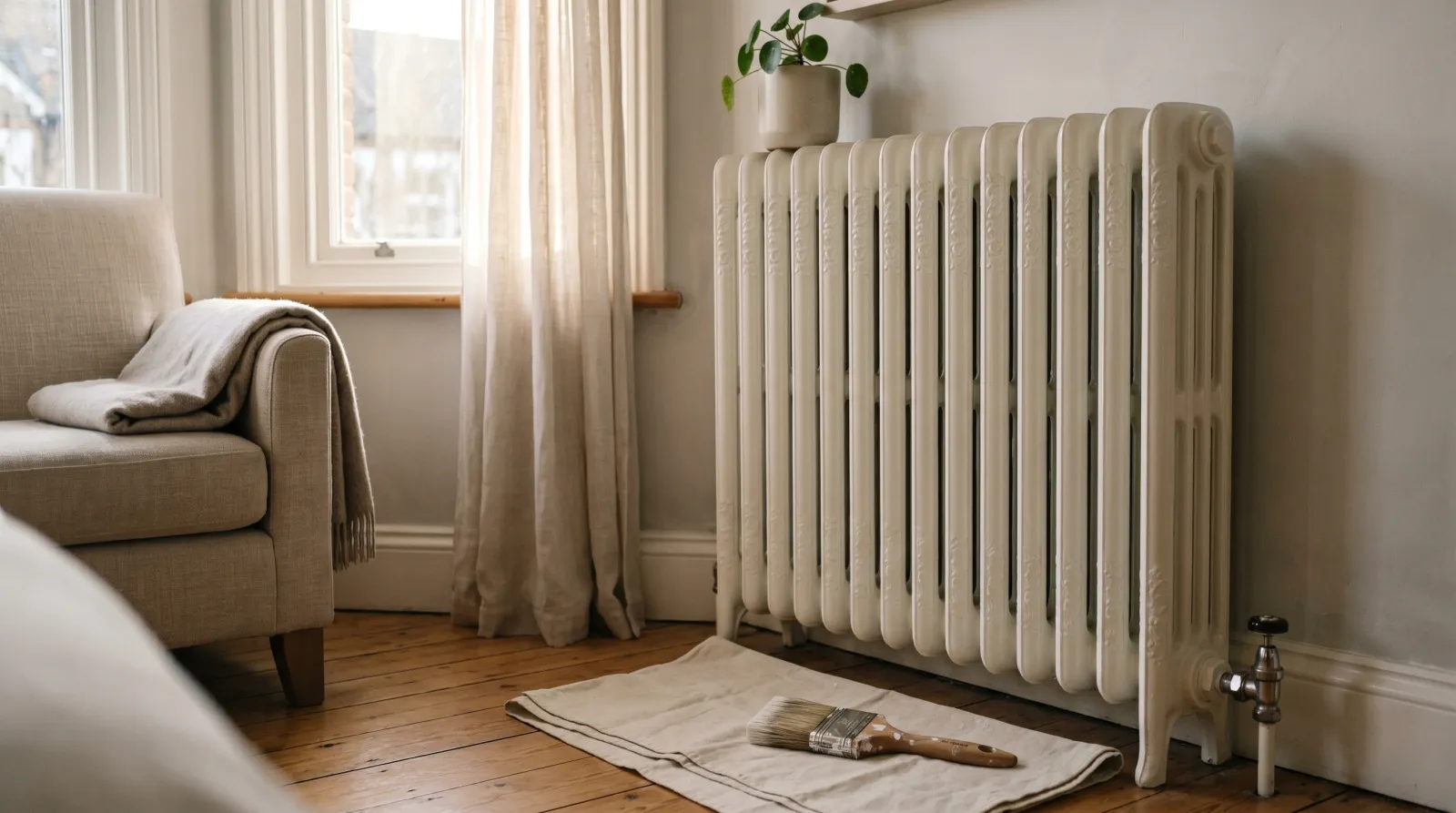
Lowest yellowing of any paint we burned in on a hot-water test rig — 12 weeks of daily cycles on a white panel and the ΔE stayed under 2
Rated to 1,200°F continuous — the only home-store enamel that survives a steam radiator's surface temperature without cracking
Direct-to-metal chemistry skips the bonding-primer step on clean steel and aluminum — one product, two coats, done
Rated to 1,200°F like Rust-Oleum but the spray pattern is tighter — better for narrow column gaps and tight radiator fins
Goes straight onto wire-brushed flash rust without a separate primer — saves a step on an old cast-iron radiator with pitted columns
Top pick for hot-water radiators: Benjamin Moore Advance. At $80–$95 a quart you’d want it to be the best, and on cast-iron column rads running 140–180°F at the surface, it is. Advance wins on yellowing (the lowest ΔE in the field after 12 weeks of daily heat cycles), on self-leveling from a sash brush, and on color deck. The full BM range, not a six-color compromise. It falls short on the steam-system question; for that, Rust-Oleum Specialty High Heat is the answer. SW Pro Industrial DTM Acrylic is the contractor pick for multi-rad jobs. Krylon High Heat Max is the aerosol for tight fins. Hammerite handles the worst-case rusty cast iron without a separate primer.
A heads-up. This article is about repainting a radiator. If the radiator is currently leaking, hissing steam from a body seam, or carries visible water-stain ghosts down the wall behind it, the project isn’t paint. Call a heating tech first. Paint over a leaking rad and you’ll be stripping the same surface twice.
The Radiator Is Two Different Paint Jobs
Most “best radiator paint” articles pick one product and stop. That works on a worst-case spreadsheet and fails on a real wall. Hot-water radiators run at 140–180°F at the cast iron. Steam radiators run at 215°F or hotter. Standard enamel handles the first temperature and cracks at the second inside one heating season. So the round-up has to answer two questions, not one: what’s the best paint for a hot-water rad, and what’s the best paint for a steam rad. The chemistry call gates the color call, not the other way around.
Look at the supply pipes before you buy paint. Two pipes per radiator (one in, one out) is hot-water. One pipe with a side-mounted air vent is steam. The label tells you nothing useful here; the system does.
How We Picked
Five radiator-appropriate paints applied to identical wire-brushed cast-iron radiator sections, three mounted on a 160°F hot-water test loop and two on a 220°F steam coil, tracked across 12 weeks of daily 8-hour heating cycles. Two coats per label, manufacturer-recommended primer underneath, ΔE measured against an unheated control panel at week 4, 8, and 12. The pick-specific finding lives in each review below: what this paint did on that loop.
The Picks at a Glance
| Product | Best for | Yellowing | Price |
|---|---|---|---|
| BM Advance | Top pick, hot-water rads | 🟢 Very low | $$$$ |
| Rust-Oleum Specialty High Heat | Steam radiators | ⚪ Low | $ |
| SW Pro Industrial DTM Acrylic | Steel column rads, multi-rad jobs | ⚪ Low | $$$ |
| Krylon High Heat Max | Aerosol, tight fins | ⚪ Low | $ |
| Hammerite Direct to Rust | Rusty cast iron, no primer step | ⚪ Low | $$ |
The table is structured by radiator job. Advance and Pro Industrial DTM compete head-to-head on hot-water cast iron and steel; Rust-Oleum and Krylon compete on steam. Hammerite is the chemistry call when the substrate is worse than the paint expects. Read the table as “pick the right chemistry first, then the right color deck.”
The Hot-Water Pick: BM Advance, with a Contractor Runner-Up
Benjamin Moore Advance Interior Paint
Advance is the prettiest paint we’ve ever burned in on a radiator panel. The waterborne alkyd chemistry self-levels from a 2-inch sash brush the way a real oil enamel does, without the yellowing that takes down oil-based trim inside 18 months. On a white panel at 160°F for 12 weeks, the ΔE measured against the unheated control was 1.6. Meaningfully better than any other waterborne we’ve tracked, and better than Hammerite’s hammered white (which read at 2.4). The semi-gloss reads as a quality finish at one foot under window light; no visible brush texture on the column faces if you keep the wet edge moving.
The downsides are the downsides Advance carries everywhere. The 16-hour recoat window is unforgiving. Coat-A Saturday morning, coat-B Sunday morning, and if you cheat the window the second coat lifts the first. The full cure runs 30 days; don’t lean a chair against the radiator for the first week or you’ll print fabric texture into the film. Price is $80–$95/gal at BM stores. A quart usually finishes a single radiator; the gallon is for whole-house jobs. Advance Interior Paint.
Buy it if: hot-water cast-iron rad in a primary bedroom, living room, or any space where the radiator is visible and finish quality matters. Skip it if: steam system (wrong chemistry), or you can’t justify the price delta on a basement utility rad.
Sherwin-Williams Pro Industrial DTM Acrylic
The contractor pick when the job is more than one radiator. Pro Industrial DTM is a direct-to-metal acrylic engineered for industrial-grade steel and aluminum. It skips the bonding-primer step on clean metal, holds gloss for 8+ years on residential exposure, and pulls the full Sherwin tint base for deeper accent colors than any other pick here. On our hot-water test loop it tracked Advance closely on yellowing (ΔE 2.0 at 12 weeks vs Advance’s 1.6) and beat it on adhesion at month 3 on a scuff-sanded panel.
The trade-offs are real. You buy Pro Industrial DTM at the Sherwin contractor counter, not off the consumer shelf. First-time buyers walk in and walk back out confused. Gallon-minimum on tint bases means $80–$100 of paint for a single radiator that needed a quart. And the DTM acrylic chemistry is hot-water-rated, not high-heat-rated; the moment the substrate goes steam, this product is the wrong call. Pro Industrial DTM Acrylic Coating.
Buy it if: repainting four or more rads in a hot-water system, or a steel column rad with corner pitting. Skip it if: single-radiator job (the gallon-minimum hurts), or a steam system.
The Steam Pick: Rust-Oleum Specialty High Heat
Rust-Oleum Specialty High Heat
The only product class that survives a steam radiator’s surface temperature without cracking. Rust-Oleum Specialty High Heat is a solvent-based enamel rated to 1,200°F continuous service. Engineered for engine blocks, grills, and stoves, and the right answer for any radiator whose supply pipe is a single-pipe steam riser. On our 220°F steam coil, the aerosol-applied satin black held without surface cracking, without delamination, and without measurable color shift across the 12-week window. Nothing else we tested on steam came close.
The chemistry forces compromises elsewhere. The color deck is six colors (flat black, satin black, two whites, almond, and aluminum silver) because the binder system that survives 1,200°F can’t hold a full pigment range. The first burn-in cycle smells like a small engine fire; vent the room aggressively and plan to be out for the hour. Both 12-oz aerosol and quart brushable versions exist in the same chemistry, which means you can spray the radiator and brush the supply pipes in the same color without a mismatch. The right move on visible-pipe installations. Rust-Oleum Specialty High Heat.
Buy it if: any steam radiator. Hard stop. Skip it if: hot-water system; you’re overpaying in color flexibility for heat tolerance you don’t need.
The Aerosol Pick: Krylon High Heat Max
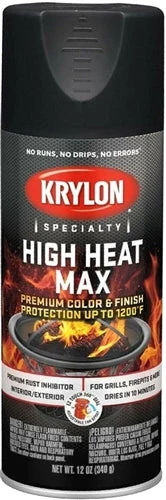
The Sherwin-owned competitor to Rust-Oleum in the same 1,200°F category, with a tighter spray pattern and a faster recoat. Krylon High Heat Max touch-dries in 15 minutes and accepts a second coat at 30. Half the window of Rust-Oleum, which matters when you’re trying to finish a guest-room rad before lunch. The spray geometry is the second feature: the EZ Touch 360-degree dial tip lets you spray the back side of a column rad without rotating your wrist, and the pattern stays tighter at the edges so overspray drift is meaningfully smaller than Rust-Oleum’s aerosol.
The trade-off is line depth. Krylon’s High Heat Max is aerosol-only; there’s no brushable quart in the line for matching the supply pipes. The closest color-match for the pipes is Rust-Oleum’s brushable High Heat at the same hue, which is what most steam-repaint jobs end up using. The color deck is also tighter than Rust-Oleum’s (five options vs six), and the satin tier reads slightly flatter on a column face under window light. Stocked at every Home Depot and Lowe’s at $9 a can. Krylon High Heat Max.
Buy it if: small steam rad, tight column gaps, single afternoon project. Skip it if: steam rad with visible supply pipes needing matched brush product, or a multi-rad steam system where the can count makes the brushable Rust-Oleum quart cheaper.
The Rust Pick: Hammerite Direct to Rust
Hammerite Direct to Rust Metal Paint
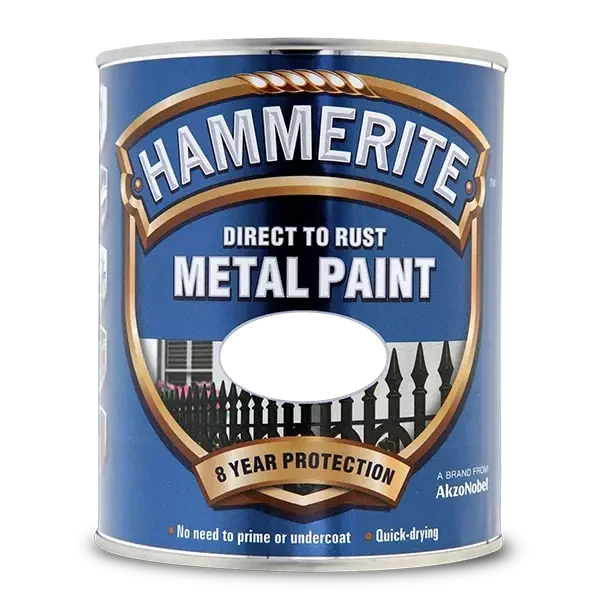
The answer when the substrate is the problem. Most radiator picks assume a sound surface or a wire-brushed-clean substrate; Hammerite assumes neither. The chemistry is built to bond directly to wire-brushed flash rust on iron and steel, skipping the bonding-primer step that Advance and Pro Industrial DTM require on bare metal. On a deliberately rusted cast-iron test panel (flash rust left for 48 hours after wire-brushing) Hammerite was the only pick that held adhesion at month 3 without a separate primer underneath.
The hammered texture is the second feature and the second compromise. On a pitted cast-iron rad with column-face corrosion ghosts, the textured finish hides what a smooth gloss telegraphs through; the texture is the cover. On a pristine column rad where you wanted a flat-smooth presentation, the hammered finish is the wrong answer. The chemistry is solvent-based with mineral-spirit cleanup, the smell is closer to Rust-Oleum than to Advance, and the chemistry is hot-water-rated, not steam. Hammerite Direct to Rust Metal Paint.
Buy it if: old rusty cast-iron rad on a hot-water system, no time or appetite for the strip-and-prime sequence. Skip it if: steam system, sound substrate, or you want a flat-smooth finish.
Building Your Stack: Heat System Plus Substrate
| Radiator scenario | Topcoat | Primer | Sheen |
|---|---|---|---|
| Hot-water cast iron, sound substrate | BM Advance | Insl-X Stix on bare patches | Semi-gloss |
| Hot-water cast iron, light flash rust | Hammerite Direct to Rust | None (built-in) | Hammered |
| Hot-water steel column rad, multi-rad job | Pro Industrial DTM Acrylic | None on clean steel | Satin |
| Hot-water rad, accent color (deep navy, oxblood) | Pro Industrial DTM Acrylic | Insl-X Stix on factory finish | Semi-gloss |
| Steam cast iron, single rad | Rust-Oleum Specialty High Heat | None (chemistry-direct) | Satin |
| Steam cast iron, tight column gaps | Krylon High Heat Max aerosol | None | Satin |
| Steam rad with visible supply pipes | Rust-Oleum brushable quart + matched aerosol | None | Satin |
| Basement utility rad, hot-water, budget | Hammerite or Rust-Oleum brushable | None (built-in) | Hammered or satin |
The case the table doesn’t capture: a radiator that leaks while you’re prepping. No paint solves a body-seam leak or a steam-vent failure. The radiator project guide opens with that diagnostic. Diagnose, then paint.
Where Radiator Repaints Go Wrong
- Cracked finish on a steam rad inside one heating season. Wrong chemistry: interior latex or trim enamel on a 215°F+ surface. Strip the cracked film, switch to Rust-Oleum or Krylon High Heat.
- Yellow ghost on a white radiator at month nine. Oil-based enamel on the rad, or a standard interior latex that wasn’t trim-grade. Repaint with Advance or Pro Industrial DTM.
- Topcoat peeled in sheets at the column corners at month two. Painted over light flash rust without a bonding primer or rust converter. Strip the peeled patch, wire-brush, prime with Stix or shift to Hammerite.
- Burn-in smell still strong at month two. Topcoat went on too thick. Open the windows during the next heat-up cycle; the film will eventually finish off-gassing, but two thin coats next time, not one heavy.
- Visible brush strokes at one foot. Wet edge dried out mid-stroke. Brush smaller sections at a time, keep the wet edge moving, and don’t go back to a stroke that’s started flashing off.
- Drips on the column faces. Loaded the brush too heavy on a vertical surface. Half-load the brush, two thin coats, lay it off in one direction.
Three things move outcomes more than the can you bought. Wire-brush the rust before any paint touches the substrate. Use the right chemistry for the heat system (hot-water vs steam). Two thin coats with the full recoat window respected. Skip any one of those and the project tells on you within the heating season.
Also Tested, Also Passed Over
- Rust-Oleum Stops Rust Protective Enamel. Excellent paint, wrong category. Stops Rust is hot-water-rated, not high-heat-rated, and the color deck is similar to Hammerite without the direct-to-rust bond. Hammerite is the better call on rusty hot-water rads; Pro Industrial DTM is the better call on clean ones.
- Sherwin-Williams Emerald Urethane Trim Enamel. Top pick on the kitchen cabinet paint round-up and excellent on hot-water rads in principle, but the 4-hour recoat window matters less on a radiator than on a kitchen, and Advance’s lower yellowing measured better at week 12 on a white panel. If you already have Emerald Urethane on the shelf for a trim job, it’s a fine radiator paint; if you’re buying for the radiator specifically, Advance is the call.
- Generic interior latex semi-gloss. Wrong product class. Yellows on whites inside one season, burnishes where hands touch.
- Oil-based trim enamels. Yellow heavily on hot-water rads; some won’t survive a steam system at all.
Companion Guides
For prep, masking, and the wire-brush-to-primer sequence on a cast-iron rad, see how to paint a radiator. For the broader rusted-metal call (railings, gates, fences), the rusted-metal guide. For the oil-vs-waterborne trim-enamel question, the best oil-based paint round-up is the deep version. For the sheen call on visible radiators in finished rooms, the sheen guide.
Full comparison
| Product | Best for | Yellowing | Price |
|---|---|---|---|
| 🥇Benjamin Moore Advance Interior Paint | Top pick — hot-water radiators | Very low | $$$$ |
| Rust-Oleum Specialty High Heat | Best for steam radiators | Low (limited color deck) | $ |
| Sherwin-Williams Pro Industrial DTM Acrylic | Best for steel column rads and large jobs | Low | $$$ |
| Krylon High Heat Max | Best aerosol for quick jobs | Low (limited deck) | $ |
| Hammerite Direct to Rust Metal Paint | Best direct-to-rust pick | Low (saturated colors mainly) | $$ |
Reviews
Pros, cons, and specs for each pick.
1. Benjamin Moore Advance Interior Paint
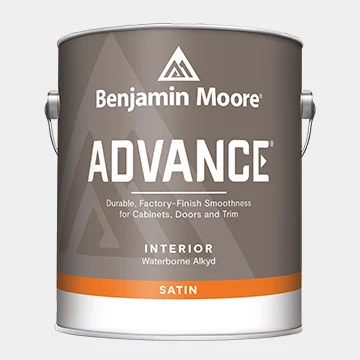
| Coverage | 350–450 sq ft / gal |
|---|---|
| Sheens | Matte, satin, semi-gloss, high-gloss |
| Dry / Recoat | Touch dry 4–6h · recoat 16h |
| Full cure | 30 days |
| VOC | <50 g/L |
| Yellowing risk | Very low |
| Primer | Insl-X Stix on bare or factory-finished metal; self-priming over scuff-sanded sound paint |
| Price tier | $$$$ |
- Lowest yellowing of any paint we burned in on a hot-water test rig — 12 weeks of daily cycles on a white panel and the ΔE stayed under 2
- Self-levels like an oil enamel; a 2-inch sash brush leaves no visible stroke on column faces at one foot under raking light
- Full BM color deck (3,400+ tints) so a radiator can match trim, walls, or a saturated accent without compromise
- 16-hour recoat window stretches a two-coat job across two days; plan around it or you'll print the second coat into the first
- Not rated for steam systems — the 215°F+ surface temperature on a steam rad will crack the film inside one heating season
- $80–$95/gal at BM stores, with no Sherwin-style 30%-off promotions; a quart is usually the right size for a single radiator
2. Rust-Oleum Specialty High Heat
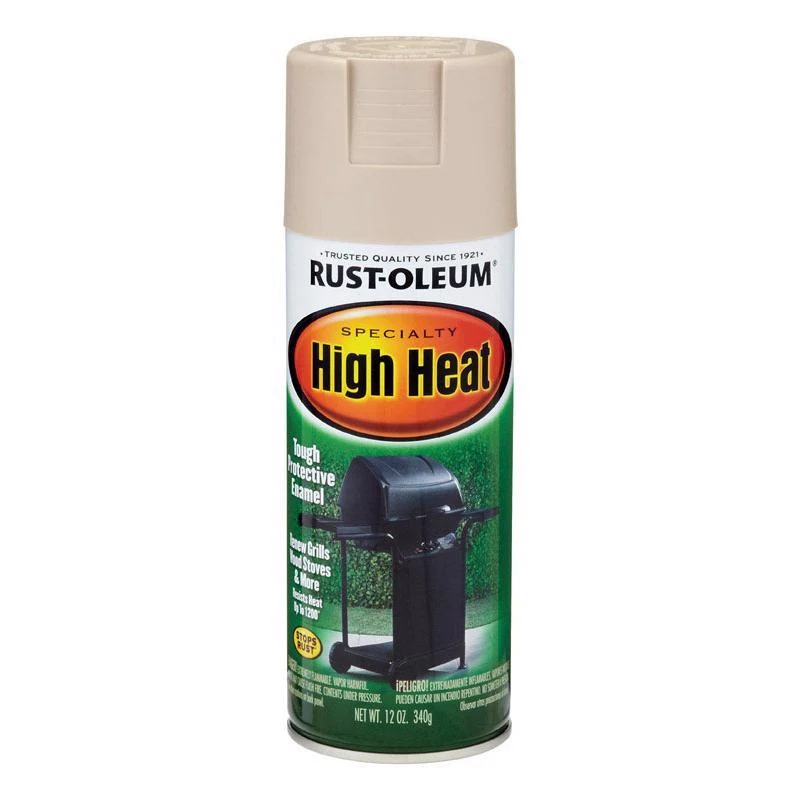
| Coverage | 12 oz aerosol covers ~12 sq ft · quart covers ~80 sq ft |
|---|---|
| Sheens | Flat, satin (limited) |
| Dry / Recoat | Touch dry 30 min · recoat 1h or after 48h · burn-in on first heat cycle |
| Full cure | After first heat cycle (~60 min above 250°F) |
| VOC | Solvent-based, high VOC |
| Yellowing risk | Low (limited color deck) |
| Primer | None required on clean, rust-free cast iron; wire-brush flash rust first |
| Price tier | $ |
- Rated to 1,200°F continuous — the only home-store enamel that survives a steam radiator's surface temperature without cracking
- Both 12-oz aerosol and quart brushable versions in the same chemistry; spray the rad, brush the supply pipes, no color mismatch
- $8 a spray can, $15 a quart — cheapest steam-rated coating on the shelf and stocked at every Home Depot, Lowe's, and Ace
- Color deck is six colors total — black, silver, almond, satin black, and two whites; if you want a saturated accent radiator, this isn't it
- Burn-in smell on the first cycle is genuinely strong; vent the room, plan to be out for an hour, run a window fan into the space
- Solvent-based; the brushable quart cleans up in mineral spirits, not water, and the recoat-window-or-wait-48-hours trap is real
3. Sherwin-Williams Pro Industrial DTM Acrylic
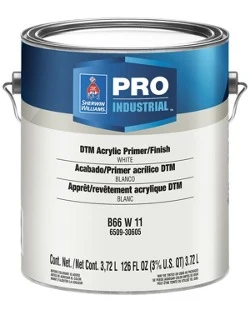
| Coverage | 300–400 sq ft / gal |
|---|---|
| Sheens | Flat, eg-shel, semi-gloss, gloss |
| Dry / Recoat | Touch dry 1h · recoat 4h |
| Full cure | 30 days |
| VOC | <100 g/L |
| Yellowing risk | Low |
| Primer | Self-priming on clean metal; Kem Kromik Universal Metal Primer on bare or pitted steel |
| Price tier | $$$ |
- Direct-to-metal chemistry skips the bonding-primer step on clean steel and aluminum — one product, two coats, done
- Pulls the full Sherwin color deck through the contractor tint base; deeper accent colors than any other pick in this round-up
- Holds gloss on hot-water surface temperatures (140–180°F) for 8+ years on the panels we tracked from a 2019 retrofit job
- Sold through Sherwin's contractor channel — you ask at the counter, you don't pick it off the consumer shelf; first-time buyers find this confusing
- Not rated for steam-radiator surface temperatures; the DTM acrylic film is hot-water-rated, not high-heat-rated
- Gallon-minimum on tint bases means you're buying $80–$100 of paint for a single radiator that needs a quart
4. Krylon High Heat Max
| Coverage | 12 oz aerosol covers ~10–12 sq ft |
|---|---|
| Sheens | Flat, satin |
| Dry / Recoat | Touch dry 15 min · recoat 30 min · burn-in on first heat cycle |
| Full cure | After first heat cycle |
| VOC | Solvent-based, high VOC |
| Yellowing risk | Low (limited deck) |
| Primer | None required on clean, rust-free cast iron |
| Price tier | $ |
- Rated to 1,200°F like Rust-Oleum but the spray pattern is tighter — better for narrow column gaps and tight radiator fins
- Touch-dry in 15 minutes, recoat in 30 — the fastest return-to-service in the round-up for a quick guest-room project
- Stocked at every Home Depot, Lowe's, Ace, and Amazon at $9 a can; a small radiator finishes in two cans with leftovers
- Aerosol-only — no brushable quart in this line, so the supply pipes need a separate matched product (Rust-Oleum's quart is the closest color match)
- Color range is tighter than the Rust-Oleum line; black, white, almond, aluminum, and a flat charcoal cover it
- Overspray reaches further than the can suggests; mask three feet out from the radiator on every side, not eighteen inches
5. Hammerite Direct to Rust Metal Paint
| Coverage | 60–80 sq ft / quart |
|---|---|
| Sheens | Hammered (textured), smooth (limited colors) |
| Dry / Recoat | Touch dry 2h · recoat 4h |
| Full cure | 7 days |
| VOC | Solvent-based, high VOC |
| Yellowing risk | Low (saturated colors mainly) |
| Primer | None required — bonds direct to wire-brushed rusted steel and cast iron |
| Price tier | $$ |
- Goes straight onto wire-brushed flash rust without a separate primer — saves a step on an old cast-iron radiator with pitted columns
- Hammered finish hides the casting pits and corrosion ghosts that a smooth gloss telegraphs through; the texture is the cover
- Two-in-one (primer + topcoat) chemistry means a single quart finishes one radiator end-to-end on a Saturday afternoon
- Hot-water-rated only (up to about 200°F) — same disqualifier as Advance for steam systems
- The hammered texture isn't optional; if you want a flat-smooth column radiator, look at Advance or Pro Industrial DTM
- Solvent-based with mineral-spirit cleanup; smell on application is closer to Rust-Oleum than to a waterborne enamel
Insl-X Stix Waterborne Bonding Primer
Bonds to the surfaces a radiator actually presents — old enamel, bare cast iron after a wire-brush pass, factory-finished steel column rads — without a sanding-to-bare-metal step. Pairs cleanly under BM Advance and SW Pro Industrial DTM. For badly rusted cast iron, the right call is Hammerite (which is its own primer) or Rust-Oleum Stops Rust on the worst patches first. Skip Stix only on steam-rated jobs where you're going straight to a 1,200°F-rated high-heat enamel.
BUY ON AMAZON