How to Paint a Radiator
Painting a radiator the right way: identify hot-water vs steam, kill rust, prime with a metal-bonding specialty primer, two thin coats, and burn the first cycle.

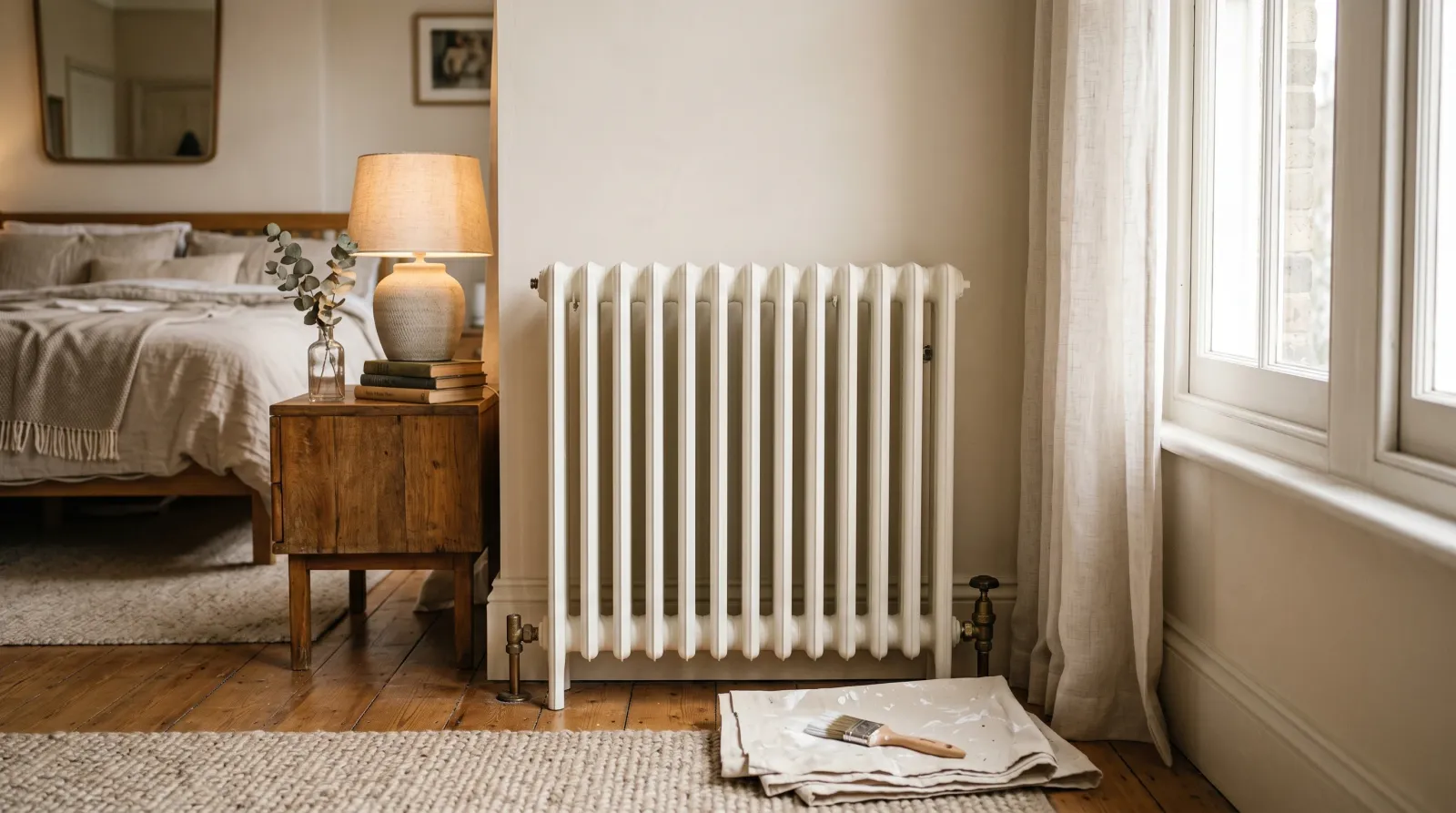
Painting a radiator looks like a one-Saturday job. It bites in three places: heat type, prep, and primer. Get those three right and the finish holds a decade. Skip any one and you’ll be scraping flaked paint off cast iron next October.
Find out what kind of radiator you’ve got before you buy a single thing at the paint counter.
What You’ll Get
A cast-iron radiator finished in satin enamel that survives heat cycling, doesn’t yellow, and looks like it belongs to the room. Total cost $60–$140 per radiator. One weekend of working time, plus a 48-hour cool-down before you start and another day for the finish to set before the heat comes back on.
Honest Take on Time and Difficulty
Medium. The painting itself is easy. The prep is the work.
A realistic schedule for one radiator:
| Day | Activity | Hours |
|---|---|---|
| Fri night | System off, bleed the valves | 0.5 |
| Sun morning | Wire-brush, vacuum, wipe down | 2–3 |
| Sun afternoon | Mask, prime | 1–2 |
| Mon evening | First topcoat | 1 |
| Tue evening | Second topcoat | 1 |
| Wed | Cure, heat back on |
You can’t shortcut the cool-down. A radiator that feels cool on the outside can still be 90°F internally, and waterborne primer flashes before it bonds.
Most old radiators sit four inches off the wall with column backs you can’t reach standing up. Plan on a small flexible-handle radiator brush.
Method: Hot-Water vs Steam, Pick the Right Topcoat
This is the decision nobody mentions and it’s the one that ruins the most paint jobs. Look at the radiator. Count the pipes coming up out of the floor.
Two pipes (one supply, one return) means hot-water (hydronic). The radiator surface runs at 140–180°F. Standard interior enamel handles that. Rust-Oleum Protective Enamel, BM Advance, or any quality alkyd or waterborne urethane trim enamel works.
One pipe with an air vent on the side means steam. The radiator runs at 215°F or hotter when the system is making steam. Standard enamel yellows and cracks inside one season.
For steam, use a true high-heat coating. Rust-Oleum High Heat and Krylon High Heat are both rated to 1,200°F and are the only home-store products I trust here. The downside: high-heat enamels come in a narrow color range (black, silver, white, a few neutrals) and read slightly flatter than a normal enamel. That’s the price of paint that doesn’t fail.
If you’re not sure which system you have, find the boiler. A round expansion tank near the ceiling and circulator pumps on the supply lines mean hot-water. A glass sight gauge and no circulator pumps mean steam.
What You’ll Need
Primer. Insl-X Aqua-Lock if the cast iron is mostly sound with a few rust spots. Waterborne, low odor, fast recoat, bonds to bare metal and old paint without sanding to bare. Rust-Oleum Stops Rust oil-base if there’s heavy rust or flaking; it locks rust under the film and gives the topcoat something to bite. One quart primes a typical column radiator. See the best primers round-up.
Topcoat. Rust-Oleum Protective Enamel for hot-water radiators. Rust-Oleum High Heat or Krylon High Heat for steam; both come in 12 oz spray cans or quart brushable cans. Two thin coats either way. For background on metal enamel chemistry, see the oil-based paint round-up.
Tools. A 2-inch angled sash brush for the columns. A small bent-handle radiator brush for the back side. A twisted-cup wire brush on a drill for heavy rust; a hand wire brush for the fins. 120-grit and 220-grit sandpaper. A vacuum with a brush attachment and a crevice tool. The paint brush round-up covers the sash brushes I reach for here.
Masking. Canvas drop cloth and rosin paper under the radiator and out three feet in every direction. Painter’s tape for the baseboard and the wall behind it. If you’re using oil-base or high-heat enamel, open the windows and run a fan. These are real solvent-heavy products, not water-cleanup acrylics.
Step 1: Shut the System Down and Wait
Turn the boiler off at the thermostat 48 hours before you plan to start. On hot-water, close the supply and return valves at the radiator if it has them. On steam, close the supply valve only and leave the air vent open so condensate can drain back.
Bleed the air vent at the top of the radiator. You’re not draining it; you’re making sure no water boils into the workspace mid-job.
Cast iron stays warm long after the surface feels cool. Touch the supply pipe near the floor. If it’s still warm, wait. Paint on a warm radiator flashes before it levels and you end up with sticky orange-peel that smells for weeks. Give it the full 48 hours.
Step 2: Wire-Brush the Rust
Lay down the drop cloth and rosin paper. Tape the baseboard and the wall behind the radiator. Tape the supply pipes if you don’t want them painted.
Hit the heavy rust with the twisted-cup wire brush on a drill. Slow speed. You’re knocking off loose flakes and scale, not grinding into sound metal. Don’t try to strip to bare cast iron. Sound paint that’s been on there for forty years is a better primer base than fresh-bare iron.
Get into the fins and column backs with the hand wire brush. Wrap a strip of 120-grit around a paint stir stick for the tightest gaps.
If there’s heavy rust on the back side or inside a fin you can’t reach, use Rust-Oleum Stops Rust oil-base primer instead of the waterborne. The oil-base locks down rust the brush missed.
Step 3: Vacuum and Wipe Down
This is the step everyone shortcuts and it’s the one that decides how the topcoat looks at six inches.
Vacuum the radiator with a brush attachment, then go back with a crevice tool and pull dust out of every fin and column gap. There will be more dust than you expect. Decades of forced-air heat pack iron oxide and household lint into every crevice.
Wipe the whole radiator down with denatured alcohol on a lint-free rag. Two passes. Alcohol picks up oily residue that vacuum and tack cloth miss. Let it flash dry (three minutes) before primer.
Watch out for kitchen radiators. Cooking grease films onto cast iron and you cannot see it. Primer doesn’t bond to grease. The finish lifts in sheets six months later.
Step 4: Prime
Pop the lid on the Insl-X Aqua-Lock (or Rust-Oleum Stops Rust if you went oil-base). Stir; don’t shake. Load the 2-inch sash brush about a third of the way up the bristles.
Cut in around the top fitting and the supply pipes first. Work down the front face of each column, top to bottom, in steady strokes. Don’t overwork it. Primer that’s been brushed back and forth six times leaves ridges. Two passes max per section, then move on.
Get the back side with the bent-handle radiator brush. You can’t see what you’re doing back there, so go by feel.
One coat of primer is enough on sound old paint. Two thin coats on bare cast iron where you wire-brushed through the old finish. Recoat window is on the can: Aqua-Lock is 2 hours, Stops Rust is 4 hours minimum, longer in humidity.
Watch out for drips at the bottom of the columns. Cast-iron columns are vertical and primer wants to run. Catch drips with the tip of the brush within the first ten minutes; after that the film has set and you’ll spread the drip instead of leveling it.
Step 5: Two Coats of Topcoat
Same routine as primer. Cut in, front of each column, back side with the radiator brush.
First coat thin. Resist the urge to load the brush and “get it done in one.” A heavy first coat on a vertical column sags within thirty seconds and leaves a ridge you’ll see every time you walk past for the next decade. Two thin coats always beat one heavy coat.
Wait the full recoat window between coats. Rust-Oleum Protective Enamel recoats at 1 hour or after 48 hours; the in-between zone (2–24 hours) is when the first coat is too set for a recoat to flow into it and not set enough for the second coat to bite. Read the can.
Second coat is the one that levels and looks even. Same technique, light hand, two passes max per section.
Brushable high-heat enamels are thicker and less forgiving than the spray cans. Two very thin coats; three if you can’t get full coverage without going thick.
Common Mistakes That Ruin the Job
- Standard enamel on a steam radiator. Yellows and cracks inside one heating season. High-heat enamel only on steam.
- Skipping the 48-hour cool-down. Cast iron holds heat. Paint on a 90°F radiator flashes before it levels.
- No primer. Wall paint doesn’t bond to metal. Finish peels at the columns inside two years.
- Wire-brushing to bare cast iron everywhere. Sound old paint is a better primer base than freshly exposed iron. Spot-clean only.
- Skipping the vacuum step. Trapped dust gets sealed under the primer and the topcoat reads bumpy at six inches.
- One heavy coat instead of two thin ones. Sags, ridges, drips. Always two coats.
- Not warning the household about the first heat cycle. Open the windows, plan to be out for an hour. The smell goes away after one cycle.
Cure Schedule
| Time after final coat | What’s safe |
|---|---|
| 2 hours | Touch dry, no contact |
| 24 hours | Re-handle gently, drop cloth off |
| 48 hours | Heat back on (first cycle will smell) |
| 7 days | Wipe-clean with a damp rag |
| 30 days | Full cure, scrub if you have to |
Don’t fire the system back up at 24 hours just because the can says “dry to handle.” Surface dry isn’t through-cured, and the first heat cycle on a half-cured film locks volatiles into the topcoat and you’ll smell them every time the heat comes up for the next month.
Maintenance
A properly primed and topcoated cast-iron radiator holds eight to twelve years on hot-water, six to ten on steam. The columns fade first on south-facing radiators that catch sun through a window.
Touch-ups are easy. Vacuum, wipe with alcohol, dab leftover topcoat into any chips with a small artist’s brush. Don’t re-prime for a touch-up unless the chip went all the way to bare metal.
When the whole radiator needs a refresh (visible yellowing on the front faces, or chalk-rub when you wipe a finger across it), it’s the same job. The original primer coat is sound; you’re just refreshing the topcoat. Half a day per radiator instead of a full weekend.
Cost Breakdown: One Cast-Iron Column Radiator
| Item | Cost |
|---|---|
| Specialty primer (1 qt) | $18–$28 |
| Topcoat enamel (1 qt) | $20–$32 |
| Wire brush + sandpaper | $15 |
| Sash brush + radiator brush | $18 |
| Drop cloth, rosin paper, tape | $20 |
| Denatured alcohol (1 pt) | $8 |
| Total | $99–$121 |
Already own brushes and a drop cloth? Drop $40. Three radiators in the house? Buy gallons instead of quarts. A pro will quote $200–$450 per radiator for the same work.
What’ll bite you in two years: you skipped the alcohol wipe, or you used wall paint instead of metal enamel, or you ran the heat at 24 hours because the can said dry-to-touch. Do the three steps right and the finish outlasts the boiler.
Ask a Question