Product review · Rust-Oleum · Updated August 7, 2026
Chalked Ultra MatteRust-Oleum paint review
7.8/10The easiest furniture paint to learn on — as long as you buy the topcoat in the same trip.
The friendliest paint a first-timer can pick up: no primer, no sanding on most pieces, and a velvety matte finish for $17 to $25 a can. Just know going in that it is a two-step job, not one.

Emily Roberts · DIY Editor & First-Timer's Guide · Updated August 7, 2026
Emily painted her first room at 24, hated every minute of it, and got better. She writes the guides she wishes she had, which means defining every term and never assuming you know what a scuff-sand is. About the testing process →
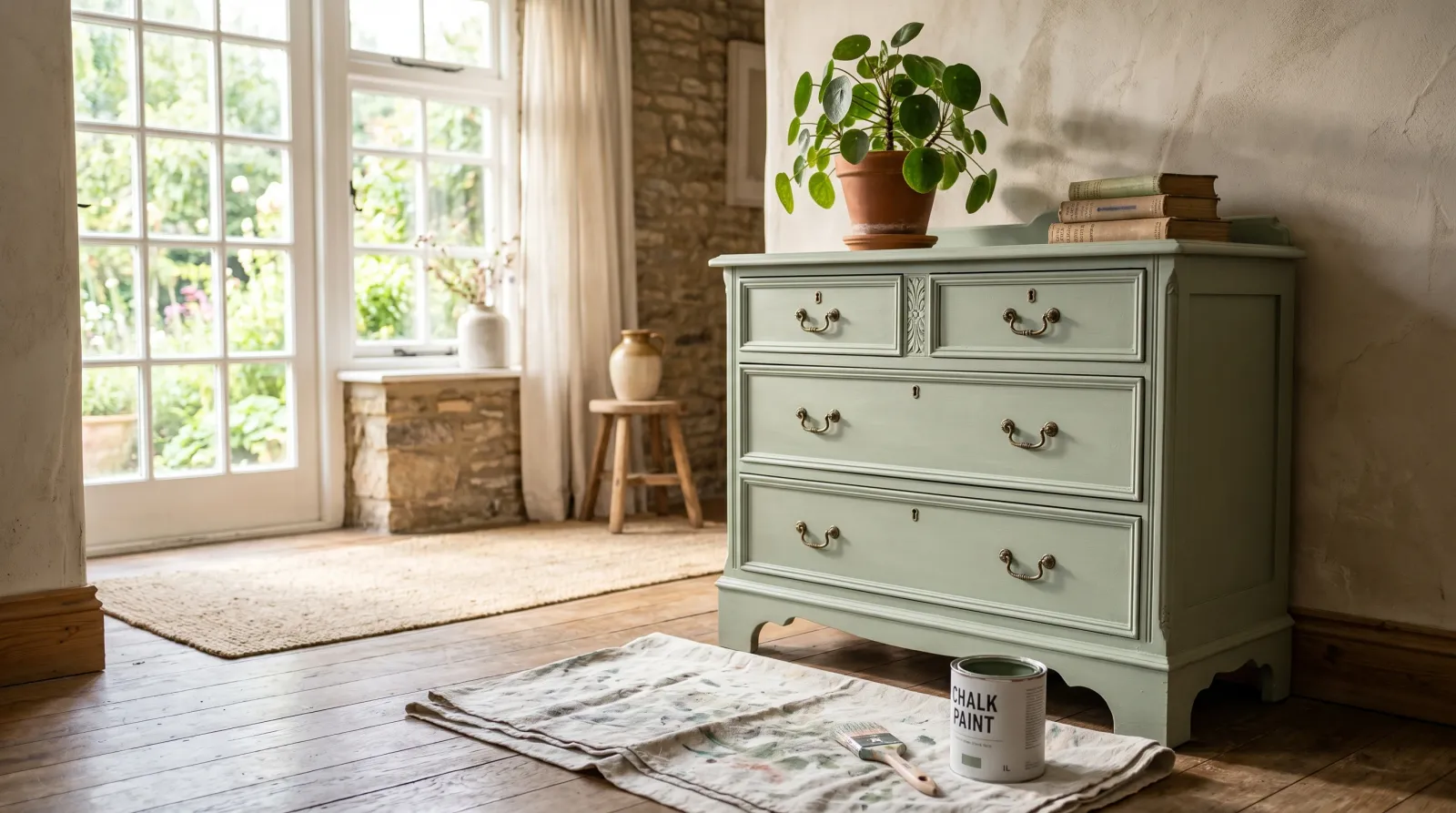
Rust-Oleum Chalked Ultra Matte1 sheen
CoverageUp to 150 sq ft per quart in one coat
Dry / RecoatTouch 30 min
VOCLow-VOC water-based acrylic
Sheens Ultra Matte only
Read this first
The Fast Verdict
For furniture, yes. At $17 to $25 a can it is the friendliest paint a beginner can pick up: no primer, no sanding on most pieces, touch-dry in 30 minutes, and a matte finish that looks far more expensive than it is. Budget for two coats and a topcoat, because the bare finish is soft and marks easily. It is not worth it for kitchen cabinets or anything else you touch all day — use a cabinet enamel there instead.
Best for
Thrifted dressers · Nightstands and accent pieces · Farmhouse and boho matte looks · Distressed finishes · First-time painters · Raw or previously painted wood
Skip if
Kitchen cabinets · A finish that must be wipeable straight from the can · You will not do the topcoat step · A piece that lives a hard life
What it's good at
- No sanding on raw wood, old painted furniture, or any non-glossy surface
- Fast pace — touch-dry in 30 minutes and recoatable in two hours
- Forgiving for first-timers; the thick paint hides brush marks and small flaws
- That soft, powdery, zero-shine look people pay boutique prices for
- Distressing beautifully once dry, if you want a worn vintage edge
- Cheap enough to try a color on a small piece without much risk
What it's not good at
- Standing up to hands and mugs bare — it needs a wax or topcoat to be wipeable
- The one-coat claim; a light color over a dark piece looks streaky at one coat
- Being overworked — go back over a half-dry section and you get ridges
- Glossy varnish, laminate, and shiny metal without a quick scuff first
- Kitchen cabinets and anything else you touch fifty times a day
- Sheen choice — Ultra Matte is the only finish it comes in
Same shelf, different cans
Which Chalked Are You Buying
Rust-Oleum puts the Chalked name on a few different cans and the shelf does not sort them out for you. Here is the family so you do not bring home the wrong one.
Chalked Ultra Matte Paint (brush-on quart)
BaseLow-VOC water-based acrylic
SheensUltra Matte only — flat, chalky, zero shine
Recoat2 hr
Buy it if
Dressers, nightstands, and flat pieces. Cheaper per ounce than the spray, and this is the can this review covers.
Avoid if
The piece is all spindles and chair legs where a brush leaves drag marks.
Chalked Ultra Matte Spray
BaseSame chalk-style finish in an aerosol
SheensUltra Matte only
Buy it if
Chairs, spindles, and detailed pieces where a brush cannot get a clean lay-down.
Avoid if
You are covering a big flat panel — the quart costs less per ounce.
Chalked Tint Base
BaseThe untinted base your store mixes
Buy it if
You want a custom color rather than one of the premixed shades. Same paint, mixed at the counter into 26 shades.
Avoid if
A premixed color already works — no reason to pay for a mix.
Numbers, not adjectives
Spec Sheet
- Coverage
- Up to 150 sq ft per quart in one coat (figure two coats in practice)
- Finish
- Ultra Matte only — flat, chalky, zero sheen
- Dry / Recoat
- Touch 30 min · handle 1h · recoat 2h
- Full hardness
- Usable in a few days, fully cured around 1 week
- VOC
- Low-VOC water-based acrylic, CARB compliant
- Primer
- Self-priming on most surfaces; scuff-sand glossy ones; topcoat needed for wear
- Surfaces
- Wood, laminate, metal, ceramic, canvas, most non-glossy interior surfaces
- Sizes
- 30 oz quart cans; premixed colors and a tint base
- Price
- $17–25 per 30 oz quart
Application Settings That Work
- Brush
- Load the brush, go in one direction, lay the paint down, and leave it alone. The paint is thick, so it hides small brush marks and surface flaws on its own — going back over a section that has started to set is what creates streaks. On big flat panels like a dresser side, a small roller gives a more even coat than a brush.
- Primer
- None needed on raw wood, old painted furniture, or any non-glossy surface — wipe it clean with a damp rag and start painting. The one exception is anything shiny: a glossy varnish, a slick laminate dresser, or shiny metal all need a light scuff with fine sandpaper first. Then seal the finished paint with wax or the Chalked Protective Topcoat on anything you touch.
How Long Until You Can Actually Use It
The fast part is real: touch-dry in about 30 minutes, handle in an hour, and you can put the second coat on at two hours. That is why a small dresser is an afternoon instead of a weekend. The slow part is the hardness. The piece is usable in a few days and fully cured at about a week, and until then the bare chalk finish is soft and porous — it grabs greasy fingerprints, shows water rings, and scuffs if you drag something across it. A coffee mug on an unsealed test board left a ring. So plan the job as paint, then topcoat: a clear wax or the Chalked Protective Topcoat is what makes the surface wipeable. On a piece that only sits and looks pretty you can skip the sealer. On anything you touch, do not.
Mid-project panic
When It Goes Wrong, and How to Fix It
Streaks and brush ridges across a panel
Why it happens. The paint starts setting fast, which is great for speed and bad if you keep going back over an area that has already started to tack up. Overworking a half-dry section drags the paint instead of laying it down.
The fix. Brush in one direction, lay it down, and walk away. On big flat panels a small roller helps more than a brush. If streaks are already there, let the coat dry, sand them lightly smooth, and put the second coat on in one direction without going back over it.
The paint peeled off in a sheet weeks later
Why it happens. No sanding has an asterisk. On a glossy varnish, a slick laminate dresser, or shiny metal, there is nothing for the paint to grab, so the whole film lets go later even though it looked fine at first.
The fix. Scuff shiny surfaces with fine sandpaper before you paint — a light pass, two minutes of work, just enough to dull the shine. Then wipe the dust off and paint. Skipping this on a glossy piece is the number-one way people end up disappointed.
Fingerprints, water rings, and scuffs on the finished piece
Why it happens. Chalk paint dries soft and porous. Until it is sealed it grabs grease from hands, marks where a wet glass sits, and scuffs when something is dragged across it.
The fix. Seal it. A clear wax or the Chalked Protective Topcoat over the dry paint is what lets you wipe the surface down. Buy the topcoat in the same trip as the paint — it is annoying to discover you need it after the paint has already dried.
One coat looks patchy and thin
Why it happens. The can says one coat covers. On a light color over a dark piece, one coat looks streaky in real life, and a 30-ounce can does not go as far as 150 sq ft suggests once you are doing two coats.
The fix. Plan on two coats from the start and buy a little extra so you do not run out mid-project. A standard dresser eats most of a can across two coats. The second coat is what makes the colour look even.
The color does not match the lid
Why it happens. Premixed colors read a little differently on real wood than they do on the label, which is normal rather than a bad can.
The fix. Test it on the back or the underside of the piece first and let it dry fully before you judge it — chalk paint lightens as it dries. If you want something specific, ask the store for the tint base instead, which mixes into 26 shades.
Side by side
Rust-Oleum Chalked vs Annie Sloan vs Waverly
Three chalk paints at three price points. They all give you the matte look; what changes is how many coats it takes, where you buy it, and how much the piece matters to you.
| Rust-Oleum Chalked | Annie Sloan Chalk Paint | Waverly Chalk Paint | |
|---|---|---|---|
| Price | $17–25 per 30 oz quart | $25–45 per quart | $10–14 per jar |
| Coats to cover | One coat is patchy on most colors. Plan two. | Goes on creamier and covers in fewer coats. | Coverage is a touch weaker than Chalked. |
| Where you buy it | Home Depot, Walmart, Amazon — easy to grab today. | Usually a stockist rather than a big box. | Walmart, in smaller jars. |
| Consistency can to can | Reliable batch to batch. | The original formula, and it shows in the way it lays down. | The weak spot — less consistent than the Rust-Oleum. |
| Best job | A thrifted dresser or nightstand you want done this weekend. | A statement piece you plan to keep for years. | A single picture frame or a small box. |
Price
Rust-Oleum Chalked$17–25 per 30 oz quart
Annie Sloan Chalk Paint$25–45 per quart
Waverly Chalk Paint$10–14 per jar
Coats to cover
Rust-Oleum ChalkedOne coat is patchy on most colors. Plan two.
Annie Sloan Chalk PaintGoes on creamier and covers in fewer coats.
Waverly Chalk PaintCoverage is a touch weaker than Chalked.
Where you buy it
Rust-Oleum ChalkedHome Depot, Walmart, Amazon — easy to grab today.
Annie Sloan Chalk PaintUsually a stockist rather than a big box.
Waverly Chalk PaintWalmart, in smaller jars.
Consistency can to can
Rust-Oleum ChalkedReliable batch to batch.
Annie Sloan Chalk PaintThe original formula, and it shows in the way it lays down.
Waverly Chalk PaintThe weak spot — less consistent than the Rust-Oleum.
Best job
Rust-Oleum ChalkedA thrifted dresser or nightstand you want done this weekend.
Annie Sloan Chalk PaintA statement piece you plan to keep for years.
Waverly Chalk PaintA single picture frame or a small box.
For a weekend dresser refresh, Rust-Oleum Chalked is the right can: it is on the shelf at every big box, it costs about half what the original does, and the finish looks the part once it is sealed. Step up to Annie Sloan when the piece is a keeper and you want fewer coats and a creamier lay-down. Drop to Waverly only for something tiny, where a smaller jar is genuinely all you need. And if the piece takes real daily wear, none of the three is the answer — that is a cabinet enamel job.
If not this one
Honest Alternatives
WC
Waverly Chalk Paint$10–14
Sold at Walmart in smaller jars, this is the budget chalk paint for tiny projects. Smaller color range and slightly weaker coverage, and the consistency varies more can to can, but for a single picture frame or a small box it does the job for less.
AS
Annie Sloan Chalk Paint$25–45 / qt
The original, and it shows. Goes on creamier, covers in fewer coats, and distresses like a dream. Costs about twice as much and usually means finding a stockist. Worth it on a statement piece you want to keep for years, overkill for a weekend refresh.
Full review →BM
Benjamin Moore Advance$80–95 / gal
A different animal. If the piece takes real wear — cabinets, a vanity, a bathroom door — skip chalk paint and use a self-leveling cabinet enamel. Advance dries hard and wipes clean with no wax step, but it asks for primer and patience.
Full review →Questions people actually ask
Chalked Ultra Matte Questions, Answered
Is Rust-Oleum Chalked worth it?
For furniture, yes. At $17 to $25 a can it is one of the friendliest paints a beginner can pick up — no primer, no sanding on most pieces, touch-dry in 30 minutes, and a matte finish that looks far more expensive than it is. Just budget for two coats and a topcoat, because the bare finish is soft and marks easily. It is not worth it for kitchen cabinets or anything else you touch all day.
Do I really not have to sand before using Chalked paint?
On raw wood, old painted furniture, and most matte surfaces, no — wipe it clean and paint. The one exception is anything shiny: a glossy varnish, a laminate dresser, or slick metal. Those need a light scuff with fine sandpaper so the paint has something to grab. Skip that step on a glossy piece and the paint can peel off in a sheet later.
Does Rust-Oleum Chalked need a topcoat?
For anything you touch, yes. The bare chalk finish is soft and matte, so it scuffs, water-spots, and shows greasy fingerprints. A clear wax or the Chalked Protective Topcoat seals it so you can wipe it down. On a piece that just sits and looks pretty, you can skip the topcoat. On a coffee table or a kitchen chair, do not.
How many coats will I actually need?
The can says one. In real life, plan on two. One coat looks patchy on most colors, especially the lighter ones over a dark piece. A quart covers about 150 square feet in one coat, so a standard dresser takes most of a can across two coats. Buy a little extra so you do not run out mid-project.
Can I use Chalked paint on kitchen cabinets?
I would not, not for the cabinets you open every day. Chalk paint plus a wax topcoat looks lovely but it is not built for daily kitchen abuse and grease. For real cabinet wear you want a cabinet enamel like Benjamin Moore Advance. Save Chalked for furniture, a built-in you rarely touch, or a pantry door.
What is the difference between the brush-on and the spray version?
Same finish, different application. The brush-on quart is better for big flat pieces like a dresser, and it is cheaper per ounce. The spray can is faster on spindles, chair legs, and detailed pieces where a brush leaves drag marks. This review is the brush-on quart.
Is chalk paint the same as chalkboard paint?
No, and this trips a lot of people up. Chalkboard paint is the kind you write on with chalk. Chalked is chalk-style furniture paint, named for the soft, powdery matte finish it dries to — flat and velvety, like unglazed pottery, with zero shine. You will know it when you see it.
Can I get it in a custom color?
Yes. Chalked comes in premixed colors and a tint base your store can mix into 26 shades. If none of the premixed cans is right, ask for the tint base. Test whatever you buy on the back of the piece first — the color can read a little differently on real wood than it does on the lid.
How long before I can put things on the painted piece?
It is touch-dry in 30 minutes, handleable in an hour, and recoatable at two. The paint is usable after a few days and fully hard at about a week. Wait for the topcoat to go on and cure before you set drinks or heavy objects on it, or you will press marks into a finish that only looks finished.
Keep exploring
Rust-Oleum brand guide and product reviewsBest furniture paint, testedWhat chalk paint actually isChalk paint vs latex for furniture
We may earn a commission when you buy through the retailer link above. It never changes the score or the verdict.
Ask a Question