Product review · Cabot · Updated August 7, 2026
Semi-Solid Deck & Siding StainCabot paint review
7.8/10The best can at this opacity for a grayed-out deck — as long as the boards are bare and you buy for two coats.
Three different cans in Cabot's range say semi-solid on the front, and only one of them belongs on a deck. Here is which to buy, what it really covers, and the prep step that causes almost every peeling complaint.

Mark Thompson · Pro Contractor & Field Editor · Updated August 7, 2026
22 years running residential and light commercial repaints across the Midwest. Mark has stripped, brightened, and recoated more grayed-out decks and fences than he cares to count, and still takes weekend jobs to keep the numbers honest. About the testing process →
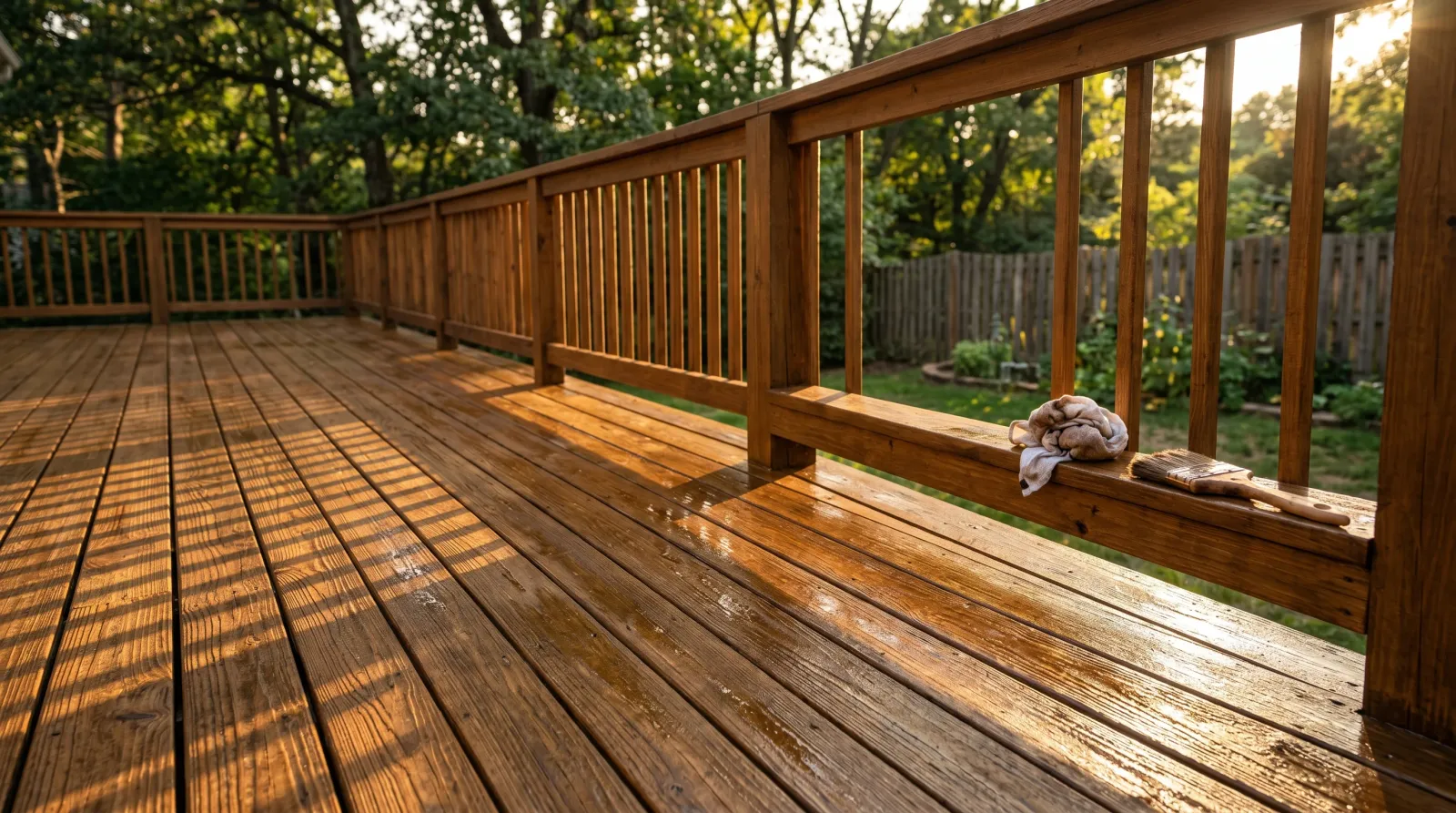
Cabot Semi-Solid Deck & Siding Stain1 sheen
Coverage400–500 sq ft / gal on smooth wood
Recoat24 hr
VOC#1400 under 550 g/L
Sheens Flat
Read this first
The Fast Verdict
Buy it for a weathered deck or fence on bare or stripped wood. It carries about twice the pigment of a semi-transparent, hides roughly 70 percent of the grain, and still reads as wood instead of paint. Three to four years on horizontal boards, longer on vertical. Because it soaks in, it wears by thinning out, so the recoat is a clean-and-coat, never a scrape. Skip it on new cedar where the grain is the look, and skip it on anything that was ever painted or sealed.
Best for
Weathered gray decks · Fence and siding refinish · Splotchy PT pine · Bare or stripped wood · Warm brown and earth tones · Hiding grain without the painted look
Skip if
New cedar or redwood you want to show grain · Boards that were ever painted or sealed · A cool blue-leaning designer gray spec · You are counting on genuine one-coat coverage on rough wood
What it's good at
- Hiding a tired deck without the painted look — it pulls splotchy gray PT pine back to one even tone and still reads as wood
- Wearing instead of peeling, because it penetrates rather than laying a film on top
- Recoats that are a clean-and-coat, never a scrape or a failed-film mess
- Long open time and a clean brush-out, so full boards pull end to end without flashing lap marks
- Mold and mildew resistance that holds on shaded north-side runs
- Availability — every Lowe's stocks the 1400 series and tints all 100 colors at the counter
- Warm browns and earth tones, including the 2026 Color of the Year, Acorn
What it's not good at
- Delivering the label's one coat on rough-sawn cedar or thirsty weathered PT pine
- Going over anything film-forming — old paint, old solid stain, or a clear sealer
- Standing water and high-traffic lanes, which thin out well before the rest of the deck
- Cool, blue-leaning designer grays; Cabot's grays lean warm and driftwood-y
- Fast turnarounds — 24 hours to recoat and about 72 to a full weather cure
- New cedar or redwood where the grain is supposed to be the look
Same shelf, different cans
Which Cabot Semi-Solid Are You Buying?
This is the single biggest source of confusion with this product, and it is why people keep asking whether Cabot semi-solid is oil-based. Three separate cans wear the semi-solid name and they are not the same coating. Match the can to the wood before you match it to the color.
Semi-Solid Stain + Sealer #1400 (this review)
BaseOil-based alkyd on linseed and tung oil, under 550 g/L VOC, mineral-spirits cleanup, 400–500 sq ft/gal on smooth wood
SheensFlat
Recoat24 hr
Buy it if
Your state allows the oil. It is the deeper, better-covering option and the one built for decks and horizontal boards.
Avoid if
You live in California, Maryland, Delaware, or another OTC state where the oil can is not sold.
Semi-Solid Stain + Sealer Low VOC #17400
BaseWaterborne alkyd, under 250 g/L, CARB and OTC compliant, soapy-water cleanup, 250–350 sq ft/gal
SheensFlat
Recoat24 hr
Buy it if
The standard oil is restricted where you live. It is a real waterborne alkyd, not a relabeled oil, and it hides the same.
Avoid if
The oil is legal in your state. This one carries less oil, so it covers less ground and does not soak in as deep.
Semi-Solid Acrylic Siding Stain
Base100% acrylic, water-based, soap-and-water cleanup, 100–300 sq ft/gal, gallon and 5-gallon only
SheensFlat
Recoat2 hr; dries in 1–2 hr, one coat recommended
Buy it if
You are coating wood that stands up — siding, shingles, shakes, wood roofs, log homes. It dries in an afternoon and one coat is genuinely enough there.
Avoid if
It is a deck. It does not have the soak-in an oil gives boards that hold standing water and take foot traffic. It is not sold in a quart, which tells you Cabot does not expect deck-sized jobs from it.
Numbers, not adjectives
Spec Sheet
- Coverage
- 400–500 sq ft / gal on smooth wood; 250–350 on rough or weathered; Low VOC 250–350
- Opacity
- Semi-solid — hides roughly 70% of the grain
- Touch dry
- 24–48 hr
- Recoat
- 24 hr
- Weather-ready
- About 72 hr
- Apply temp
- 50–90°F, air and surface both; rain-free for 24 hr after
- VOC
- #1400 under 550 g/L; Low VOC #17400 under 250 g/L, CARB and OTC compliant
- Primer
- None — self-sealing, bare or stripped wood only, nothing film-forming underneath
- Surfaces
- Exterior decks, fences, siding, rails. Not for previously painted boards
- Cleanup
- Mineral spirits (#1400); soapy water (#17400)
- Sizes
- Half-pint, quart, gallon, 5-gallon (Low VOC: quart and gallon)
- Price
- $48–58 / gal at Lowe's; quarts $22–26
Application Settings That Work
- Brush
- Natural-bristle brush or a stain pad. Cut in the rail and the board ends first, then pull full boards end to end and keep a wet edge. Work two to three boards at a time — that is about the widest section you can carry before the leading edge starts to set. Never stop in the middle of a board.
- Airless
- You can spray it, but back-brush immediately behind the gun, no exceptions. Sprayed stain that is not worked into the wood sits on top instead of soaking in, and that surface film is exactly what peels later.
- Primer
- None, and do not use one. It is self-sealing and it has to soak into bare or stripped wood to grip. Nothing film-forming can be underneath it — old paint, old solid stain, or a clear sealer blocks the bite and it wicks off in the first hard rain. Strip any film, wash with a deck cleaner, follow with a wood brightener, then let the boards dry 24 to 48 hours and test them with a water drop before you open the can.
Dry Times in the Real World
Plan the weekend around this before you open the can. Touch dry is 24 to 48 hours, recoat is 24 hours, and the full weather cure lands around 72 hours. So a two-coat deck on rough boards is a second-day return, not an afternoon. Apply between 50 and 90°F, and Cabot means the air and the board surface — a south-facing deck in direct sun can run 30 degrees above the air temperature, so put your hand on the boards before you start. Keep it rain-free for about 24 hours after you finish so the oil can set before weather hits it. Nobody walks on it for 24 hours, and the furniture stays off until it has had its full cure at around 72 hours. Two label notes that matter more than they sound: keep the container closed between pours, and do not transfer the stain to another container. Oil that sits open skins over, and a mystery bucket six months later is how you end up with a batch that will not dry.
Mid-project panic
When It Goes Wrong, and How to Fix It
Fresh stain is peeling off in sheets
Why it happens. A penetrating semi-solid should not peel at all, so when it does, one of three things happened. Something film-forming was left underneath — old paint, old solid stain, or a clear sealer — and the stain bonded to that film instead of to wood. Or the boards were still wet when you stained, and moisture trapped above roughly 20 percent pushed the coat back off the first time the sun hit it. Or it was over-applied on dense smooth boards, where the excess that could not soak in sat on the surface as a thin film, and that thin film is the only part of the job that can peel.
The fix. Strip the failed areas back to bare wood. Let the boards dry until they pass a check — sprinkle water on a board, and if it soaks in within a few seconds you are good, if it beads and sits the wood is still full. A moisture meter is better. Then recoat thin. Do not spot-patch over a peeling edge; it keeps walking outward.
One coat left hungry, uneven spots
Why it happens. The one-coat line on the label is a fairy tale on rough wood. On smooth, dense, prepped boards it is real — a hands-on test by Bob Vila got genuine one-coat coverage and water still beading at three weeks. On rough-sawn cedar, weathered PT pine, or anything thirsty, the first coat disappears into the grain unevenly. Honest coverage there is 250 to 350 sq ft a gallon, not 500.
The fix. Set your expectation off your boards, not off the can. Smooth and dense: buy for one coat, apply thin, do not flood it. Rough or gray: buy for two and plan the second-day return. For a 300-square-foot deck on rough boards, buy three gallons, not two.
New boards will not take the stain anywhere
Why it happens. Fresh-milled lumber comes off the planer with a burnished mill glaze that sheds stain. It looks like clean bare wood, so people skip straight to the can and then blame the product when the oil sits on top and never soaks in.
The fix. Break the glaze with a pass of 80-grit before you stain. That opens the surface so the oil can get in. On weathered boards you are washing with a deck cleaner instead, then following with a wood brightener — the brightener is not cosmetics, it drops the pH back down after the cleaner and reopens the grain.
Traffic lanes and stair treads worn out by year two
Why it happens. This is a deck stain doing deck-stain things. Flat boards that pool water after rain and the foot of a stair stringer take the beating. On a deck with bad drainage the high-traffic lanes thin out while the edges still look new. South-facing boards fade and thin first.
The fix. Recoat the worn runs in year three, not the whole deck and not a full strip. Because the stain soaks in and wears by thinning out, a clean and a fresh coat over the worn spots blends. Expect a year-old coat to read a touch lighter than fresh, so pull the recoat out to a natural break like a board end.
Lap marks showing up across the boards
Why it happens. Stopping mid-board. The oil has a long open time and holds a wet edge well, but the leading edge still sets eventually, and a restart in the middle of a board reads as a line the moment low sun hits it. Spraying without back-brushing does the same thing — sprayed stain that is not worked in just sits on top.
The fix. Cut in the rail and board ends first, then pull full boards end to end, two to three boards at a time. Never stop mid-board — stop at a board end every time. Natural-bristle brush, a stain pad, or a sprayer with immediate back-brushing behind the gun, no exceptions.
Side by side
Semi-Transparent vs Semi-Solid vs Solid on a Deck
The real decision on an old deck is not the brand, it is the rung on the opacity ladder. All three of these are Cabot cans off the same shelf, and the right one is decided by how tired the wood looks.
| Cabot Semi-Solid | Cabot Semi-Transparent | Cabot Solid Color Acrylic | |
|---|---|---|---|
| How much grain it hides | Roughly 70% — enough to bury weathering, enough grain left to read as wood | Tints the wood and lets the grain read through | Fully opaque. Hides everything and looks painted |
| Pigment load | About twice the semi-transparent | The light rung — color without hide | Highest of the three |
| Life on horizontal boards | 3–4 years; longer on vertical fence and siding | 14–18 months | 4–6 years |
| How it fails | Thins out and wears, as long as it went on bare wood | Thins out and fades faster; more frequent refresh | Weathers by erosion rather than peeling |
| Price per gallon | $48–58 | $44–52 | $50–58 |
| Buy it when | The deck has gone gray and blotchy but the boards are still sound | The wood is new or lightly weathered and too nice to cover | The grain is too far gone, or the homeowner wants a clean painted look that is still a stain |
How much grain it hides
Cabot Semi-SolidRoughly 70% — enough to bury weathering, enough grain left to read as wood
Cabot Semi-TransparentTints the wood and lets the grain read through
Cabot Solid Color AcrylicFully opaque. Hides everything and looks painted
Pigment load
Cabot Semi-SolidAbout twice the semi-transparent
Cabot Semi-TransparentThe light rung — color without hide
Cabot Solid Color AcrylicHighest of the three
Life on horizontal boards
Cabot Semi-Solid3–4 years; longer on vertical fence and siding
Cabot Semi-Transparent14–18 months
Cabot Solid Color Acrylic4–6 years
How it fails
Cabot Semi-SolidThins out and wears, as long as it went on bare wood
Cabot Semi-TransparentThins out and fades faster; more frequent refresh
Cabot Solid Color AcrylicWeathers by erosion rather than peeling
Buy it when
Cabot Semi-SolidThe deck has gone gray and blotchy but the boards are still sound
Cabot Semi-TransparentThe wood is new or lightly weathered and too nice to cover
Cabot Solid Color AcrylicThe grain is too far gone, or the homeowner wants a clean painted look that is still a stain
Buy by how tired the wood looks, not by the can. New or lightly weathered cedar where the grain is the look: semi-transparent, and accept the 14-to-18-month refresh. A 5-to-10-year-old deck that has drifted gray and splotchy but still has sound boards: semi-solid, and this is the rung it was built for. Past saving — grain gone, surface chewed up: step to the solid color acrylic and get four to six years. The one rule that outranks all of it: every one of these needs bare or stripped wood underneath except the solid, so check what is on the boards before you pick a rung.
If not this one
Honest Alternatives
CS
Cabot Semi-Transparent Stain + Sealer$44–52 / gal
Same brand, a step down in pigment and price. It tints the wood and lets the grain read instead of hiding it, so it is the call on newer or lightly weathered boards. Less hide means more frequent refresh — 14 to 18 months on horizontal boards versus three-plus years for the semi-solid.
BM
Benjamin Moore Woodluxe Semi-Solid$55–65 / gal
The head-to-head premium semi-solid. It edges Cabot on color-deck breadth, particularly the cool designer grays Cabot runs thin on. Waterborne, so it cleans up with water, and the color hold on vertical siding is a touch longer per cycle. Costs more and needs a BM dealer instead of a Lowe's run.
Full review →CS
Cabot Solid Color Acrylic Stain$50–58 / gal
The next step up when the deck is past the point a semi-solid can save it. Fully opaque, weathers by erosion instead of peeling, and runs four to six years on horizontal boards. The answer when the grain is too far gone or the homeowner wants a clean painted look that is still a stain underneath.
Questions people actually ask
Semi-Solid Deck & Siding Stain Questions, Answered
Is Cabot Semi-Solid worth it over semi-transparent?
If your boards are already gray and blotchy, yes. Semi-solid carries about twice the pigment and hides roughly 70 percent of the grain, so it covers old weathering that a semi-transparent only tints. On new or clean cedar where you want the grain to show, skip it and run a semi-transparent instead. Buy by how tired the wood looks, not by the can.
Does Cabot Semi-Solid need a primer?
No, and do not use one. It is self-sealing and it has to soak into bare or stripped wood to grip. Nothing film-forming can be underneath it. Old paint, old solid stain, or a clear sealer blocks the bite and the coat wicks off in the first hard rain.
How long does Cabot Semi-Solid last on a deck?
Three to four years on horizontal deck boards, longer on vertical fence and siding that do not take foot traffic or standing water. That is an honest number for a semi-solid. South-facing boards and stair treads go first. Plan a clean-and-recoat on the high-wear runs in year three, not a full strip.
Is Cabot semi-solid stain oil based?
The standard Semi-Solid Stain + Sealer #1400 is oil-based alkyd and cleans up with mineral spirits. Two water-cleanup siblings exist. The Low VOC #17400 is a waterborne alkyd sold where the oil can is restricted, and Semi-Solid Acrylic Siding Stain is a separate 100 percent acrylic product meant for siding, shingles, and log homes. If you are staining a deck and your state allows it, the oil #1400 is the one to buy.
What is the difference between the standard and Low VOC versions?
The standard #1400 is oil-based, cleans with mineral spirits, and covers 400 to 500 sq ft a gallon on smooth wood. The Low VOC #17400 is a waterborne alkyd under 250 g/L for California and the OTC states, cleans with soapy water, and covers only 250 to 350 because it carries less oil. Both hide the same. Buy the oil if your state allows it.
Can I put Cabot Semi-Solid over a deck that has been painted?
No. Semi-solid stain is meant to soak in, and a painted board has a film on top that blocks it. It will sit on the paint, dry funny, and peel. For a previously painted deck you want a solid-color stain or a deck coating built to bond to a film. Strip the paint off first if you want to use this product.
Why is my Cabot Semi-Solid stain peeling?
A penetrating semi-solid peels for three reasons. Something film-forming was left underneath, the wood was still wet when you stained it, or it was over-applied on dense smooth boards and sat on top instead of soaking in. Moisture trapped above roughly 20 percent pushes a fresh coat back off after rain. Strip the failed areas to bare wood, dry the boards until they pass a water-drop check, and recoat thin.
What temperature do you need to apply Cabot Semi-Solid?
Between 50 and 90 degrees F, and that means both the air and the board surface. A sun-baked south-facing deck can run 30 degrees above the air temperature, so put your hand on the boards before you start. Keep the deck in that range and rain-free for about 24 hours after you finish so the oil sets before weather hits it.
How many coats do I actually need?
Depends on your boards, not on the can. On smooth, dense, prepped wood one coat is real — a hands-on test found genuine one-coat coverage with water still beading at three weeks. On rough-sawn cedar or thirsty weathered PT pine the first coat soaks in uneven and leaves hungry spots. Buy for two coats there, and figure 250 to 350 sq ft a gallon instead of 500.
Does Sherwin-Williams own Cabot?
Yes. Samuel Cabot founded the company in 1877, Valspar bought Samuel Cabot Inc. in 2005, and Sherwin-Williams acquired Valspar in June 2017, taking Cabot with it. Sherwin-Williams keeps Cabot as its stain brand for the Lowe's channel, with formulas kept separate from the SuperDeck line sold in its own stores.
Keep exploring
Cabot stain brand guideBest deck stain round-upDeck stain opacity guideSolid stain vs paint on a deck
We may earn a commission when you buy through the retailer link above. It never changes the score or the verdict.
Ask a Question