Product review · Cabot · Updated August 7, 2026
Problem-Solver Wood CleanerCabot paint review
7.6/10The fastest cheap fix for black mildew and green algae — as long as you budget for the brightener that has to follow it.
The Problem-Solver name covers a cleaner, a stripper and a brightener, and only one of them is this jug. The cleaner is the cheapest way to a stain-ready deck — it is also bleach, which puts a second product on the receipt before bare cedar looks right.

Maya Patel · Reviews Editor & Product Tester · Updated August 7, 2026
Five years running comparative product tests at a consumer testing nonprofit before paint. Maya scores deck-prep products on cost per square foot and on the second product the system quietly requires — here, the brightener that follows the cleaner. About the testing process →
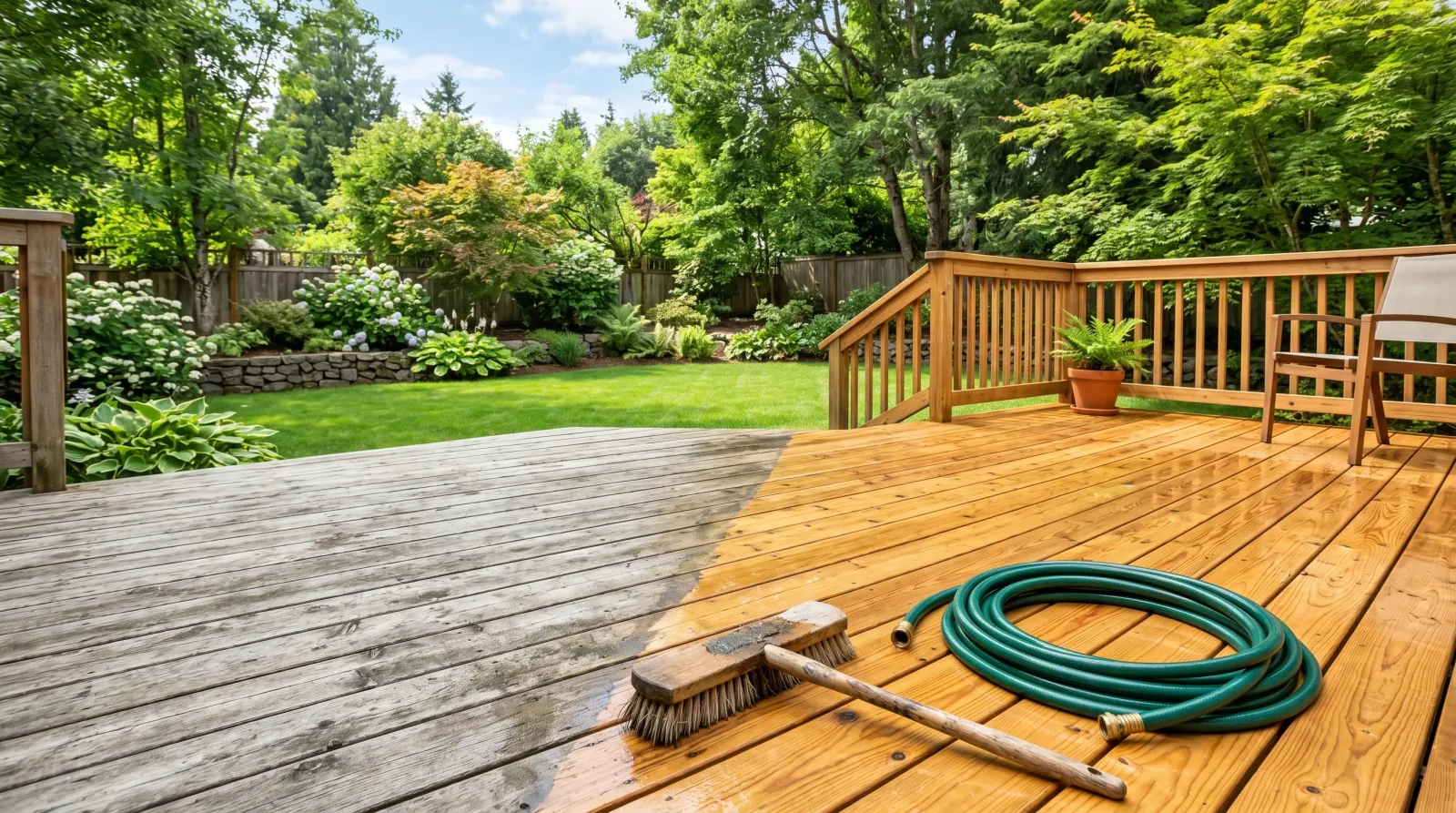
Cabot Problem-Solver Wood Cleaner
CoverageAbout 200 sq ft per diluted gallon
Dry before staining24-48 hours, longer in humidity
VOCUnder 50 g/L
Read this first
The Fast Verdict
Buy the 8002 concentrate. One gallon runs $25-35, makes up to five working gallons at about 200 sq ft each, and clears black mildew and green algae inside a single 15-to-20-minute dwell. On a previously stained or painted deck that is the cheapest route to stain-ready boards. It falls short on bare cedar and redwood, which it darkens and dulls, so the oxalic-acid brightener goes in the same cart. Skip this if you garden right up to the deck edge.
Best for
Previously stained or painted decks · Black mildew and green algae · Fence and siding prep · Composite decking and concrete · Cleaning before a recoat · Lowest cost per square foot
Skip if
Bare cedar you want bright in one pass · Planting beds right at the deck edge · Sodium hypochlorite around kids and pets · Stripping a failing solid stain · You will not buy the brightener
What it's good at
- Clearing black mildew and green algae in a single 15-to-20-minute dwell
- Beating percarbonate cleaners on speed, which need two rounds and hard scrubbing to match
- Cost per square foot — five working gallons from one $25-35 concentrate jug
- Skipping the separate bleach jug and the guessed-at mixing ratio
- Working on composite decking and concrete as well as wood, so one jug covers a mixed patio
- Prepping previously stained or painted boards, where the color side effect never shows
What it's not good at
- Bare cedar and redwood, which come out flat, greyed or muddied
- Being a one-product job — the oxalic-acid brightener is effectively required on bare wood
- Being neighborly to lawn, shrubs, fabric and some metal fasteners
- Long dwells on hot or sunny boards, where drying leaves streaks
- Lasting mildew protection — the growth returns on a damp shaded deck
- Lifting an intact coating; a failing solid stain needs the stripper instead
Same shelf, different cans
Which Problem-Solver Are You Buying?
This is where the money gets wasted. The Problem-Solver name covers three different products and two cleaner SKUs, and the shelf tag does not spell out the difference. Grab the wrong jug and you either strip a coating you wanted to keep or fail to clean at all.
Wood Cleaner — Concentrate 8002 (this review)
BaseSodium hypochlorite with sodium hydroxide
Buy it if
Default pick. Routine cleaning plus mildew and algae removal before stain. One gallon makes up to five working gallons, which is the whole value story.
Avoid if
Your job is a single fence panel and you do not want leftover concentrate sitting in the garage.
Wood Cleaner — Ready-to-Use 8007
BaseSodium hypochlorite with sodium metasilicate, pre-diluted
Buy it if
Small jobs — a few steps, one fence panel, a piece of outdoor furniture. Same chemistry, nothing to mix.
Avoid if
A whole deck. You pay about the price of the concentrate jug for one gallon of working solution instead of five.
Wood Stripper 8004
Buy it if
You are removing old solid or semi-transparent stain, or old paint, down to bare wood. Strip first, then clean, then brighten, then stain.
Avoid if
Your problem is grime, mildew or algae on an intact finish. The stripper is not the cleaner.
Wood Brightener 8003
BaseOxalic acid rinse
Buy it if
Step two after this cleaner on any bare wood. It neutralizes the raised pH and pulls the warm color back.
Avoid if
Composite decking, or boards going under a solid-color stain that hides the wood anyway.
Numbers, not adjectives
Spec Sheet
- Type
- Bleach-based exterior wood cleaner / mildew stain remover
- Coverage
- About 200 sq ft per diluted gallon
- Dilution
- Concentrate makes up to 5 gallons; 1 part concentrate to roughly 4 parts water
- Dwell time
- 15-20 minutes wet, then rinse
- Dry before staining
- 24-48 hours, longer in humidity
- VOC
- Under 50 g/L (ready-to-use listed under 0.5%)
- Surfaces
- Wood, composite decking, concrete; decks, siding, fences, outdoor furniture
- Application
- Pump sprayer or brush; hose or pressure-wash rinse
- Sheens
- N/A — surface-prep cleaner, not a finish
- Sizes
- 1-gal concentrate (8002), 1.33-gal ready-to-use (8007)
- Price
- $25-35 / gal at Lowe's and Ace; the concentrate is the value buy
Application Settings That Work
- Brush
- A pump sprayer or a stiff-bristle scrub brush is all you need. Apply, let it dwell 15 to 20 minutes without letting it dry, scrub the stubborn spots, then rinse thoroughly. A pressure washer speeds the rinse but used carelessly it furrs the wood grain, so on softwood the hose-and-brush method is the safer default.
- Thinning
- Dilute the 8002 concentrate roughly 1 part concentrate to 4 parts water — one gallon makes up to five gallons of working solution, and each diluted gallon covers about 200 sq ft. The 8007 is already at working strength, so mix nothing. No separate bleach is needed at any point; the product is the bleach.
Dwell Time and the Dry Window
Two clocks run on this job and people only watch one. The first is the dwell: 15 to 20 minutes wet, then rinse. The solution has to stay wet the whole time — if it dries on the boards before you rinse, you get streaks and uneven lightening. On a hot sunny afternoon that window shrinks fast, so work small sections and chase the shade instead of soaking a whole deck at noon in July. The second clock is longer. After the rinse the wood needs 24 to 48 hours to dry before stain goes on, and longer in humid weather. Wet fiber will not take a penetrating stain properly, so plan the cleaning for one weekend day and the staining for the next. If bare wood is involved, the brightener goes in between, which is a third stop on the same timeline.
Mid-project panic
When It Goes Wrong, and How to Fix It
Bare cedar looks flat, grey and muddy after cleaning
Why it happens. Sodium hypochlorite is alkaline. Alkaline cleaners drive the wood's pH up and pull the warm tone out of bare cedar and redwood. On previously stained boards you will not notice. On bare or freshly stripped softwood you will, and this is the product's single biggest weakness.
The fix. Follow with an oxalic-acid brightener — Cabot's Wood Brightener 8003 is the matched step-two product. It neutralizes the surface and restores the natural color. Budget for two products from the start, not one, and grab both in the same trip so you are not stopping mid-project once the dull boards appear.
Streaks and uneven lightening across the boards
Why it happens. The solution dried before it got rinsed. The dwell is 15 to 20 minutes wet, and on hot or sunny boards that window closes much sooner than the label number suggests.
The fix. Work in small sections you can rinse before they dry, and stay out of direct sun — early morning or an overcast day beats midday. Keep the surface wet through the dwell, re-wetting if it starts to flash off, then rinse thoroughly with a hose before moving to the next section.
Bleached grass and shrubs at the edge of the deck
Why it happens. The product is bleach and it behaves like bleach. It lightens fabric, can corrode some metal fasteners over time, and will lighten the lawn and planting beds around the deck if the overspray and runoff land on them.
The fix. Wet the plants and lawn down before you start and rinse them again after. Do not spray on a breezy day next to shrubs you care about. Wear gloves and eye protection — the label warns it causes eye, skin and respiratory burns. If your beds run right up to the boards, an oxygen cleaner is the safer buy.
The mildew is back the following season
Why it happens. This is a stain remover, not a mildewcide. The bleach knocks back live mold and algae on contact and lifts the staining, but it leaves no lasting protection behind. A damp, shaded deck simply regrows it.
The fix. Treat the cleaner as step one, not the whole job. Clean, brighten, let the wood dry the full 24 to 48 hours, then seal with a stain that carries a mildew-resistant additive. Keep the boards draining and the shaded areas as clear as you can.
Old solid stain or paint is still peeling after a wash
Why it happens. The cleaner is for grime and biological staining, not for lifting an intact coating. No amount of dwell time turns it into a stripper.
The fix. Use the Problem-Solver Wood Stripper 8004 to take the failing coating back to bare wood. Then run the sequence properly: strip, clean, brighten, stain. Trying to make the cleaner do a stripper's job wastes a jug and a weekend.
Side by side
Bleach Cleaner vs Oxygen Cleaner
The honest competitor is not another bleach cleaner, it is the oxygen (sodium percarbonate) cleaners sold in most deck-wash kits. They are different tools with a clean trade-off, and how black your boards are decides it.
| Cabot Problem-Solver Wood Cleaner | Oxygen / percarbonate deck cleaner | |
|---|---|---|
| Chemistry | Sodium hypochlorite — bleach — with sodium hydroxide in the concentrate | Sodium percarbonate |
| Speed on heavy black mildew | Wins. Most staining gone in one dwell and rinse | Slower. Usually needs more than one round |
| Scrubbing effort | Light — spray, dwell, spot-scrub, rinse | Falls short here. Hard scrubbing on heavy biological growth |
| Effect on bare wood color | Darkens and dulls cedar and redwood; brightener needed | Wins. Gentler on wood color, the kinder pick on bare softwood |
| Lawn, shrubs and pets | Lightens grass and shrubs unless wetted down first and rinsed after | Wins. The gentler option around planting beds, kids and pets |
| Price | $25-35 per gallon of concentrate, makes up to 5 working gallons | $15-20 per bag, mixes into more solution than you would think |
| Brightener still needed | Yes on any bare wood — that is a second product on the receipt | Paired with a separate brightener in the gentler path too |
Chemistry
Cabot Problem-Solver Wood CleanerSodium hypochlorite — bleach — with sodium hydroxide in the concentrate
Oxygen / percarbonate deck cleanerSodium percarbonate
Speed on heavy black mildew
Cabot Problem-Solver Wood CleanerWins. Most staining gone in one dwell and rinse
Oxygen / percarbonate deck cleanerSlower. Usually needs more than one round
Scrubbing effort
Cabot Problem-Solver Wood CleanerLight — spray, dwell, spot-scrub, rinse
Oxygen / percarbonate deck cleanerFalls short here. Hard scrubbing on heavy biological growth
Effect on bare wood color
Cabot Problem-Solver Wood CleanerDarkens and dulls cedar and redwood; brightener needed
Oxygen / percarbonate deck cleanerWins. Gentler on wood color, the kinder pick on bare softwood
Lawn, shrubs and pets
Cabot Problem-Solver Wood CleanerLightens grass and shrubs unless wetted down first and rinsed after
Oxygen / percarbonate deck cleanerWins. The gentler option around planting beds, kids and pets
Price
Cabot Problem-Solver Wood Cleaner$25-35 per gallon of concentrate, makes up to 5 working gallons
Oxygen / percarbonate deck cleaner$15-20 per bag, mixes into more solution than you would think
Brightener still needed
Cabot Problem-Solver Wood CleanerYes on any bare wood — that is a second product on the receipt
Oxygen / percarbonate deck cleanerPaired with a separate brightener in the gentler path too
If the deck is covered in black mildew and green algae, the bleach cleaner clears it faster and for less effort, and then you brighten. If the boards are grey and grimy rather than heavily mildewed, or your planting beds run right up to the deck edge, percarbonate plus a brightener is the gentler path and you pay for it in scrubbing time. Bleach wins on speed and biological stain removal; percarbonate wins on wood color and on your yard.
If not this one
Honest Alternatives
GO
Generic oxygen / percarbonate deck cleaner$15-20 per bag
The cheaper, gentler pick. Kinder to wood color and to your lawn, and the sensible buy for a deck that is grey-grimy rather than black-mildewed. It works slower on heavy biological growth and asks for real scrubbing, so factor in elbow grease.
CP
Cabot Problem-Solver Wood Brightener (8003)$25-30 / gal
Less an alternative than the other half of the job. The oxalic-acid rinse neutralizes the raised pH and restores the warm tone the bleach pulls out — the difference between a flat grey deck and one that takes stain the color you picked.
PS
Problem-Solver Wood Stripper (8004)Sold alongside the cleaner
The right tool when the real problem is peeling solid stain or old paint. No cleaner lifts an intact coating. Strip back to bare wood first, then clean, then brighten, then stain.
Questions people actually ask
Problem-Solver Wood Cleaner Questions, Answered
Is Cabot Problem-Solver Wood Cleaner worth it?
For cleaning a previously stained or painted deck before a recoat, yes. One gallon of the 8002 concentrate runs $25-35 and makes up to five gallons of working solution at about 200 sq ft each, and the bleach clears black mildew and green algae in a single 15-to-20-minute dwell. It is less of a bargain on bare softwood, because it darkens and dulls cedar and redwood and you have to buy the oxalic-acid brightener to fix that. If you garden right up to the deck edge, an oxygen cleaner plus a brightener is the gentler buy.
Do I need a wood brightener after Cabot Problem-Solver?
Yes, on most jobs. The cleaner is alkaline and bleach-based, so it raises the wood's pH and can leave bare cedar and redwood looking dull or darkened. Following with Cabot Wood Brightener, an oxalic-acid rinse, neutralizes the surface and restores the natural color. Skip the brightener only on composite decking or on boards you are about to coat with a solid-color stain that hides the wood anyway.
Is the concentrate or the ready-to-use version a better buy?
The concentrate (8002) is the value pick. One gallon makes up to five gallons diluted, which covers a typical 500-square-foot deck with room to spare, for about the price of a single ready-to-use jug. The ready-to-use 8007 is only worth it for a small fence panel or a few steps where you do not want leftover concentrate sitting in the garage. Buy the concentrate unless the job is genuinely tiny.
How do I dilute the concentrate?
Roughly 1 part concentrate to 4 parts water, which turns one gallon into up to five gallons of working solution. Each diluted gallon covers about 200 sq ft. You do not add your own bleach at any point — the product already is the bleach, which is one of the reasons it is simple for a once-a-year deck wash.
Can I use it without a pressure washer?
Yes. Apply with a pump sprayer or a stiff-bristle brush, let it dwell 15 to 20 minutes without letting it dry out, scrub the stubborn spots, and rinse thoroughly with a garden hose. A pressure washer speeds the rinse, but used carelessly it furrs the wood grain. For most homeowners the hose-and-brush method is safer on softwood.
How long before I can stain after cleaning?
Give the wood 24 to 48 hours to dry, and longer in humid weather. Stain will not penetrate damp fiber properly, so clean one day and stain the next rather than the same afternoon. If the boards were bare, the brightener step goes in between, which adds another rinse and another drying window to the schedule.
Will it kill the mildew or just lift the stain?
It removes the surface stain and the bleach knocks back live mold and algae on contact. It is not a long-term mildewcide, so if the deck stays damp and shaded the growth comes back. The real fix is cleaning, then sealing with a stain that has a mildew-resistant additive, and keeping the boards draining.
Will it strip old paint or solid stain?
No. The cleaner handles grime, dirt, weather grey and biological staining, not intact coatings. If a solid stain or old paint is peeling, you need the Problem-Solver Wood Stripper (8004) instead. The full order for a failing finish is strip, clean, brighten, then stain — trying to make the cleaner do a stripper's job wastes the jug.
Will it hurt my grass and plants?
It can. Bleach lightens fabric, corrodes some metal fasteners over time, and will bleach the grass and shrubs at the edge of the deck if you do not wet them down first and rinse them after. The label also warns about eye, skin and respiratory burns, so wear gloves and eye protection and avoid breezy days. If your planting beds run right up to the boards, an oxygen cleaner is the safer route.
Can I use it on composite decking and concrete?
Yes — it is rated for composite decking and concrete as well as painted, stained, unfinished and weathered wood. That makes it useful when a back patio mixes a wood deck, a composite step and a concrete pad, because one jug covers the whole zone. On composite you can also skip the brightener, since there is no wood tone to restore.
Keep exploring
We may earn a commission when you buy through the retailer link above. It never changes the score or the verdict.
Ask a Question