Product review · Backdrop · Updated June 10, 2026
Interior Semi-GlossBackdrop paint review
7.4/10Right for trim, doors, and bathroom walls; wrong for a kitchen that gets handled all day.
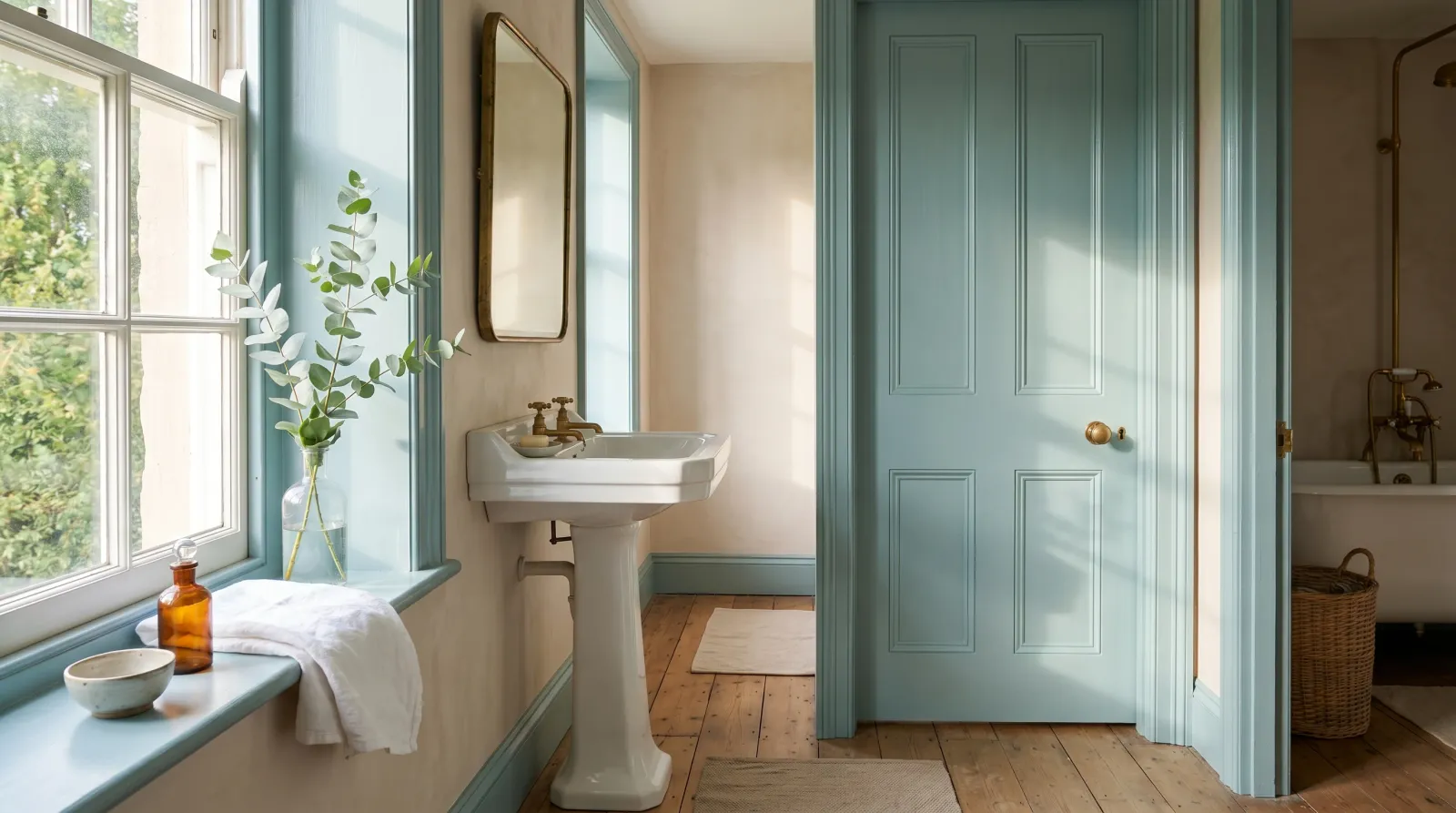
The trim-and-door half of Backdrop's deck, at a 30 percent sheen that matches your walls out of the box. It is an acrylic asked to act like an enamel, and door edges feel the difference.

Maya Patel · Reviews Editor & Product Tester · Updated June 10, 2026
Maya spent five years running comparative product testing at a consumer testing nonprofit before joining CompositePaint. She built the round-up protocol the team uses, and she brushes trim paints side by side rather than trusting a spec sheet. About the testing process →
Backdrop Interior Semi-Gloss1 sheen
CoverageUp to 400 sq ft / gal
Dry / RecoatTouch dry 60 min · recoat 3–4 hr
VOCUltra-low
Full cureRoughly 14–30 days
Sheens 6% sheen
Read this first
The Fast Verdict
Buy it if your walls are already Backdrop. One pigment system means the trim matches with no color fight, it brushes better than a mail-order paint has any right to, and the low odor is real in a small windowless bathroom. It is an acrylic, not a waterborne alkyd, so it stays softer than Advance or Emerald Urethane on a bumped door edge. At $59 a gallon with no satin in the range, value is not the argument.
Best for
Interior trim · Doors and casings · Bathroom and powder-room walls · Matching Backdrop walls · Low-odor work in tight rooms
Skip if
Kitchen cabinets · You want a satin · Value per gallon is the metric · You only need enough for one door
What it's good at
- Matching your Backdrop walls exactly — one pigment system, no trim-chip fight under store fluorescents
- Brushing cleanly for a mail-order paint, with real open time on a long baseboard run
- Low odor in a small windowless bathroom with the door shut
- Wiping clean at 30 percent sheen where the Standard finish would smear
- Drawing a clean line of light along trim profiles against a matte wall
- A resealable can that survives the dozen open-and-close cycles a trim job takes
What it's not good at
- Cured film hardness — it is an acrylic, and door edges show it
- Hiding bad prep; the sheen puts every brush mark and scratch into the light
- Kitchen cabinets, which Backdrop itself splits out into a different product
- Value per gallon against a hardware-store waterborne alkyd
- Small jobs — a half-gallon is the smallest can, so one door means overbuying
- Offering a satin, which is the sheen a lot of trim jobs actually want
Same shelf, different cans
Which Backdrop Semi-Gloss Are You Buying?
Semi-gloss now points at more than one Backdrop product, and that is where buyers go wrong. This review is the Interior Semi-Gloss. Match the line to the surface, not just the sheen number.
Backdrop Interior Semi-Gloss
BaseAcrylic
SheensAbout 30 percent
Buy it if
Interior trim, doors, and bathroom walls, in the same color as your Standard walls.
Avoid if
Kitchen cabinets that get handled every day.
Backdrop Cabinet & Door Paint
BaseBackdrop's separate cabinet formula
SheensSemi-gloss
Buy it if
Kitchen cabinets, vanities, and hard-use built-ins. It cures harder than this acrylic.
Avoid if
Wall trim, where the extra hardness buys you nothing.
Backdrop Exterior Semi-Gloss
BaseExterior acrylic
Sheens25 percent
Buy it if
Outdoor trim, doors, and fences — the resin is built for UV and weather.
Avoid if
Anything indoors.
Backdrop Standard
BaseAcrylic
Sheens6 percent
Buy it if
Interior walls, in the same color deck.
Avoid if
Trim and doors, which need the higher sheen to wipe clean.
Numbers, not adjectives
Spec Sheet
- Coverage
- Up to 400 sq ft / gal
- Sheen
- Semi-Gloss, about 30 percent — the only sheen in this line
- Resin
- Acrylic (not a waterborne alkyd)
- Dry / Recoat
- Touch dry 60 min · recoat 3–4 hr
- Full cure
- Roughly 14–30 days
- VOC
- Ultra-low; Green Wise Certified; no added formaldehyde
- Primer
- Self-priming on prepped, previously painted trim and doors; bonding primer (INSL-X Stix or Zinsser BIN) on raw, glossy, or factory-finished surfaces
- Surfaces
- Interior trim, doors, bathroom walls, prepped previously painted wood
- Colors
- About 78 curated colors, shared with the Standard wall finish
- Sizes
- Half-gallon and gallon. No quarts. Peel and Stick swatches sold separately
- Where
- Backdrop direct; Amazon; select Lowe's stores
- Price
- About $59 / gal for standard colors, $65–75 for specialty; about $48 half-gallon, plus shipping
Application Settings That Work
- Brush
- A 2.5-inch synthetic sash brush. The open time is generous enough to lay off a six-foot baseboard run without the leading edge setting up, and it levels acceptably for an acrylic. Do not go back into a section that has started to set.
- Primer
- Previously painted trim in sound condition needs a scuff sand and a clean, nothing more. Raw wood, MDF, glossy factory finishes, or anything with tannin or stain risk wants INSL-X Stix or Zinsser BIN first.
Mid-project panic
When It Goes Wrong, and How to Fix It
Brush marks and sanding scratches showing up in the finish
Why it happens. At 30 percent sheen every brush mark, every bit of dust in the film, and every scratch you did not knock down catches the light. The forgiveness you get from the 6 percent Standard finish is gone. Bad prep that hides under a matte wall jumps out on semi-gloss trim under a window.
The fix. Budget more sanding and tack-cloth time than you would for wall paint. Use a quality 2.5-inch synthetic sash brush, keep a wet edge, and lay off in one direction. Check the run under raking light before the coat sets, not the next morning.
Chips and edge wear on doors and cabinet faces
Why it happens. This is an acrylic asked to act like an enamel. Waterborne alkyds like Benjamin Moore Advance and urethane enamels like SW Emerald Urethane cure to a hard, chip-resistant film; an acrylic stays slightly softer. Window trim and door casings never notice. A door edge that gets bumped does.
The fix. Keep it on trim, casings, and bathroom walls. For cabinets, move to Backdrop's own Cabinet & Door paint or a hardware-store waterborne alkyd. No additive turns an acrylic into an alkyd, so this is a product choice, not a technique problem.
Trim near a window flashes hot and shows its texture
Why it happens. In a sunny room with low raking light, a true semi-gloss will do that, and it puts every imperfection in the substrate underneath into the light with it.
The fix. If the trim is not dead-smooth, or you are not confident in your brushwork, the sheen you want is a satin. Backdrop does not make one, so that means a second brand for that surface.
New paint peeling off a bare or slick surface
Why it happens. Self-priming is a real claim on a prepped, previously painted surface. It is not a license to skip prep on raw wood, MDF, or a glossy factory finish, where the acrylic has nothing to key into.
The fix. Scuff sand, clean, and prime — INSL-X Stix on slick surfaces, Zinsser BIN where you also need stain blocking over knots or tannin. Then topcoat.
Side by side
Backdrop Interior Semi-Gloss vs BM Advance vs a Hardware-Store Alkyd
The question here is almost never which one looks better. It is which surface you are painting and how fast you need the job done.
| Backdrop Interior Semi-Gloss | Benjamin Moore Advance | Hardware-store waterborne alkyd | |
|---|---|---|---|
| Chemistry | Acrylic | Waterborne alkyd | Waterborne alkyd — PPG Break-Through, Behr Urethane Alkyd, Glidden trim enamels |
| Cured hardness on a door edge | Softer; fine on casings, marks on a bumped edge | Harder, chip-resistant | Harder than the Backdrop acrylic |
| Leveling out of a brush | Levels acceptably; good open time on a long run | Self-levels like oil | Cures harder; leveling varies by brand |
| Color matching your walls | Automatic — same deck and pigment system as Standard | The full Benjamin Moore library, mixed at a dealer | Match it the old-fashioned way, chip against sample |
| Recoat window | 3–4 hr | 16 hr, so two coats is a two-day job | Varies; check the label |
| Where you buy it | Online, shipped; select Lowe's stores | At a Benjamin Moore dealer | At the hardware store today |
| Price per gallon | About $59, $65–75 for specialty colors | $80–95 | $40–55 |
| Where it wins | Trim and bath walls that must match Backdrop walls | Cabinets and anything that needs a hard, flat brush finish | Durability per dollar on trim and doors |
Chemistry
Backdrop Interior Semi-GlossAcrylic
Benjamin Moore AdvanceWaterborne alkyd
Hardware-store waterborne alkydWaterborne alkyd — PPG Break-Through, Behr Urethane Alkyd, Glidden trim enamels
Cured hardness on a door edge
Backdrop Interior Semi-GlossSofter; fine on casings, marks on a bumped edge
Benjamin Moore AdvanceHarder, chip-resistant
Hardware-store waterborne alkydHarder than the Backdrop acrylic
Leveling out of a brush
Backdrop Interior Semi-GlossLevels acceptably; good open time on a long run
Benjamin Moore AdvanceSelf-levels like oil
Hardware-store waterborne alkydCures harder; leveling varies by brand
Color matching your walls
Backdrop Interior Semi-GlossAutomatic — same deck and pigment system as Standard
Benjamin Moore AdvanceThe full Benjamin Moore library, mixed at a dealer
Hardware-store waterborne alkydMatch it the old-fashioned way, chip against sample
Recoat window
Backdrop Interior Semi-Gloss3–4 hr
Benjamin Moore Advance16 hr, so two coats is a two-day job
Hardware-store waterborne alkydVaries; check the label
Where you buy it
Backdrop Interior Semi-GlossOnline, shipped; select Lowe's stores
Benjamin Moore AdvanceAt a Benjamin Moore dealer
Hardware-store waterborne alkydAt the hardware store today
Price per gallon
Backdrop Interior Semi-GlossAbout $59, $65–75 for specialty colors
Benjamin Moore Advance$80–95
Hardware-store waterborne alkyd$40–55
Where it wins
Backdrop Interior Semi-GlossTrim and bath walls that must match Backdrop walls
Benjamin Moore AdvanceCabinets and anything that needs a hard, flat brush finish
Hardware-store waterborne alkydDurability per dollar on trim and doors
If the surface is trim, casings, or a bathroom wall and your walls are already Backdrop, buy this one — the free color match is worth real money and the durability gap never shows there. If the surface is a cabinet, do not pick on sheen alone: Backdrop's own Cabinet & Door paint cures harder than this acrylic, and Advance is the benchmark brush finish. If you are counting dollars, a hardware-store waterborne alkyd gives you a tougher film on trim for less.
If not this one
Honest Alternatives
AH
A hardware-store waterborne alkyd$40–55 / gal
PPG Break-Through, Behr Urethane Alkyd Enamel, or Glidden's trim enamels cure to a harder film on doors and trim for well under Backdrop's price. You give up the curated deck and the can design, and you match trim color the old-fashioned way.
BM
Benjamin Moore Advance$80–95 / gal
The default brush-and-roll cabinet and trim paint. Self-levels like oil, cleans up with water, and cures to a noticeably harder film. Costs more and wants a 16-hour recoat and a 30-day cure, so the project runs slower.
Full review →BC
Backdrop Cabinet & Door PaintAbout $89 / gal
Same color deck, same can, but a formula split out for cabinets that cures harder than this acrylic. Choose it the moment the surface is a cabinet door rather than wall trim.
Full review →Questions people actually ask
Interior Semi-Gloss Questions, Answered
Is Backdrop semi-gloss good for kitchen cabinets?
It will hold up on low-traffic cabinets, but it is an acrylic, not a hardening enamel. For a daily-driver kitchen use Backdrop's separate Cabinet & Door paint or Benjamin Moore Advance, both of which cure to a harder, more abrasion-resistant film. Keep the Interior Semi-Gloss for trim, doors, and bathroom walls.
How shiny is Backdrop's 30 percent sheen?
It is a true semi-gloss — brighter and more reflective than most eggshells, softer than a high-gloss enamel. It throws enough light to read as crisp trim and cleans well against fingerprints. Under raking light it also shows every brush mark and surface flaw, so prep matters more here than with the 6 percent Standard.
Does Backdrop semi-gloss need primer?
On previously painted trim or doors in sound condition with a light scuff sand, no — the self-priming acrylic grips fine. On raw wood, MDF, glossy factory finishes, or anything with tannin or stain risk, prime first with INSL-X Stix or Zinsser BIN. Self-priming is a claim about prepped painted surfaces, not bare or slick ones.
Is it worth it over a hardware-store trim enamel?
You are paying for the curated color deck, the doorstep delivery, and the low odor, not for a coating that beats Advance on durability. The paint brushes nicely and the color confidence is real. If you want maximum film hardness per dollar, a hardware-store waterborne alkyd wins.
Does Backdrop make a satin?
No. Interior sheens are Standard at 6 percent and Semi-Gloss at about 30 percent, with nothing between them. If your trim is not dead-smooth, or a sunny room makes semi-gloss flash hot near a window, a satin is what you want — and that means shopping another brand for that surface.
Will the semi-gloss match my Backdrop wall color?
Yes, and that is the main reason to buy it. Wall paint in Standard and trim in Semi-Gloss come from the same 78-color deck and the same pigment system, so the undertones line up. You skip the old fight of holding a trim chip against a wall sample under store lighting.
What sizes does it come in?
Half-gallon and gallon only. There is no quart, so a single door or one small window's trim means overbuying and committing more dollars than the job needs. Peel and Stick swatches are sold separately for testing the color first.
Can I buy Backdrop semi-gloss in a store?
Mostly no. It ships direct from Backdrop, there are per-color listings on Amazon, and select Lowe's stores now stock it. The in-store color selection is much narrower than the website's, so the store option is about avoiding a shipping wait rather than getting the full deck.
How long before the trim is fully hard?
Touch dry at about 60 minutes and recoatable at 3 to 4 hours, but full cure runs roughly 14 to 30 days. It is usable well before that. Just do not judge its hardness — or lean furniture against a freshly painted baseboard — in the first couple of weeks.
Keep exploring
Backdrop paint brand overviewBest paint for interior trimSatin vs semi-gloss for trim and doorsWhat semi-gloss sheen actually means
We may earn a commission when you buy through the retailer link above. It never changes the score or the verdict.
Ask a Question