Product review · Backdrop · Updated June 10, 2026
Cabinet & Door PaintBackdrop paint review
7.8/10Yes for one design-led kitchen you'll spray or brush patiently; no if you want the hardest, glassiest brush finish per dollar.
A good cabinet enamel with a great buying experience bolted on. The 30 percent sheen wipes grease off at month two — and the film stays soft enough to print a fingernail for two to four weeks.

Maya Patel · Reviews Editor & Product Tester · Updated June 10, 2026
Maya spent five years running comparative product testing at a consumer testing nonprofit before joining CompositePaint. She runs the cabinet enamels on test panels and comes back at month two with a damp rag, because that is when the differences show. About the testing process →
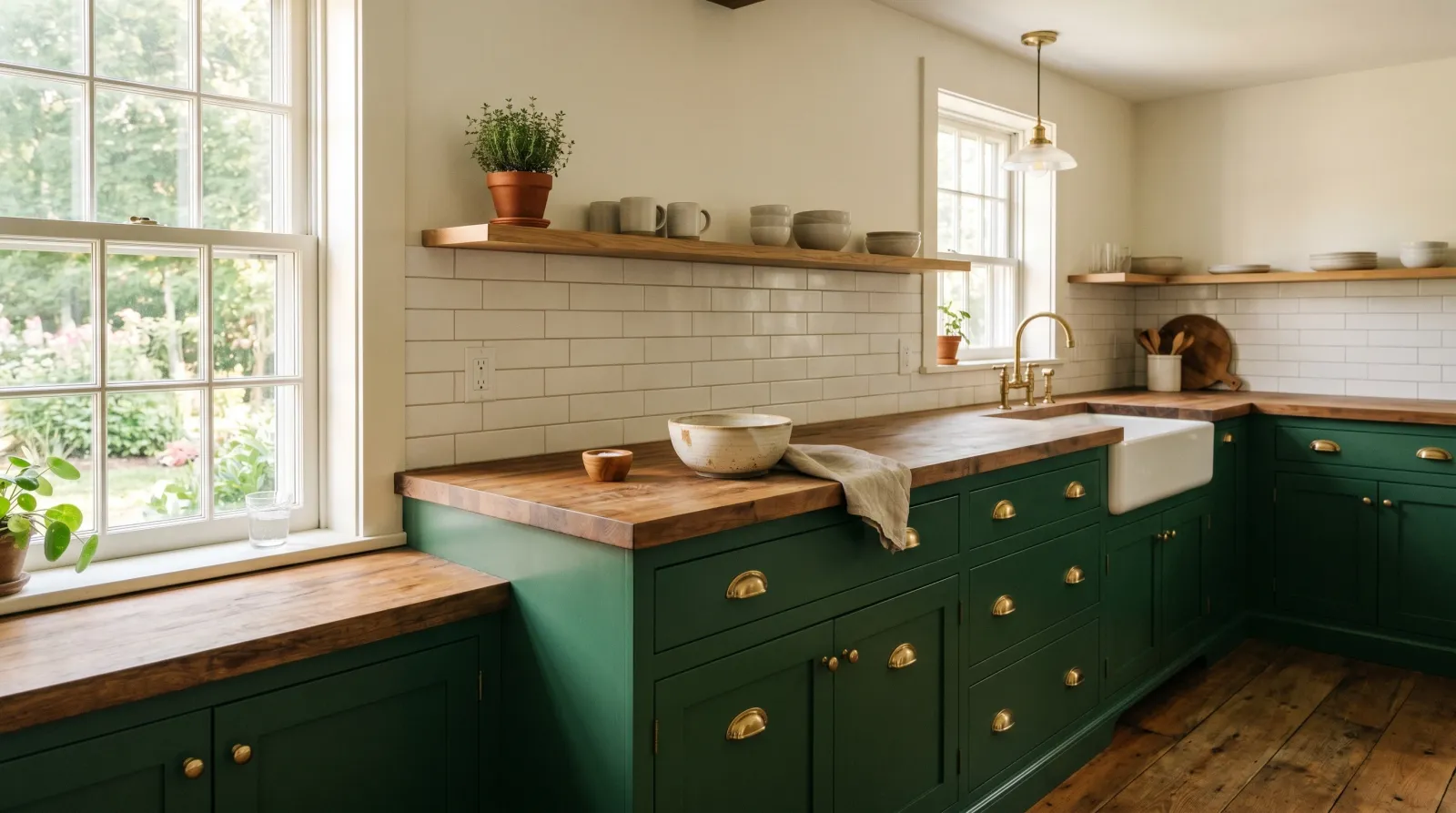
Backdrop Cabinet & Door Paint1 sheen
CoverageUp to 400 sq ft / gal
Dry / RecoatTouch dry 60 min · recoat 3–4 hr
VOCUltra-low
Full cureAbout 14–30 days
Sheens no high-gloss.
Read this first
The Fast Verdict
Buy it for one kitchen, a vanity, or a door where you have already fallen for a Backdrop color and you will spray it or brush it patiently. The 30 percent sheen genuinely washes, the odor is low enough to sleep in the house the same night, and the curated deck takes the gamble out of a $2,000 project. It is an acrylic enamel, not a waterborne alkyd, so it carries more brush texture than Advance and stays soft through a 14-to-30-day cure.
Best for
One design-led kitchen · Vanities and mudroom built-ins · Interior doors · Furniture flips · Spraying or patient brushwork · Low-odor work in a closed house
Skip if
A high-abuse family kitchen that needs the hardest film · You want a satin or high-gloss · You measure cabinet paint by cost per gallon · Running short on a Saturday would stall you
What it's good at
- Color confidence on a project where the wrong green ruins $2,000 of cabinetry
- Washability — greasy fingerprints came off a test panel at month two with a damp rag and mild soap, no ghosting, no burnish
- Genuinely low odor in a closed kitchen with the doors laid out across the room
- Skipping the primer coat on a re-repaint of previously painted cabinets
- Same-can touch-ups that blend on the semi-gloss inside the first month
- Doorstep delivery with the swatch, the roller, and the can in one order
What it's not good at
- Flowing out like an alkyd — brush texture survives under raking light
- Being ready fast; the film stays soft through a 14-to-30-day cure and prints
- Sheen choice: semi-gloss or nothing, with no satin and no high-gloss
- Rescuing you on a Saturday, because there is no counter to drive to
- Cost per gallon against INSL-X Cabinet Coat or Behr's cabinet enamel
- Bare wood, laminate, and melamine without a bonding primer first
Same shelf, different cans
Which Backdrop Are You Buying?
The wall paint and the cabinet paint can wear the same color, which is exactly where people go wrong. This review is the Cabinet & Door enamel.
Backdrop Cabinet & Door
BaseAcrylic enamel
SheensSemi-gloss, Backdrop's 30 percent
Buy it if
Cabinets, doors, vanities, built-ins, furniture, and high-touch trim.
Avoid if
Walls. You would be paying enamel money for a sheen you do not want up there.
Backdrop Standard
BaseSelf-priming acrylic
Sheens6 percent
Buy it if
Interior walls and ceilings.
Avoid if
A vanity or a cabinet. It will not take a kitchen wipe-down and it burnishes at the door pull inside a year.
Numbers, not adjectives
Spec Sheet
- Coverage
- Up to 400 sq ft / gal
- Sheen
- Semi-Gloss only, Backdrop's 30 percent. No satin, no high-gloss
- Resin
- Acrylic enamel (not a waterborne alkyd)
- Dry / Recoat
- Touch dry 60 min · recoat 3–4 hr
- Full cure
- About 14–30 days
- VOC
- Ultra-low; Green Wise Certified; made without formaldehyde
- Primer
- Self-priming on prepped, previously coated cabinets; bonding primer (INSL-X Stix, Zinsser B-I-N) on raw wood, laminate, melamine, and factory-glossy finishes
- Surfaces
- Cabinets, doors, vanities, mudroom built-ins, furniture
- Sizes
- Half-gallon, gallon, and five-gallon; Peel & Stick swatches sold separately
- Where
- Backdrop direct; a slice of the deck on Amazon
- Price
- About $55 half-gallon, $80 gallon, plus shipping
Application Settings That Work
- Brush
- A quality synthetic sash brush — a Purdy or Wooster nylon-poly blend — on the frames, and a high-density foam or microfiber mini-roller on the flats. Two thin coats. Keep a wet edge, do not overwork it, and let it tip off.
- Airless
- A fine-finish tip, thinned to Backdrop's guidance. Spraying gives the smoothest finish, full stop — doors come out close to factory if you have somewhere to lay them flat.
- HVLP
- Works well and is the practical route for a set of doors in a garage. Thin per Backdrop's guidance and lay two thin coats rather than one heavy one.
- Thinning
- Thin only for spraying, and only to Backdrop's published guidance. Brushed and rolled, it goes on as it comes out of the can.
- Primer
- Scuff sand and clean previously painted cabinets in sound shape and you can skip the primer. Raw wood, laminate, melamine, and factory-glossy doors are the failure cases — deglosser plus a bonding primer like INSL-X Stix or Zinsser B-I-N first.
The Cure Reality
Touch-dry in an hour is the easy part, and it fools people. The film keeps hardening for two to four weeks, and inside that window a fingernail or a pan edge prints the surface. Re-hang the doors after a day so the kitchen works, then leave the faces alone: no stacking, no sliding a pot onto a painted shelf, no tape on a door. On a daily-driver family kitchen those first two weeks are a discipline problem more than a paint problem. Advance has the same issue, so this is not unique to Backdrop — the marketing just does not prepare you for it.
Mid-project panic
When It Goes Wrong, and How to Fix It
Fingernail and pan-edge prints in the first two weeks
Why it happens. Touch-dry and cured are two different things. The acrylic film keeps hardening for two to four weeks, and it stays soft enough to take an impression the whole time. Most early damage complaints are week-one complaints.
The fix. Re-hang doors after a day so the kitchen is usable, then keep hands off the faces. Nothing stacked against them, nothing slid across a painted shelf, no tape. If a print shows up in week one, that is the cure, not a bad batch — and it will not repeat once the film is hard.
Brush texture visible under raking window light
Why it happens. This is an acrylic enamel, not a waterborne alkyd. The category's best brush finishes — Advance, Emerald Urethane — are alkyds that flow out almost dead-flat as they level. Backdrop levels reasonably, but it will not erase a heavy pass the way an alkyd can.
The fix. Spray if you can: HVLP or a fine-finish airless tip, thinned to Backdrop's guidance, gets doors close to factory. Brushing, use a quality synthetic sash brush on the frames and a high-density foam or microfiber mini-roller on the flats, two thin coats, wet edge, and let it tip off. Advance forgives a brush mark; this tolerates one.
New paint peels off laminate, melamine, or a glossy factory door
Why it happens. Self-priming is true on the cooperative case — a previously painted cabinet in sound shape, scuff-sanded and cleaned. It is not true on slick substrates, which are slick by design and give the film nothing to grip.
The fix. Deglosser plus a bonding primer, with INSL-X Stix as the standard pairing, then topcoat. Raw or bare wood needs priming too, or it drinks the first coat and telegraphs the grain right through your color.
You ran a half-gallon short on a Saturday afternoon
Why it happens. There is no counter to drive to. On a wall paint that is an annoyance; on cabinets, where you want to finish the run while the doors are off, a stock-out stalls the whole project for days.
The fix. Measure the door and drawer faces before you order and buy the gallon rather than two half-gallons for a full kitchen. Keep the leftover for touch-ups — same-can spot fixes blend well on this sheen inside the first month.
Side by side
Backdrop Cabinet & Door vs BM Advance vs INSL-X Cabinet Coat
Three cabinet enamels that land on the same shortlist. What separates them is resin and buying experience, not color.
| Backdrop Cabinet & Door | Benjamin Moore Advance | INSL-X Cabinet Coat | |
|---|---|---|---|
| Chemistry | Acrylic enamel | Waterborne alkyd | Waterborne acrylic-urethane enamel |
| Leveling out of a brush | Levels reasonably; slight brush texture under raking light | Flows out almost dead-flat; reads like a sprayed door | Self-leveling a notch above Backdrop |
| Cured hardness | Hard enough for normal kitchen life; softer through the long cure | The benchmark for brush-and-roll cabinets | Hard cured film |
| Color deck | Curated Backdrop deck, seen first on a Peel & Stick swatch | The full Benjamin Moore library, mixed at a dealer | Tinted at a store from Benjamin Moore's full library |
| Sheens | Semi-gloss only | Satin, semi-gloss, high-gloss | Semi-gloss cabinet enamel |
| Price per gallon | About $80 | $80–95 | $50–55 |
| How you buy it | Online only; no store to top up from | Benjamin Moore dealer | Benjamin Moore dealer |
| Where it wins | One design-led kitchen where the color decision is the hard part | Finish quality on a brushed door | Value — most of the same job for $25 to $30 less a gallon |
Chemistry
Backdrop Cabinet & DoorAcrylic enamel
Benjamin Moore AdvanceWaterborne alkyd
INSL-X Cabinet CoatWaterborne acrylic-urethane enamel
Leveling out of a brush
Backdrop Cabinet & DoorLevels reasonably; slight brush texture under raking light
Benjamin Moore AdvanceFlows out almost dead-flat; reads like a sprayed door
INSL-X Cabinet CoatSelf-leveling a notch above Backdrop
Cured hardness
Backdrop Cabinet & DoorHard enough for normal kitchen life; softer through the long cure
Benjamin Moore AdvanceThe benchmark for brush-and-roll cabinets
INSL-X Cabinet CoatHard cured film
Color deck
Backdrop Cabinet & DoorCurated Backdrop deck, seen first on a Peel & Stick swatch
Benjamin Moore AdvanceThe full Benjamin Moore library, mixed at a dealer
INSL-X Cabinet CoatTinted at a store from Benjamin Moore's full library
Sheens
Backdrop Cabinet & DoorSemi-gloss only
Benjamin Moore AdvanceSatin, semi-gloss, high-gloss
INSL-X Cabinet CoatSemi-gloss cabinet enamel
Price per gallon
Backdrop Cabinet & DoorAbout $80
Benjamin Moore Advance$80–95
INSL-X Cabinet Coat$50–55
How you buy it
Backdrop Cabinet & DoorOnline only; no store to top up from
Benjamin Moore AdvanceBenjamin Moore dealer
INSL-X Cabinet CoatBenjamin Moore dealer
Where it wins
Backdrop Cabinet & DoorOne design-led kitchen where the color decision is the hard part
Benjamin Moore AdvanceFinish quality on a brushed door
INSL-X Cabinet CoatValue — most of the same job for $25 to $30 less a gallon
If finish quality is the whole job and you are brushing, Advance wins; the alkyd flows out flatter than any acrylic will. If the buying experience is not the point, Cabinet Coat does most of what Backdrop does for $25 to $30 less a gallon. Backdrop earns its money in one case: you have already chosen a Backdrop color, you want the swatch-then-ship workflow, and you will spray the doors or brush them patiently. For a high-abuse family kitchen, buy the harder film.
If not this one
Honest Alternatives
IX
INSL-X Cabinet Coat$50–55 / gal
A pro-favorite waterborne acrylic-urethane enamel well under Backdrop's gallon price, sold through Benjamin Moore dealers. Self-leveling is a notch above Backdrop and the cured film is hard. You lose the curated deck and the doorstep delivery.
Full review →BM
Benjamin Moore Advance$80–95 / gal
The waterborne alkyd that levels like oil and reads like a sprayed door from a brush. It is the category benchmark for brush-and-roll cabinets and where Backdrop's acrylic gives up ground, with a fuller color deck and three sheens.
Full review →BC
Behr Cabinet & Trim Enamel$45–50 / gal
The Home Depot answer when you need it today and you live nowhere near a paint store. About half Backdrop's price, an acrylic-urethane that brushes fine, with a long soft cure and the standard Behr fan deck. Right for a rental, a flip, or a budget kitchen.
Full review →Questions people actually ask
Cabinet & Door Paint Questions, Answered
Does Backdrop Cabinet & Door paint need a primer?
On previously painted cabinets in good shape with a scuff sand, you can usually skip it. On raw wood, laminate, melamine, or a slick factory finish, prime first. The self-priming claim covers the easy case, not the hard one. Slick surfaces want a bonding primer like INSL-X Stix or Zinsser B-I-N, then the topcoat.
How long before I can use the cabinets normally?
Touch-dry at about 60 minutes and recoatable at 3 to 4 hours, but full cure runs roughly 14 to 30 days, and the film keeps hardening that whole time. Re-hang doors after a day, but keep fingernails and pan edges off them for the first couple of weeks or you will print the surface.
Is it a waterborne alkyd like Benjamin Moore Advance?
No. Backdrop builds it on acrylic resins rather than a waterborne alkyd, and that is the main spec difference. Advance levels harder and reads more like a sprayed factory door because the alkyd flows out further. Backdrop brushes like a premium acrylic enamel: good and washable, with a touch more brush texture under raking light.
Is Backdrop Cabinet & Door paint worth it?
Worth it for one design-led kitchen where you have already picked the color and you will spray it or brush it patiently. The 30 percent sheen wipes clean, the odor is genuinely low, and the curated deck takes the gamble out of the color. Skip it if you want the hardest brush finish per dollar or the lowest price per gallon.
Can I spray it?
Yes, through an HVLP or a fine-finish airless tip, thinned per Backdrop's guidance. Spraying gives the smoothest result on doors and is how you get closest to a factory look. Brushing and rolling works too, but plan on light texture in the film. Either way, two thin coats beat one heavy one.
Will it stick to laminate or melamine cabinets?
Not on its own. Laminate, melamine, and thermofoil are slick by design, and nothing topcoats them reliably without a bonding primer first — INSL-X Stix is the standard pairing. Factory-finished glossy doors need a deglosser plus a bonder too, or the new film peels at the first chip.
Does it come in a satin?
No. Backdrop makes semi-gloss for cabinets and nothing else — no satin for a quieter look, no high-gloss for a statement door. If your taste runs to a low satin on cabinetry, you are looking at Advance, which offers satin, semi-gloss, and high-gloss, or at Cabinet Coat instead.
Can I use Backdrop Standard on a vanity instead?
No, and if you bought a half-gallon for that, return it while the seal is intact. The 6 percent wall sheen will not take a kitchen or bathroom wipe-down the way the semi-gloss does, and it burnishes at the door pull inside a year. Same brand, two different jobs.
What size should I order for a full kitchen?
For a vanity or a single door the half-gallon is plenty. For a full kitchen, order the gallon and keep the leftover for touch-ups, because you cannot pop down to a store for a quart. Five-gallon is also available. Measure the door and drawer faces first — running short means waiting on a shipment with your doors off.
Keep exploring
Backdrop paint brand overviewBest no-sand cabinet paintsBenjamin Moore Advance reviewLatex vs acrylic cabinet paint
We may earn a commission when you buy through the retailer link above. It never changes the score or the verdict.
Ask a Question