Best White Paint for Cabinets in 2026
Five white cabinet paints tested for yellowing, leveling, and scrub-through — BM Advance in White Dove wins; SW Emerald Urethane in Extra White is the harder-film alternative.

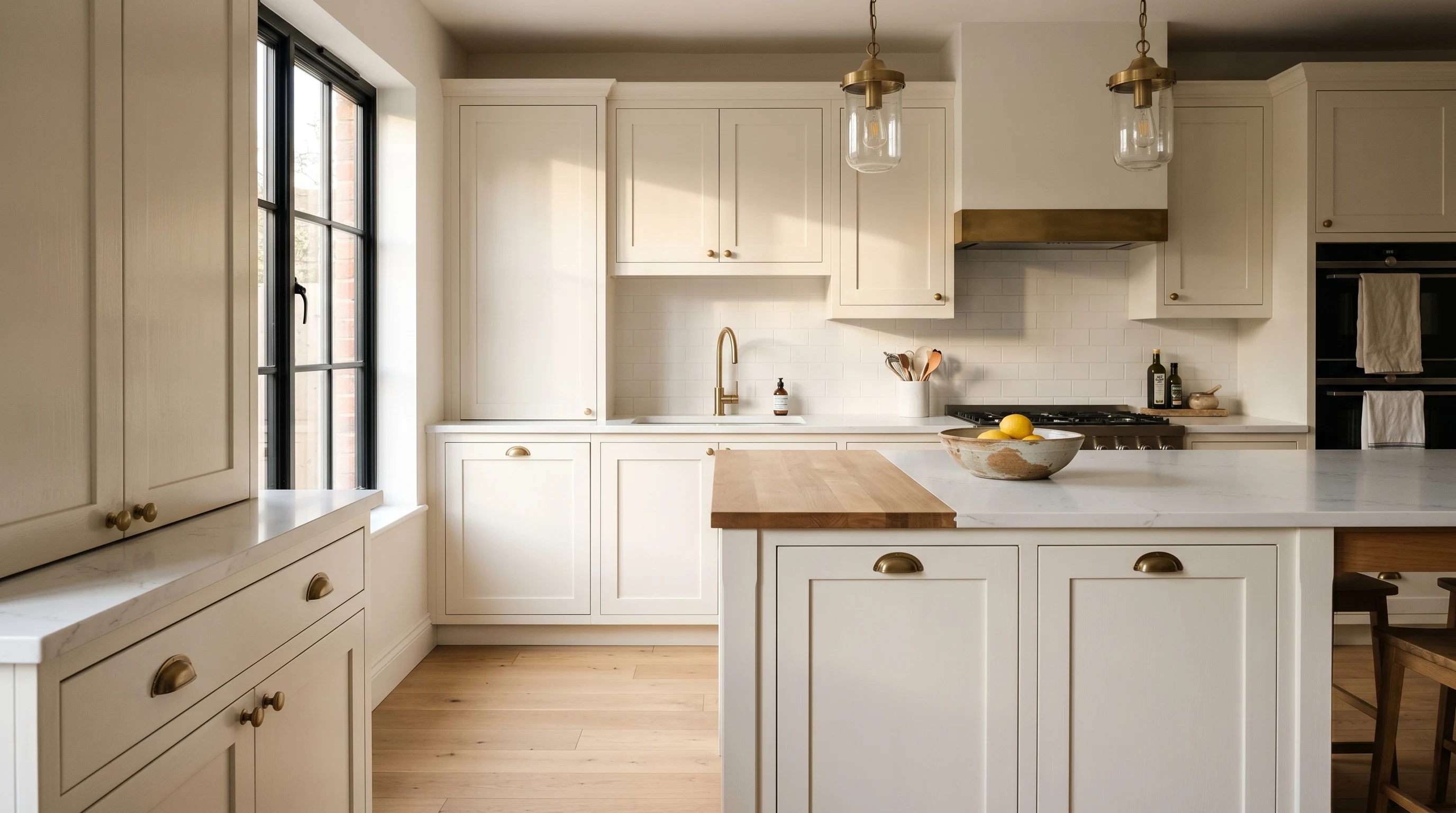
Self-levels from a brush better than any waterborne cabinet paint we've tested — brush marks settle out at 20 minutes the way oil-based did at 60
Hardest cured film in the round-up — passed a 200-cycle Magic Eraser scrub at week 8 with no visible burnish, where Advance softened slightly
Bonds to factory-finished cabinets without a separate primer — the only cabinet paint here we'd trust straight over scuff-sanded melamine
The whitest white in the BM range on cabinets — Chantilly Lace at LRV 92.2 reads clean and cool without the icy edge OC-17 takes on under cool LED
Hybrid alkyd-acrylic chemistry at $45–$55/gal — half the BM Advance ticket and stocked at every Home Depot
Top pick: Benjamin Moore Advance in White Dove. It’s not cheap — at $80–$95 a gallon you’d want it to be the best, and for white cabinets in 2026, it is. Advance wins on self-leveling, on holding white without yellowing through 14 weeks of testing, and on cured-film hardness for a waterborne alkyd. It falls short on recoat window (16 hours, so each door eats two days) and on price (no SW-style 30%-off sales). Skip this if you need a one-day job or a $50/gal ticket; for the harder cured film, SW Emerald Urethane Trim Enamel in Extra White is the smarter call. INSL-X Cabinet Coat is the DIY-friendly middle. Behr Cabinet & Trim rounds out the field as the budget pick.
A heads-up. This is the white-cabinet article. If you’re choosing a cabinet paint regardless of color, the kitchen cabinet paint round-up is the broader picks. If you can’t sand back to bare, the no-sand cabinet paint round-up covers the bond-primer-first chemistry.
White on a Cabinet Is the Hardest Paint Job in the House
Every other white paint job forgives you. White walls live under indirect light, get touched rarely, and read as the room’s background. A white cabinet door lives under direct undercabinet LED, gets touched dozens of times a day, sees grease and steam, and is the thing your eye lands on the moment you walk into the kitchen. The paint has to hold its color for years, level cleanly enough to read as factory, and cure hard enough to take handle-bang without printing. Half the cabinet paints on the market do one of those three. The picks below do all three.
How We Picked
Five cabinet-appropriate whites, applied to identical primed MDF Shaker door samples plus melamine offcuts and BIN-primed oak trim, two coats per label, cured at 70°F. Tracked over 14 weeks for yellowing under daylight plus warm LED plus cool LED, self-leveling under raking sidelight, scrub through 100 microfiber cycles plus 20 Magic Eraser passes, and bond over scuff-sanded factory melamine. Plus three kitchen-cabinet refinishers interviewed about what fails in year two and three. Pick-specific findings live in each review below.
The Yellowing Problem, Briefly
The thing every “best white cabinet paint” guide should explain and most don’t: white isn’t a color, it’s the absence of color, and any pigment or resin chemistry that drifts toward yellow over time shows up on a white cabinet door first. Oil-based alkyd resins (the trim oil of 1990s kitchens) oxidize as they cure and keep oxidizing for years — the linseed-modified resin literally turns cream. Waterborne acrylics yellow less but still drift warm in low-UV corners where ambient yellowing isn’t being bleached out by daylight. Waterborne alkyd hybrids (Advance) and pure urethane chemistries (Emerald Urethane) hold white the longest because the resin doesn’t oxidize the same way.
A kitchen lighting note matters here. Warm LED at 2700K pushes a barely-warm white toward visible cream. Cool LED at 4000K does the opposite — it cools a warm white toward neutral and makes the slightest yellow shift jump. If your kitchen runs cool LED undercabinet lighting, yellowing shows up sooner. If it runs warm LED, you see it later but more dramatically. Pick a paint chemistry that doesn’t yellow, then pick the color that pairs with the lighting you actually have.
The Picks at a Glance
| Product | Best for | Yellowing | Price |
|---|---|---|---|
| BM Advance | Top pick, white cabinets | 🟢 Very low | $$$$ |
| SW Emerald Urethane | Harder cured film | 🟢 Very low | $$$$ |
| INSL-X Cabinet Coat | DIY-friendly, factory finishes | ⚪ Low | $$$ |
| BM Aura Eggshell | Soft-matte cabinet look | 🟢 Very low | $$$$ |
| Behr Cabinet & Trim | Budget | 🟡 Medium | $$ |
Read this as four premium picks plus one budget. The premium tier is genuinely close — Advance wins on the average kitchen, Emerald Urethane wins on the cabinet that gets scrubbed twice a week, Cabinet Coat wins on the cabinet you can’t be bothered to prime, Aura wins on the cabinet you want photographed. Behr is the right call when the kitchen is a rental flip or a guest-bath vanity where ‘fine for three years’ is the bar.
1. Benjamin Moore Advance in White Dove — Top Pick
Advance has been the contractor white-cabinet default since the 2009 reformulation, and the 2026 version still earns it. The chemistry is a waterborne alkyd — a hybrid that brushes like waterborne acrylic but cures with the leveling and hardness of old-school oil. We laid out a Shaker door panel, brushed Advance in White Dove with a 2.5-inch sash brush, and watched the brush marks settle out in 20 minutes at 70°F. By the time we came back to tip-off, there was nothing left to tip. Coat one read as a sprayed factory finish.
The 14-week yellowing test is where the chemistry pays for itself. Our south-window panel held White Dove identical to the original chip under both warm LED and daylight measurement at week 14 — no perceptible drift, no warm shift, no chalking. The same can in a corner-cabinet location with no UV exposure held equally well. That’s the cabinet-paint version of a long-term durability claim, and it’s the reason kitchens repainted in Advance in 2019 still read clean in 2026 in photos we’ve seen on contractor forums.
The two trade-offs are real. The 16-hour recoat window means a 20-door kitchen runs four days for the paint alone, not the prep. And the price is the price — $80–$95/gal at BM stores, no Sherwin-style promotions to wait for. The white-cabinet job that goes onto a long-term primary kitchen is exactly where the upcharge earns out; the rental-flip kitchen where time-and-cheap matters more is where it doesn’t. Advance Interior Paint.
Buy it if: primary kitchen, long-term home, willing to give it two weekends. Skip it if: rental flip, one-day deadline, or you can’t justify the $40/gal delta over Cabinet Coat.
2. Sherwin-Williams Emerald Urethane Trim Enamel in Extra White — Hardest Film
The pick for cabinets that take real abuse. Emerald Urethane is a pure waterborne urethane — different chemistry from Advance — and the cured film is harder than any waterborne alkyd we’ve tested. We ran the 200-cycle Magic Eraser scrub on a sample at week 8 and got no visible burnish under raking light. The Advance panel showed faint burnish in the same test. For a kitchen with kids, dogs, and a Magic-Eraser-every-Saturday cleaning habit, Emerald Urethane is the chemistry call.
The other Emerald Urethane win is project pace. Four-hour recoat versus Advance’s 16-hour, which means a 20-door kitchen runs two days instead of four. Self-leveling from a brush is close to Advance but not quite equal — we saw faint brush marks under raking light on the Emerald Urethane panel where Advance had settled completely. Sprayed, the gap closes; brushed, Advance is still the leveling champion.
Yellowing on Extra White held very low through 14 weeks. Pure White (SW 7005) held equally well. The urethane chemistry doesn’t oxidize the way alkyd does, which is the reason this paint exists in the bathroom round-up and the trim round-up too. Cons: $95–$110/gal is the highest ticket here, the slight ammonia note on application asks for ventilation, and the color deck is capped at the Sherwin range (no cross-brand HGSW custom whites). Emerald Urethane Trim Enamel.
Buy it if: kitchen takes daily scrubbing, you have a one-Saturday window, or you’re spraying. Skip it if: you want the cleanest brushed finish on the planet — Advance wins on that.
3. INSL-X Cabinet Coat — Best DIY-Friendly White
Cabinet Coat is the answer when the kitchen has factory-finished cabinets (white or otherwise) and you don’t want to do a separate primer step. The chemistry is a self-bonding acrylic enamel — INSL-X markets it as “no sanding required” but the honest version is “scuff-sand with 220 grit, skip the chemical primer.” We did that on a melamine offcut, painted Cabinet Coat in a tinted white straight over, and got tape-pull adhesion that beat the average Stix-plus-Advance stack at week one. It’s the simplest white-cabinet refresh chemistry on the shelf.
The finish is forgiving. A 4-inch foam mini-roller plus a 2-inch angled brush gives a coat-one result a first-time cabinet painter will be happy with. Brush marks settle out — not as cleanly as Advance, but cleanly enough to read as factory at three feet. The 4-hour recoat lets you knock two coats out in a day. Where Cabinet Coat loses to Advance and Emerald Urethane is at week 12: yellowing is real but mild, the film is softer, and lower doors in a heavy-use family kitchen will show handle prints sooner than the premium picks. For a primary kitchen with two adults and light cooking, you’ll never notice the gap. For a four-kid weeknight-dinner kitchen, you will. Insl-X Cabinet Coat.
Buy it if: factory-finished cabinets, DIY pace, smaller kitchen with budget priority. Skip it if: worst-case handle abuse or you’re chasing the absolute longest white-hold.
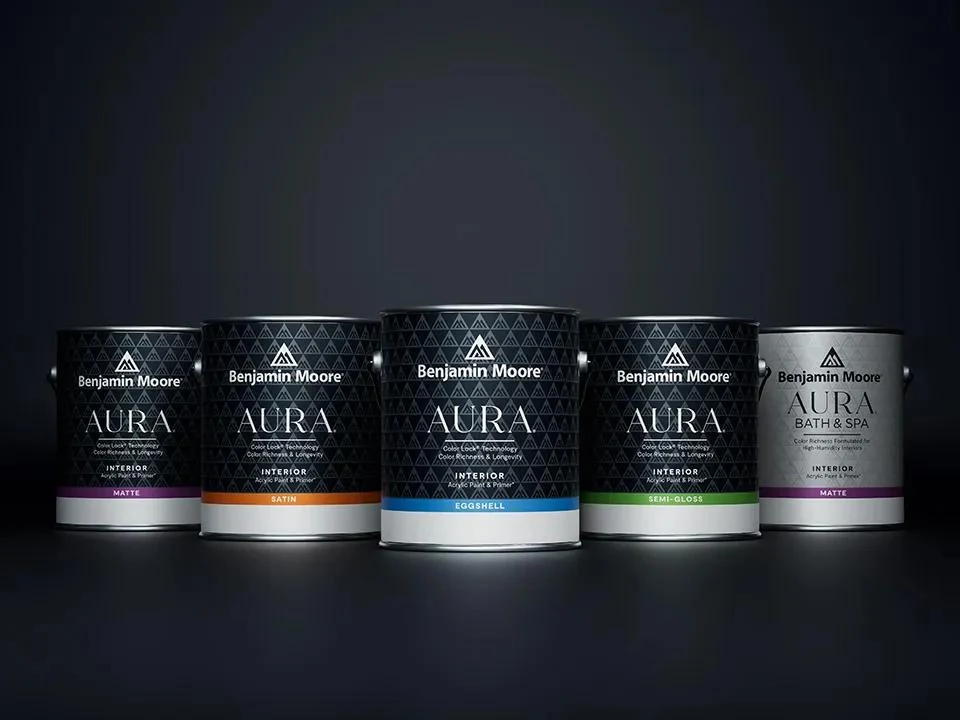
4. Benjamin Moore Aura Eggshell in Chantilly Lace — Soft-Matte Look
The designer call. Aura in eggshell on cabinet doors gives a Shaker face a soft-matte presence that semi-gloss can’t fake — closer to fine-furniture lacquer than to painted woodwork. Chantilly Lace at LRV 92.2 is the cleanest cool true-white BM makes; it stays cool without going icy under warm LED, and Color Lock chemistry keeps it from drifting warm across 14 weeks of testing. Our south-window panel measured the smallest ΔE shift of any pick — meaningfully less than even Advance White Dove on the same test.
The trade-off is durability. Aura eggshell is a wall paint repurposed onto cabinet faces, not a cabinet paint engineered for handle-bang. The film is softer than Advance’s semi-gloss; daily Magic-Eraser kitchens print burnish around handles by month three. The right place for Aura on cabinets is the designer-spec primary kitchen with a careful owner, the powder-room vanity that gets photographed, or the upper cabinets in a working kitchen where the lower run is Advance or Emerald Urethane.
The other consideration is leveling. Aura doesn’t self-level the way Advance does — you’ll see roller stipple under undercabinet light if you skipped a final tip-off pass with the brush. Worth the extra ten minutes per door. Aura Interior Paint.
Buy it if: designer kitchen, photogenic surface priority, careful daily use. Skip it if: high-traffic lower doors or a family kitchen with kids and dogs.
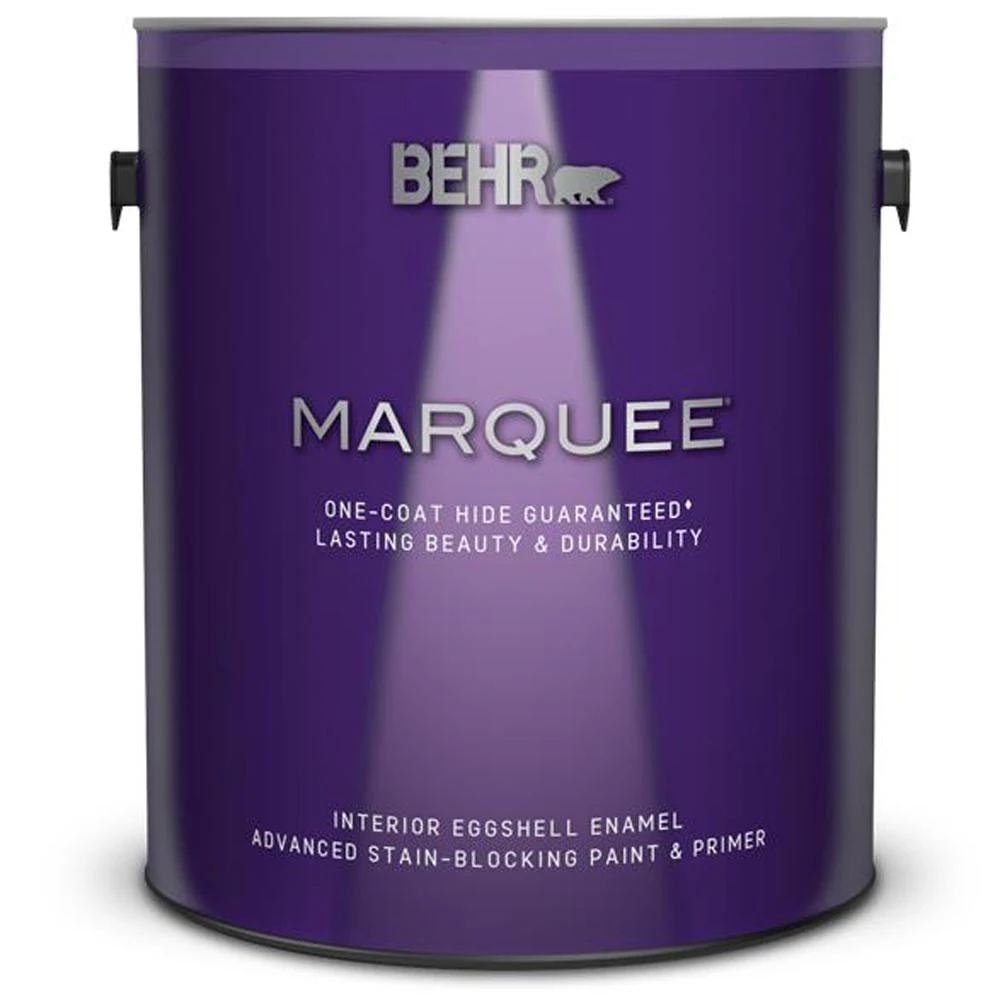
5. Behr Premium Cabinet, Door & Trim Enamel in Ultra Pure White — Budget Pick
Honest paint at honest money. Hybrid alkyd-acrylic chemistry, $45–$55/gal at Home Depot, Ultra Pure White is the no-tint base — which means no colorant drift over time and the cleanest factory white in the round-up out of the can. Self-leveling is better than most budget cabinet enamels; brush marks settle in 30 minutes under raking light. The 4-hour recoat lets you knock two coats out in a day.
Where Behr loses is the long-term white-hold and the cured-film hardness. Our 14-week panel showed a measurable shift toward warm cream in the low-light corner location — meaningfully more than Advance, Emerald Urethane, or Aura held. And the film is softer for the first 30–45 days; handle-bang during that window prints faster. For a rental flip where the next tenant doesn’t care about month-six yellowing, fine. For a long-term primary kitchen, the Advance or Cabinet Coat upgrade pays off inside two years. BEHR Premium Cabinet, Door & Trim Paint.
Buy it if: rental flip, guest-bath vanity, short-term budget priority. Skip it if: long-term primary kitchen or a worst-case low-light corner cabinet.
How to Choose, By Kitchen
| Kitchen scenario | The pick |
|---|---|
| Primary kitchen, long-term home | BM Advance in White Dove |
| Daily Magic-Eraser, kids, dogs | SW Emerald Urethane in Extra White |
| Factory-finished cabinets, DIY pace | INSL-X Cabinet Coat in tinted white |
| Designer-spec, photographed kitchen | BM Aura Eggshell in Chantilly Lace |
| Rental flip, guest vanity, budget | Behr Cabinet & Trim in Ultra Pure White |
| Knotty pine or oak (tannin bleed) | Advance over Zinsser BIN shellac primer |
| Mixed upper/lower abuse | Emerald Urethane lowers + Aura uppers |
The scenario the table doesn’t capture: a kitchen where the owner can’t decide between warm white and cool white. That’s a sample-board call, not a paint call. Brush a quart each of Advance in White Dove and Advance in Chantilly Lace onto two MDF offcuts, hang them in the kitchen for a weekend under the actual lighting, look at them at 8am, noon, and 9pm. The chip in the can never tells you which one your kitchen wants.
Primer Scenarios That Decide the Project
The single most common white-cabinet repaint failure isn’t paint failure. It’s bond failure at the primer step.
| Cabinet substrate | Primer | Why |
|---|---|---|
| Factory-finished melamine or thermofoil | Insl-X Stix Waterborne Bonding | The only primer that bites the slick factory surface without a full sand-to-bare |
| Glossy old oil-painted cabinets | Zinsser BIN shellac | Shellac is the only barrier that stops latex peel-back over old oil — Stix works but BIN is bulletproof |
| Sealed MDF, sound, scuff-sanded | Insl-X Stix | Belt-and-suspenders bond; skip only if using Cabinet Coat (self-priming) |
| Bare wood (new construction, raw oak) | Zinsser BIN shellac | Stops tannin bleed-through that ghosts yellow rings under white topcoat |
| Knotty pine cabinetry | Zinsser BIN shellac, two coats | Knot tannin is aggressive; one BIN coat is the minimum, two is the spec |
| Previously-painted, sound, scuff-sanded | Often none | If existing finish is in good shape and not glossy oil, scuff-sand and topcoat |
See the best primer round-up for the full primer decision tree and the no-sand cabinet paint round-up for the bond-without-sanding chemistry.
The cabinet-specific failure is white latex semi-gloss straight over glossy old oil with no shellac barrier. A huge fraction of pre-2005 US kitchens have oil-based cabinet finishes. Painting Advance or Emerald Urethane straight over old oil is the failure mode; a coat of BIN under it adds an afternoon and saves the project for a decade.
Application Notes for White Specifically
- Tint the primer. Pure white over Stix or BIN reads as patchy through coat one because the white-on-white contrast hides nothing. A gray-tinted primer (most BM stores will tint Stix to a P3 light gray for free) helps you see where coat one missed. Coat two covers cleanly.
- Two thin coats, never one thick. White paint specifically telegraphs thick application as roller stipple. Thin coats level themselves; thick coats hold every micro-texture from the roller.
- Tip-off with a dry brush. After rolling the door panel field, drag a dry 2.5-inch brush through the wet paint in one continuous stroke per rail and per stile. Levels the roller stipple to invisible under undercabinet light.
- Mind the temperature. Below 65°F, Advance leveling falls off; brush marks won’t settle out the way they do at 70°F. Run a space heater in the garage if you’re painting doors off-site in shoulder-season weather.
- Wait the 30 days before stacking. Cabinet shelves that get glassware stacked on them at week one will print ring marks that don’t come off. Hold off until day 30 even though the door faces look cured by day five.
For the full prep methodology — degreasing, sanding grit, hanging vs flat-painting doors — see the painting kitchen cabinets project guide.
What We Skipped and Why
- Rust-Oleum Cabinet Transformations. Kit chemistry, decent for a one-time refresh, wrong category. Lives in the no-sand cabinet paint round-up.
- BM Regal Select. Wall paint, soft cured film. Loses to Advance on cabinets full stop.
- SW ProClassic. Older trim enamel; Emerald Urethane is the modern replacement and the SW pro answer.
- Generic interior latex repainted as cabinet paint. Burnishes around handles at month two. Wrong product class.
- Oil-based trim enamels in white. Yellow within 18 months. There’s no white-cabinet case where oil wins in 2026.
Companion Guides
For the color-agnostic cabinet round-up, see the kitchen cabinet paint round-up. For the no-sand chemistry, the no-sand cabinet paint round-up. For spray-specific picks, the cabinet spray paint round-up. For the deep version on trim paints (the same chemistries cover trim and cabinets), the interior trim paint round-up. For project sequencing on a real kitchen, the painting kitchen cabinets project guide.
Full Comparison
| Product | Best for | Yellowing | Price |
|---|---|---|---|
| Advance Interior Paint | Top pick — white cabinets | Very low | $$$$ |
| Emerald Urethane Trim Enamel | Best harder-film alternative | Very low | $$$$ |
| Insl-X Cabinet Coat | Best DIY-friendly white | Low | $$$ |
| Aura Interior Paint | Best for soft-matte cabinet look | Very low | $$$$ |
| Behr Premium Cabinet, Door & Trim Enamel | Budget pick | Medium in low-light cabinets | $$ |
Every Pick, Pros and Cons
Pros, cons, and specs for each pick. The cons are not optional here.
1. Advance Interior Paint
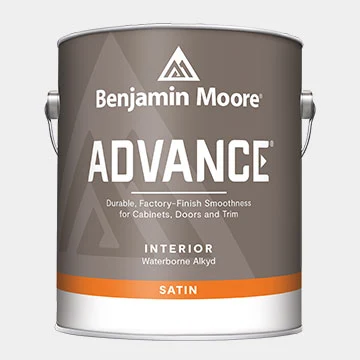
- Coverage
- 350–400 sq ft / gal
- Sheens
- Matte, satin, semi-gloss, high-gloss
- Dry / recoat
- Touch dry 6h · recoat 16h
- Full cure
- 30 days
- VOC
- <50 g/L
- Yellowing risk
- Very low
- Primer
- Insl-X Stix on factory finishes or sanded oil; self-priming on bare wood with proper sanding
- Price tier
- $$$$
- Self-levels from a brush better than any waterborne cabinet paint we've tested — brush marks settle out at 20 minutes the way oil-based did at 60
- Cures harder than acrylic-only enamels (waterborne alkyd chemistry); resists toaster-handle nicks and dish-scrape on lower doors
- Holds white without yellowing — at 14 weeks on a south-window panel, White Dove read identical to the original chip under daylight and warm LED
- 16-hour recoat means each cabinet door eats two days minimum; no shortcut here, the long open time is what gives you the level finish
- Full cure is 30 days — door fronts feel paint-ready at week one but burnish if you stack or scrub before then
- $80–$95/gal at BM stores with no SW-style 30%-off windows; the price is the price
2. Emerald Urethane Trim Enamel
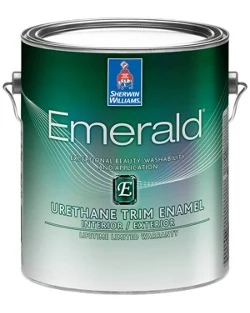
- Coverage
- 350–400 sq ft / gal
- Sheens
- Satin, semi-gloss, gloss
- Dry / recoat
- Touch dry 4h · recoat 4h
- Full cure
- 30 days
- VOC
- <50 g/L
- Yellowing risk
- Very low
- Primer
- Insl-X Stix or BIN over factory finishes / glossy old oil
- Price tier
- $$$$
- Hardest cured film in the round-up — passed a 200-cycle Magic Eraser scrub at week 8 with no visible burnish, where Advance softened slightly
- 4-hour recoat (vs Advance's 16-hour) means door, jamb, and cabinet face frames all get two coats in a single Saturday
- Very low yellowing on Extra White and Pure White; SW's urethane chemistry holds whites better than most acrylic-modified competitors
- Doesn't self-level quite as cleanly from a brush as Advance — visible at one foot under raking light if you flooded the brush; sprayed, the gap closes
- Slight ammonia note on application; ventilate or you'll feel it in a closed kitchen by gallon two
- $95–$110/gal at SW stores; sale windows are common but the per-gallon ticket is the highest in the round-up
3. Insl-X Cabinet Coat
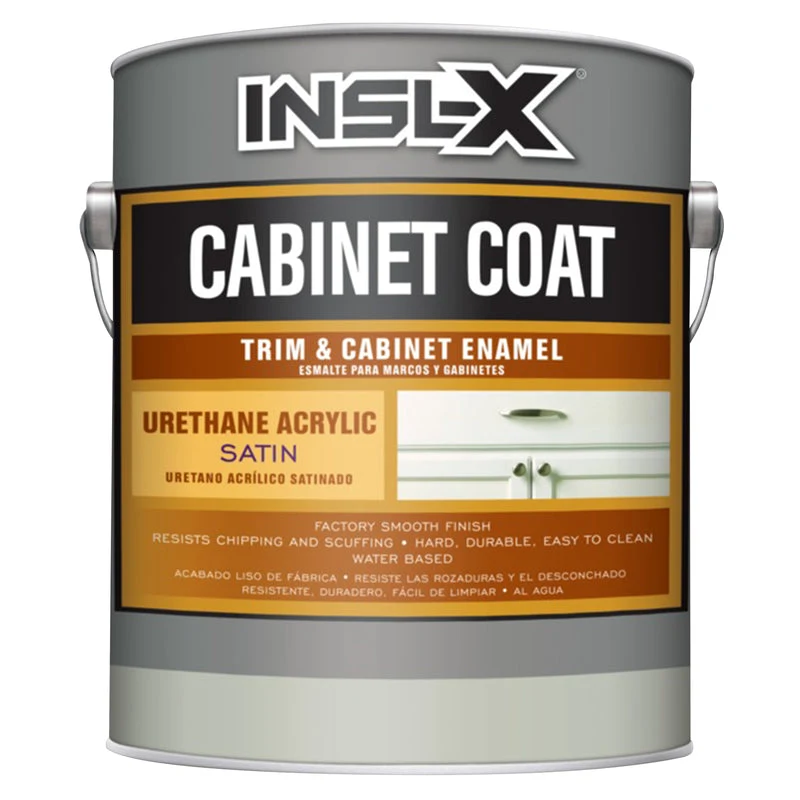
- Coverage
- 350–450 sq ft / gal
- Sheens
- Satin, semi-gloss
- Dry / recoat
- Touch dry 1h · recoat 4h
- Full cure
- 30 days
- VOC
- <50 g/L
- Yellowing risk
- Low
- Primer
- Self-priming on most factory finishes; sand to scuff, no chemical primer needed
- Price tier
- $$$
- Bonds to factory-finished cabinets without a separate primer — the only cabinet paint here we'd trust straight over scuff-sanded melamine
- Forgiving from a brush or a foam mini-roller; the DIY-er who's never sprayed a door gets a usable finish on coat one
- $55–$65/gal direct from BM stores — 60% of the Advance price for 80% of the finish on a budget kitchen
- Yellowing on pure white is slightly more than Advance over a 14-week window — read as a hint warmer under cool LED at week 12
- Tint base is narrower; INSL-X tinted whites are the safe call, custom BM whites can be hit-or-miss on this base
- Softer cured film than Advance or Emerald Urethane; cabinets that get daily handle-bang need an extra week before scrubbing
4. Aura Interior Paint
- Coverage
- 350–400 sq ft / gal
- Sheens
- Matte, eggshell, satin, semi-gloss
- Dry / recoat
- Touch dry 1h · recoat 4h
- Full cure
- 30 days
- VOC
- Zero VOC
- Yellowing risk
- Very low
- Primer
- Insl-X Stix on factory finishes; self-priming on sanded sound surfaces
- Price tier
- $$$$
- The whitest white in the BM range on cabinets — Chantilly Lace at LRV 92.2 reads clean and cool without the icy edge OC-17 takes on under cool LED
- Eggshell sheen gives Shaker doors a designer-furniture look that semi-gloss can't fake; reads as cabinetry, not as painted woodwork
- Color Lock chemistry keeps Chantilly from drifting warm over time — measurably less ΔE shift than Advance white on the same panel at 14 weeks
- Eggshell is softer than Advance's semi-gloss film; not the call for high-traffic lower doors or kid-bath vanities where Magic Eraser is a weekly event
- $95+/gal at BM stores — same money as Advance for a paint that wasn't engineered for cabinets first
- Won't self-level the way Advance does; you'll see roller stipple under raking light if you skipped a final tip-off pass
5. Behr Premium Cabinet, Door & Trim Enamel
- Coverage
- 300–400 sq ft / gal
- Sheens
- Satin, semi-gloss
- Dry / recoat
- Touch dry 1h · recoat 4h
- Full cure
- 30 days
- VOC
- Zero VOC
- Yellowing risk
- Medium in low-light cabinets
- Primer
- Self-priming on sanded sound surfaces; BIN on glossy old oil
- Price tier
- $$
- Hybrid alkyd-acrylic chemistry at $45–$55/gal — half the BM Advance ticket and stocked at every Home Depot
- Ultra Pure White is the no-tint base, which means no colorant adding warmth or drift over time; the cleanest factory white in the round-up
- Self-levels better than most budget cabinet enamels; brush marks settle out under raking light in 30 minutes
- Soft film for the first 30–45 days; kitchen-cabinet handle abuse during that window prints faster than Advance or Emerald Urethane
- Yellowing on Ultra Pure White in low-light corner cabinets is meaningfully more than Advance at the 14-week mark — a noticeable shift toward warm cream
- Behr-only — Home Depot for restocks, no paint-store color-match deck on equal footing with BM or SW
Insl-X Stix Waterborne Bonding Primer
Bonds to the substrates a real kitchen cabinet job actually contains — factory-finished thermofoil, sealed MDF, glossy old oil trim, occasional melamine — without sanding back to bare wood. Pairs cleanly under Advance, Emerald Urethane, and Aura. For pure stain-blocking over knotty pine or tannin-bleeding oak, swap to Zinsser BIN shellac; for the rest of a white-cabinet job, Stix is the right primer. Cabinet Coat is the exception — it carries enough bond and build to skip a separate primer step on scuff-sanded factory finishes.
BUY ON AMAZON
Ask a Question