Best Spray Paint for Wood Furniture
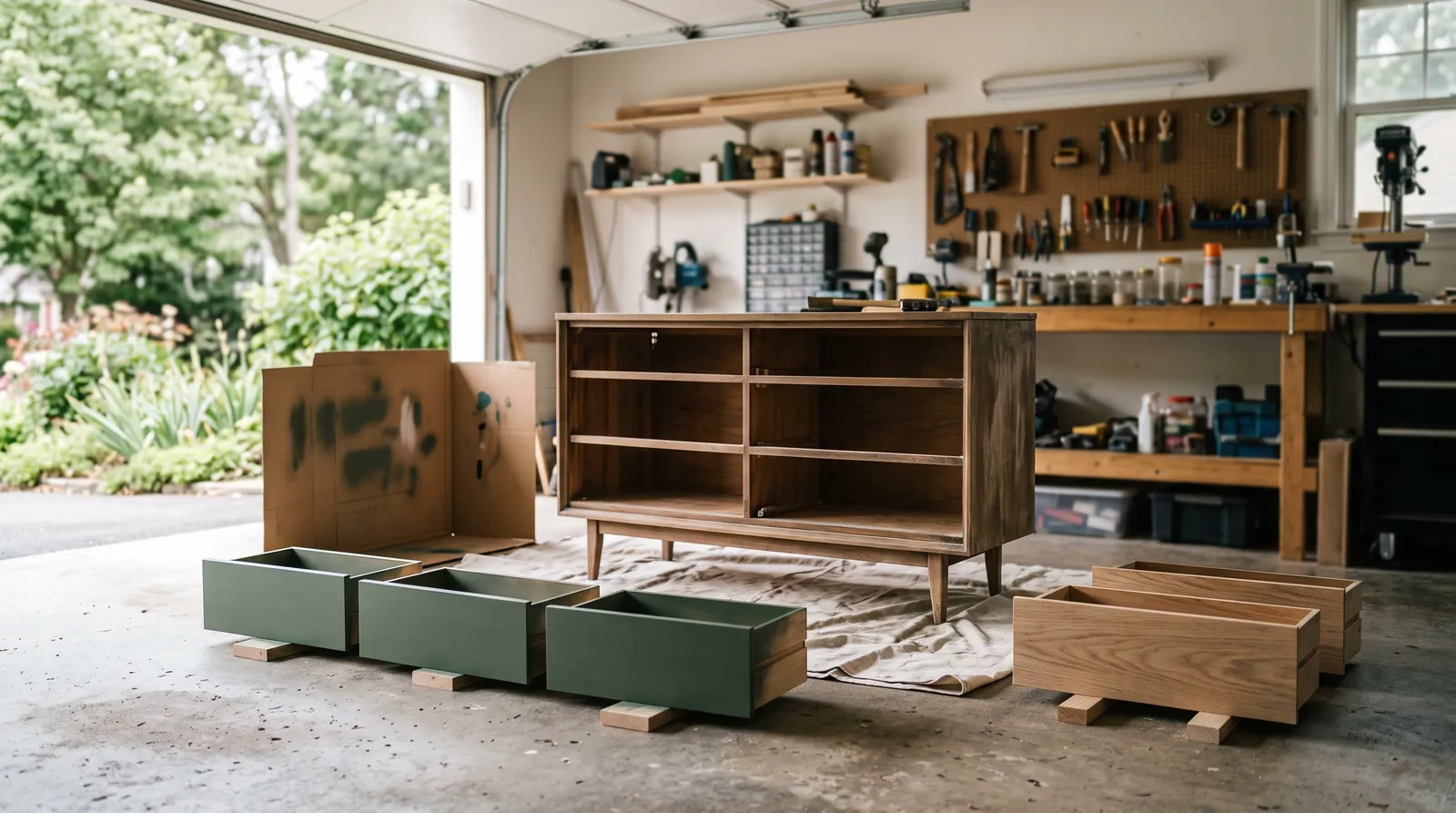
Six aerosols sprayed on oak, pine, and poplar test doors and a real thrifted dresser. Top pick: Rust-Oleum Universal All Surface for the trigger, the fan, and the film.

Comfort trigger sprays a wide fan with a full-hand pull instead of a fingertip button, which is the single biggest reason its drawer fronts came out stripe-free where button cans left banding
$6–$8 a can at every home center, which puts a two-coat nightstand under $15 in paint
Dry to touch in 10 minutes or less, which turned a small side table into three coats and a topcoat between breakfast and dinner
Dead-flat velvet finish that hides the milling marks and light dents a satin enamel would spotlight; the reason it wins on old pine and thrifted oak
The strongest no-sand adhesion in the round-up; it stuck to a glossy factory-lacquered nightstand side that Painter's Touch peeled off in a tape pull
Water-based and non-yellowing, which is why it's the only clear that belongs over a white or pale-sage painted dresser
Disclosure: Some links below are affiliate links. We earn a commission if you buy through them, at no extra cost to you. Picks are based on the criteria in “How I Picked”. No brand pays for placement.
Top pick: Rust-Oleum Universal All Surface. At $11 to $14 a can it’s the most expensive general-purpose aerosol in this round-up, and on a six-drawer oak dresser it earned the gap. Universal wins on the comfort trigger, the wide fan, and a film that took 200 denatured-alcohol double rubs at seven days where the budget cans burned through around 120. It falls short on color range and on price per square foot, which is where Rust-Oleum Painter’s Touch 2X Ultra Cover comes in at $6 to $8 with well over a hundred colors. If you need a same-day turnaround, Krylon COLORmaxx dries to touch in ten minutes. For a flat vintage look on old pine, Rust-Oleum Chalked Ultra Matte. For a glossy factory finish you can’t sand, or anything living outdoors, Krylon Fusion All-In-One. Over all of them on a tabletop, Minwax Polycrylic aerosol.
Skip this whole page if your piece is a slab-front IKEA cabinet. Spray earns its money on shapes a brush can’t reach.
What Actually Separates These Cans
Every can on this list claims paint and primer in one, dries to touch in twenty minutes, and covers in two coats. Those numbers cluster so tightly that they stop being a decision.
Three things do separate them. The first is the delivery mechanism. A fingertip button and a 3-inch fan is a different tool from a full-hand trigger and a 5-inch fan, and after forty minutes on a dresser your finger tells you which one you bought. The second is film hardness at day seven, because furniture is the one painted object people press, slide, stack, and set drinks on. The third is what the paint does over raw wood grain, which is not the same question as what it does over metal or plastic.
Wood raises grain. Every one of these aerosols carries enough solvent to lift the fibers on freshly sanded oak and pine, and the first coat comes back rougher than the panel you started with. That’s normal. Knock it back with 320 grit after coat one and the second coat lays down glass-flat. Nobody prints that on the can.
How I Picked
Six aerosols on matched red oak, eastern white pine, and poplar panels (12x12 inches, three species each, sanded to 180 grit, sprayed at 68–74°F and 45–55% RH), two coats per product at each TDS’s spec distance, plus three real pieces: a 1970s oak six-drawer dresser, a pair of glossy factory-lacquered nightstands, and a set of pine garden chair slats mounted south-facing. Measured fan width at 10 inches on kraft paper, hide after each coat, grain raise by hand at 320 grit, block resistance under a 5 lb weight at 24 and 48 hours, and alcohol double rubs at 7 days. Can counts came off the real furniture, not from the coverage claim on the label.
The Six Cans, Side by Side
| Product | Best for | Fan width | Full cure | Price |
|---|---|---|---|---|
| Rust-Oleum Universal | All-around furniture work | 🟢 5 in, trigger | 7 days | $$$ |
| Rust-Oleum Painter’s Touch 2X | Value, color choice | 🟡 3 in, button | 7 days | $ |
| Krylon COLORmaxx | Same-day projects | ⚪ 4 in, button | 7 days | $ |
| Rust-Oleum Chalked | Vintage matte look | ⚪ 4 in, button | 7 days | $$ |
| Krylon Fusion All-In-One | No-sand and outdoor | 🟢 5 in, trigger | 7 days | $$ |
| Minwax Polycrylic | Clear topcoat | ⚪ 4 in, button | 3 days | $$$ |
Every can here hits the same 20-minute touch dry and the same one-hour handle time, so those columns got dropped. They tell you nothing. Fan width and price are what actually change your Saturday.
Prime First, or the Wood Wins
Paint-and-primer in one means the paint carries enough resin to bond to bare wood. It does not mean the paint blocks tannin or seals a knot. Those are different chemistries.
Red oak and pine will both punish you for the confusion. Oak’s tannin migrates through a light-colored aerosol enamel and shows up as amber shadows along the grain in week two. Pine knots weep resin under any solvent-borne film and ghost through a white dresser by month six. Neither problem is fixable after the fact; you strip and start over.
Zinsser B-I-N Shellac-Base Primer Spray solves both for about $18 a can. Shellac seals resin and blocks tannin better than anything else in an aerosol, dries to recoat in 45 minutes, and sticks to old varnish without a full strip. Two light coats over the knots and every raw oak surface, scuff with 320 grit, then color. On poplar, maple, birch ply, and MDF, skip it. Those substrates read clean and the self-priming aerosols handle them.
One limit: B-I-N is shellac, and shellac and water are enemies. Outdoor furniture gets an exterior primer instead.
The Picks in Detail
Rust-Oleum Universal All Surface, Top Pick
The trigger is the product. Everything else about Universal is a competent modern aerosol enamel, but the full-hand comfort trigger with a 5-inch fan is what turned a six-drawer dresser from a chore into two hours. Button cans make you hold a fingertip at constant pressure across a 30-inch drawer front, and human fingers fatigue. Fatigued fingers ease off at the end of a pass, which reads as banding under a raking lamp. My Painter’s Touch drawer fronts had it. My Universal drawer fronts didn’t.
The any-angle valve is the second real feature. Chair rungs, table aprons, and the underside of a shelf lip all need the can upside down, and Universal keeps spraying at any orientation until it’s empty. Krylon Fusion does this too. The budget cans sputter.
Film performance backed up the price. At seven days I ran denatured alcohol double rubs on the poplar panels: Universal moved color at around 200, Fusion at about 180, Painter’s Touch and COLORmaxx around 120. Block resistance at 48 hours was clean under a 5 lb weight where Painter’s Touch left a faint drop-cloth weave print. On a dresser where drawer sides slide against a case for the next decade, that gap matters more than the $6 per can.
The honest weaknesses are money and palette. Four cans for that dresser put me at $50 in paint, and the color deck runs about 60 shades against Painter’s Touch’s hundred-plus. Matte options are thin. And the wide fan that saves you on a drawer front wastes paint on spindles; a Windsor chair burns a can faster than the coverage rating implies.
Buy it for dressers, cabinets, bookcases, headboards, and anything with large flat panels where banding shows. Skip it if the piece is small, the budget is tight, or you need a specific color that only the 2X deck carries.
Rust-Oleum Painter’s Touch 2X Ultra Cover, Best Value
The default can, and it’s the default for a reason. Six to eight dollars at every Home Depot, Lowe’s, Walmart, and Ace in the country, well over a hundred colors across flat, satin, semi-gloss, and gloss, and enough build that a nightstand hides in two coats. A pair of nightstands cost me $14 in paint. Nothing else on this page comes close on dollars.
Where it lands versus Universal is honest and narrow. The film is a step softer. At 24 hours a fingernail pressed into a drawer front left a mark that Universal’s didn’t take, and the block test at 48 hours transferred a faint weave pattern from the drop cloth. Give it the full seven days and it hardens up fine. Most people don’t give it seven days, and then they blame the paint.
The button is the other tax. It’s a small plastic rectangle, and forty minutes of constant pressure on a large piece is genuinely tiring. Work in short sessions or accept some banding.
One thing 2X does better than any other pick: it sands. The flat sheen powders cleanly under 320 grit between coats without gumming the paper, which is exactly what you want after the first coat raises grain on pine. That property is why it’s still my recommendation for anyone doing their first furniture project. Cheap enough to make mistakes on, forgiving enough to fix them.
Buy it for first projects, small pieces, specific colors, and any job where the budget matters more than the last 10% of hardness.
Krylon COLORmaxx, Fastest Dry
Ten minutes to touch. That’s the whole pitch, and it’s a real one.
A small pine side table went from bare to three coats of color plus two coats of clear between breakfast and dinner on a Saturday. No other can here allows that schedule. Krylon rates a 12 oz can at up to 25 sq ft, and my poplar panels tracked close, which makes COLORmaxx the cheapest per square foot in the round-up despite costing the same as Painter’s Touch. The EZ Touch tip rotates so the fan runs horizontal or vertical, which is a small thing that helps a lot on a tall chair back.
The cost of speed is build. Each pass lays down less than either Rust-Oleum, and a mid-tone color over a stained substrate took three coats where Universal hid in two. The fast solvent flash also punishes distance: drift past about 12 inches and you get dry spray, a sandpaper texture that has to be sanded out and recoated.
Colors read a touch cooler on wood than the cap suggests. Spray a scrap.
Buy it for small pieces, a one-day turnaround, and anything with lots of thin parts. Skip it if you’re covering a dark stain with a light color and don’t want to spray three coats.
Rust-Oleum Chalked Ultra Matte, Best Vintage Look
The only can here that changes how the wood reads rather than just what color it is. Chalked dries dead flat, closer to velvet than to a flat wall paint, and that finish forgives things a satin enamel spotlights: milling ridges, old dents, the slight waviness of a 60-year-old drawer front. On a thrifted oak dresser with history in the surface, that’s the difference between “refinished” and “repainted.”
It also grips a scuff-sanded old finish better than anything except Fusion, so a lightly deglossed piece skips the strip-to-bare step entirely.
Two limits, and the first is non-negotiable. Chalk finish is porous. A water glass on an untopcoated Chalked dresser leaves a ring inside a week, and the ring doesn’t wipe off. Every horizontal surface needs a clear coat, which is why Polycrylic is on this list. The second limit is the palette: around 15 colors, all muted neutrals, no saturated brights. Chalked is a look, not a color system.
At $9 to $11 for 12 sq ft of coverage you’re paying near-Universal money for a Painter’s-Touch-grade build. That’s the tax on the finish.
Buy it for thrifted pine, old oak, farmhouse pieces, and anything you plan to distress. Skip it if the piece takes daily wet use and you won’t topcoat it.
Krylon Fusion All-In-One, Best No-Sand Adhesion
The rescue can. I sprayed one of the glossy factory-lacquered nightstands without sanding, on purpose, to see what would fail. Painter’s Touch 2X came off with a strip of blue tape at 48 hours. Fusion stayed put. That’s the pitch, and it holds.
Fusion also carries the exterior rating that the rest of the interior-first picks don’t. Pine garden chair slats sprayed in April came through 90 days of Mid-Atlantic summer south-facing with no chalking and a color shift you’d need a chip to notice. Rust-inhibitive formula, so the hinges and pulls get sprayed with the same can.
The sheen is the surprise. Fusion’s satin reads closer to semi-gloss on flat wood than either Rust-Oleum satin does, and higher sheen means every ridge and every heavy pass shows. On carved or turned parts that’s fine. On a large flat drawer face, spray Universal instead and save yourself the sanding.
Cure time is seven days and Fusion means it more than the others. I reassembled a test chair at day two and the painted seat block bonded to the painted rail hard enough to leave paint behind when I pulled it apart. Wait, or wax the contact points.
Overspray also travels further than the Rust-Oleum cans. Mask generously or work outside.
Buy it for glossy finishes you can’t sand, garden furniture, and pieces with metal hardware you want to spray in the same session.
Minwax Polycrylic Protective Finish, Best Clear Topcoat
Not a color, and the pick most people skip. Skipping it is why painted furniture looks bad at year two.
Polycrylic is water-based and non-yellowing, which makes it the only sensible clear over white, cream, pale sage, or dusty blue. Oil-based polyurethane is harder and it will amber a white dresser to a faint yellow within eighteen months in a sunny room. Sprayed Polycrylic also levels flatter than brushed Polycrylic, which is a genuinely different product experience; the quart streaks on a tabletop in a way the aerosol simply doesn’t.
Two-hour recoat means three coats on a dresser top in one afternoon. Satin is the sheen most people want over matte or satin color.
The weakness is hardness. Polycrylic is softer than an oil-based poly, and a desk that takes a laptop and a coffee mug every day will show wear at the contact points inside a year. For a dining table or a home-office desk, use an oil-based wipe-on and accept the amber. For a dresser, a nightstand, a bookcase, or a headboard, Polycrylic is the right answer.
It goes on milky and dries clear. Don’t fix what isn’t broken by adding a heavier coat.
What a Real Piece Costs in Cans
Coverage claims on aerosol labels assume a flat panel and a perfect operator. Furniture is neither. Here’s what the three project pieces actually consumed, two coats, no primer counted.
| Piece | Sprayable area | Universal | Painter’s Touch 2X | COLORmaxx |
|---|---|---|---|---|
| Nightstand | ~12 sq ft | 2 cans | 2 cans | 2 cans |
| Six-drawer dresser | ~50 sq ft | 4 cans | 4 cans | 3 cans |
| Pine chair slats (set) | ~18 sq ft | 3 cans | 3 cans | 2 cans |
The chair slats are the interesting row. Eighteen square feet of surface ate three cans of Universal because a 5-inch fan aimed at a 2-inch slat throws most of its paint at the air behind it. Narrow parts punish wide fans. That’s the case for COLORmaxx on anything spindly and for Universal on anything with a slab face.
Buy the cans locally when you can. Home Depot and Lowe’s both shelve Painter’s Touch 2X and COLORmaxx at $6 to $8 where the same can lands closer to $10 on Amazon once it’s a two-pack or a multi-color set, and a four-can dresser job is a real $12 to $16 difference. Amazon earns the order on the six-packs of a single color, on Chalked and Polycrylic aerosols that home centers stock thin, and on colors your store doesn’t carry. Aerosols also ship ORM-D ground only, so plan two or three days, not overnight.
Sheen, Because Furniture Shows Everything
Higher sheen means more reflected light, and reflected light finds every flaw in your prep. On a large flat drawer front, gloss will show a sanding scratch you can’t see with your eyes on bare wood. Satin is the safe default for most furniture: enough sheen to wipe clean, not enough to editorialize about your surface prep.
Ultra matte hides the most and protects the least. Semi-gloss and gloss belong on small parts, on children’s furniture that gets wiped daily, and on pieces where you did the prep properly and want to show it off. If sheen names are fuzzy, the sheen guide maps them to actual gloss units.
Which Can for Which Piece
- Six-drawer dresser, oak or maple, large flat fronts: Rust-Oleum Universal, plus B-I-N over the oak, plus Polycrylic on the top.
- First project, small budget, nightstand or shelf: Painter’s Touch 2X. Two cans, done under $15.
- Windsor chair, spindle bed, picture frames, anything fiddly: Krylon COLORmaxx. Cheapest per square foot and the fastest recoat.
- Thrifted pine or old oak you want to read as vintage: Chalked Ultra Matte, topcoated.
- Glossy factory-finished piece you can’t sand, or a garden bench: Krylon Fusion All-In-One.
- Any painted horizontal surface people will use: Minwax Polycrylic on top, three coats.
Spraying Notes That Change the Result
- Sand to 180, then vacuum and tack-cloth. Dust in the first coat is dust in every coat. This is also where a good sanding block or orbital sander pays for itself.
- Shake for a full minute after the ball rattles. Not until it rattles. After. Under-mixed pigment sprays lean and streaky, and the fix is another coat you didn’t need.
- 10 to 12 inches, parallel to the surface, don’t arc your wrist. Arcing puts the ends of every pass further away, which is dry spray at the edges and heavy build in the middle.
- Two light coats beat one heavy one every time. Heavy coats sag on vertical surfaces and stay soft underneath for weeks.
- Sand at 320 after coat one on raw wood. Grain raise is guaranteed. Knocking it down is 90 seconds a panel and it’s the difference between a factory look and a fuzzy one.
- Respect the recoat window. Rust-Oleum’s is within one hour or after 48. Recoat at hour six and the fresh solvent wrinkles the half-cured film underneath.
- Wear a real respirator. Aerosol solvent load in a closed garage is not a nuisance-dust situation; see the respirator picks for what actually filters organic vapor.
- Spray drawers out of the case, faces flat, on blocks. Vertical drawer fronts sag. Flat ones don’t.
The full sequence, including hardware removal and the drying setup, lives in the furniture repaint project guide.
What I Passed On
- Rust-Oleum Specialty Lacquer Spray. Sprays beautifully and levels better than any pick here. It’s also brittle on furniture that flexes, hot solvent that lifts old finishes, and it needs real ventilation. A cabinet-shop product in a homeowner’s can.
- Montana Gold and other artist cans. Superb atomization and color, $10 to $12 for 400 ml, and no furniture-grade durability claim. Buy them for art, not for a dresser.
- Rust-Oleum Painter’s Touch Ultra Cover (non-2X). Still on some shelves. The 2X version costs the same and builds better. No reason to buy the old one.
- Krylon ColorMaster. Largely superseded by COLORmaxx in the same slot; where both are stocked, COLORmaxx is the current formula.
- Any “spray paint for laminate” claim. Laminate is a different substrate with a different prep path, covered in the laminate furniture guide.
If the piece is a dresser and you’re doing this once, buy Universal, buy one more can than you think, and give it the full week before the drawers go back in.
Full Comparison
| Product | Best for | Yellowing | Price |
|---|---|---|---|
| Rust-Oleum Universal All Surface Spray Paint | Top pick — best all-around spray for wood furniture | Low on whites; the oil-modified enamel drifts slightly warmer than a waterborne acrylic over years | $$$ |
| Rust-Oleum Painter's Touch 2X Ultra Cover Spray Paint | Best value and widest color range | Medium on the gloss whites over a sunny window sill; the satin and flat whites hold better | $ |
| Krylon COLORmaxx Paint + Primer | Fastest dry — best for a same-day project | Low on the waterborne-acrylic whites | $ |
| Rust-Oleum Chalked Ultra Matte Spray Paint | Best matte look for a vintage or farmhouse piece | Low; the matte whites stay cool | $$ |
| Krylon Fusion All-In-One Spray Paint | Best adhesion without sanding — and for outdoor wood | Low to medium on whites in direct sun | $$ |
| Minwax Polycrylic Protective Finish | Best clear topcoat over any of the above | Very low — the reason it beats oil-based poly over light colors | $$$ |
Every Pick, Pros and Cons
Pros, cons, and specs for each pick. The cons are not optional here.
1. Rust-Oleum Universal All Surface Spray Paint

- Coverage
- Up to 15 sq ft per 12 oz can (one coat)
- Sheens
- Gloss, satin, matte, hammered, metallic
- Dry / recoat
- Touch 20 min · handle 1h · recoat within 1h or after 48h
- Full cure
- 24h to light use; 7 days to full hardness
- VOC
- Varies by color and state SKU; low-VOC formulas available in CA/OTC states
- Yellowing risk
- Low on whites; the oil-modified enamel drifts slightly warmer than a waterborne acrylic over years
- Primer
- Self-priming on sanded bare wood; Zinsser B-I-N on knotty pine, oak tannin, or old varnish
- Price tier
- $$$
- Comfort trigger sprays a wide fan with a full-hand pull instead of a fingertip button, which is the single biggest reason its drawer fronts came out stripe-free where button cans left banding
- Any-angle valve keeps spraying upside down, so chair rungs and table aprons get coated without flipping the piece twice
- Bonded paint-and-primer film survived 200 double rubs with denatured alcohol at 7 days where the budget cans burned through around 120
- $11–$14 a can is roughly double Painter's Touch 2X, and a six-drawer dresser eats three to four cans
- The wide fan wastes paint on narrow parts; spindle chairs and picture frames burn through a can faster than the coverage number suggests
- Color range is around 60 shades, well short of the 2X Ultra Cover deck, and the matte options are limited
2. Rust-Oleum Painter's Touch 2X Ultra Cover Spray Paint

- Coverage
- Up to 12 sq ft per 12 oz can (one coat)
- Sheens
- Flat, satin, semi-gloss, gloss, metallic
- Dry / recoat
- Touch 20 min · handle 1h · recoat within 1h or after 48h
- Full cure
- 24h to light use; 7 days to full hardness
- VOC
- Varies by color; check the can for CA/OTC compliant SKUs
- Yellowing risk
- Medium on the gloss whites over a sunny window sill; the satin and flat whites hold better
- Primer
- Self-priming on sanded bare softwood; needs a stain-blocker on knots and oak
- Price tier
- $
- $6–$8 a can at every home center, which puts a two-coat nightstand under $15 in paint
- Well over 100 colors across flat, satin, semi-gloss, and gloss; the only line in the round-up where you can match a specific room palette without special ordering
- Doubles as a primer on sanded poplar and pine, and the flat sheen sands smooth between coats with 320 grit without gumming the paper
- Fingertip button, not a trigger. Twenty minutes into a dresser my index finger was done, and tired fingers produce uneven passes
- Film hardness is a step below Universal; drawer fronts stayed slightly tacky to a fingernail press at 24 hours and needed the full week
- Blocks against itself if you stack painted parts too early, which is how a chair leg picks up a permanent print of the drop cloth weave
3. Krylon COLORmaxx Paint + Primer
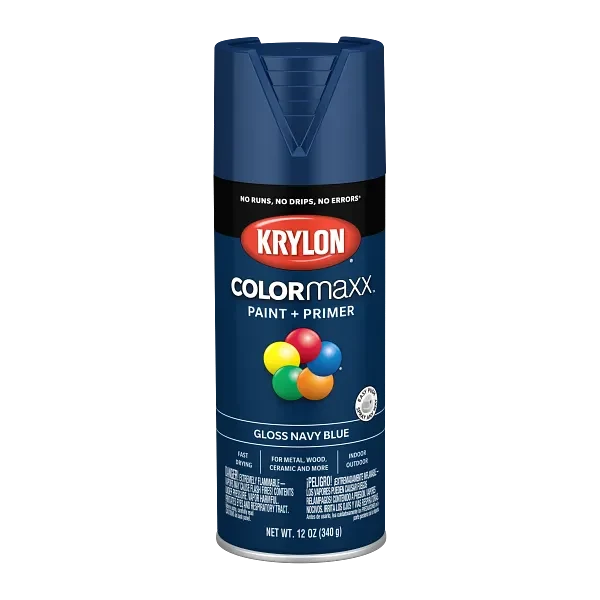
- Coverage
- Up to 25 sq ft per 12 oz can (one coat)
- Sheens
- Gloss, satin, flat, metallic
- Dry / recoat
- Touch 10 min · handle 1h · recoat anytime
- Full cure
- 24h light use; 7 days full hardness
- VOC
- Varies by color; CA-compliant SKUs sold in restricted states
- Yellowing risk
- Low on the waterborne-acrylic whites
- Primer
- Self-priming on clean sanded wood; stain-blocker still required over knots
- Price tier
- $
- Dry to touch in 10 minutes or less, which turned a small side table into three coats and a topcoat between breakfast and dinner
- Cheapest per square foot in the group; Krylon rates a 12 oz can at up to 25 sq ft and our poplar panels tracked close to it
- EZ Touch fan spray tip rotates horizontal or vertical, so you can match the fan to a tall chair back instead of fighting it
- Thinner build per pass than either Rust-Oleum. Three coats to full opacity on a mid-tone piece where Universal hid in two
- Fast solvent flash means a dry-spray gritty texture if you drift past about 12 inches from the surface
- The colors read slightly cooler on wood than the cap suggests; sample on scrap before you commit a whole dresser
4. Rust-Oleum Chalked Ultra Matte Spray Paint
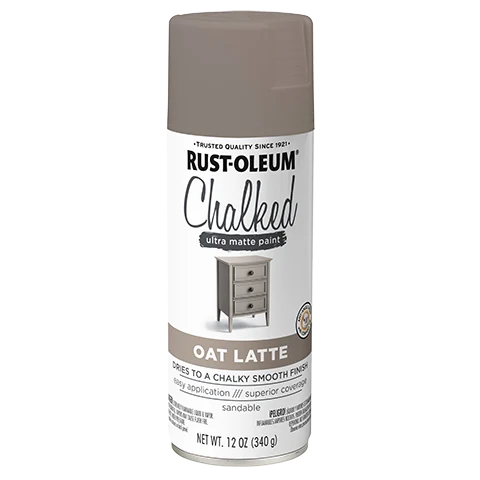
- Coverage
- Up to 12 sq ft per 12 oz can (one coat)
- Sheens
- Ultra matte only
- Dry / recoat
- Touch 20 min · handle 1h · recoat within 1h or after 24h
- Full cure
- 24h before topcoat; 7 days full hardness
- VOC
- Varies by SKU; low-VOC versions in restricted states
- Yellowing risk
- Low; the matte whites stay cool
- Primer
- Grips scuff-sanded old finishes without primer; B-I-N still needed over knots and water stains
- Price tier
- $$
- Dead-flat velvet finish that hides the milling marks and light dents a satin enamel would spotlight; the reason it wins on old pine and thrifted oak
- Grips a scuff-sanded old finish better than any other pick here, so a lightly deglossed dresser skips the strip-to-bare step
- Sands and distresses on purpose with 220 grit, and Rust-Oleum's Chalked Decorative Glaze takes over it cleanly if you want aged edges
- Chalk finish is porous and will hold a coffee ring within a week. A clear topcoat is mandatory, not optional, on any horizontal surface
- Around 15 colors, mostly muted neutrals; no saturated brights in the aerosol line
- $9–$11 a can and only 12 sq ft of coverage puts it near Universal money at Painter's Touch build
5. Krylon Fusion All-In-One Spray Paint
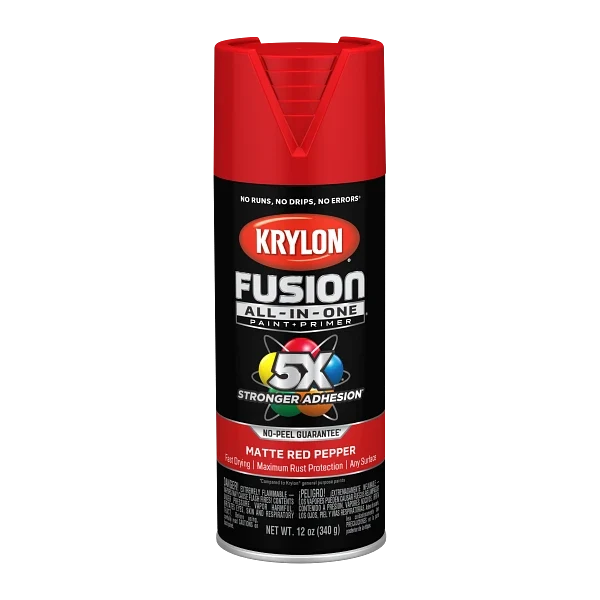
- Coverage
- Up to 25 sq ft per 12 oz can (one coat)
- Sheens
- Gloss, satin, flat, metallic, hammered
- Dry / recoat
- Touch 20 min · handle 1h · recoat within 1h or after 48h
- Full cure
- 7 days
- VOC
- Varies by color; CA-compliant SKUs available
- Yellowing risk
- Low to medium on whites in direct sun
- Primer
- No sanding or priming claimed on most surfaces; scuff-sand anyway on glossy factory finishes
- Price tier
- $$
- The strongest no-sand adhesion in the round-up; it stuck to a glossy factory-lacquered nightstand side that Painter's Touch peeled off in a tape pull
- Rated for exterior use, and our sprayed pine slats came through a Mid-Atlantic summer with no chalking at 90 days
- Big-button trigger with a 5-inch fan and a rust-inhibitive formula that also covers the metal hardware and hinges on the same piece
- Sheen is glossier than the label suggests; the satin reads close to semi-gloss on flat wood, which highlights every ridge you left
- Full cure is 7 days and it means it. Reassembling a chair at day 2 and the joints stick where painted surfaces touch
- Overspray travels further than the Rust-Oleum cans; mask twice as much area or spray outside
6. Minwax Polycrylic Protective Finish
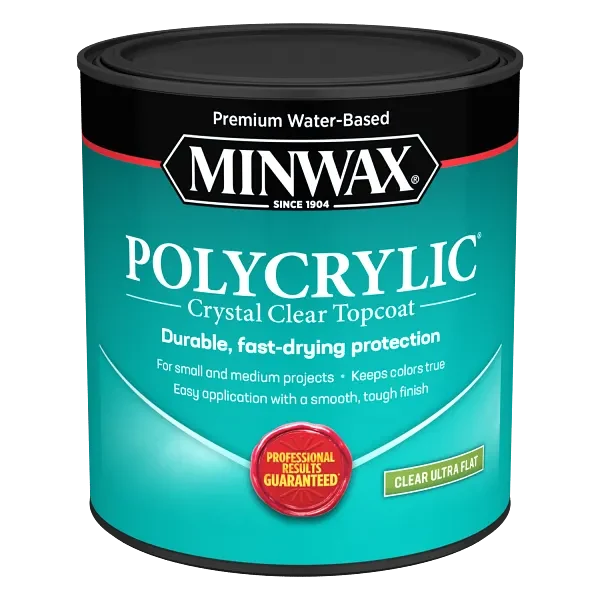
- Coverage
- Roughly 12–14 sq ft per 11.5 oz can per coat
- Sheens
- Gloss, semi-gloss, satin, matte
- Dry / recoat
- Touch 30 min · recoat 2h
- Full cure
- 24h to light use; 3 days before heavy objects
- VOC
- Water-based, low VOC
- Yellowing risk
- Very low — the reason it beats oil-based poly over light colors
- Primer
- N/A — topcoat only, over fully cured paint
- Price tier
- $$$
- Water-based and non-yellowing, which is why it's the only clear that belongs over a white or pale-sage painted dresser
- Sprayed film levels flatter than brushed Polycrylic; the aerosol skips the streaking that makes the quart version frustrating on a tabletop
- Two-hour recoat means three coats on a table top in a single afternoon
- Softer than an oil-based polyurethane. A dining table or a desk that takes a laptop every day wants oil-based wipe-on instead
- $12–$14 for 11.5 oz makes it the priciest can here per ounce, and a dresser top plus drawer faces uses most of one
- Milky when wet, which panics people into over-applying. It clears as it dries; leave it alone
Zinsser B-I-N Shellac-Base Primer Spray
Wood furniture has two problems no paint-and-primer aerosol solves on its own: knots that weep resin, and tannin that bleeds through white. Shellac stops both. B-I-N in the spray can dries to recoat in 45 minutes, sticks to old varnish without a full strip, and seals pine knots so hard they stay invisible at month six instead of ghosting through a white dresser by month two. One 15 oz can primes a small dresser or two nightstands. Spray two light coats over every knot and every raw oak surface, scuff with 320 grit, then color. On poplar, maple, and MDF that already reads clean, skip it — the self-priming aerosols handle those substrates fine. Shellac's weakness is water: don't put B-I-N on outdoor furniture, where an oil-base or waterborne exterior primer belongs instead.
BUY ON AMAZON
Ask a Question