Best Metallic Spray Paint
Five metallic spray paints tested on steel, oak, ABS plastic, and glazed ceramic for brightness, striping, and outdoor hold. Top pick: Rust-Oleum Universal Metallic.

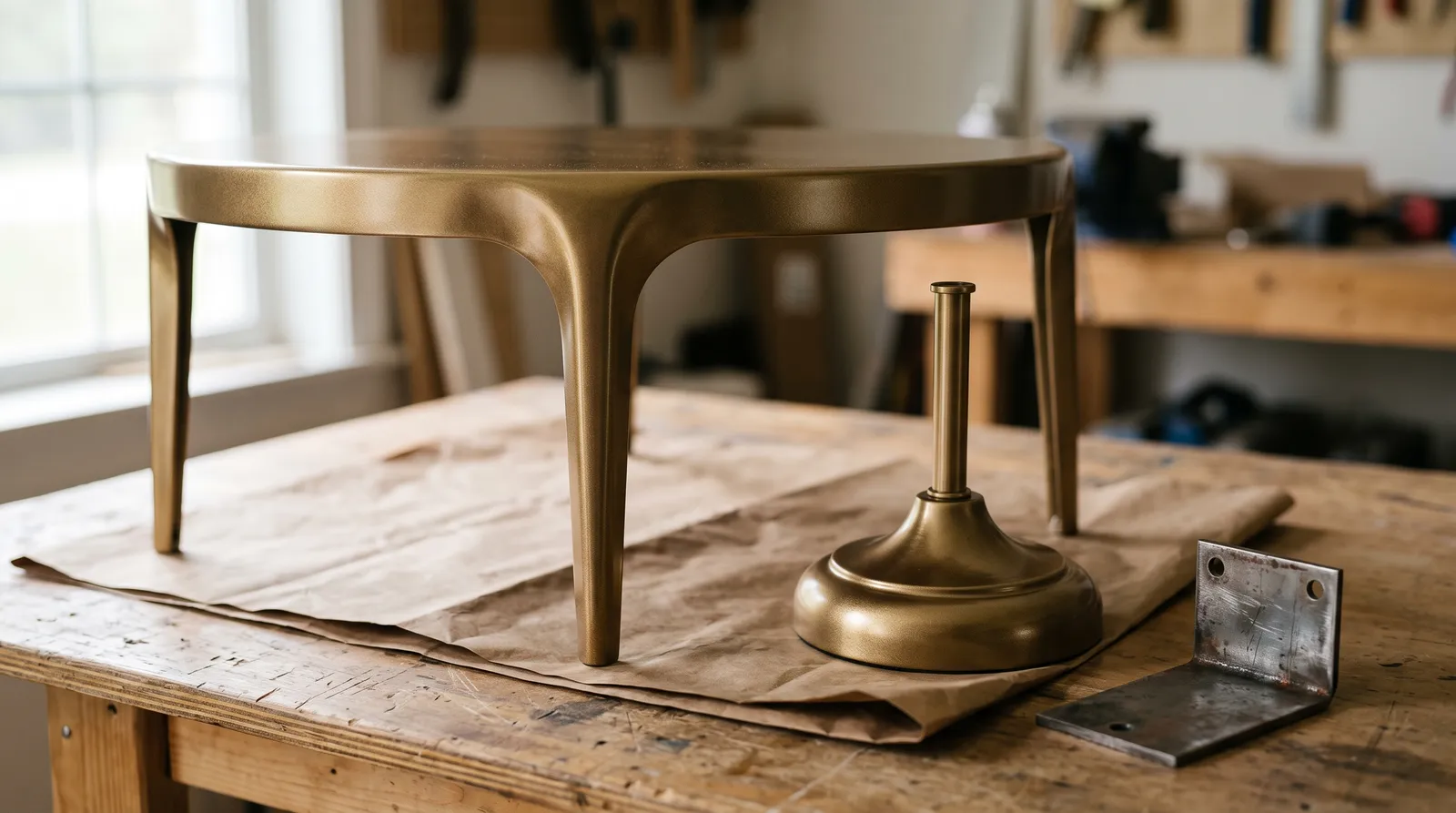
The only pick in the round-up rated for exterior use that still reads as a decorator finish; our Oil Rubbed Bronze panel sat outside from November through April with no chalking and no flake dulling
The closest a rattle can gets to real plating. On our sealed MDF panel the Original Chrome threw a legible reflection at arm's length; nothing else in the round-up came close
Oil-based rust-inhibitive enamel with metallic flake suspended in it, so the decorative layer and the protective layer are the same coat
Sprays directly over sound rust with no sanding and no primer, which is the only reason a 40-year-old wheelbarrow is worth refinishing at all
11 oz for roughly the price of Krylon's 6 oz Premium can, which makes it the cheapest bright metallic per square foot in the round-up
Disclosure: Some links below are affiliate links. We earn a commission if you buy through them, at no extra cost to you. Our picks come out of the test protocol in “How We Picked”. No brand pays for placement.
Top pick: Rust-Oleum Universal Metallic Spray Paint. At $9 to $12 a can it is the only metallic here that looks like a decorator finish and survives outdoors, and it grips slick plastic and glazed ceramic without a bonding coat under it. Universal Metallic wins on versatility, on color range for hardware matching, and on that 360-degree trigger that sprays a chair underside without you lying on the floor. It falls short on raw brightness. Set the Pure Gold next to Krylon’s 18 Kt. Gold and Rust-Oleum reads as warm satin brass while Krylon reads as gold leaf. If you need the mirror, buy Krylon Premium Metallic and keep the piece indoors. If the piece is a rusted patio table, neither of those is your answer and Stops Rust Hammered is.
The category confuses people because the word “metallic” covers two products that behave nothing alike.
Metallic Is Two Products Wearing One Word
One family is decorative leafing lacquer. Fine aluminum, bronze, or brass flake floating near the surface of a fast lacquer carrier, tuned for maximum reflection. Krylon Premium Metallic and Krylon Metallic Paint live here. They are the brightest cans on any shelf and they are all interior, because the same soft flake that throws a reflection oxidizes under UV and rain.
The other family is pigmented enamel with metallic flake mixed in. Rust-Oleum Universal Metallic and Stops Rust Metallic live here. The flake is coarser and sits deeper in a tougher binder, so the finish reads as brushed nickel or aged copper rather than chrome, and it holds outside.
Nobody labels the aisle this way. Both families sit in the same rack, both cans say metallic, and the price is close enough that shoppers pick on color chip alone. Then the bright one goes on a mailbox and looks like grey primer by summer.
Here is the rule that saves you a repaint: bright equals indoor. Every genuinely mirror-like rattle can on the US market is interior-rated. If a can claims plating-grade shine and exterior durability in the same sentence, read the back label before you believe the front.
How We Picked
Five aerosols, four substrates each (cold-rolled steel, sanded red oak, ABS plastic, glazed ceramic), two coats at 10 to 12 inches with half-pass overlap at 72°F. Brightness was scored by three people at 3 feet under a single raking 3000K source against a solid brass plate and a chromed plate, because “shiny” is useless without a reference. Adhesion was ASTM D3359 cross-hatch tape pull at 7 days on the two slick substrates. A matched set of panels went on a south-facing exterior rack in November and came off in April. A second steel set was pre-rusted outdoors for six weeks and coated without sanding, to test the direct-to-rust claims that only one of these picks actually makes.
The Five Cans, Side by Side
| Product | Best for | Where it works | Metal look | Price |
|---|---|---|---|---|
| Rust-Oleum Universal Metallic | Top pick: furniture, fixtures, hardware | Indoor + outdoor | ⚪ Satin-bright | $$ |
| Krylon Premium Metallic | Small decor, the plated look | Indoor only | 🟢 Mirror-bright | $$$ |
| Rust-Oleum Stops Rust Metallic | Railings, mailboxes, patio metal | Indoor + outdoor | ⚪ Flake-bright | $$ |
| Rust-Oleum Stops Rust Hammered | Rusted, pitted, dinged metal | Indoor + outdoor | 🟡 Textured, low shine | $$ |
| Krylon Metallic Paint | Budget crafts, lamp bases, frames | Indoor only | 🟢 Polished-bright | $ |
Pricing note before you click anything: all five are cheaper on a shelf than shipped. A single can of Universal Metallic runs about $9 at Home Depot and $14 to $16 as a solo Amazon listing, because a can of aerosol is a hazmat-class shipment. The Amazon math only works on multi-packs. If you need one can of one color today, drive. If you need six cans of the same color for a headboard and a pair of nightstands, order the pack.
What Goes Under the Metallic
Metallic film is thin and semi-translucent, and it reports on everything beneath it. Oak grain shows through gold as dark stripes. A spackle patch reads as a pale cloud. Old glossy enamel makes fresh flake crawl into fish-eyes about ninety seconds after the pass.
A grey bonding primer fixes all three at once, and it grips the substrates people actually spray metallic onto: laminate lamp bases, ABS drawer pulls, glazed ceramic, powder-coated brackets. We use Rust-Oleum Universal Bonding Primer under everything here except clean bare steel and sound cured enamel.
One thing worth knowing that nobody prints on the can: primer color changes the finished metallic. Grey primer under silver keeps it cool and neutral. Black primer under the same silver deepens it into gunmetal. Warm tan primer under gold pushes it toward brass. If you are chasing a specific fixture color, the base coat is half your color decision, and you can shift the result a full shade without changing topcoat cans. Test on a card.
For the deeper prep sequence on old metal, work through our rusted metal prep guide first. The scuff step matters more than the can does.
The Picks in Detail
Rust-Oleum Universal Metallic Spray Paint, Top Pick
Universal is Rust-Oleum’s do-everything line, and the Metallic sheen is the version worth owning. Paint and primer in one, rated interior and exterior, and it sticks to wood, metal, plastic, concrete, wicker, and vinyl without a separate adhesion coat.
The test that decided it was the ABS plastic panel. Cross-hatch tape pull at 7 days: Universal Metallic came off the tape clean, 5B, no lift at the cut lines. Both Krylon picks failed the same test on the same plastic without primer, one at 2B and one worse. That one result is why Universal is the top pick for anyone refinishing a mixed piece, because almost every real project is mixed. A floor lamp is a steel pole, a plastic switch housing, and a cast base.
The exterior rack settled the second question. Our Oil Rubbed Bronze steel panel went out in November and came back in April with no chalking, no flake dulling, and no edge rust at the cut ends. The Aged Copper on oak came back slightly lighter, which is normal for copper flake, and still looked like a finish rather than a failure.
The trade-off is brightness. Under the raking light against our brass reference plate, Pure Gold scored a 6 where Krylon’s 18 Kt. Gold scored a 9. Universal reads as satin brushed metal. That is the right look on cabinet hardware, on a bed frame, on light fixtures, and it is the wrong look on a Christmas centerpiece.
The recoat window will bite you. Inside one hour, or wait 48 hours. We came back at hour five on a spare panel to see what would happen and the second coat lifted and wrinkled the first into orange peel that had to be sanded out. Set a timer. Our spray paint dry time guide has the full window chart across brands.
Buy it for furniture, hardware, light fixtures, mixed-material pieces, and anything that goes outside. Skip this if you want a mirror.
Krylon Premium Metallic, Best for the Plated Look
Nothing else in the round-up looks like this. On our sealed MDF panel, Original Chrome threw a readable reflection at arm’s length. Not a hint of one. A reflection you could check your part in. Premium Metallic scored 9 and 10 against both reference plates, and the gap to second place was not close.
Very fine flake in a high-gloss lacquer carrier does two things at once. It maximizes reflection, and it lays down smoother than any enamel here, which means fewer overlap stripes on a piece with curves. On the ceramic vase we sprayed as a real-world check, two coats produced an unbroken gold surface with no visible pass lines at all.
Then the limits. It is 6 oz for the price of most 11 oz cans, so the cost per square foot is the worst here by a wide margin. It is interior only and Krylon is not being cautious about that: our exterior control panel dulled to flat pewter in nine weeks. And it demands a uniform cured base, because the fine flake floats unevenly across anything absorbent. Raw oak grain came straight through two coats on our test panel like a photograph.
Lacquer chemistry also means no spraying it over a fresh water-based paint that has not fully cured, and mineral spirits for anything you need to clean.
Buy it for picture frames, vases, candlesticks, small decor, and any indoor piece where the whole point is shine. Skip this if the piece will live outdoors or gets handled daily.
Rust-Oleum Stops Rust Metallic, Best for Outdoor Metal
The one to buy for a railing. Stops Rust Metallic is an oil-based rust-inhibitive enamel with metallic flake suspended in it, which means the decorative coat and the protective coat are the same coat. Coarser flake than Universal, and it reads noticeably brighter outdoors in daylight even though the two look similar under shop lighting.
Our wrought-iron rail section in Gold Rush went through a full winter and came back with its color intact. The identical rail in Krylon Metallic Paint was dull by February and had rust weeping at two weld seams by April.
What you pay for that is time. Touch dry is 2 to 4 hours and handling is 5 to 9, so a two-coat job on a gate is Saturday and Sunday, not Saturday afternoon. The odor is heavy oil enamel and it hangs around for days indoors. And the color range is short and traditional, so there is no satin nickel here and no modern matte metal.
Bare aluminum and galvanized steel still want a bonding primer under it. Everything else clean or lightly rusted takes it direct.
Buy it for railings, gates, mailboxes, fence posts, metal patio frames. Skip this if you need the job done in a day.
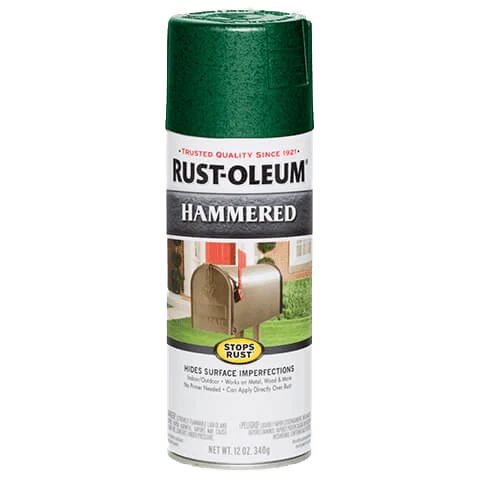
Rust-Oleum Stops Rust Hammered, Best over Rust and Pitting
This is the can that saves projects other cans can’t. Hammered sprays directly over sound rust with no sanding and no primer, and the dimpled texture it dries into hides pitting, weld seams, and forty years of brush marks instead of framing them.
Our pre-rusted steel panels made the case. Six weeks of outdoor rusting, wiped with a wire brush and nothing else, two coats of Hammered in Dark Bronze. At the April pull, no bleed-through, no blistering, no rust reappearing at the edges. The smooth metallics on the same pre-rusted panels all telegraphed the pitting, and two of them showed rust staining back through the film by month three.
It is forgiving in a way none of the others are. A heavy pass that would run in Universal Metallic just pools into more texture.
Two honest cons. It is a texture, not a mirror, and if you wanted modern smooth metal there is no technique that gets you there. And touch-ups almost never blend, because the hammer pattern lands differently on a spot repair and you see the patch from across a patio. Repaint whole components, not spots.
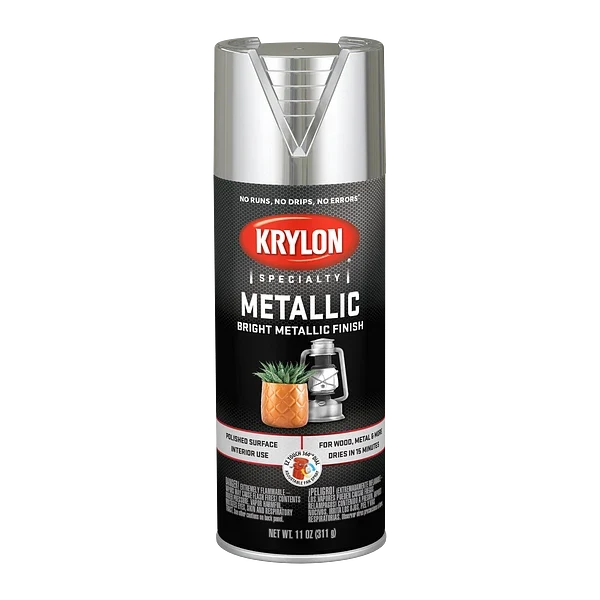
Krylon Metallic Paint, Budget Pick
Eleven ounces of loud chrome for about what Krylon charges for six ounces of the Premium can. That is the entire pitch and it is a good one for the right job.
Chrome Aluminum and Bright Gold are genuinely reflective, close behind Premium Metallic under our raking light and well ahead of both enamels. Coverage is the best in the round-up at 20 to 25 sq ft per can, and the EZ Touch tip sprays at any angle.
The film is soft. A fingernail marked our panel at day three, and the aluminum colors burnish where a thumb rests. There is zero rust protection, which matters because people buy this can for outdoor metal constantly. It is craft paint that happens to come in a big can.
Buy it for lamp bases, frames, holiday decor, prop work, anything indoors nobody touches.
Which Can for Which Job
- Refinishing furniture, hardware, or fixtures, one can for the whole piece: Universal Metallic.
- Indoor decor where shine is the entire point: Krylon Premium Metallic over a grey primer.
- Railings, gates, mailboxes, anything steel that lives outside: Stops Rust Metallic.
- Rusted, pitted, forty-year-old metal you don’t want to sand: Stops Rust Hammered.
- A dozen craft pieces on a budget, all staying indoors: Krylon Metallic Paint.
If you are spraying furniture rather than metal, the metallic question sits inside a bigger one. Our furniture paint round-up covers the durability side, and the Rust-Oleum 2X versus Krylon Fusion comparison settles the general-purpose can argument these two brands have been having for a decade.
What a Project Actually Costs
| Project | Cans needed | Paint | Primer | Total |
|---|---|---|---|---|
| Pair of table lamp bases | 1 Krylon Premium | $12 | $9 (half a can) | ~$21 |
| Dining chair, two coats | 2 Universal Metallic | $20 | $9 | ~$29 |
| Cabinet hardware, 20 pulls | 1 Universal Metallic | $10 | $9 | ~$19 |
| Wrought-iron rail, 12 feet | 3 Stops Rust Metallic | $27 | none on steel | ~$27 |
| Rusted patio table + 2 chairs | 5 Stops Rust Hammered | $50 | none | ~$50 |
The hardware row is the one people underestimate in the wrong direction. Twenty cabinet pulls is a single can and one evening, and it changes a kitchen more than the price suggests. The chair row is the one people underestimate in the right direction: six dining chairs is twelve cans and $120 in aerosol before primer, which is the point where a quart of brush-on enamel and a good brush starts making more sense.
Matching Metallic to Hardware You Already Own
Manufacturer finish names are marketing, not standards. Two brands both selling “oil rubbed bronze” can be two visibly different browns, and the factory version is usually a plated finish with high and low tones that a single flat spray color cannot copy.
Three things make a match land. Spray a test card, not a scrap of the piece, so you can hold the sample directly against the existing fixture. Check it in the room’s real light and then again at night under the bulbs you own, because metallic shifts harder between daylight and 2700K than solid color does. And tune the base coat: black primer under a bronze topcoat deepens it, tan primer warms it toward brass.
If some pieces in the room stay original, expect to spray all of them anyway. A near-match reads as a mistake; a consistent whole-room finish reads as a choice.
Spraying Metallic Without Stripes
Metal flake aligns with the direction of the pass, which is why metallic shows banding that solid colors hide.
- 10 to 12 inches, steady speed, half-pass overlap. A slow pass loads more flake and reads brighter than the pass beside it. Consistent speed matters more than distance.
- Final coat in one direction across the whole piece. Alternating direction to save time is exactly how you get a plaid.
- Warm the can in a bucket of tap water for five minutes. Higher can pressure atomizes finer, and finer atomization is smaller flake clumps. This is the single cheapest improvement available.
- Scuff glossy substrates with 320-grit before priming. Our sandpaper grit guide covers which grit for which surface; on metallic work the target is dull, not scratched.
- Mist the last pass from a few inches farther back. It drops a light even layer of flake over the overlap lines and evens the whole surface.
- Spray at 65 to 80°F and under 60 percent humidity. Cold cans spit. Humid air blushes lacquer white.
- Wear a real respirator. Every can here is solvent-borne, and metallic aerosols hang in the air longer than pigmented ones. A dust mask does nothing. See our painting respirator picks.
Where Metallic Jobs Go Wrong
- Blotchy gold over bare wood. Absorbent grain drinking unevenly. Seal with primer, then spray.
- Second coat wrinkled the first. Missed recoat window on a Rust-Oleum can. Sand flat, re-prime, start over, and set a timer next time.
- Bright silver went grey outdoors in one season. Interior lacquer flake used outside. There is no clear coat that saves it; buy the enamel.
- Fish-eyes and craters. Silicone contamination from furniture polish or a mold-release agent on new plastic. Wipe with denatured alcohol, then a fresh tack cloth, then prime.
- Chrome dulled to grey after clear coating. The clear wetted the flake. Rust-Oleum publishes exactly this warning on its Specialty Metallic line. Test any topcoat on scrap first.
- Flaking off a plastic planter after a month. The plastic flexes and the film doesn’t. No aerosol solves that.
- Rust bleeding back through the new metallic. The old rust was loose, not sound. Wire-wheel to tight metal, or use a rust converter and let it cure. The exterior peeling paint diagnosis walks the same failure chain on other substrates.
Also Considered, Also Rejected
- Rust-Oleum Specialty Metallic (real metal leafing flakes). Bright, cheap, indoor-only, and it competes directly with Krylon Metallic Paint at a similar price. It lost on nozzle consistency across three cans and on Rust-Oleum’s own do-not-topcoat guidance, which limits where it can go.
- Rust-Oleum Mirror Effect. A real product that does a real thing, but it works from the back side of glass and acrylic only. It’s a glass treatment, not a metallic finish for objects. Different category.
- Krylon Looking Glass. Same story as Mirror Effect, same reason it isn’t ranked here.
- Krylon Premium Foil Metallic and Shimmer Metallic. Narrower craft-focused variants of the Premium can, thinner retail stocking, and the base Premium Metallic covers the use case.
- Rust-Oleum Universal Forged Hammered and Flat Metallic. Both good; both are style variants of picks already on the list rather than separate answers.
- Automotive wheel and caliper metallics. Harder film, real heat resistance, and a color range built for wheels. Right product for a brake caliper, wrong product for a console table.
Two cans cover most of what anyone needs from this aisle. A can of Universal Metallic for anything real, and a can of Krylon Premium Metallic for anything that only has to be beautiful indoors. Buy the primer with them.
Full Comparison
| Product | Best for | Yellowing | Price |
|---|---|---|---|
| Universal Metallic Spray Paint | Top pick — best all-around metallic for furniture, fixtures, and hardware | N/A — metal flake pigment, no clear amber binder to shift | $$ |
| Premium Metallic | Best for the brightest plated look on small decor | N/A on the golds; the chrome and silver hold neutral indoors | $$$ |
| Stops Rust Metallic Spray Paint | Best for outdoor metal that has to survive weather | Low; the golds warm slightly in the first year under direct sun | $$ |
| Stops Rust Hammered Spray Paint | Best over rusted, pitted, or dinged metal | Low | $$ |
| Metallic Paint | Budget pick — bright chrome and brass for crafts and lamp bases | Low indoors | $ |
Every Pick, Pros and Cons
Pros, cons, and specs for each pick. The cons are not optional here.
1. Universal Metallic Spray Paint
- Coverage
- 12–15 sq ft per 11 oz can
- Sheens
- Metallic (also sold in a Flat Metallic and a Hammered variant)
- Dry / recoat
- Touch 20 min · handle 1h · recoat within 1h or after 48h
- Full cure
- 24h to hard; 7 days to full film hardness
- VOC
- Solvent-borne aerosol; CA and OTC-compliant SKUs sold in restricted states
- Yellowing risk
- N/A — metal flake pigment, no clear amber binder to shift
- Primer
- None on clean sound substrates; bonding primer on flexible plastic or previously glossy enamel
- Price tier
- $$
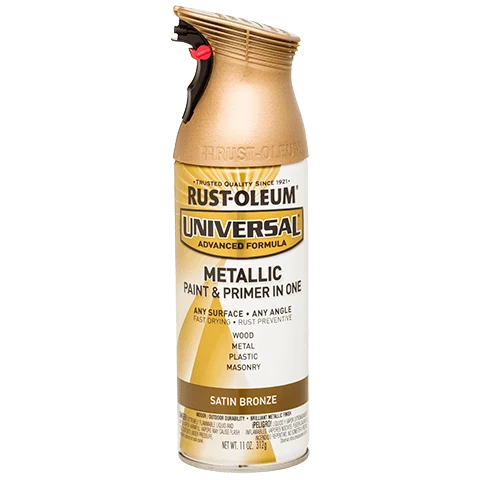
- The only pick in the round-up rated for exterior use that still reads as a decorator finish; our Oil Rubbed Bronze panel sat outside from November through April with no chalking and no flake dulling
- Paint and primer in one, and it grips slick ABS plastic and glazed ceramic without a separate bonding coat where the two lacquer picks crawled
- The 360-degree comfort trigger sprays upside down, which is the difference between finishing a chair underside in one pass and repainting it twice
- Widest usable color range for hardware matching: Oil Rubbed Bronze, Satin Nickel, Antique Brass, Aged Copper, Champagne Mist, Titanium Silver, Pure Gold, Black Stainless
- Not the brightest metal look in the group; against Krylon Premium Metallic the Pure Gold reads as a warm satin brass rather than gold leaf
- About 12 to 15 sq ft per 11 oz can, so a full dining chair is two cans and a headboard is four; the per-project cost stacks up fast
- Recoat window is unforgiving in the Rust-Oleum way: inside one hour, or wait 48 hours. Come back at hour six and the second coat wrinkles the first
2. Premium Metallic
- Coverage
- 15–20 sq ft per 6 oz can
- Sheens
- High gloss metallic
- Dry / recoat
- Touch 10 min · handle 2h
- Full cure
- 24h before light handling; 7 days before wiping with any cleaner
- VOC
- Solvent-borne lacquer aerosol; mineral spirits cleanup
- Yellowing risk
- N/A on the golds; the chrome and silver hold neutral indoors
- Primer
- Yes on porous or patchy substrates — a uniform grey or black sealer coat
- Price tier
- $$$
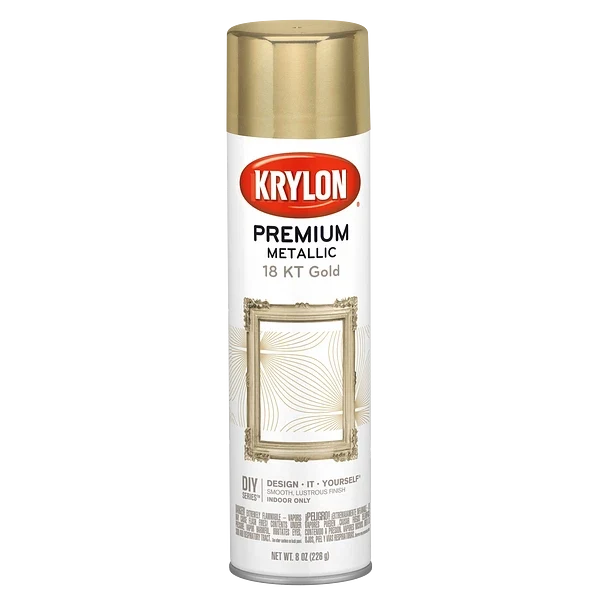
- The closest a rattle can gets to real plating. On our sealed MDF panel the Original Chrome threw a legible reflection at arm's length; nothing else in the round-up came close
- Very fine flake and a high-gloss lacquer carrier, which is why it lays down smoother than the enamels and shows fewer overlap stripes
- 18 Kt. Gold is the gold most people picture when they type gold spray paint into a search bar, and it does not go green in the can
- Interior only, and Krylon means it. Our exterior control panel dulled to a flat pewter in nine weeks of Mid-Atlantic weather
- 6 oz can, 15 to 20 sq ft, and the highest price per ounce here. Small decor and picture frames, not furniture
- It needs an even, fully cured base coat underneath or the flake floats unevenly. Raw wood grain telegraphs straight through
- Lacquer chemistry, so mineral spirits for cleanup and no recoating over a fresh water-based paint that has not cured
3. Stops Rust Metallic Spray Paint
- Coverage
- 12–14 sq ft per 11 oz can
- Sheens
- Metallic gloss
- Dry / recoat
- Touch 2–4h · handle 5–9h · recoat within 1h or after 48h
- Full cure
- 24h to hard; 7 days before scrubbing or washing
- VOC
- Solvent-borne oil enamel aerosol; CA-compliant SKU in restricted states
- Yellowing risk
- Low; the golds warm slightly in the first year under direct sun
- Primer
- None on clean or lightly rusted steel; Rust-Oleum Universal Bonding Primer on galvanized or aluminum
- Price tier
- $$
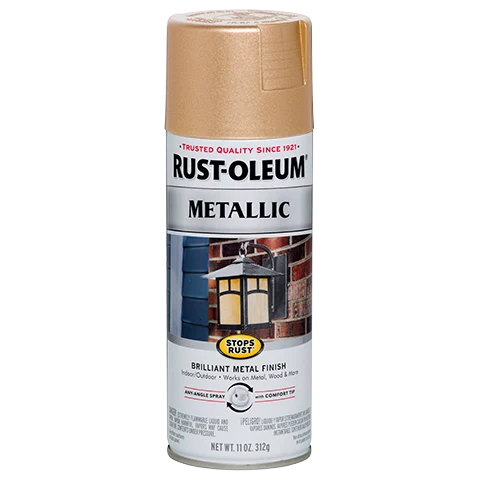
- Oil-based rust-inhibitive enamel with metallic flake suspended in it, so the decorative layer and the protective layer are the same coat
- Bigger flake than the Universal line, which reads brighter outdoors in real daylight even though it looks similar under shop lights
- Gold Rush over a wrought-iron railing held its color through a full winter on our test rail; the same rail in a craft-grade metallic went dull by February
- Slow. Touch dry runs 2 to 4 hours and handling is 5 to 9, so a two-coat job is a full weekend rather than an afternoon
- Oil enamel odor is heavy and lingers for days indoors. Spray it outside or in a ventilated garage with the door open
- Color list is short and leans traditional; there is no satin nickel, no champagne, no matte black metal look
4. Stops Rust Hammered Spray Paint
- Coverage
- 12–14 sq ft per 12 oz can
- Sheens
- Gloss hammered texture (a matte hammered is also sold)
- Dry / recoat
- Touch 2–4h · handle 5–9h · recoat within 1h or after 48h
- Full cure
- 24h to hard; 7 days for full weather resistance
- VOC
- Solvent-borne oil enamel aerosol
- Yellowing risk
- Low
- Primer
- None; that is the whole point of the product
- Price tier
- $$
- Sprays directly over sound rust with no sanding and no primer, which is the only reason a 40-year-old wheelbarrow is worth refinishing at all
- The dimpled hammered pattern hides pitting, weld seams, and old brush marks that a smooth metallic would frame and highlight
- Genuinely forgiving to spray. Heavy passes that would run in any other can here just pool into more texture
- It is a texture, not a mirror. If you want a clean modern metal look, this is the wrong can and no amount of technique fixes that
- Touch-ups almost never blend; the hammer pattern lands differently on a spot repair and you see the patch from across a patio
- Slow oil-enamel cure, same as the rest of the Stops Rust family
5. Metallic Paint
- Coverage
- 20–25 sq ft per 11 oz can
- Sheens
- Metallic
- Dry / recoat
- Touch 15 min · handle 4h
- Full cure
- 24h; 7 days before any cleaning
- VOC
- Solvent-borne lacquer aerosol; mineral spirits cleanup
- Yellowing risk
- Low indoors
- Primer
- Recommended on bare wood, plaster, and unglazed ceramic
- Price tier
- $
- 11 oz for roughly the price of Krylon's 6 oz Premium can, which makes it the cheapest bright metallic per square foot in the round-up
- Chrome Aluminum and Bright Gold are loud and reflective in a way the enamel picks are not
- EZ Touch 360 tip sprays at any angle and clogs less than the old Krylon nozzles did
- Interior only, and softer than the enamels — a fingernail marks it at day three
- Dull Aluminum and Chrome Aluminum burnish where you touch them, so it belongs on things nobody handles
- No rust protection at all, on a product people constantly buy for outdoor metal
Rust-Oleum Universal Bonding Primer
Metallic spray is thin, and thin coatings show everything under them. A grey bonding primer does two jobs at once here. It gives the flake a uniform, non-absorbent base so the metal look lands evenly instead of blotching over grain and filler, and it grips the slick substrates people actually spray metallic onto: laminate lamp bases, ABS drawer pulls, glazed ceramic vases, powder-coated shelf brackets. One 12 oz can primes about the same area two cans of topcoat will cover. Skip it on clean bare steel and on anything already wearing a sound cured enamel. Use it on everything plastic, everything glossy, and every piece of raw wood where you want a plated look rather than a wood-grain-with-shimmer look.
BUY ON AMAZON
Ask a Question