Best High-Heat Paint for Grills and Stoves
Five high-heat paints tested on steel coupons, a cast iron grate, and stove pipe through 40 burn cycles. Top pick: Rust-Oleum Specialty High Heat Spray Paint.

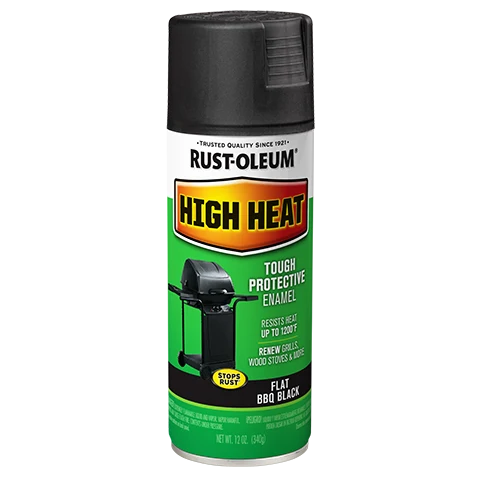
Held flat black through 40 burn cycles on a cast iron grate with no chalking at the firebox edge, where the budget aerosol went gray at cycle 18
The factory finish on a large share of American wood stoves, so a touch-up can matches the stove instead of patching it
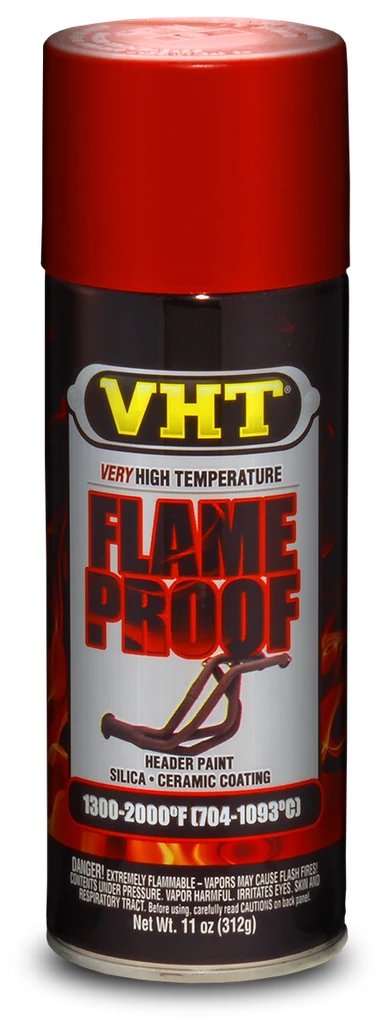
Rated 1300°F to 2000°F intermittent, roughly 800 degrees past every 1200°F can in this round-up
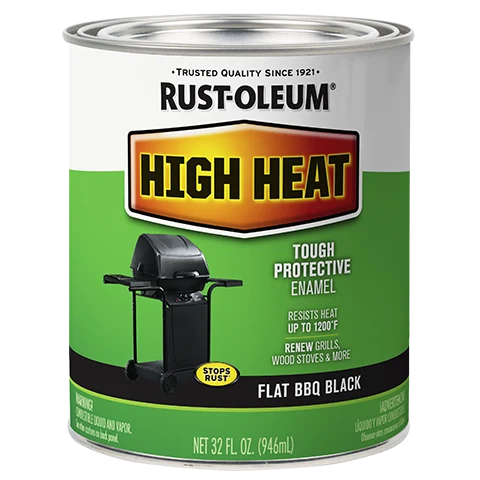
Brushable film means you can coat a stove indoors in February without tenting the room in overspray
Dry to touch in 10 minutes and dry to handle in 1 hour, the fastest turnaround in the round-up by a wide margin
Disclosure: Some links below are affiliate links. We earn a commission if you buy through them, at no extra cost to you. Our picks come from the test protocol in “How I Tested”. No brand pays for placement.
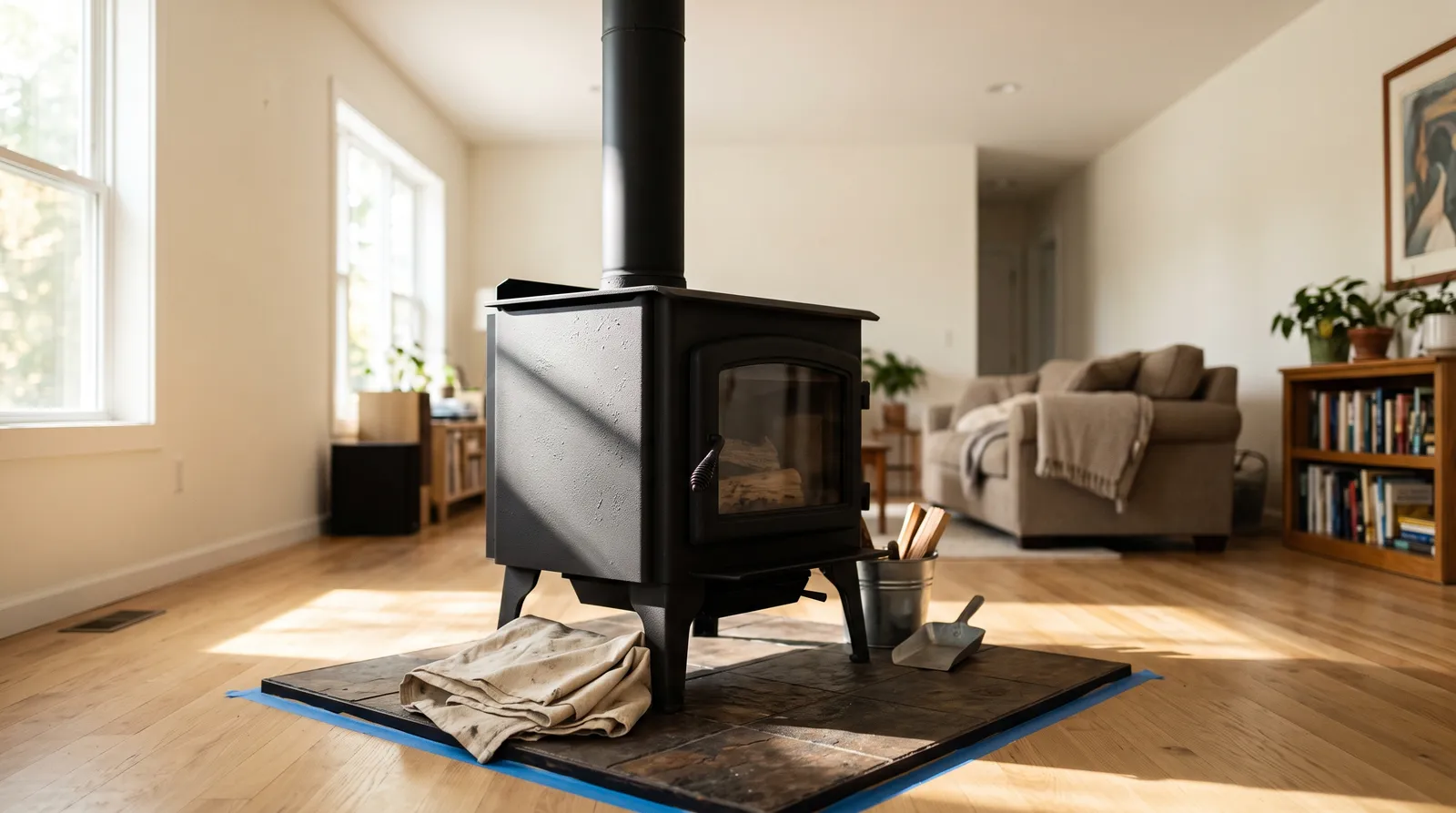
Top pick: Rust-Oleum Specialty High Heat Spray Paint. At about eight dollars a can it is the cheapest thing on this list, and after 40 burn cycles on a cast iron grate coupon it was still flat black with no chalking at the hot edge. Rust-Oleum wins on color hold, on cure tolerance, and on the fact that a hardware store two miles from you has it right now. It falls short on color range (six shades, all dark) and on coverage, where 12 oz gets you eight to ten square feet. If you need brown, bronze, or almond to match a wood stove, Stove Bright is the pick. If you are coating an exhaust header or hard-fired single-wall pipe, only VHT FlameProof is rated for it. Skip Krylon High Heat Max if the metal runs hot for hours at a stretch.
The can is not the variable. The cleaning is. High-heat paint gets no primer, so degreasing is the entire adhesion step, and grease is exactly what a grill and a stove are covered in.
How I Tested
Five coatings went onto matched 6 x 6 inch cold-rolled steel coupons, a sectioned cast iron charcoal grate, and a 12 inch length of 24-gauge single-wall stove pipe. Everything degreased, wire-brushed to bare metal, alcohol-wiped, and coated within four hours at 78°F. Each product cured on its own published schedule, with a duplicate coupon left deliberately uncured to price out what shortcutting costs. Then 40 heat cycles on a propane burner to a 600–700°F IR-verified surface, 30 minutes hot, cooled to ambient, six weeks of it. Pipe coupons ran hotter, 900–950°F. Cross-hatch tape pulls at cycle 10 and cycle 40, MEK rubs on cured and uncured samples, and 30 days on an outdoor rack for rust bleed. Pick-specific results live in each review below.
The Field at a Glance
| Product | Best for | Continuous rating | Colors | Price |
|---|---|---|---|---|
| Rust-Oleum High Heat Spray | Top pick: grills, stove bodies, fire pits | 🟢 1200°F | 6 | $ |
| Stove Bright High Temp | Wood stoves and inserts, color matching | 🟢 1200°F | 9+ | $$ |
| VHT FlameProof | Headers, exhaust, single-wall pipe | 🟢 2000°F intermittent | 13 | $$ |
| Rust-Oleum High Heat Brush | Cast iron, radiators, indoor work | 🟢 1200°F | 1 (black) | $ |
| Krylon High Heat Max | Budget, fast handling, cool-running parts | 🟡 600°F | 2 | $ |
That Krylon row is the one to read twice. The front of the can says 1200°F, and that number is honest as an intermittent peak. The continuous service number is 600°F, and a wood stove burning hard sits above 600°F for three hours at a time. Two ratings, two different jobs. The rest of this category buries the distinction in the technical data sheet where nobody looks.
Match the Rating to the Metal, Not the Fire
The most common buying mistake in this category is reading the temperature inside the appliance instead of the temperature on the surface you are about to coat. A wood fire runs 1100°F in the firebox. The stove’s painted side panel sits around 450°F while that is happening, because cast iron and steel shed heat fast into a room. Rate the paint to the skin, not the flame.
| Part you are painting | Buy this rating | Why |
|---|---|---|
| Charcoal kettle, gas grill cart, lid exterior | 1200°F | Skin runs 300–500°F, well inside the standard tier |
| Wood stove body, doors, side panels | 1200°F | 400–700°F sustained, needs continuous-service headroom |
| Single-wall stove pipe, first three feet | 2000°F | 600–900°F skin, past what silicone-alkyd holds |
| Double-wall or insulated chimney pipe | 1200°F | Outer wall stays under 400°F by design |
| Exhaust manifold, header, turbo housing | 2000°F | 900–1400°F, the only true VHT case here |
| Radiator, engine block, brackets, trim rings | 600°F | Brief heat soak, no sustained load |
| Firebox interior, grill interior, oven cavity | Nothing | Direct flame contact is past every consumer rating |
The last row is the one people argue with. There is no consumer coating that survives flame impingement, and a coating that burns off inside a cook chamber is a food problem on top of a paint problem. Bare metal is the correct finish in there. Cast iron cooking grates get oil and seasoning, the same as a skillet.
Quick Decision Tree
- Charcoal kettle, gas grill cart, fire pit, chiminea: Rust-Oleum Specialty High Heat Spray. Two cans covers a full kettle plus the legs.
- Wood stove or insert in a color that is not black: Stove Bright. It is the factory finish on a lot of American stoves, so the touch-up disappears.
- Exhaust manifold, header, turbo housing, or single-wall pipe that glows: VHT FlameProof, and run the full bake schedule.
- Painting indoors in winter, or coating pitted cast iron: Rust-Oleum High Heat Brush. No overspray, better fill.
- Radiator, engine block, or a part that never sees sustained heat: Krylon High Heat Max. Handle it in an hour.
The Picks in Detail
Rust-Oleum Specialty High Heat Spray Paint, Top Pick
This is the can that shows up in every hardware store aisle with a grill on the label, and it earned the spot. Silicone-alkyd, 1200°F, six colors, no primer, roughly eight dollars.
What it did on the rack: the grate coupon went through all 40 cycles at 600–700°F and came out the same flat black it started as. No chalking, no gloss shift, no gray bloom at the ribs where the coupon ran hottest. Cross-hatch at cycle 40 came back 4B, one square edge lifting out of a hundred. The only pick that matched it on color hold was Stove Bright, at twice the price.
The cure is what makes it the top pick rather than merely the cheapest. Rust-Oleum’s schedule is 250°F for 30 minutes, then 400°F for 30 minutes, which on a grill or stove is just the first two fires. There is no oven step, no cooling interval you have to time, no procedure to get wrong. Our deliberately uncured coupon still failed the MEK rub, so the cure is not optional, but the version of it a homeowner has to execute is “light a fire, let it burn, let it cool, light another.”
The label restriction is real and people ignore it. It goes on the outside. Rust-Oleum’s page says plainly not to use it in areas directly exposed to flame, which means no firebox interior, no grill interior, no oven cavity, no stovetop. Coat the shell, the lid, the legs, the cart, the pipe.
Coverage is the honest annoyance. 12 oz gets you eight to ten square feet, and a Weber kettle with a lid and a leg assembly is two cans minimum. The brush-on quart is better value for anything bigger than a grill, if black works for you.
Buy it for grills, fire pits, stove bodies, wood racks, chimineas, and anything else that gets hot outside. Skip this if you need a color that is not black, silver, copper, almond, or aluminum.
Stove Bright High Temperature Paint, Best for Wood Stoves
Forrest Technical Coatings makes this in Eugene, Oregon, and a good share of the wood stoves sold in America leave the factory wearing it. That is the whole argument. If your stove is Goldenfire Brown, the can that matches it is the can the factory sprayed, and no Rust-Oleum shade gets there.
The color range is the widest by a distance: two blacks, Charcoal, Metallic Brown, Rich Brown, Goldenfire Brown, Bronze, Forest Green, Almond. On our vertical panel test at 10 inches, Stove Bright sprayed the driest, tightest fan of any aerosol in the round-up and laid flat on a vertical stove side with no sag, which matters when you are shooting the sides of a stove in place on a hearth.
Heat performance tracked the Rust-Oleum almost exactly through 40 cycles on the black. The colors are slightly softer. Run a finger down the Goldenfire Brown coupon at cycle 30 and you get a faint bronze transfer, the metallic pigment sitting a little proud in the cured film. It looks fine. It just marks.
You will pay 12 to 16 dollars a can and you will order it, because hearth dealers and Amazon are the channel. There is no Sunday-afternoon second can.
Buy it for a stove or insert in any color, and for touch-ups where the repair has to vanish. Skip this if your stove is black and you want to spend half as much.
VHT FlameProof Coating, Best for the 2000°F Tier
Different chemistry, different job. FlameProof is a silicone-ceramic rated 1300°F to 2000°F intermittent, sold through the automotive channel, and it is the only pick here with any business on an exhaust header or a hard-fired pipe.
On the stove pipe coupon at a measured 940°F skin temperature, VHT was the only coating that showed no film breakdown at all. The two 1200°F silicone-alkyds both went powdery on the pipe within a dozen cycles, which is not a failure of those products so much as a demonstration that the pipe was outside their range.
The cure is a procedure and the failure mode is total. Air dry one hour, 250°F for 30 minutes, cool completely, 400°F for 30 minutes, cool completely, 600°F for 30 minutes. Our uncured VHT coupon wiped down to bare steel in about 20 MEK doubles. The cured one held past 50. On a vehicle you can run the bake with the engine. On stove pipe you can do it with staged fires. Either way, do all three steps.
Two more restrictions worth knowing before you buy. VHT states it will not bond well to stainless, so a stainless header is the wrong substrate. Aluminized and galvanized pipe has to be blasted and cleaned first.
Buy it for headers, collectors, manifolds, turbo housings, and single-wall pipe. Skip this if you are painting a grill; you would be running a three-stage bake for temperatures the cheap can already handles.
Rust-Oleum Specialty High Heat Brush Paint, Best Brush-On
Same chemistry as the top pick, applied with a brush, black only, about 25 dollars a quart.
Two reasons it earns its own slot. First, indoor work. Repainting a wood stove in a finished living room in February is not an aerosol job, and a quart of brush-on with a two-inch natural bristle means no tenting, no overspray on the hearth tile, no fogging the room. Second, pitting. On the rust-pitted section of our grate, one brushed coat filled the ribs that took three light spray passes to cover, and the brushed film measured thicker at the pit bottoms where thin spray always flashes first.
The trade-off is finish quality and thickness control. Brush marks stay visible until the first firing softens and levels the film, and on a flat stove top they never fully lay down. More important: thick is the enemy. Loading the brush like wall paint gives you a film that blisters the first time the metal hits 500°F, because the solvent underneath cannot get out. Thin coats, tipped off, and a full recoat wait.
Buy it for cast iron stoves, old radiators, grate frames, and any indoor repaint. Skip this if your piece is not black.
Krylon High Heat Max, Budget and Speed Pick
Fastest handling time in the category and the best published coverage. Krylon lists dry to touch at 10 minutes, dry to handle at 1 hour, and 15 to 20 square feet per 12 oz can, which is roughly double the Rust-Oleum’s spread. On bare steel, two light passes covered with no primer and the gloss black looked sharper out of the can than anything else here.
Then we cycled it. At burn cycle 18 the coupon chalked to a dull gray, and by cycle 30 there was rust bleed at the cut edge. The reason is on the technical sheet: 1200°F intermittent, 600°F continuous. Krylon is not overselling, the number is right there. It just does not survive a stove that runs above 600°F for hours, and that describes most stoves.
There is a real use case. Engine blocks, radiators, brackets, stove trim rings, fire pit rims, anything that heat-soaks briefly and cools. On the low-temperature coupons this can was fine at cycle 40. Also worth knowing: the gloss finish goes flat wherever the metal actually runs hot, so a piece with a hot zone and a cool zone finishes two-toned.
Buy it for parts under 600°F continuous where you want it handled in an hour. Skip this if it is a wood stove. For how these two brands behave on ordinary metal at ordinary temperatures, our Rust-Oleum 2X vs Krylon Fusion comparison is the more useful read.
The Cure Is the Product
Here is the part that gets skipped and shouldn’t. Silicone resins crosslink with heat. Not with air, not with time, with heat. An air-dried high-heat coating is a half-finished coating, and it behaves like one.
Our uncured duplicate coupons failed a 50-double MEK rub down to bare metal on all five products. Every single one. Wipe them with lacquer thinner and the paint comes off on the rag. That is what an uncured film is: pigment sitting in a soft binder waiting for the heat that finishes the reaction.
The good news is that the cure is easy on four of the five. Rust-Oleum and Stove Bright cure on the fires you were going to light anyway. Light a small fire, let the piece reach 250°F, hold it 30 minutes, let it cool. Light a bigger one, get to 400°F, hold 30 minutes, let it cool. Done. VHT wants the same idea with a 600°F third step and honest cooling in between.
Skipping it does not fail immediately. It fails in month four, when a rag or a grill brush or a wet leaf takes the paint off in a patch and you assume the can was bad.
Where High-Heat Paint Fails
- Blistering on the first fire. Almost always primer underneath, or a coat laid on too thick. Standard primers gas off around 200°F. Strip the blistered area to bare metal, no primer, thin coats.
- Peeling in sheets off a grill lid. Grease. Rendered fat polymerizes into a film that no coating bonds through, and it survives a casual wipe-down. Degrease, rinse to a bare water break, re-clean, then paint.
- Chalking to gray at month two. Continuous service temperature exceeded. Move up a tier.
- Rust bleeding through at the seams. The steel was rusted before you painted. These films are thin and porous by design, and they do not encapsulate rust. Mechanical removal first; see our rusted metal prep guide.
- Paint burning off the inside of a firebox. Direct flame contact is hundreds of degrees past every rating on this page. Nothing on the consumer market survives it. Leave interiors bare.
- Coating a grill cart or fire pit stand with high-heat paint that never gets hot. Wasted money and a flat, chalky finish where a normal enamel would have looked better and lasted longer. Legs, carts, and side tables are ordinary metal; treat them like the pieces in our garden furniture project guide.
- A two-toned finish on one part. Gloss coatings that flatten in the hot zone. Use a flat coating on anything with an uneven heat map.
- Solvent-sensitive film that wipes off. Never cured. Run the bake schedule.
Prep and Application Notes
- Degrease, then abrade, then wipe. Heavy surfactant degreaser first, wire brush or 80-grit second, denatured alcohol last. Reversing the first two just grinds grease into the profile.
- Paint the same day you clean. Bare degreased steel flash-rusts in hours in humid weather, and flash rust is a bond breaker.
- Two light passes, not one heavy one. Every failure mode in this category traces back to film thickness. Ten inches from the surface, keep the can moving, accept that it looks thin.
- Respect the recoat window. Rust-Oleum wants a second coat within one hour or after 24 hours. In between, the solvent in the fresh coat lifts the partly-set one underneath.
- Mask more than you think. High-heat aerosols carry farther on overspray than a standard enamel because the film is thinner and drier. Full drop cloth, and see our drop cloth picks if you are doing this indoors.
- Wear a real respirator. Solvent-borne silicone aerosols in a garage warrant an organic vapor cartridge, not a dust mask. Our respirator round-up covers the cartridge types.
- Plan the first burn for a ventilated day. The cure smokes for 30 to 60 minutes and smells sharp. Windows open, fan running, birds and pets in another room.
For recoat windows and full-cure behavior across aerosols generally, see our spray paint dry time guide.
What a Full Job Costs
| Project | Coating | Degreaser | Abrasives + mask | Total |
|---|---|---|---|---|
| Charcoal kettle exterior | 2 cans Rust-Oleum, $16 | $8 | $12 | ~$36 |
| Mid-size wood stove, black | 1 quart brush-on, $25 | $8 | $15 | ~$48 |
| Wood stove, color match | 3 cans Stove Bright, $42 | $8 | $15 | ~$65 |
| 6 ft single-wall pipe | 2 cans VHT, $28 | $8 | $12 | ~$48 |
| Fire pit ring | 1 can Rust-Oleum, $8 | $8 | $10 | ~$26 |
A note on where to buy. Rust-Oleum and Krylon aerosols are cheaper at Home Depot, Lowe’s, or Ace than shipped, usually by a dollar or two a can, and a store trip beats hazmat shipping surcharges on aerosols. The Amazon links here earn their place on the sizes and brands the big boxes do not stock: the brush-on quart, Stove Bright in any color, and VHT in anything but flat black. Buy local where local is cheaper. That is not a hard rule to follow.
Also Considered, Also Rejected
- Rust-Oleum High Heat Ultra. Semi-gloss, 1200°F, deeper color than the Specialty line. Genuinely good, and the sheen is the problem for this use case: semi-gloss flattens unevenly across a hot zone. On an engine or a decorative piece it is the better-looking can.
- Rutland 1200° stove paint. Long-standing hearth-channel product, comparable chemistry to Stove Bright, narrower color range and patchier stocking. Fine if your dealer carries it.
- Thurmalox 270 Stove Paint. The specifier’s answer for hearth professionals, with real published data behind it. Distribution is too thin for a DIY round-up.
- POR-15 high-temperature paint. Strong on an exhaust system, sold in a system with their own prep chemicals, and the price and the process both assume you are restoring a car.
- Dupli-Color Engine Enamel with Ceramic. Rated around 500°F, which is engine bay territory and nothing more. Do not put it on a stove.
- BBQ grill paint from unnamed Amazon sellers. The category is full of relabeled cans with no technical data sheet, no continuous-service number, and no manufacturer to call. Two of them we looked at listed the same 1200°F claim with no cure schedule anywhere on the label. Buy a brand that publishes a TDS.
Clean the metal like you mean it, spray two thin coats, and burn it twice. The eight-dollar can does the rest.
Full Comparison
| Product | Best for | Yellowing | Price |
|---|---|---|---|
| Rust-Oleum Specialty High Heat Spray Paint | Top pick — best all-around for grills, stoves, and fire pits | Not applicable; silicone-alkyd blacks and metallics do not yellow | $ |
| Stove Bright High Temperature Paint | Best for wood stoves, inserts, and hearth work | Not applicable | $$ |
| VHT FlameProof Coating | Best for 2000°F work: exhaust, headers, single-wall pipe | Not applicable | $$ |
| Rust-Oleum Specialty High Heat Brush Paint | Best brush-on for cast iron, radiators, and touch-ups | Not applicable | $ |
| Krylon High Heat Max | Budget and fastest handling time | Not applicable | $ |
Every Pick, Pros and Cons
Pros, cons, and specs for each pick. The cons are not optional here.
1. Rust-Oleum Specialty High Heat Spray Paint
- Coverage
- 8–10 sq ft per 12 oz can
- Sheens
- Air dries satin, heat cures to flat
- Dry / recoat
- Touch 30 min · handle 1–2h · recoat within 1h or after 24h
- Full cure
- Heat cure on first firing; hold 250°F for 30 min, then 400°F for 30 min
- VOC
- Solvent-borne aerosol; check the state-restricted SKU in CA/OTC states
- Yellowing risk
- Not applicable; silicone-alkyd blacks and metallics do not yellow
- Primer
- None. Rust-Oleum specifically says primer is not recommended
- Price tier
- $
- Held flat black through 40 burn cycles on a cast iron grate with no chalking at the firebox edge, where the budget aerosol went gray at cycle 18
- The most forgiving cure schedule in the round-up: it heat-cures on the first real fire instead of demanding a staged oven ramp
- On a shelf at every Home Depot, Lowe's, Ace, and Walmart in the country for roughly 7 to 9 dollars a can
- Six colors and they are all dark or metallic (black, silver, bright copper, almond, aluminum, barbeque black). No light neutrals, no color match
- Rated 1200°F for surfaces, not for direct flame contact. Rust-Oleum says outright not to coat the inside of a firebox, grill interior, or oven cavity
- 12 oz covers about 8 to 10 sq ft, so a full charcoal kettle plus legs plus a lid runs two cans and you will feel that on a big smoker
2. Stove Bright High Temperature Paint

- Coverage
- 10–14 sq ft per 12 oz can
- Sheens
- Flat to low satin depending on color
- Dry / recoat
- Touch 15–20 min · recoat 15 min · handle 1h
- Full cure
- Cures on first firing; manufacturer specifies a 45 min low burn, cool, then a hotter burn
- VOC
- Solvent-borne silicone aerosol
- Yellowing risk
- Not applicable
- Primer
- None on clean bare or previously Stove Bright coated cast iron and steel
- Price tier
- $$
- The factory finish on a large share of American wood stoves, so a touch-up can matches the stove instead of patching it
- Color range no one else in this category comes close to: Goldenfire Brown, Metallic Brown, Charcoal, Forest Green, Almond, Bronze, Rich Brown, plus two blacks
- Sprayed the tightest, driest fan pattern of any aerosol here at 10 inches, and laid down flat on a vertical stove side without a sag
- Hearth shops and Amazon only. No Home Depot, no Lowe's, no Saturday morning rescue if you run out mid-job
- 12 to 16 dollars a can, roughly double the Rust-Oleum, and the coverage is not better
- The colored versions cure to a slightly chalky hand compared to the blacks; run a finger down a Goldenfire Brown panel at cycle 30 and you get a faint bronze transfer
3. VHT FlameProof Coating
- Coverage
- 6–8 sq ft per 11 oz can
- Sheens
- Flat (satin clear available)
- Dry / recoat
- Touch 20–30 min · recoat 10 min · air dry 1h before the cure ramp
- Full cure
- Staged bake: 250°F / 400°F / 600°F, 30 min at each step with cooling between
- VOC
- Solvent-borne silicone-ceramic
- Yellowing risk
- Not applicable
- Primer
- VHT flat gray or white FlameProof primer on bare blasted steel; none over sound old coating
- Price tier
- $$
- Rated 1300°F to 2000°F intermittent, roughly 800 degrees past every 1200°F can in this round-up
- The only pick that survived our stove pipe coupon at a measured 940°F skin temperature with no film breakdown
- Sold in 11 oz aerosol and quart cans, in flat black, white, silver, red, blue, orange, aluminum, and a Nu Cast Iron shade that matches aged stove castings
- The cure schedule is a real procedure, not a suggestion. Air dry 1 hour, 250°F for 30 min, cool, 400°F for 30 min, cool, 600°F for 30 min. Skip it and the film wipes off with solvent
- VHT says outright it will not bond well to stainless, and aluminized or galvanized pipe has to be blasted first
- Automotive channel product. Auto parts stores and Amazon carry it; paint departments generally do not
4. Rust-Oleum Specialty High Heat Brush Paint
- Coverage
- Roughly 50–60 sq ft per quart at spec film build
- Sheens
- Air dries satin, heat cures to flat
- Dry / recoat
- Touch 30 min · recoat within 1h or after 24h
- Full cure
- Heat cure on first firing; 250°F for 30 min, then 400°F for 30 min
- VOC
- Solvent-borne; ventilate and wear a cartridge respirator indoors
- Yellowing risk
- Not applicable
- Primer
- None. Primer under high-heat coatings is the most common cause of first-fire blistering
- Price tier
- $
- Brushable film means you can coat a stove indoors in February without tenting the room in overspray
- Fills the pitting on old cast iron better than any aerosol here; one brushed coat covered rust-pitted grate ribs that took three light spray passes
- A quart does an entire mid-size wood stove with paint left over, at roughly 22 to 28 dollars
- Black only. If your stove is brown, bronze, or almond, this pick is off the table
- Brush marks stay visible until the first firing softens and levels the film, and on a flat stove top they never fully disappear
- Thick spots are the failure mode. Load the brush like wall paint and you get blistering the first time the stove hits 500°F
5. Krylon High Heat Max
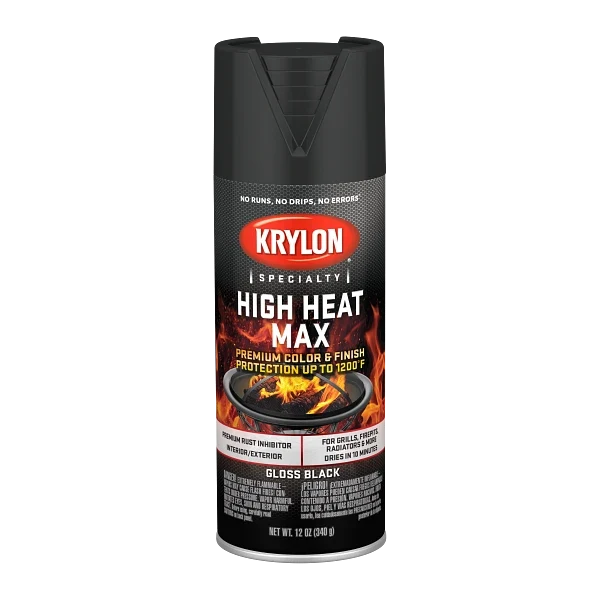
- Coverage
- 15–20 sq ft per 12 oz can
- Sheens
- Gloss (goes flat in the hot zones after firing)
- Dry / recoat
- Touch 10 min · handle 1h
- Full cure
- 7 days air cure, or first firing on hot parts
- VOC
- Solvent-borne aerosol
- Yellowing risk
- Not applicable
- Primer
- None
- Price tier
- $
- Dry to touch in 10 minutes and dry to handle in 1 hour, the fastest turnaround in the round-up by a wide margin
- Krylon publishes 15 to 20 sq ft per 12 oz can, the best coverage per can of any aerosol tested
- Gloss black and gloss aluminum both cover bare steel in two light passes with no primer
- Continuous service rating is only 600°F; the 1200°F number is intermittent. On a hard-burning stove this is the wrong can
- Our grate coupon chalked to a dull gray at burn cycle 18 and showed rust bleed at the cut edge by cycle 30
- Two colors only, both gloss, and the gloss goes flat wherever the metal runs hot, so a part-hot part-cool piece finishes two-toned
Original Krud Kutter Cleaner & Degreaser
High-heat paint does not get a primer, so the degreaser is the primer step. Every surface in this category is contaminated in a way wall paint never deals with: rendered pork fat on a grill lid, creosote film on stove pipe, cooking oil polymerized into cast iron, road grime and oil mist on an exhaust manifold. Silicone-alkyd and silicone-ceramic films bond mechanically to clean bare metal and to nothing else. Scrub with a heavy surfactant degreaser, rinse to a bare water break, wire-brush the loose scale off, wipe with denatured alcohol, then paint the same day before flash rust forms. Every first-fire peel I have seen traced back to skipped cleaning, not to the can.
BUY ON AMAZON
Ask a Question