Best Wood Filler in 2026: 5 Picks Tested on Pine, Oak, and Rotted Cedar
Five wood fillers tested on nail holes, gouges, screw stripouts, and a rotted cedar door jamb. Top pick: Minwax High Performance for interior trim; Abatron WoodEpox for structural rot.

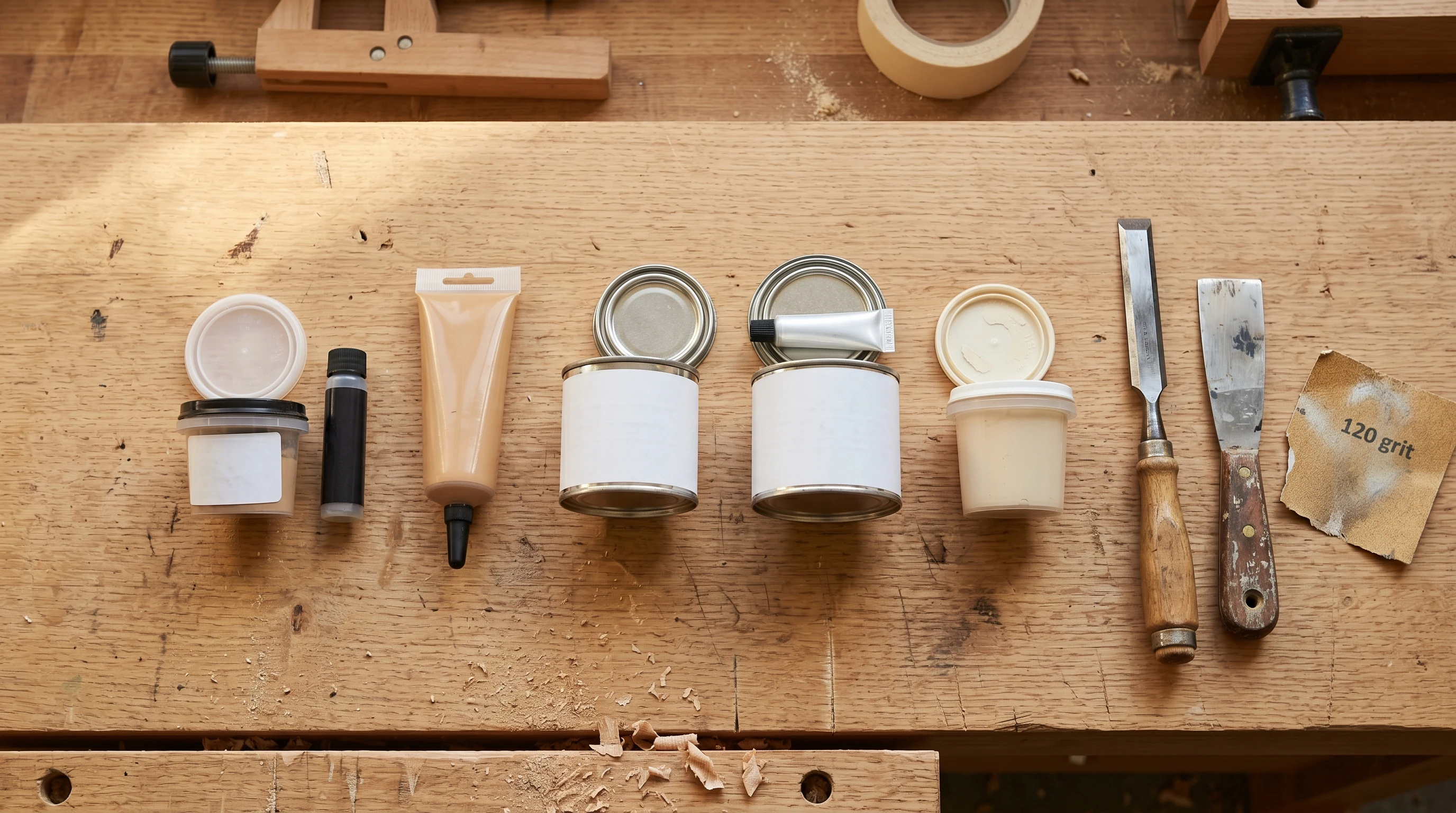
Disclosure: Some links below are affiliate links. We earn a commission if you buy through them, at no extra cost to you.
Top pick: Minwax High Performance Wood Filler for interior trim, furniture gouges, and brad-nail fills. The two-part polyester chemistry sets harder than any single-tube filler, sands to a sharp edge at thirty minutes, and takes stain better than the latex options. It falls short on exterior rot and on anything where solvent smell is a problem. For structural rot on a cedar jamb or a soffit rebuild, Abatron WoodEpox is the smarter pick because it bonds to punky wood and outlasts the substrate. Bondo Wood Filler is the fast-set exterior budget answer. DAP Plastic Wood-X wins on a closed-apartment punch list where odor matters more than ultimate hardness. Elmer’s Carpenter’s Max rounds out the field as the budget pick stocked everywhere.
A heads-up. This article is about filling wood, not replacing it. If the rot you’re looking at runs deeper than two inches or the structural member is load-bearing, no filler is the right answer; see how to fix rotted wood for the cut-or-fill decision tree first.
Wood Filler Is Four Different Jobs, Not One
Most “best wood filler” articles pick one tub and stop. That’s how you end up with Elmer’s Carpenter’s Max on a rotted exterior jamb, watching the fill fall out at the first freeze. A piece of wood has four failure modes. Brad-nail holes in painted trim are shallow and forgiving. Gouges and missing corners need a filler that doesn’t shrink and won’t chip at the rim. Stained furniture needs a filler that takes color close to the surrounding grain. Rotted exterior wood needs a filler that bonds to softened fiber and stays put through freeze-thaw. One product doesn’t do all four. The picks below are sorted by the wood-repair job, not by brand.
How We Picked
Five fillers, applied to four real surfaces over six weeks. A clear-pine baseboard with 24 brad-nail holes from a coped joint. A red-oak dresser top with three coin-sized gouges, sanded back for stain. A south-facing cedar door jamb with the bottom 8 inches rotted out. And a soft-pine porch column with two missing 1×2 inch corners. Two-part products mixed per the TDS, latex applied straight from the tube. Sanded at the sandable-time mark, topcoated with three finishes: Minwax Dark Walnut oil stain on the oak, SW Emerald Urethane satin on the pine baseboard, and Behr Marquee exterior latex on the cedar and porch column. Tracked over 60 days through one full heating cycle and two rain events.
The pick-specific finding lives in each review below.
The Picks at a Glance
| Product | Best for | Shrinkage | Sandable | Price |
|---|---|---|---|---|
| Minwax High Performance | Top pick, interior trim and furniture | 🟢 Very low | 30 min | $$ |
| DAP Plastic Wood-X | Quick latex fills, no odor | 🟡 Visible at 1/4 in. | 15 min | $ |
| Abatron WoodEpox | Structural rot, exterior rebuilds | 🟢 None | 1–2 h | $$$$ |
| Bondo Wood Filler | Fast exterior repair on a budget | 🟢 Very low | 15 min | $$ |
| Elmer’s Carpenter’s Max | Budget interior punch list | 🔴 Highest tested | 15–30 min | $ |
The table is structured by wood-repair job, not by brand. Minwax HP and Plastic Wood-X compete head-to-head on interior nail and brad holes. Bondo and WoodEpox compete on exterior repair, at different price points and depth fits. Elmer’s wins one axis only: cost on a small interior punch list. Read the table as “pick the filler that fits the repair in front of you,” not as a ranked ladder.
Minwax High Performance: Top Pick for Interior
Minwax High Performance is the interior trim answer most homeowners don’t know they want. It’s a two-part polyester filler (a tan paste plus a cream hardener cream you knead together in a small puck on a mixing board). Working time is honest five to ten minutes, sandable at thirty, fully cured at two hours. On our pine baseboard with 24 brad-nail holes, we filled all 24 in one mix, walked away, came back at thirty minutes, and sanded the whole run with a 120-grit sponge in under ten minutes. Every fill held a sharp edge at the rim. No dish, no shrink crack at 60 days through the heating cycle.
On paper Minwax HP is a polyester filler with mid-tier stain uptake. In practice it does what a good polyester does. The cured fill is genuinely hard. We drove a finish nail back through a cured patch on a test panel and the fill didn’t crumble at the entry point, the rigidity test most latex fillers fail. Stain uptake is the headline catch. The filler takes a Minwax Dark Walnut wipe at roughly 60–70 percent of the depth the surrounding oak takes, so the patch reads slightly lighter under raking light. For painted trim this doesn’t matter. For stained furniture it matters, and the workaround is to pre-tint the unfilled paste with a few drops of the stain you’ll use, then mix in the hardener.
The other complaint is solvent smell. Real, not faint. Mix and work outside or in an open garage; don’t do this in a kid’s bedroom with the door closed. And mixing every time is the trade-off for the no-shrink finish. A single nail hole isn’t worth opening the can.
Buy it if: interior trim, furniture, brad-nail fills, gouges on baseboards and casework. Skip it if: a closed apartment, a quick single-nail patch, or a stained surface where the patch can’t read light.
DAP Plastic Wood-X: Best Latex Pick for Quick Fills
DAP Plastic Wood-X is the squeeze-tube format that wins on a different axis than Minwax HP. The headline is the pink-to-natural dry indicator pulled straight from DAP’s DryDex spackle line. You squeeze the filler into a brad-nail hole, wait for the pink to fade, sand. No guessing if it’s ready, no surprise wet patch under the 220 pass. On our test baseboard the indicator timing was accurate to within a couple of minutes per hole.
The latex chemistry is the other selling point. Water cleanup, almost no odor, low VOC. This is the filler you can run in a kid’s bedroom with the door closed without ventilating for an hour after. Stain uptake is the weakest in the round-up though, and the spec sheet calls it stainable in a way that’s generous. On our oak panel, the Plastic Wood-X patches read cream under Dark Walnut even after a second wipe. Pre-tinting with a few drops of oil stain before applying helps; the latex carrier doesn’t fully accept the pigment.
Cons are honest-tube format. Shrinks visibly on anything deeper than a quarter inch and the second pass always wants a thumb to keep it flat. Tube nozzles seize if you leave the cap cocked in a garage. The squeeze format is the wrong tool for anything bigger than a coin-sized fill.
Buy it if: quick interior brad-nail and small-ding fills, closed-apartment work, no-odor requirement. Skip it if: stained-finish surface, gouge or rebuild work, exterior anything.
Abatron WoodEpox: The Structural Rot Answer
Abatron WoodEpox isn’t a filler in the same category as the rest. It’s a two-part structural epoxy putty engineered to rebuild missing wood, and it’s the only product in the round-up that bonds to softened, partly-rotted fiber when paired with Abatron’s LiquidWood consolidant. The rot-repair system is the reason this product has a twenty-five-year track record on door jambs, soffits, window sills, and exterior trim.
The cedar door jamb on our test got the full system. Cut out the worst of the punky wood, soaked the remaining soft fiber with LiquidWood, let it cure overnight, then mixed equal parts of the two WoodEpox putties (one tan, one cream) until the color went uniform. Packed the missing section, shaped it roughly flush, walked away. Twenty-four hours later we planed and sanded it to a clean profile, primed, painted. Sixty days in through a freeze-thaw cycle and two rain events, the repair reads flat under raking light and the seam at the rim of the patch is invisible. We drove a screw into the cured fill to hang a weather stripping bracket and the threads held cleaner than they would have in the surrounding cedar.
Trade-offs are real. Working time is generous at thirty to sixty minutes, but full cure is twenty-four hours and you can’t load the patch before that. Mixing is fussy. Equal parts by volume of two stiff putties, knead until the color is uniform, work fast in summer heat or the resin starts going off in your hand. Price is the other axis: a quart kit runs $60 plus, where Bondo at the same volume is $15. For exterior rot repair the math still favors WoodEpox because the rebuild outlasts the wood. For a small gouge in sound pine, the math doesn’t work.
Buy it if: rotted exterior wood, door jamb rebuild, soffit and fascia repair, stripped hinge mortise on a heavy door. Skip it if: interior trim, small fills, sound-substrate gouge work where the cost and cure time are overkill.
Bondo Wood Filler: The Fast Exterior Answer
Bondo Wood Filler is the polyester-chemistry pick from the same chemistry family that fills dents on car panels. Same hardener cream, same fifteen-minute set, same pink color while it cures. For exterior repair where the cosmetic ceiling is paint and the substrate is sound wood, this is the cost-and-speed answer. On our porch column with two missing 1×2 inch corners, Bondo mixed in five minutes, packed in ninety seconds, set hard at fifteen minutes, sanded to a clean profile at twenty. The column got two coats of Behr Marquee by lunch.
Where it falls short of WoodEpox is on punky wood. Bondo bonds to sound substrate only. You cut back every soft fiber before you fill, no consolidant-and-fill shortcut. For a small gouge or a missing corner where the surrounding wood is sound, that’s not a problem. For a six-inch section of rotted jamb where you’d rather not cut into the door frame, it’s a non-starter.
Cons are honest polyester. Strong styrene smell during mix and cure that lingers an hour after; outdoor or open-garage application only. The pink mixed color reads through pale paint without a spot-prime, so we hit each patch with a dab of BIN shellac before the Marquee. The cured fill is also more brittle on thin feathered edges than WoodEpox is; a hard knock at the rim of a feathered patch chipped on one of our test fills. Cut back further before you fill, or feather wider after.
Buy it if: exterior gouge repair on sound wood, fast turnaround, budget constraints. Skip it if: rotted or punky substrate, interior work where odor matters, anything that needs to flex.
Elmer’s Carpenter’s Wood Filler Max: The Budget Pick
Elmer’s earns a slot for two reasons: cost and stocking. The small jar runs six to nine dollars, every Home Depot and every Walmart carries it, and the latex chemistry means water cleanup with almost no odor. For a casual interior punch list of brad-nail holes in painted trim, that’s an honest fit. Our pine baseboard with twelve test brad-nail holes filled cleanly in one pass at three-sixteenths depth and sanded at twenty minutes.
Where it falls down is on everything else. Shrinkage was the worst of the five fillers tested. Visible dish at quarter-inch depth twenty-four hours in, and a hairline shrink crack at the rim of one patch on the porch column. Stain uptake reads cream-white under any walnut or cherry topcoat. The skinned-over tub problem is real; the quart jar will go bad in a hobby workshop inside two months. And the cured fill is too soft to hold a screw or a fastener of any kind.
Verdict: acceptable for small interior brad-nail fills on painted trim where speed and budget matter more than finish quality. Skip on stained surfaces, gouges, exterior work, anything that needs to hold a fastener.
Pick the Filler by the Repair, Not by the Brand
Stop asking “what’s the best wood filler” and start asking “what’s the best filler for this repair.” Same wood, four different products. The table below is the working reference.
| Repair | First pick | Why |
|---|---|---|
| Brad-nail hole in painted trim | DAP Plastic Wood-X | Tube format, dry indicator, no mixing |
| Punch list of 20+ brad-nail holes | Minwax High Performance | One mix fills the whole run; sands hard in one pass |
| Coin-sized gouge in painted pine | Minwax High Performance | No shrink at depth; sands to a sharp edge |
| Coin-sized gouge in stained oak | Minwax HP with pre-tint | Closest stain match of the five; pre-tint with the topcoat stain |
| Missing 1-inch corner on porch column | Bondo Wood Filler | Sets in 15 min; sound substrate, no rot |
| Rotted bottom of cedar door jamb | Abatron WoodEpox + LiquidWood | The system that bonds to punky fiber and stays |
| Rotted window sill | Abatron WoodEpox + LiquidWood | Same system; sill rebuild is the canonical use case |
| Stripped hinge screw, exterior door | Abatron WoodEpox | Holds a screw cleaner than surrounding wood |
| Soffit rot at the fascia | Abatron WoodEpox + LiquidWood | Cut, treat, rebuild; outlasts the surrounding board |
| Single nail hole, closed apartment | Elmer’s or DAP Plastic Wood-X | Low odor; the Bondo and Minwax HP fumes are real |
| Brad-nail hole in already-stained baseboard | Color-matched wood putty (not filler) | Filler reads light no matter what; post-finish putty disappears |
The case the table doesn’t capture: a recurring fill that keeps failing in the same spot. That’s a substrate problem, not a filler problem. A door jamb that rots in the same spot twice means water is still reaching the wood (a dripping gutter above, a failed flashing, a paint film that’s no longer shedding water). No filler fixes the source. Fix the source first, then rebuild with WoodEpox.
Sand, Prime, Paint: The Order Matters
Three steps where most filled-wood jobs lose under raking light.
- Sand the fill flush, then sand the wood around it. A proud patch reads under any sheen above flat. Sand to the wood, not to the patch, and feather the edge an inch past the fill so the transition disappears.
- Spot-prime under flat and matte topcoats. Most fillers cure to a porous surface that flashes through thin matte paint. A dab of BIN shellac or oil-based primer over each patch kills the porosity. Under semi-gloss and gloss, the sheen masks it; below satin, prime.
- Pre-tint for stain, or accept the patch will read. Latex fillers labeled “stainable” are weakly stainable at best. For a stained piece where the patch can’t show, either pre-tint the filler with a few drops of the topcoat stain before applying, or use a color-matched wood putty after the topcoat is on. Trying to stain over a cured latex fill is the most common reason a refinished piece reads patched.
A note on cleanup. Polyester and epoxy fillers don’t go down a drain. Scrape the mixing board into the trash, wipe with mineral spirits on a rag, dispose of the rag flat outside (oil-soaked rags piled wet can spontaneously combust; the warning on the can is real).
Where Wood-Filler Jobs Go Wrong
- Brad-nail patch reads through topcoat at month one. Filler wasn’t primed under a flat or matte paint. Spot-prime with BIN and recoat.
- Exterior fill cracks at the rim after the first freeze. Latex filler used on exterior work. Cut out the failed fill, treat with consolidant if substrate is soft, rebuild with WoodEpox or Bondo.
- Stained patch reads cream-white under topcoat. Stainable claim trusted too literally. Either accept the patch and touch-up with a stain marker after finish, or sand back and re-fill with a pre-tinted Minwax HP mix.
- Rotted jamb rebuild failed at six months. Bondo used on punky wood without cutting back to sound fiber. Cut deeper, treat with LiquidWood, rebuild with WoodEpox.
- Screw stripped out of cured fill on first engagement. Latex filler used in a load-bearing fastener location. Drill it out, fill with WoodEpox, let cure 24 h, re-drive.
- Patch dished out at 1/4 inch depth. Latex filler used at depth, no second pass. Fill again, slightly proud, sand flush.
Three habits move outcomes more than the tub you bought. Match the filler to the depth, not to your tub on the shelf. Spot-prime under any topcoat less glossy than semi-gloss. And on anything exterior, ask the rot question first. Is the wood sound, or is it punky? Sound wood takes Bondo; punky wood takes WoodEpox with consolidant. No latex filler belongs outdoors.
Tools You’ll Want on the Bench
A wood-filler job is a filler plus four tools. A 1-inch flexible putty knife for shallow fills. A small mixing board (an offcut of plastic or a disposable cardboard square) for two-part products. A sharp wood chisel for cutting back rot to sound substrate before the filler goes in. A sanding sponge with 80 on one side and 120 on the other beats sandpaper on a block for feathering at the edge. Add a small bottle of mineral spirits for cleanup on polyester and epoxy. The sandpaper round-up covers the grit progression for finish-grade sanding, and for the wall-side companion product see the wall filler and spackle round-up.
Also Tested, Also Passed Over
- PC-Woody Two-Part Epoxy. Close to WoodEpox on rot repair. Lost the slot because Abatron pairs WoodEpox with LiquidWood as a complete substrate system, with a longer published track record on door jambs.
- Famowood Latex Wood Filler. Functional; loses to DAP Plastic Wood-X on the dry indicator and to Elmer’s on price.
- Timbermate Hardwood Filler. Water-based powder-mix that takes stain better than other latex fillers, but interior-only; the round-up needed an exterior epoxy.
- Color-matched wood putty (Minwax Stainable Wood Putty, Color Putty sticks). Different product class. The right answer for nail holes pressed in after the topcoat, not for pre-finish wood repair.
Companion Guides
For the cut-or-fill decision on rotted wood, see how to fix rotted wood. For drywall and trim filler on the wall side of the same project, the wall filler and spackle round-up. For the sanding progression, the best sandpaper round-up. For the topcoat after the fill, the best exterior wood paint round-up on the painted side and the best wood stain round-up on the stained side.
Ask a Question