Room Colors · Green Family Room
8 Best Green Family Room Paint Colors for 2026
ideas, combinations, and real rooms
8 curated picks from real green family rooms — with the exact colors, honest reasons why, and the combinations that hold the room together.

Former interior stylist who can spot a green undertone from across a room. Jessica writes the color and mood pieces — what to choose, what pairs, and why your "white" looks pink.
The Fast Answer
Don't want to read 8 picks? These four are the safe answers.

Top Picks for the Green Family Room
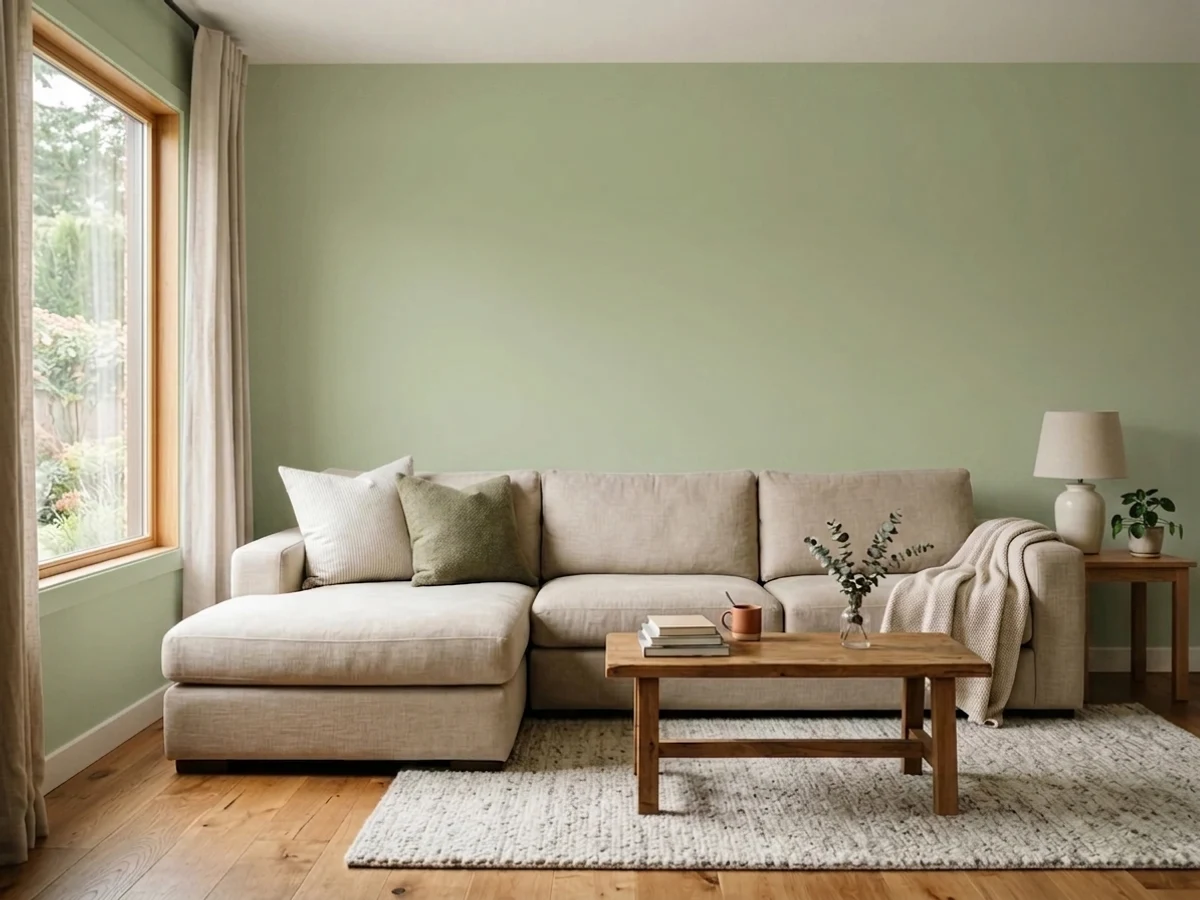
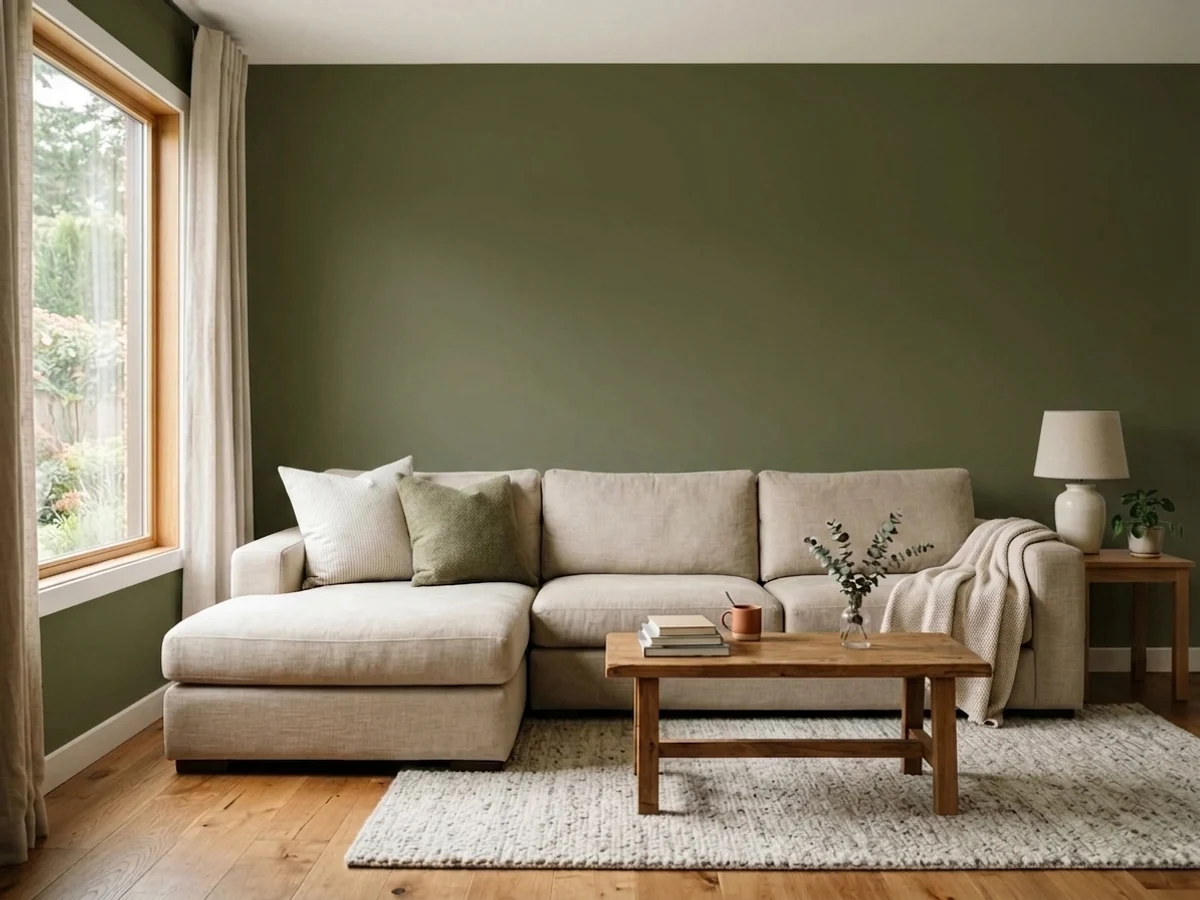
Tap a shade to see the green family room in it, then try it on your own room.
Green Family Room Color Trends 2026 — What's In, What's Out

- Bright Kelly Green Accents — Saturated, primary-leaning greens feel too playful for today's family rooms; 2026 favors muted, earthy olive and sage instead.
- Single Green Accent Wall — One green wall against three neutral walls feels dated; 2026 commits to green throughout the room instead of isolating it.
- Cool Blue-Green Everything — Cool, minty blue-greens are losing favor to warmer, more grounded olive and moss greens in 2026 family rooms.
The 8 Best Green Family Room Paint Colors
Every pick below is a real rendered green family room, not a chip. The lead color first; the swatches are the full scheme in the photo — walls, furniture, textiles, accent.

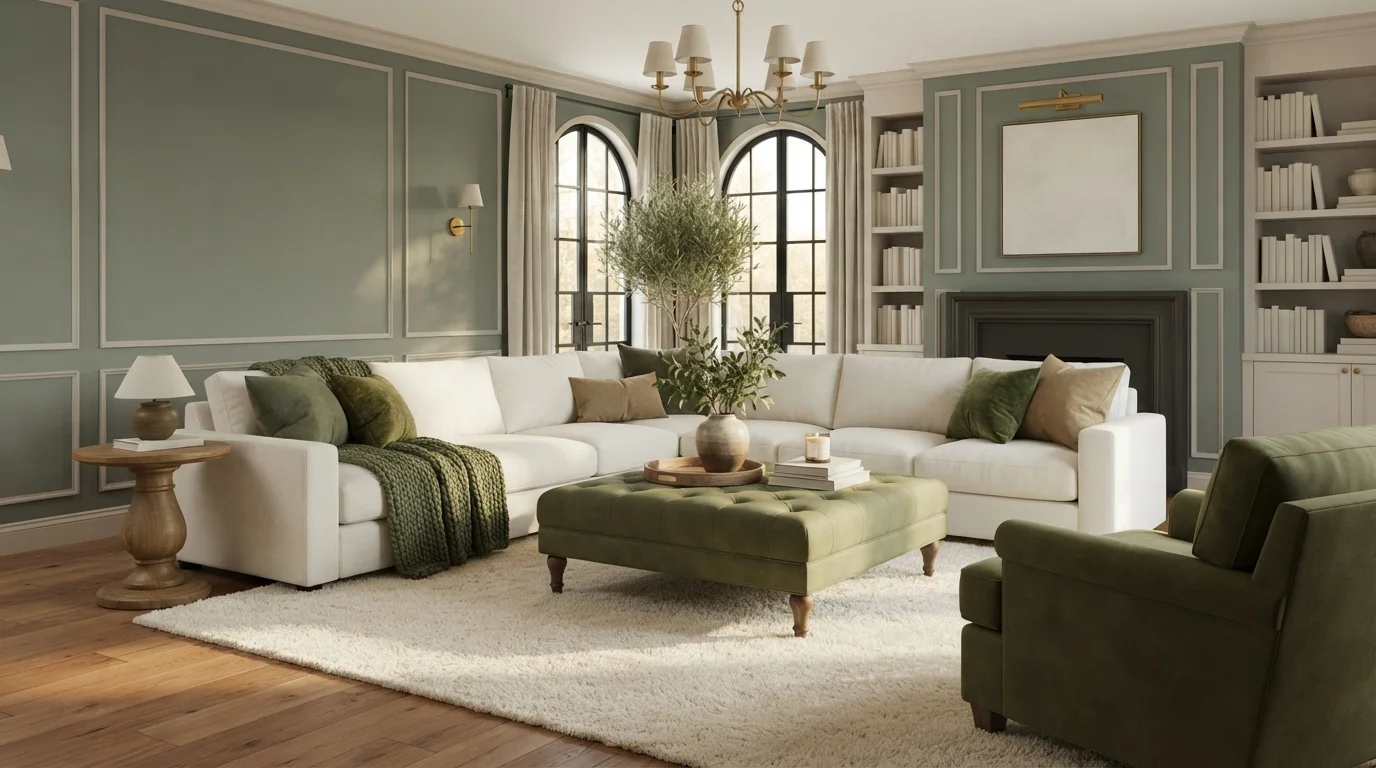
Warm sage-green paneled walls wrap around creamy plush seating to create an inviting, nature-inspired living room retreat.
Sage is a soft, muted gray-green that feels calm and natural. In this space, rich sage covers the paneled walls and built-in bookshelves, setting a tailored backdrop for a plush cream sectional sofa, a tufted olive ottoman, and a thick woven rug. The entire room feels peaceful, grounded, and snug. This pairing works because bright cream fabrics and warm wood tones keep the deep green walls feeling fresh and balanced. It is ideal for anyone who loves classic architecture with relaxed, botanical warmth.
SEE PRIVET ON YOUR WALLS →
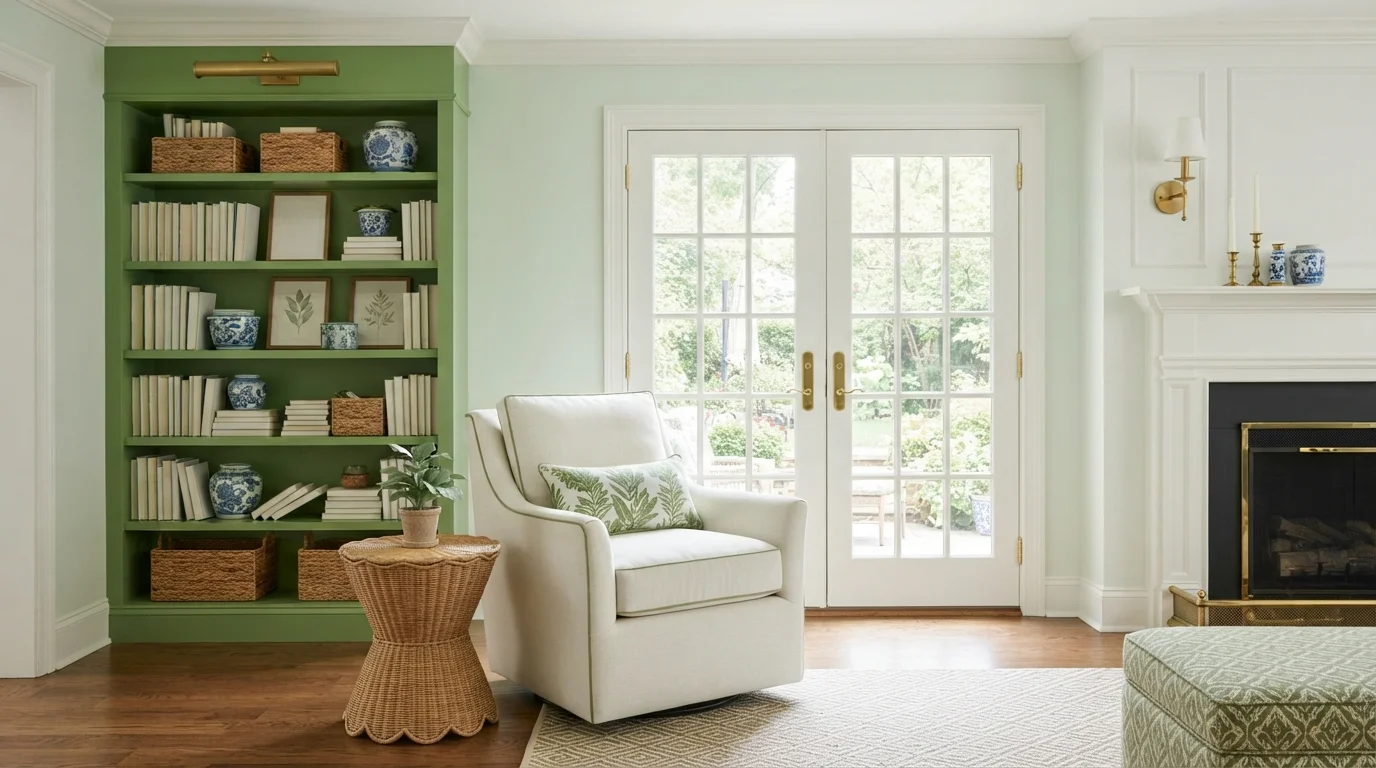
Crisp leafy green shelving meets soft celery walls and natural wicker for a sunny, garden-inspired retreat.
Leaf green is a lively, botanical shade that brings outdoor energy straight into your home. In this sitting room, bright green wraps the built-in bookcase, while the surrounding walls stay light in a soft celery tone. A cream armchair with green welt cord sits over a neutral patterned rug beside a woven wicker side table. The space feels fresh, cheerful, and full of natural charm. Layering two shades of green works because the pale walls keep the vivid bookcase from overwhelming the room. It is perfect for classic cottage lovers.
SEE IT ON YOUR WALLS →
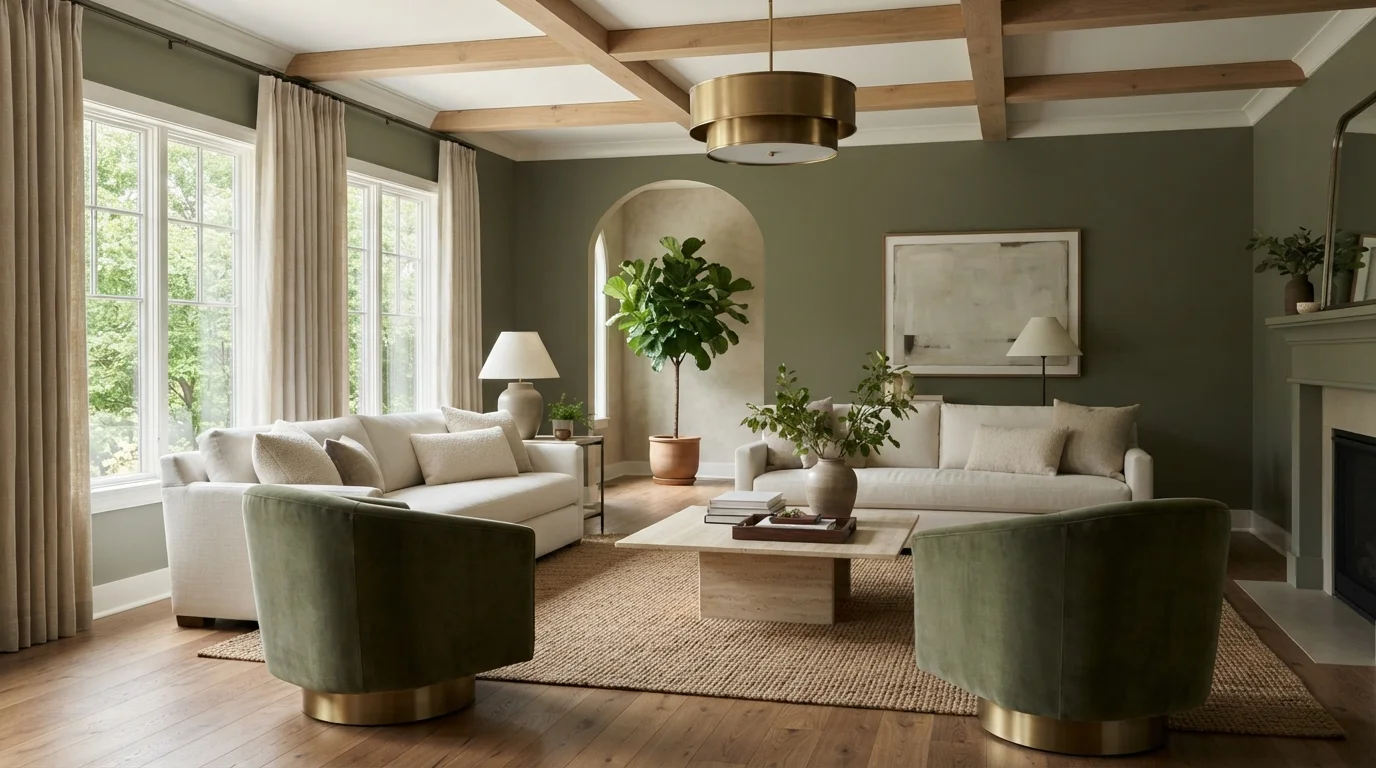
Rich olive green walls meet plush cream seating and natural wood beams for a peaceful, nature-inspired living space.
Olive green is a warm, earthy green inspired by nature. In this room, velvety olive washes the main walls, balanced by tailored cream sofas, olive velvet armchairs, and a low travertine coffee table resting on a soft beige rug. The room feels deeply calm, grounded, and welcoming. This combination works because blending natural greens with warm whites brings the serene feeling of the outdoors right inside. It is ideal for anyone who wants a relaxing gathering space that feels both stylish and cozy.
SEE BOWLING GREEN ON YOUR WALLS →
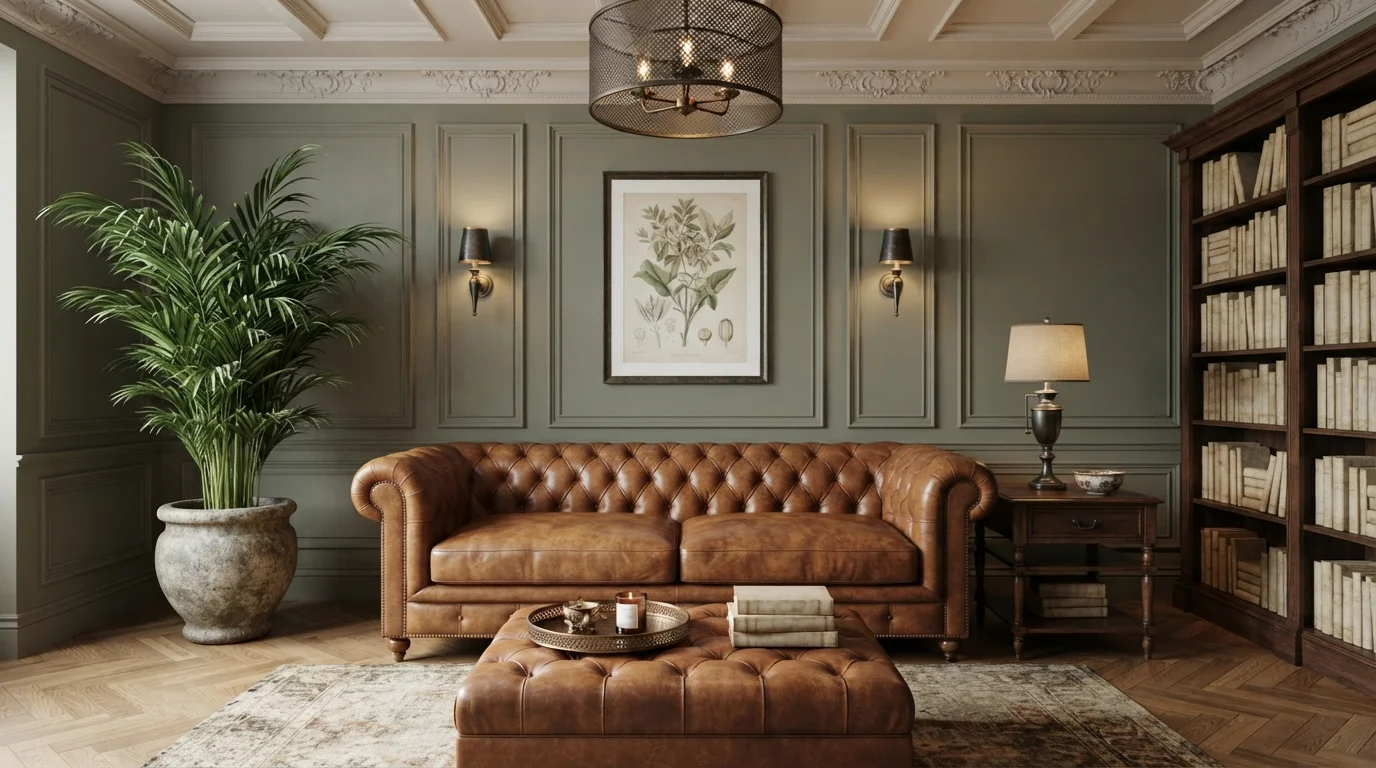
Rich green paneled walls and worn cognac leather create a timeless, moody retreat bathed in warm amber lighting.
Olive is a rich, earthy moss green. In this space, the deep green covers the paneled walls from floor to ceiling, balanced by an ornate cream plaster ceiling. A cognac brown leather Chesterfield sofa and matching square ottoman anchor the room over a patterned beige rug. The room feels cozy, stately, and deeply relaxing. Pairing deep green with rich leather works effortlessly because both tones pull from nature. It is ideal for anyone who loves the timeless look of a private study or library.
SEE CROPPED ON YOUR WALLS →
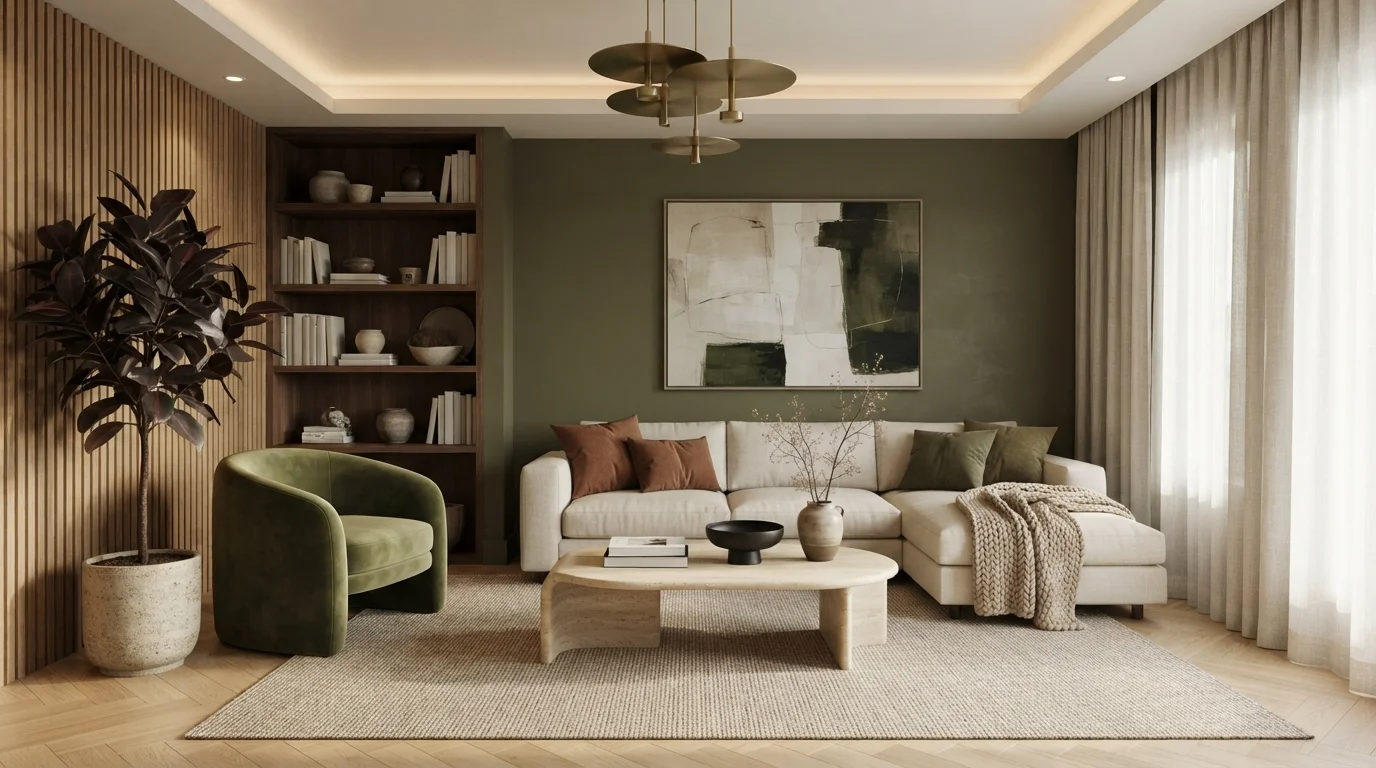
Rich olive walls and warm terracotta accents blend effortlessly with creamy upholstery to create a peaceful, grounded sanctuary.
Olive green is a rich, natural earthy tone with a soothing presence. In this room, the olive accent wall anchors the space, beautifully complementing the off-white ceiling, plush cream sectional, moss green velvet armchair, and smooth stone coffee table on a neutral woven rug. The space feels calm, grounded, and exceptionally welcoming. This combination works so well because nature-inspired greens and warm terracotta accents effortlessly balance soft cream fabrics and textured wood. It is a wonderful look for anyone who loves an organic, cozy home.
SEE IT ON YOUR WALLS →
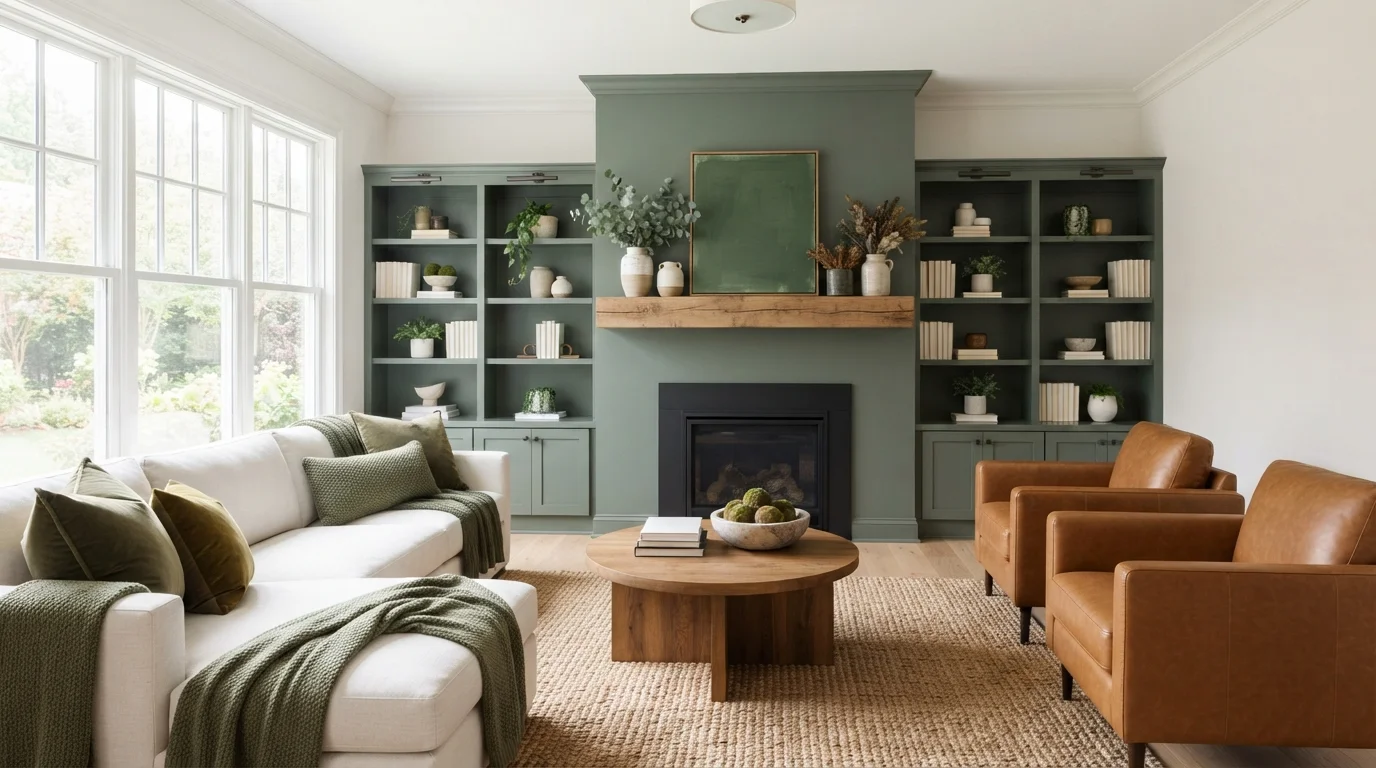
Deep sage green walls meet rich cognac leather and crisp white linen for a grounded, nature-inspired living room.
Sage green is a rich, earthy moss tone that brings the quiet feel of the outdoors inside. In this living room, deep green covers the striking fireplace feature wall and built-in shelving, balanced by an inviting white sectional, caramel leather armchairs, and a thick jute rug. The whole room feels grounded, calm, and effortlessly cozy. Pairing cool leafy greens with warm wood and leather works because nature-inspired colors always harmonize together. It is perfect for anyone who loves an organic, relaxed style.
SEE PICHOLINE ON YOUR WALLS →
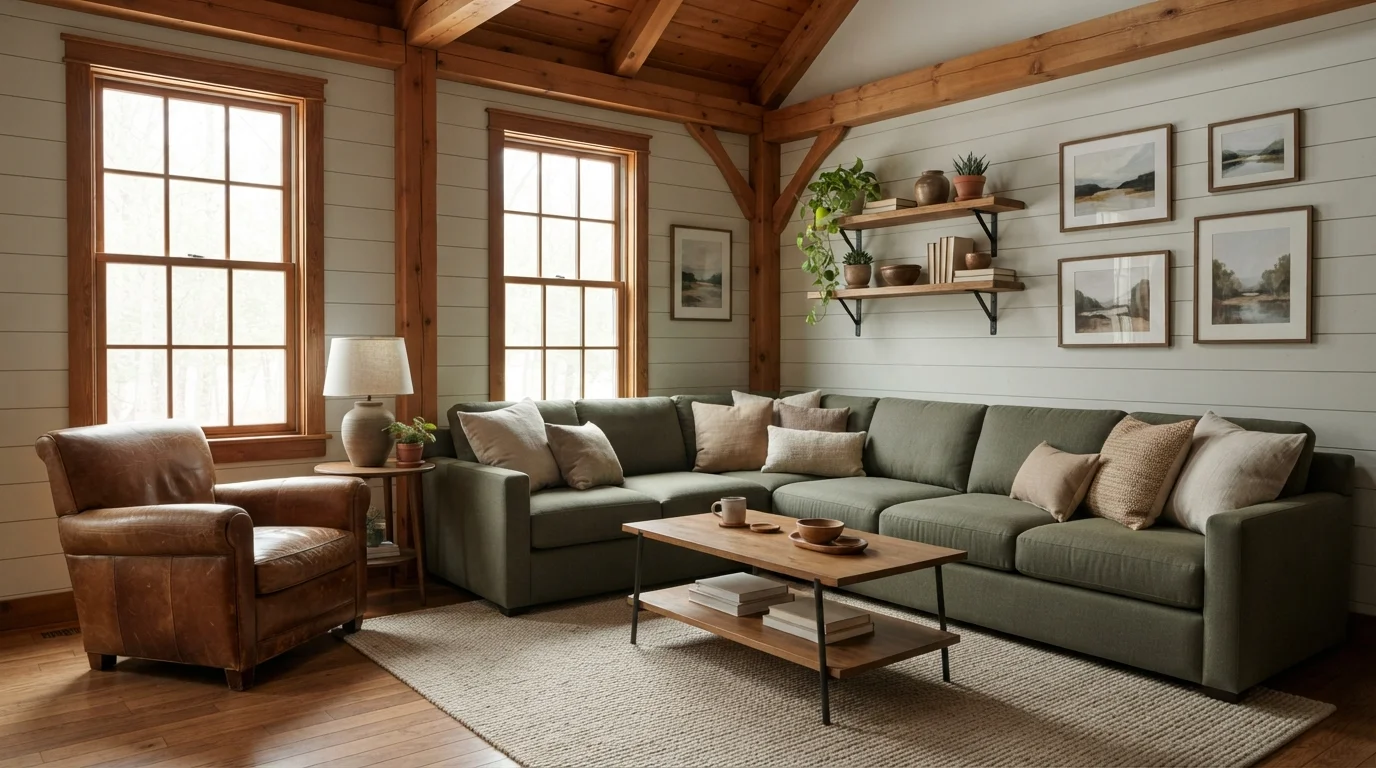
Soft olive-green walls pair effortlessly with rich natural timber beams and cozy leather for a tranquil, nature-inspired haven.
Muted sage is a soft, earthy green that brings the quiet outdoors inside. In this living room, sage-toned shiplap wraps the walls, seamlessly pairing with an olive sectional sofa and warm timber window frames. A caramel leather armchair, rustic wood coffee table, and flatweave beige rug keep everything grounded. The room feels deeply cozy, serene, and welcoming. This combo works because botanical greens and warm wood tones are natural partners that never clash. It is perfect for anyone wanting a relaxed, cabin-inspired escape.
SEE IT ON YOUR WALLS →
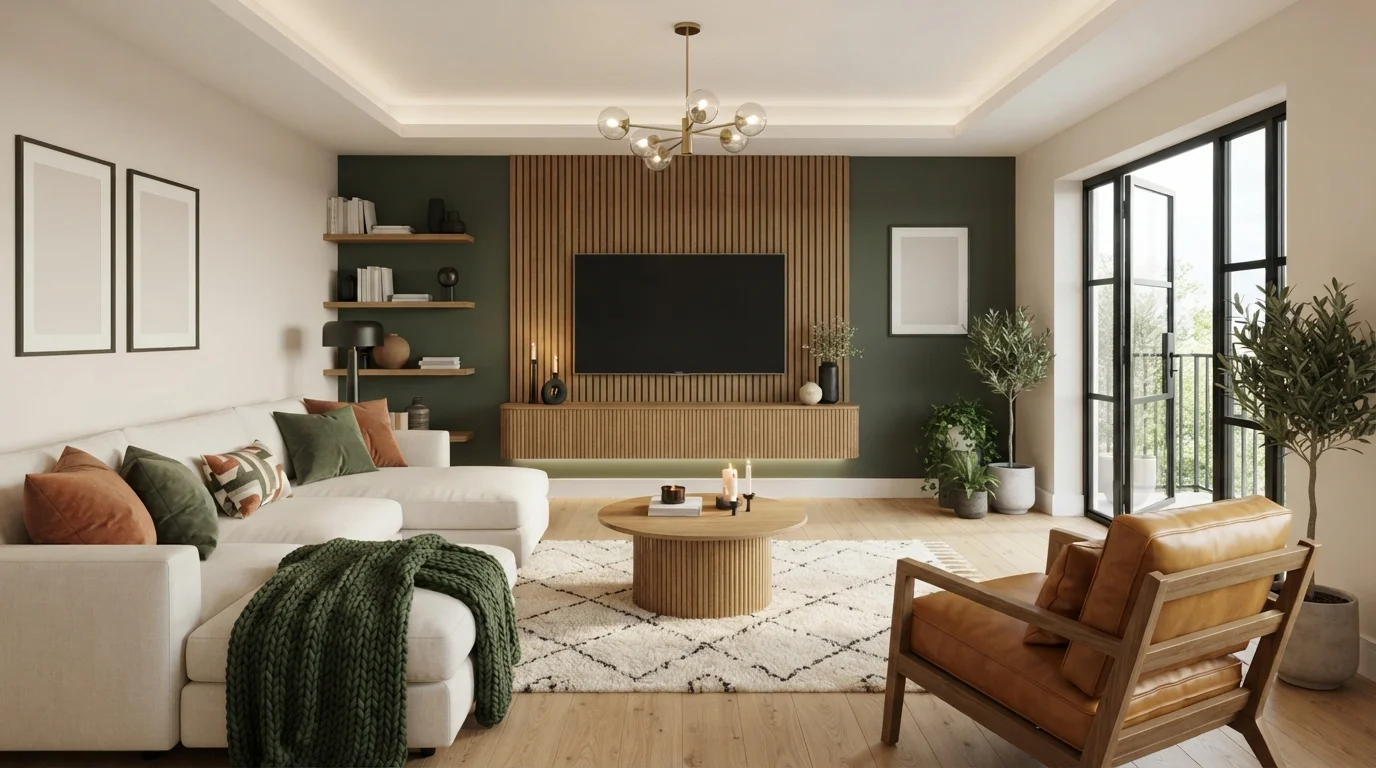
Soft amber lighting, plush cream seating, and earthy olive walls create an inviting evening retreat after a long day.
Olive green is a deep, earthy shade inspired by nature. In this room, it wraps the TV accent wall, pairing seamlessly with a soft cream ceiling, fluted oak millwork, an ivory sectional, and warm terracotta accent pillows. The space feels calm, grounded, and exceptionally snug. This combination works because earthy greens and rich wood tones balance each other effortlessly under soft, glowing light. It is ideal for anyone who loves an organic, modern sanctuary for cozy evenings at home.
SEE COURTYARD ON YOUR WALLS →Green Family Room Wall Color Combinations
A wall color never works alone. These are the full schemes from the rooms above — the lead color first, then the supporting colors that make the photo work.
Warm sage-green paneled walls wrap around creamy plush seating to create an inviting, nature-inspired living room retreat.
TRY THIS PALETTE →Crisp leafy green shelving meets soft celery walls and natural wicker for a sunny, garden-inspired retreat.
TRY THIS PALETTE →Rich olive green walls meet plush cream seating and natural wood beams for a peaceful, nature-inspired living space.
TRY THIS PALETTE →Rich green paneled walls and worn cognac leather create a timeless, moody retreat bathed in warm amber lighting.
TRY THIS PALETTE →Bancha pairs best with warm whites and natural wood — think white oak floors, a linen sofa, and brass or unlacquered hardware; its brown undertone clashes with cool white trim, so keep trim in a warm off-white rather than a stark bright white. Back to Nature is the most flexible of the five: white or cream trim keeps it fresh and family-friendly, while black window frames or a black media console give it a slightly more grown-up, current look without changing the wall color at all.
Olive Branch leans coastal, so pair it with driftwood tones, rattan, and white trim rather than anything too formal or dark. For the movie-night end, Black Emerald reads best with warm wood tones and brass or matte-black hardware — cool white trim on a near-black wall can look sterile, so a soft warm white or the same green in a matte finish on trim keeps it cohesive. Chard, being a true dark olive rather than near-black, pairs naturally with black metal accents, leather, and either white trim for contrast or matching Chard trim in semi-gloss for a fully wrapped, cocoon-like look.
More Family Room Color Ideas
Set on a color family already? Each page has its own real rooms and picks.
Light or Dark Green Family Room Colors?
Go Light (LRV 60+) If…
The room is small, faces north, or has to work at every hour. Light warm colors make it feel bigger and stay calm in evening light — the light you actually live in.
Go Dark (LRV Under 20) If…
You want the cocoon effect and the room has real daylight. Dark works best on one feature wall — or fully color-drenched in a large room with good windows.
Family rooms usually get more daily use than any other room in the house, so the light-versus-dark call comes down to how the room is actually lit and used, not just taste. Back to Nature (LRV 55) is the safe, forgiving choice for a family room with average or below-average natural light — north-facing windows, a shared wall with no exterior exposure, or a room that doubles as a playroom in the daytime. It stays legible as green instead of reading muddy or grey, and it won't swallow light the room doesn't have to spare.
Bancha (LRV 11), Chard (LRV 8), and Black Emerald (LRV 1) all belong in a family room that either gets strong natural light during the day or leans hard into being the evening hangout room — the one with the sectional, the big TV, and the lamps instead of an overhead fixture. Go this dark only with a plan for artificial light: floor lamps and sconces at a few different heights, not one central fixture, or the room reads as a cave rather than a cozy den. Olive Branch, being mid-tone and grey rather than saturated, is the one pick here that works reasonably well in either scenario without much light-planning at all.
See It. Love It.
Paint It.
Upload one photo of your green family room and try every color on this page on your own walls — in your own light, before you buy a drop of paint.

Back to NatureBeforeSheen for a Room That Actually Gets Used
A family room takes more abuse than almost any other room — crayon, dog noses at wall height, couch backs pushed against the paint, snack fingers. Eggshell or satin on the walls is the standard for any of these five picks; it wipes clean without the glare that flat paint can't survive and semi-gloss puts on full display over every roller mark and drywall imperfection.
Trim and any built-ins should go semi-gloss regardless of which green you pick — it's the finish that actually stands up to hands, feet kicking the baseboard, and repeated cleaning. If you're painting Bancha or Chard on trim to match the walls instead of contrasting with white, keep that trim in semi-gloss even though the wall color is matte-adjacent; the sheen difference between wall and trim is what keeps the room from looking like one flat block of color.
The Small-Room Mistake With Dark Green
The most common regret with family-room green isn't the color itself — it's picking a dark shade like Black Emerald or Chard for a room that's genuinely small and dim, then being surprised the room feels tighter, not cozier. Dark green works because it recedes and stops reading as a color-choice at all once the lights are low, but that only happens with enough light sources doing the work; skip the lamps and the room just looks dark, full stop.
The second mistake is testing these greens on a small swatch card instead of a large sample on the actual wall. Green shifts more under changing light than almost any other color family — Bancha can look nearly grey-brown under warm bulbs and distinctly olive-green in daylight, and Olive Branch can drift from green to almost khaki depending on what's reflecting off the floor. Paint a 2-by-2-foot patch and look at it morning, midday, and evening before committing to a full room.
About Green Family Room Paint Colors
Green works in a family room because it does the opposite of most bold colors — it settles a busy, high-traffic space down instead of revving it up. This is the room with the TV, the toy bins, the dog bed, and every homework session, so a color that reads calm at 7am and cozy at 9pm earns its keep. Green also sits closest to neutral of any "color" color, which is why it layers over existing wood floors, leather, and mismatched hand-me-down furniture without a fight.
The picks here cover both ends of that range. Bancha (Farrow & Ball No. 298, LRV 11) is a rich, earthy olive that leans more brown than green in low light — it reads warm and grounded rather than fresh. Back to Nature (Behr S340-4, LRV 55) sits at the opposite end: a soft, yellow-leaning sage light enough to work as the room's main wall color even with modest windows, and casual enough to survive kids and pets without looking precious. Olive Branch (Dunn-Edwards) splits the difference — a muted grey-green with almost no yellow in it, built for a relaxed, coastal-leaning family room rather than a jewel-box one.
Black Emerald (Sherwin-Williams SW 2936, LRV 1) and Chard (Behr MQ6-49, LRV 8) are the deep end of the family-room green story — near-black and true dark-olive respectively, built for movie-night rooms that lean into cozy over bright. Both need real light sources to read as color instead of just "dark," which is the trade you're making when you pick them over Back to Nature.
The Questions Everyone Asks
What color should I paint my green family room?
If you want one answer, start with the safe picks above — Privet, Frosted Holiday, Bowling Green, Cropped. They read well in any light and survive furniture changes. Then check the light: strong afternoon sun wants a step cooler, a north-facing room wants a step warmer.
is green a good color for a family room?
Yes — green is one of the most forgiving colors for a family room because it reads as closer to neutral than most colors, so it layers over existing wood floors, mismatched furniture, and kid clutter without fighting them. Lighter sage tones like Back to Nature keep the room feeling casual and bright; deeper picks like Bancha or Black Emerald lean the room toward cozy and calm instead. Both directions work — the choice comes down to how much natural light the room gets.
what color trim goes with green walls in a family room?
White or warm off-white trim is the standard choice and works with all five picks here, giving the walls a crisp edge without competing with the green. With warm-toned greens like Bancha, keep the white warm rather than stark blue-white, or the two will clash. For a more cohesive, wrapped look on deep greens like Chard or Black Emerald, painting the trim the same color in semi-gloss reads intentional rather than unfinished.
should i paint my family room a dark green or light green?
Pick light green, like Back to Nature at LRV 55, if the room gets average or low natural daylight or doubles as a daytime playroom — it stays legible as green instead of going muddy. Pick a dark green, like Bancha, Chard, or Black Emerald, if the room gets strong daylight or is mainly an evening hangout space with lamps doing the lighting. Dark green in a dim room with only overhead lighting is the combination that tends to disappoint.
what colors pair with green walls in a living room?
Warm wood tones, white or cream trim, and brass or black hardware all pair naturally with these greens. Back to Nature and Olive Branch look best with lighter woods like white oak and rattan for a casual, coastal feel; Bancha, Chard, and Black Emerald pair better with darker woods, leather, and black metal for a moodier, movie-night look. Avoid pairing any of these greens with cool, blue-based greys — the undertones tend to fight rather than complement.
does dark green make a family room look smaller?
It can, if the room is already small and relies on a single overhead light — dark greens like Black Emerald (LRV 1) and Chard (LRV 8) absorb light rather than bounce it, so a dim room reads even dimmer. In a room with good natural light or several lamp sources, the same colors instead make the walls recede and feel enveloping rather than cramped. If the room is small and dark to begin with, Back to Nature is the safer, light-reflecting choice.
What two-color combination works best in a green family room?
The reliable pattern is a quiet main color plus one deep accent on a single wall. Keep trim and ceiling in one warm white so the two colors are the only event in the room — the combination cards above show complete schemes from real rooms.
What colors make a green family room look bigger?
High-LRV, slightly warm colors — LRV 60–75 is the sweet spot. Paint the walls and trim close to the same light color so the corners blur, and keep the ceiling white. Stark cool white actually works against you; it creates hard shadows that show the room's edges.

Ask a Question