How to Paint Gutters Without Them Peeling in a Year
Gutter painting done right — pressure wash, TSP, scuff oxidation, self-etching primer, DTM acrylic topcoat. Ladder logistics, safety, and the mistakes that cost you a do-over.

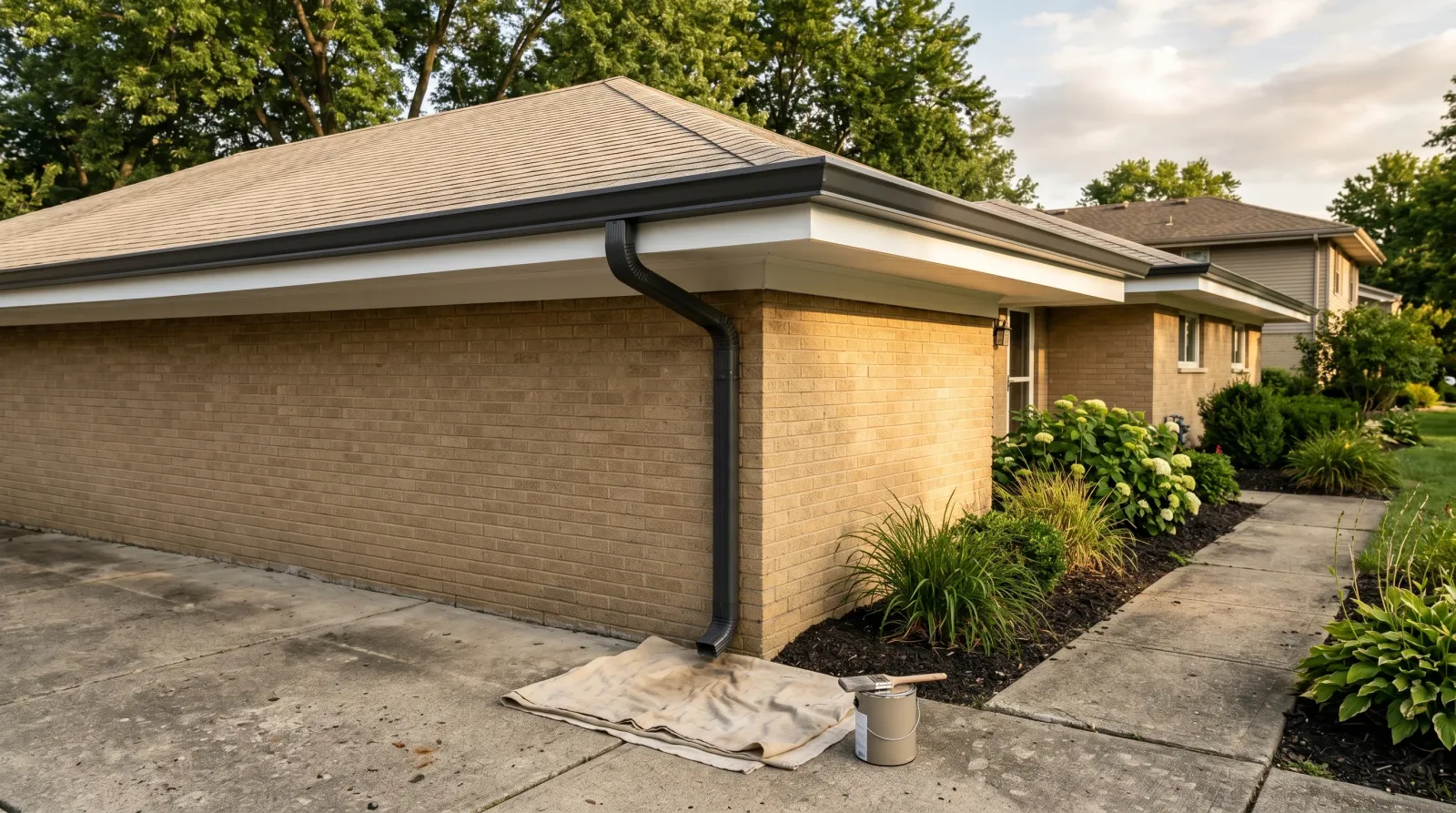
Painted gutters look sharp. Painted gutters that peel in eighteen months look worse than the chalky aluminum you started with.
The reason most DIY gutter jobs fail isn’t the paint. It’s the chalk. Aluminum oxidizes. Every gutter older than three years is wearing a thin white powder that wipes off on your finger. Paint laid over that powder bonds to the powder, not the metal. By the second summer heat cycle, the chalk releases and takes the paint with it.
The fix is honest prep. Pressure wash, TSP scrub, scuff sand, wipe with denatured alcohol, self-etching primer, then a direct-to-metal acrylic topcoat. Do all of it and the gutter holds for a decade. Skip a step and you’re back up the ladder by year two.
What You’ll Get
A 100–200 linear foot run of aluminum gutters repainted in a satin or semi-gloss color that holds eight to twelve years. Total cost around $110–$240 in materials. Two days of work alone, one day with a helper on the ladder. The downspouts come off, get painted on the ground, and go back up. That’s the only sane way to do them.
Honest Take on Time and Difficulty
Medium difficulty, mostly because of the ladder. The painting isn’t hard. The prep is repetitive, not technical. What makes this medium instead of easy is that you’re working at height for most of two days, and small mistakes at height turn into urgent care trips.
| Day | Activity | Hours |
|---|---|---|
| Sat AM | Pressure wash + TSP scrub | 2–3 |
| Sat PM | Scuff sand, wipe down, drop downspouts | 3–4 |
| Sun AM | Self-etching primer | 2 |
| Sun midday | First DTM topcoat | 2 |
| Sun PM | Second DTM topcoat, reattach downspouts | 2 |
Single-story ranch with straight runs: a weekend. Two-story with returns, hip junctions, and a sketchy approach over the porch roof: contractor job.
What You’ll Need
Paint and primer. Self-etching primer for the oxidized aluminum: Rust-Oleum Self-Etching Primer in a quart, or SW DTM Bonding Primer for a roll-and-brush version. Topcoat is a direct-to-metal acrylic: SW DTM Acrylic, BM DTM Acrylic Semi-Gloss, or PPG Pitt-Tech DTM. Satin hides minor surface waves; semi-gloss reads cleaner from the curb. See the best exterior paint round-up and the primer round-up. One quart of each covers about 150 linear feet of standard 5-inch K-style gutter.
Cleaning. TSP (trisodium phosphate) or TSP substitute. A pressure washer set to 1,500 PSI with a 25-degree fan tip, rentable for $40 a day. A long-handle soft scrub brush. Denatured alcohol for the final wipe before primer.
Sanding. 320-grit sanding sponges. Three or four. You’re dulling the surface, not removing material.
Brushes. A 2.5-inch angled sash brush for the gutter face. A 4-inch mini foam roller for back-rolling. A 1-inch brush for tight spots at end caps and hangers. See the paint brushes round-up.
Ladder and safety. Extension ladder rated 250+ pounds, set at the 4-to-1 angle. Standoff stabilizer arms that hold the ladder off the gutter itself. Work gloves, eye protection, and a helper for any work above twelve feet. The helper isn’t optional on a two-story house.
Step 1: Pressure Wash and TSP Scrub
Set the pressure washer to 1,500 PSI with a 25-degree fan tip. Higher pressure dents thin-gauge aluminum and you’ll see the ripple from the curb. Work top down, tip 12 inches off the gutter face. Hit the inside of the gutter too. Leaf debris and bird droppings trap moisture and corrode the seams.
After the wash, mix TSP per the package and scrub every face with the long-handle brush. The white chalk releases into the suds. Rinse. Run a clean finger across the dry surface. If it comes back white, scrub again.
Watch out for: skipping the TSP because the pressure wash “looked clean.” Pressure water alone knocks off surface dirt. It doesn’t lift bonded oxidation. The chalk is still there, and you won’t see it until the paint starts peeling.
Step 2: Scuff Sand and Wipe Down
Hand-scuff every exterior face with a 320-grit sanding sponge. Aim for a uniform matte. The gutter starts the day slick and ends it dull. That dullness is the bonding tooth the primer needs.
Don’t sand aggressively. Three light passes per section. Aluminum is soft and over-sanding gouges it.
Wipe every surface with denatured alcohol on a cotton rag. This pulls off sanding dust, oily fingerprints, and any TSP residue the rinse missed. Let it flash off 15 minutes before priming.
Watch out for: using a chemical deglosser instead of physical sanding. Deglossers work on enamel film, not oxidized aluminum. You need mechanical tooth.
Step 3: Drop the Downspouts
Unscrew the downspouts and lay them on a drop cloth. Paint them on the ground. Painting a vertical downspout from a ladder gives you lap marks, drips on the siding, and a sore back. Twenty minutes with a screwdriver saves an hour of acrobatics per downspout.
While they’re down, check rivets and elbows for rust. Wire-brush anything rusted and hit it with Rust-Oleum Rust Reformer before the regular primer goes on. Rusted hardware bleeds orange through any topcoat within one season.
Step 4: Self-Etching Primer
This is the step that makes the whole job hold. Self-etching primer contains a mild phosphoric acid that bites into the aluminum and creates a chemical bond, not just a mechanical grip. Without it, even a perfect scuff sand gives the topcoat a mechanical hold that lets go in the first hard summer heat cycle.
Brush a thin coat along the top edge with the 2.5-inch sash brush. Follow immediately with the 4-inch mini foam roller along the gutter face. That’s back-rolling: it pushes the primer into the scuff pattern instead of sitting on top. Self-etching primer dries fast: 30 minutes to touch, 1 hour before topcoat. Pick a calm overcast morning. Hot direct sun flashes the primer before you can back-roll, and you get holidays everywhere the foam couldn’t reach.
Watch out for: substituting interior bonding primer or “paint-and-primer-in-one” exterior wall paint. Neither contains the acid etch. Both peel by month eighteen.
Step 5: Two Coats of DTM Acrylic Topcoat
Direct-to-metal acrylic is what goes on top. SW DTM Acrylic Semi-Gloss, BM DTM Acrylic Semi-Gloss, or PPG Pitt-Tech DTM. These have elastomeric modifiers that flex with the daily heat cycle without micro-cracking along the bead.
Cut in at the top edge where the gutter meets the fascia. Roll the face with the 4-inch foam mini roller, end to end, in one direction. Don’t stop mid-run. Lap marks on gutter paint show from the street the way they don’t on a wall. Feather the edge into finished sections so the wet boundary blends.
Wait the recoat window. Typically 4 hours. Then a second coat. Two thin coats over one heavy coat. Always. A heavy coat sags at the drip edge and the sag telegraphs through for the life of the paint.
Reattach downspouts after 24 hours. Use galvanized screws if the originals showed rust.
Ladder Logistics (the Part That Hurts You)
The painting won’t bite you. The ladder will.
Set the extension ladder at the 4-to-1 angle: one foot out from the wall for every four feet up. Steeper and you’re climbing a near-vertical pole. Shallower and the ladder kicks out when you lean. Stand on a board or cardboard if the ground is uneven. Soft soil under one foot is how the ladder twists when you shift weight.
Use ladder standoff stabilizer arms. The U-shaped bracket bolts to the top of the ladder and spans across the gutter to the fascia behind it. A ladder leaning directly on wet paint dents the metal and wipes the paint off. Forty bucks. Pay it.
Never solo above twelve feet. The helper at the base isn’t doing busywork. They’re stopping the ladder from kicking when you lean. Move the ladder one ladder-width at a time. If the brush is more than an arm’s length from your shoulder, climb down and move it.
Common Mistakes That Cost You a Do-Over
- Painting over chalky oxidation. The biggest reason DIY gutter paint fails. Chalk releases and the paint goes with it. TSP and a hard scrub, every time.
- Skipping the self-etching primer. Bonding primer alone gives a mechanical hold. The acid in self-etch gives a chemical bond. Not interchangeable.
- Using exterior wall paint as a topcoat. No elastomeric modifier. It cracks along the bead the first hot summer day after a cold night.
- Painting downspouts in place. Drips, lap marks, paint on the siding, sore back. Drop them. Twenty-minute job.
- Leaning the ladder on the wet gutter. Dents the metal, wipes the paint. Standoff arms are forty bucks. Buy them.
- One heavy coat of topcoat. Sags at the drip edge, never fully hardens, looks ropy from the curb forever.
- Ignoring rust at the brackets and downspout straps. Rust bleeds orange through any topcoat within one season. Convert or replace before the primer goes on.
Cure Schedule
| Time after final coat | What’s safe |
|---|---|
| 4 hours | Touch dry, no rain |
| 24 hours | Reattach hardware, light rain fine |
| 7 days | Normal weather, scrub if needed |
| 30 days | Full cure, leaves and ice can sit on it |
Don’t reattach downspouts before 24 hours. The screws will mar the still-soft film and the bare metal at the screw head starts the corrosion clock over.
Maintenance and Touch-Ups
A properly prepped gutter paint job holds eight to twelve years. South-facing runs fade first; shaded north sides hold longest. The failure mode if prep was honest is gradual fade, not peeling.
Walk the gutters every spring. Look at the drip edge for nicks where a ladder or branch hit the film. Touch up nicks the same week with a small brush and leftover topcoat. Bare metal at a nick chalks fast, and the chalk migrates under the surrounding paint within a season.
When the whole run needs a refresh in year ten, the prep is shorter. Wash, light scuff with 320, wipe with denatured alcohol, skip the self-etch (the original is still bonded), and lay two fresh coats of DTM acrylic. One day, not two.
Cost Breakdown for a 150 Linear Foot Single-Story Run
| Item | Cost |
|---|---|
| TSP (1 lb) | $8 |
| Self-etching primer (1 qt) | $18 |
| DTM acrylic topcoat (1 qt) | $35 |
| Sash brush + mini roller + sponges | $25 |
| Drop cloths and rags | $15 |
| Pressure washer rental (1 day) | $40 |
| Ladder standoff arms | $40 |
| Total | $181 |
Already own the pressure washer and standoff arms? Drop to about $100. A pro quotes $600–$1,200 for the same run, mostly because they’re carrying liability for the ladder. The savings are real if you have the weekend and a helper.
What’ll Bite You in Two Years
The chalk you didn’t scrub off. That’s the one. Every other mistake in this guide shows up within a month — a sag, a lap mark, a missed spot at the end cap. Skipping the TSP and scuff is the silent killer. The gutters look great in October and start releasing in patches the following August. At that point the only fix is scraping everything off and starting over.
Scrub harder than you think you need to. Then scrub again.
Ask a Question