How to Paint Exterior Metal — Railings, Gates, and Siding
Three-step exterior metal paint job: kill the rust, bond with the right primer, topcoat with a DTM acrylic. Ferrous vs aluminum vs galvanized — the prep changes for each.

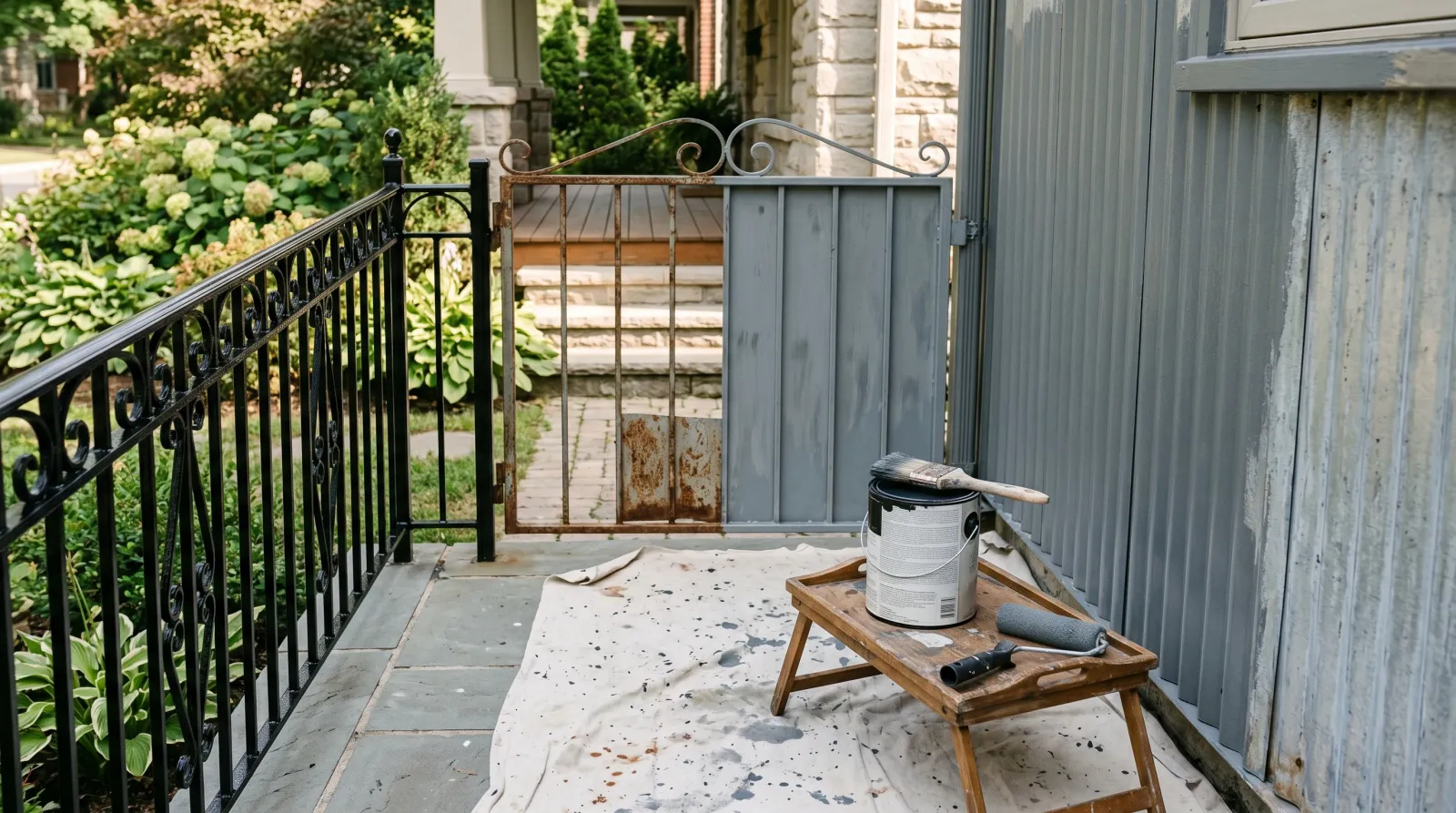
Three layers. Rust off, bonding primer down, DTM acrylic on top. Most exterior-metal repaint failures I see come back to a skipped or wrong middle layer. The topcoat looks fine for a season, then by the next summer the primer’s lifting and the paint peels off in sheets along the bottom rail. That’s not the topcoat’s fault. That’s the prep.
TL;DR
- Prep: Wire-wheel loose rust to bright metal, then convert what’s left with a rust converter. Aluminum and galvanized get a degrease and scuff only, no grinding.
- Primer: Rust-Oleum Stops Rust on ferrous. INSL-X Stix on aluminum and previously-painted exterior metal. Rust-Oleum Galvanized Metal Primer on fresh galvanized.
- Paint: A DTM (direct-to-metal) acrylic topcoat. SW Pro Industrial DTM, Behr Premium Plus DTM, or Rust-Oleum Professional DTM.
- Cure: Recoat at 4 hours. Full cure 14–30 days before any pressure wash or seasonal weather hits.
- Skill: Medium. The prep is the work; the painting is the easy part.
What “Exterior Metal” Actually Means
Three categories show up on a typical American property. Ferrous covers wrought-iron railings, hot-rolled steel gates, and cast-iron porch posts. These rust when the paint film breaks. Non-ferrous aluminum covers older aluminum siding, modern aluminum gates, and aluminum window flashing. It doesn’t rust, but it oxidizes into a chalky white powder that kills topcoat adhesion. Galvanized steel covers sheet-metal gates, chain-link top rails, corrugated barn siding, and gutters. Steel with a zinc coating; it doesn’t rust until the zinc wears through, but the zinc itself is what gives most metal-primer failures their bad name.
You build a different system for each. Same three layers, different products in each layer. That’s why so many “I painted my fence and it peeled” stories end in the same place: somebody used a ferrous-metal primer on aluminum siding, or a wood-grade exterior on galvanized, and the chemistry didn’t hold.
Why Exterior Metal Is Different From Wood
Metal moves with temperature. A black wrought-iron railing in July full-sun goes from 70°F at dawn to 140°F by 2 p.m. and back down by midnight. The metal expands and contracts; the paint film has to expand and contract with it. 100% acrylic does. Alkyd doesn’t, not for long. It gets brittle in two years and starts to micro-crack, the cracks pull moisture down to the metal, and the rust comes from under the paint instead of through it.
Metal also has no porosity. A wood primer soaks into the grain and locks in. A metal primer has to grip a smooth, nonporous, slick surface mechanically and chemically. That’s the whole job of the bonding / rust-inhibitive layer. Skip it, and the topcoat sits on top of the metal like a sticker on a fridge. Peel in sheets is what that gets you.
Step 1 — Prep (the Longest Part)
Clean and Degrease
Mineral spirits on ferrous. TSP substitute and a stiff brush on chalky aluminum siding. Dish soap and a hose on weathered galvanized. The goal is bare metal or sound paint. Nothing oily, nothing chalky, nothing flaking. Wipe with a clean white rag. If the rag comes back chalky on aluminum, you haven’t washed enough.
Repair and Spot-Prime Weld Seams
Weld seams on gates and railings are where moisture sits and rust starts. Hit them first with the wire wheel even if the rest of the metal looks clean. A bead of exterior-rated metal seam sealant fills any pitting you find at the seam after wire-wheeling. Let it skin over before primer.
Mechanical Prep
Drill-mounted wire wheel for hot-rolled steel and wrought iron with loose flakes and surface rust. Angle grinder with a flap disc for bad scaling. 220-grit scuff on sound old paint you’re recoating. Aluminum and galvanized get a 220 scuff only. Do not grind through to bright aluminum or burn through the zinc on galvanized. You’ll create exactly the problem you’re trying to prevent. Vacuum the dust, then wipe with mineral spirits, then let flash off.
Rust Conversion on Pitted Ferrous
Anything that didn’t come off with the wire wheel (the pitting, the deep flash) gets brushed with Krud Kutter Rust Converter or Rust-Oleum Rust Reformer. The product reacts with the iron oxide and turns it into a stable black film you can paint over. Two-hour cure, dry to the touch in 40 minutes. Skip this step on aluminum and galvanized. Neither has rust to convert.
Safety
Lead test before sanding any railing or gate older than 1978. RRP rule applies. P100 respirator and eye protection for the wire-wheel and grinder steps. Zinc fume is the galvanized hazard. Never cut, weld, or torch galvanized steel without ventilation; it causes metal-fume fever.
Step 2 — Primer
This is the layer most homeowners skip or get wrong. The primer is what holds the system to the metal. The topcoat looks pretty; the primer does the work.
Rust-Oleum Stops Rust for ferrous metal (wrought iron, hot-rolled steel, cast iron). Oil-based, rust-inhibitive, lays down a tough film that bites the steel and chokes off oxygen. Two coats on bare metal. The aerosol version is fine for railings and gates with pickets; the gallon for siding and flat panels.
INSL-X Stix Waterborne Bonding Primer for aluminum and previously-painted, sound exterior metal. Bonds to the slick oxide on aluminum and to factory-finished metal where regular acrylic primer slides off. Waterborne, dries in an hour, recoats in four. The same primer the bathroom pros use for glossy oil-painted trim. It’s the universal bonder on slick surfaces.
Rust-Oleum Galvanized Metal Primer or SW Pro Industrial Pro-Cryl Universal Primer for fresh galvanized. These are zinc-phosphate etch primers that grip the zinc layer chemically. Standard metal primer over fresh hot-dip galvanized peels in sheets the first summer. The etch primer is what makes the difference.
A note on “self-etching” rattle cans: fine for small touch-ups on chain-link gates and a couple of square feet of flashing. Not what you want under a whole gate or 200 square feet of metal siding. The film is too thin to carry the topcoat weather cycle through.
Step 3 — Topcoat: DTM Acrylic
DTM stands for direct-to-metal. The chemistry is engineered to bond to primed metal and flex with temperature swings without micro-cracking. Sherwin-Williams Pro Industrial DTM Acrylic Coating is the contractor default. Satin or semi-gloss, low VOC, full BM/SW deep-tint deck. Behr Premium Plus DTM is the Home Depot answer; cheaper, narrower color deck, performs respectably on residential metal in moderate climates. Rust-Oleum Professional DTM is the aerosol-friendly option for ornamental gates and railings where spraying beats brushing.
Two coats. Always two coats. The first coat looks like it covered; the second is what gives you the mil thickness that survives ten summers. Aim for 4–6 mils total dry. Lay it on heavy with a 2-inch angled sash on brushed work; back-roll a 1/4-inch nap mini-roller on flat siding panels to flatten the brush marks before the lap dries.
For SKU-level picks across the broader exterior category, see the best exterior paint round-up. The contractor field comparison is one click over.
Step 4 — Application Notes by Surface Type
Railings
Brush every section. Use a 2-inch angled sash for the rail and a 1-inch for the pickets. Cut in from the top down so any drips you miss hit unpainted metal. Hit the underside first; the underside is what fails first on a porch railing because it never dries quickly after rain.
Gates
Spray if the gate has any ornamental geometry. Aerosol Rust-Oleum Professional is fine for a single garden gate; HVLP for anything bigger. Mask the latch hardware and hinges. Two passes, perpendicular directions, 50% overlap. Brushed gates with pickets are a Saturday-long fiddle and the finish never looks as clean.
Siding (Aluminum or Corrugated Galvanized)
Roll the flats with a 1/4-inch nap mini-roller, brush the seams and overlaps with a 2-inch sash. Spray if you have an airless and a still day. Wind kills metal-siding spray jobs. Overspray drifts onto every car within 50 feet.
Step 5 — Dry, Recoat, Full Cure
Touch-dry: 1–2 hours for waterborne primer, 4–6 hours for oil-based primer. Recoat: 4 hours waterborne, 16 hours oil. Topcoat recoat: 4 hours for the DTM acrylics named above. Full cure: 14 days for normal weather exposure, 30 days before a pressure wash or hard scrub. Don’t lean a ladder on a freshly-painted railing for a week. The film looks dry; it isn’t hard yet.
Common Mistakes
- Wood-grade exterior paint on metal. Cracks in two summers. Metal moves more than wood. Use DTM.
- Skipping the etch primer on fresh galvanized. Peels in sheets the first July. Use Rust-Oleum Galvanized Metal Primer or Pro-Cryl on bright zinc.
- Painting over chalky aluminum siding without washing. The chalk is loose oxide; paint sticks to oxide, oxide doesn’t stick to aluminum, the paint peels with the oxide. Wash with TSP substitute until the rag comes back clean.
- Self-priming exterior over rusted iron. A marketing claim. Your rusted railing still needs Stops Rust under it.
- Painting in the wrong window. Don’t paint metal below 50°F surface temperature or above 90°F. A surface thermometer answers the question fast.
Maintenance and Longevity
Rinse exterior metal twice a year: spring after pollen, fall after leaf drop. A garden hose and a soft brush handle most of it. Pressure-washing on full trigger eats DTM acrylic film inside three years; if you have to pressure wash, throttle to 1,500 psi and stand back four feet. A well-prepped, two-coat DTM acrylic system over the right primer lasts 8–12 years on residential railings, gates, and siding in zones 5 and 6, and 5–8 years in coastal salt-air zones where the chloride accelerates everything.
If you see a single rust freckle bleeding through at year three, that’s a single pinhole. Sand it back to bare metal, dab Stops Rust, dab topcoat. Catching it early is a 20-minute fix. Ignoring it until the bottom rail is orange is a full strip-and-redo.
The thing that’ll bite you in two years: the underside of the bottom rail you didn’t bother to prime properly because nobody sees it. Water sits there longest. Rust always starts where you cut the corner.
Ask a Question