How to Paint a Garage Door
Repaint a garage door that holds up: identify the substrate, prep ferrous spots with DTM primer, two thin coats of DTM acrylic, mind the temperature window.

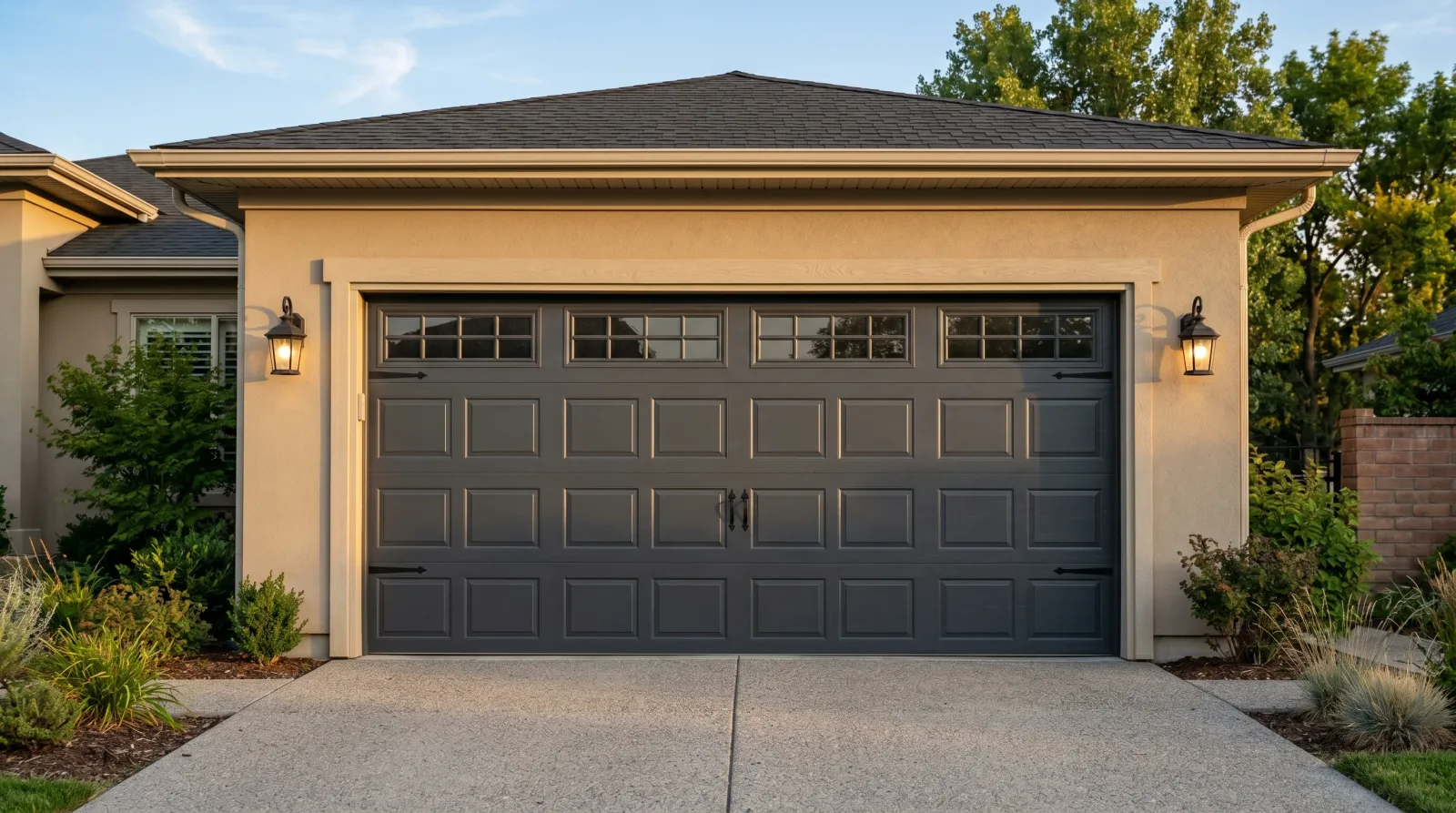
A garage door is the largest single surface on the front of most American houses. Repaint it and the curb-appeal needle moves more than it does for any other one-Saturday job. Skip the prep and the failure shows up loud — peeling along the bottom rail, rust bleeding through, a chalky finish that flashed off in the August sun.
Most garage-door repaints fail for three reasons. Wrong product class for the substrate. Wrong temperature window. Wrong primer over ferrous metal that already had rust. We’ll fix all three.
What You’ll Get
A door that reads as new from the curb. Tight, even color across all panels, no lap marks at the section joints, and a film that survives a Midwest winter. One Saturday of work assuming the weather window holds.
Honest Take on Difficulty and Time
| Approach | Active time | Calendar time | Skill |
|---|---|---|---|
| Brush and roller, door in place | 3–4 hrs | One Saturday, 24-hr cure | Medium |
| Sprayer, door in place, masked driveway | 1.5 hrs | One morning | Medium-high |
Brush-and-roller is the right call for most homeowners. A sprayer cuts active time, but the masking job to keep overspray off siding, soffit, and the neighbor’s car takes longer than the time you save. Use the brush.
Identify the Substrate First
The single biggest mistake on this job is buying the wrong paint for the door material. Three options exist and they prep differently.
- Steel. Tap rings hollow. Magnet sticks. Most American doors built after 1990. Wants a direct-to-metal acrylic. Ferrous spots get a rust-converter primer first.
- Wood. Tap thuds dull. Magnet drops. Pre-1980 doors mostly, plus a small custom segment today. Wants a thin oil primer over bare areas, then exterior acrylic over the whole field.
- Fiberglass. Tap rings higher than steel and more solid than wood. Magnet drops. Premium doors from the last fifteen years. Wants either DTM acrylic or a bonding primer like INSL-X Stix, then a quality exterior acrylic.
The substrate decides the product class. Don’t skip this step.
What You’ll Need
Paint and Primer
- Steel topcoat: Behr Direct to Metal Semi-Gloss or Benjamin Moore INSL-X Cabinet Coat. See the best exterior paint round-up for the broader exterior conversation.
- Wood topcoat: any quality 100% acrylic exterior in satin.
- Fiberglass topcoat: Cabinet Coat or DTM acrylic.
- Rust converter: Rust-Oleum Rust Reformer, spot-applied only to bare-metal scratches and rusted areas.
- Oil primer for wood: Zinsser Cover Stain.
Tools
- 3 inch Wooster Silver Tip flat brush for cutting the panel reveals
- 9 inch Wooster Pro Doo-Z roller, 3/8 inch nap, for the flats
- Mini foam roller for the section rails
- Garden hose with a spray nozzle, plus a bucket of warm water and Krud Kutter
- Stiff nylon brush for the panel grooves
- 120-grit and 220-grit sanding sponges
- 1.5 inch painter’s tape and a drop cloth that spans the door width
See the roller round-up if you don’t already own a Doo-Z.
Step 1 — Wash, Mask, and Identify Damage
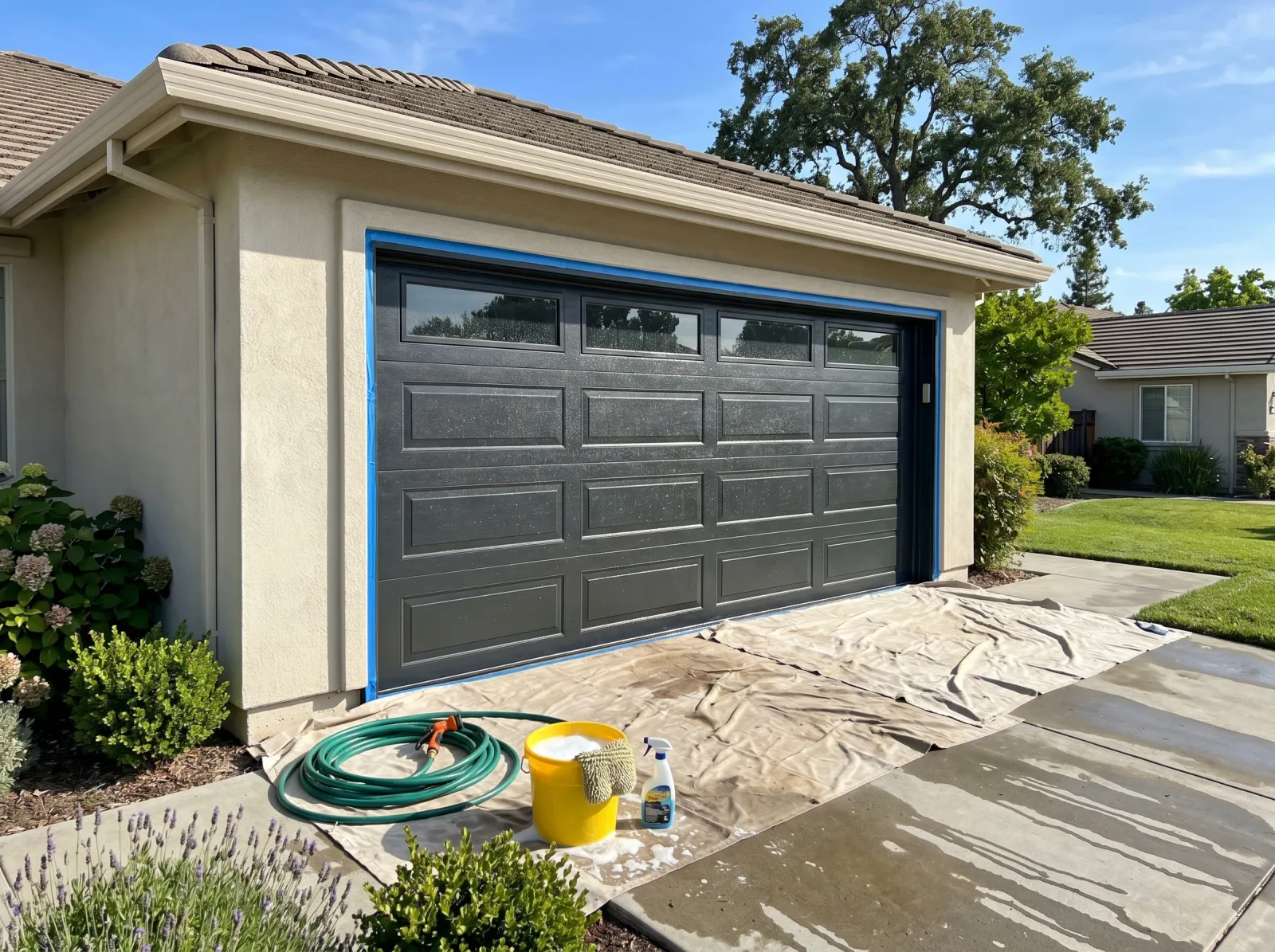
Hose down, degreaser scrub, rinse, and a hard look at the substrate before any primer touches it.
Close the door. Hose it top to bottom. Mix Krud Kutter or a TSP substitute per the label and scrub the panels with the nylon brush, paying attention to the panel grooves where dust collects. Rinse. Let the door dry for two hours in sun, four in shade.
Mask the weatherstripping at the bottom and side jambs, the handle, the lock, and any sensors on the rails. Tape a 1.5 inch line along adjacent siding or stucco. Lay a drop cloth that spans the driveway gap plus four feet of approach.
Watch out for: the windows in the top panel. Tape the glass perimeter — a 1.5 inch border is plenty.
Step 2 — Spot-Treat Ferrous Areas and Prime Bare Spots
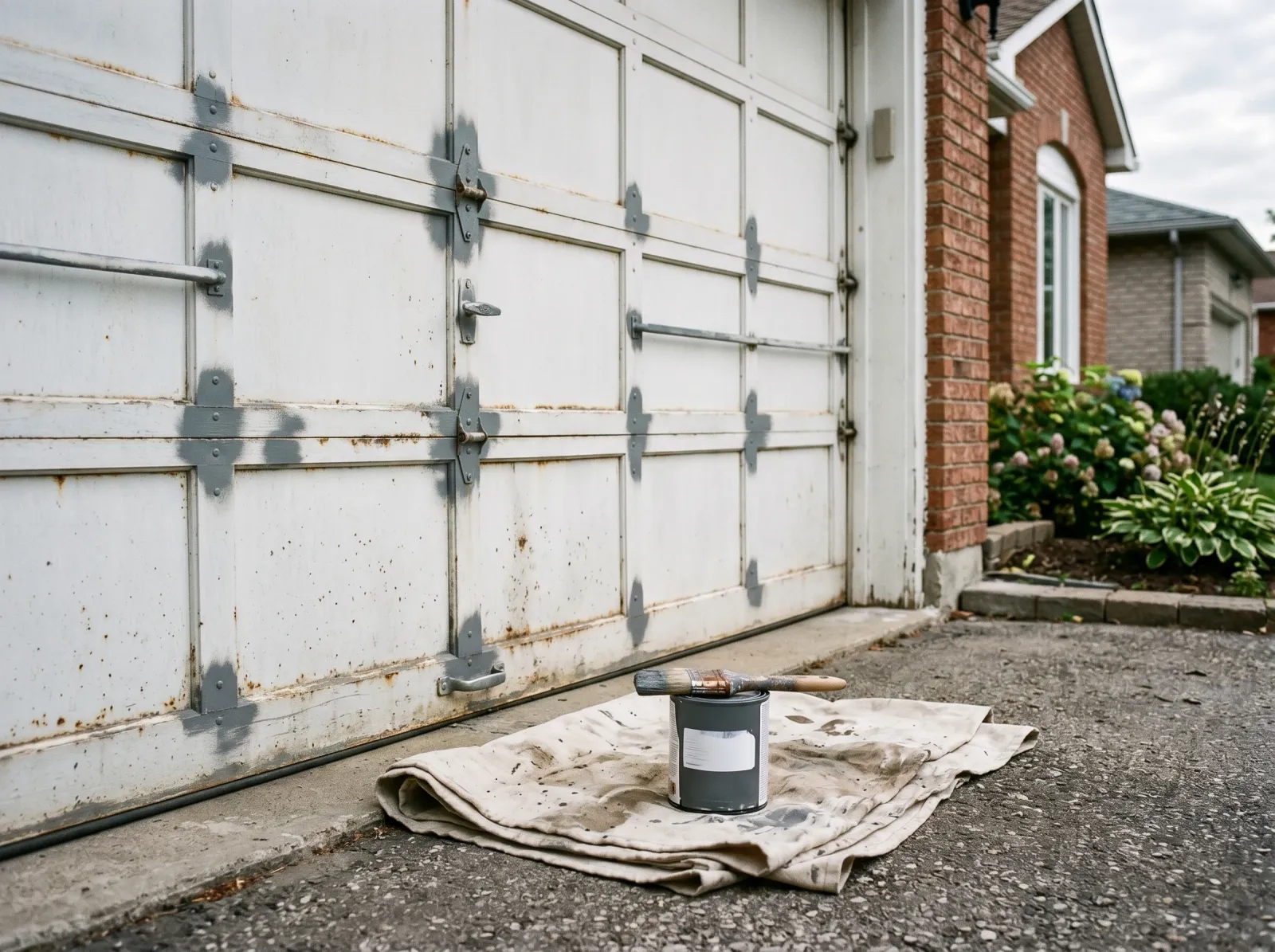
Bare-metal scratches treated with rust converter, any chalky panels and bare wood get a thin oil primer.
Walk the door and mark every spot with bare metal, light rust, or chalky paint. Sand each spot with a 220 sponge — knock the rust loose, feather the edge into sound paint. Wipe with a damp rag, let it dry.
Brush Rust Reformer onto every bare-metal spot. It converts rust to a black inert primer and gives DTM acrylic something to bite. Twenty minutes flash, second coat on the worst spots. For wood doors, brush Cover Stain onto bare-wood areas and any knot bleeding through. Two hours dry.
Hit the whole door with a 220 sponge afterward to dull any glossy factory finish and feather the primer edges into the surrounding paint.
Watch out for: painting Rust Reformer over the entire door. It’s a spot treatment. Over a whole panel it leaves a flat band you’ll see under the topcoat.
Step 3 — First Coat of DTM Acrylic
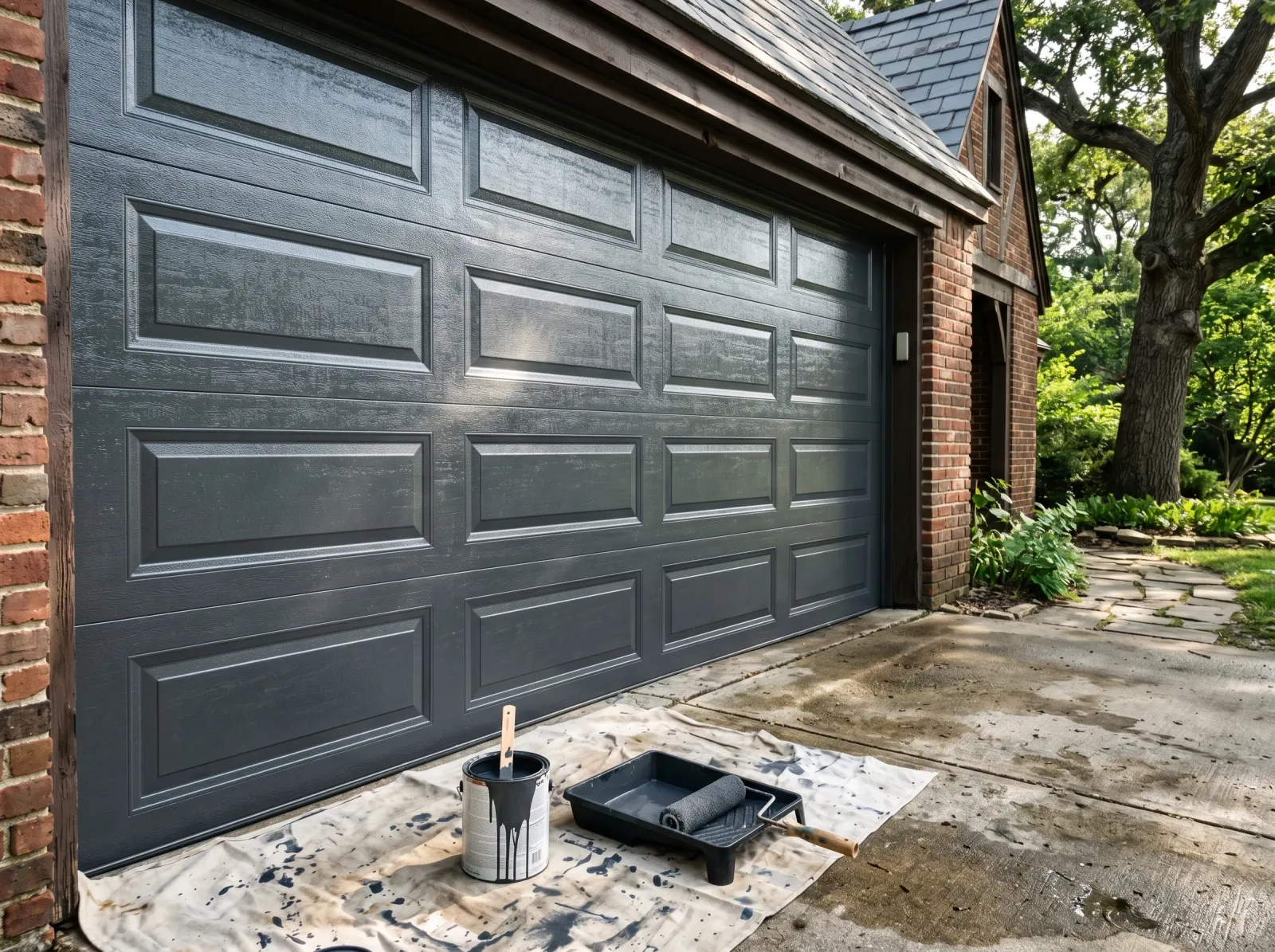
Cut the panel reveals with a 3 inch brush, roll the flats with a 3/8 inch nap, work top section down.
Check surface temperature with the back of your hand — should read warm, not hot. If the door has been in direct sun for an hour and feels hot to the touch, wait until it moves into shade. Acrylic on a hot panel flashes off before it can level and you get lap marks the second the sun hits them.
Cut the recessed panel reveals first with the 3 inch brush. Lay paint into the inside corners with the bristle tip, then drag outward across the panel face. Roll the flats and rails with the 9 inch Doo-Z. Work top section down, keep a wet edge moving, don’t stop in the middle of a section.
Back-roll every panel after you cut it — one final roller pass, light pressure, head moving the long way across the panel. Back-rolling kills brush marks and evens the mil thickness.
Open the door once at touch-dry (about two hours) so the gap line between sections gets paint on both faces. Close it to flash off.
Step 4 — Second Coat and Cure
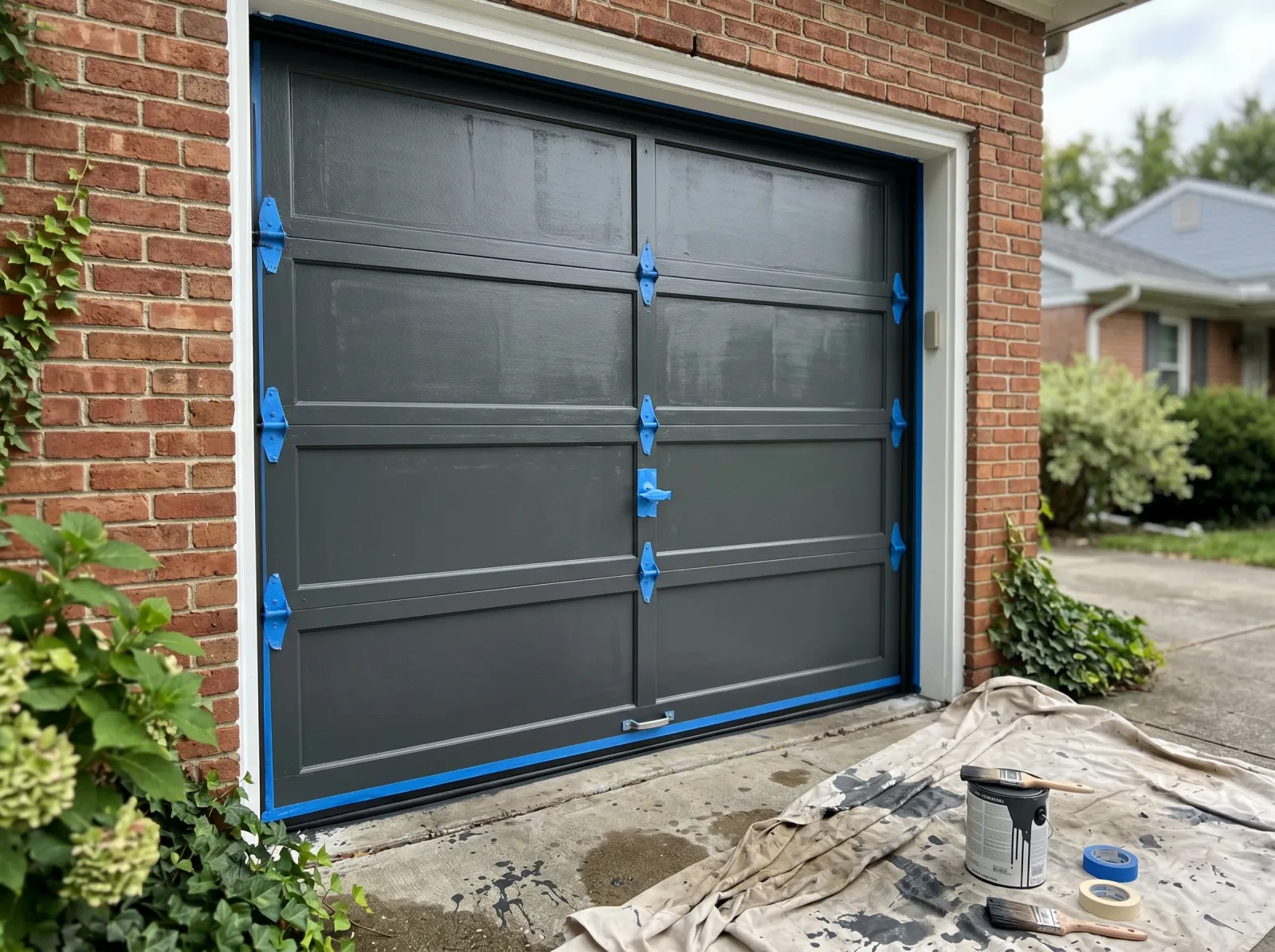
Second coat down between mid-morning and early afternoon, door stays in shade through flash-off.
Behr DTM wants four hours between coats. Cabinet Coat wants six. Read the can, set a timer.
Second coat, same order, same technique. Cut, roll, back-roll. Two thin coats beat one thick coat every time on a textured panel door. Thick coats sag in the recessed reveals and you’ll see the sag from the curb.
Plan the second coat for early afternoon if the door faces east, late morning if it faces west. The point is to have the door in shade for the four hours after you finish. South-facing doors in summer, paint at sunrise and again at sundown.
Step 5 — Pull Tape, Operate, Return to Service
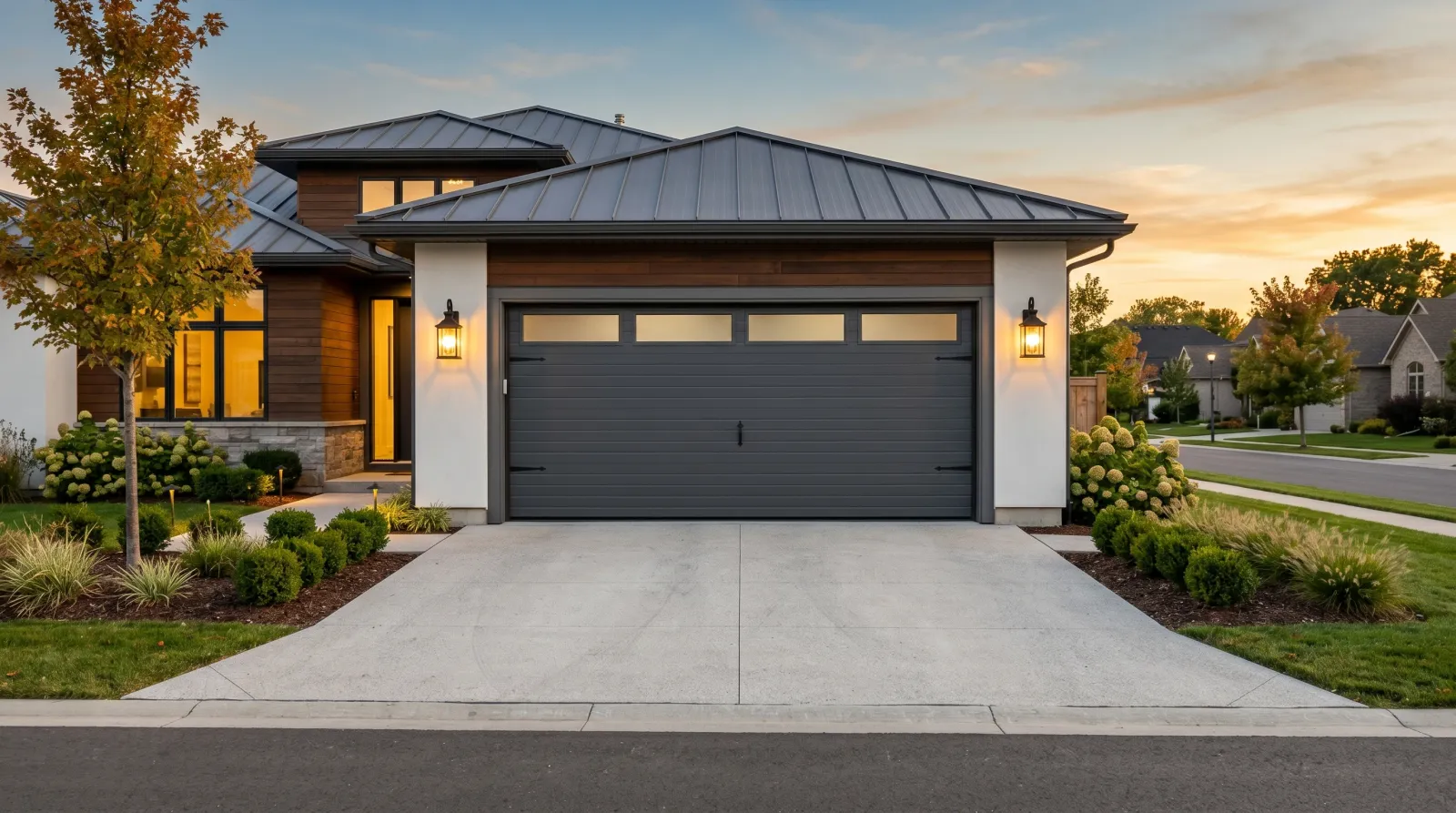
Tape pulled at 4 hours while paint is still slightly soft. Door operates after 24 hours.
Pull the masking tape four hours after the second coat, while the paint is set but still slightly soft. Pull it any later and the tape lifts a clean edge of paint with it. Pull it at a 45-degree angle, slow.
Operate the door once carefully at four hours to make sure no section is sticking to the weatherstripping. Normal opener use at twenty-four hours. Reinstall any hardware you taped over.
Cure Schedule
| Time after final coat | What’s safe |
|---|---|
| 4 hours | Pull tape, operate the door slowly once |
| 24 hours | Normal opener use |
| 7 days | Light rinse with a hose, no pressure |
| 30 days | Full cure, mild detergent wash |
Common Mistakes
- Wrong paint class for the substrate. Standard exterior latex over factory-finished steel peels in eighteen months. DTM acrylic or Cabinet Coat exists for a reason; use it.
- Painting in direct sun. The acrylic flashes off before it levels and the lap marks show up at the first low-sun hour. Door stays in shade for the four hours after each coat.
- Skipping the rust converter on a steel door. Rust spots bleed through topcoat in six months. Two minutes per spot with Rust Reformer prevents the whole repaint.
- One thick coat instead of two thin. Recessed panels sag, section rails hold thicker film, the door looks heavy and the failure shows at the corners first.
- Pulling the tape after twenty-four hours. Cured paint tears at the tape edge. Pull at four.
Maintenance
Six to ten years on a north or east exposure with a quality DTM acrylic. Four to seven on a south- or west-facing door that takes full afternoon sun. The bottom rail fails first because water and snow sit against it. Keep a labeled quart of leftover paint in the garage. For a chip, sand with 220, dab on Rust Reformer if you see bare metal, dab on topcoat with a 1 inch brush.
Cost
| Item | Cost |
|---|---|
| Topcoat (1 gallon DTM or Cabinet Coat) | $65 |
| Rust Reformer (1 quart, spot use) | $14 |
| Cover Stain (1 quart, if wood) | $20 |
| Wooster Silver Tip 3 inch | $26 |
| Doo-Z 9 inch + tray + sleeves | $24 |
| Sponges, Krud Kutter, tack cloth | $20 |
| Tape, drop cloth | $18 |
| Total | ~$165 |
What’ll Bite You in Two Years
The bottom rail. Water wicks up from the driveway, snow piles against the panel in winter, and the half-inch of door that meets the threshold is the spot nobody primes properly. If the door is steel and that bottom rail had any rust at all before you painted it, the rust comes back through the topcoat by year two unless the Rust Reformer went on first. Hit the bottom rail twice with the converter. Cheap insurance against a peeling stripe across the front of the house.
Ask a Question