Zero-VOC vs No-VOC vs Natural Paint: What Each Really Means
Zero VOC vs no VOC vs natural paint, decoded. What the can actually tests, what colorant adds back, and which label maps to cleaner indoor air.


Stand in the paint aisle and you will see three green-leaning promises on the shelf: “zero VOC,” “no VOC,” and “natural.” They sound like a ranking, as if each step buys you cleaner air than the last. They are not a ranking. They are three different claims, measured three different ways, and two of them are barely distinguishable while the third is something else entirely.
The confusion is built into the language. “Zero VOC” and “no VOC” describe a number on a test sheet. “Natural” describes where the ingredients came from. A paint can be zero-VOC and fully synthetic, or natural and still off-gassing. The reason for that is simple once you separate what each word is actually measuring.
TL;DR
- Zero-VOC and no-VOC mean the same thing. Both describe a base paint testing under 5 g/L by EPA Method 24, before colorant. There is no separate, stricter legal bar for “no VOC.”
- The number is measured at the can, before tinting. Universal colorant adds 5–15 g/L per ounce, so a deep color can land at 30–60 g/L in the mixed gallon.
- Natural paint is about ingredients, not the VOC number. Clay, lime, and casein paints are low-petrochemical, but plant oils and citrus solvents still off-gas measurable VOCs and terpenes.
- Certification beats the label word. GreenGuard Gold (≤220 µg/m³ TVOC at 14 days) is a measured emission figure. The word “natural” carries no test behind it.
- Low VOC is not low odor. Ammonia, biocides, and surfactants smell regardless of the Method 24 number.
What “Zero VOC” and “No VOC” Actually Test
Both phrases point to the same measurement: EPA Method 24, a gravimetric test that bakes a paint sample, subtracts the water, and reports what evaporated as VOC content in grams per liter. When a U.S. brand prints “zero VOC,” it means the base coating came back under 5 g/L on that test. “No VOC” is the same threshold with a different word in front of it. No federal rule defines “no VOC” as a lower or cleaner category than “zero VOC.”
So why do both exist? Marketing. One brand’s legal team prefers “zero,” another prefers “no.” Some lines use “low VOC” for products between 5 and 50 g/L and reserve “zero” for the sub-5 g/L bases. The full VOC explainer walks through where the regulatory thresholds sit, but for label-reading purposes, treat zero and no as synonyms.
The catch sits in three words: before the colorant. Method 24 is run on the untinted base. The liquid pigments dispensed at the store carry their own glycol-based vehicles, typically 5 to 15 g/L per fluid ounce. Tint a deep base with five ounces and the mixed gallon can climb to 30–60 g/L, regardless of the “zero” sticker still sitting on the lid. A few lines (Benjamin Moore Aura, Sherwin-Williams Emerald Interior) ship proprietary low-VOC colorants that hold the tinted product under 50 g/L. Most store-tint systems do not.
What “Natural Paint” Means
“Natural” is not a VOC claim. It describes the source of the ingredients: mineral and plant-derived binders, pigments, and solvents instead of petroleum-derived acrylic resin. The common natural categories:
- Clay (earthen) paint — clay binder, mineral pigment, often a bit of plant starch. Soft matte finish, breathable, almost no synthetic content.
- Lime paint and limewash — calcium hydroxide that cures by absorbing CO₂ from the air. The same chemistry behind mineral paint. Naturally alkaline, which resists mold.
- Casein (milk) paint — milk-protein binder, usually sold as a powder you mix with water. Velvety, traditional, not very water-resistant once cured.
- Plant-oil and natural-resin paint — linseed oil, tree resins, citrus or balsamic terpene solvents. This is the category that surprises people, because “natural” here can still mean a real VOC load.
That last point is the one to hold onto. A linseed-and-citrus formula is natural in every sense of the word and can still off-gas terpenes that a sensitive nose registers more strongly than a synthetic low-VOC acrylic. Natural describes the supply chain. It does not promise a low number on the air-quality meter.
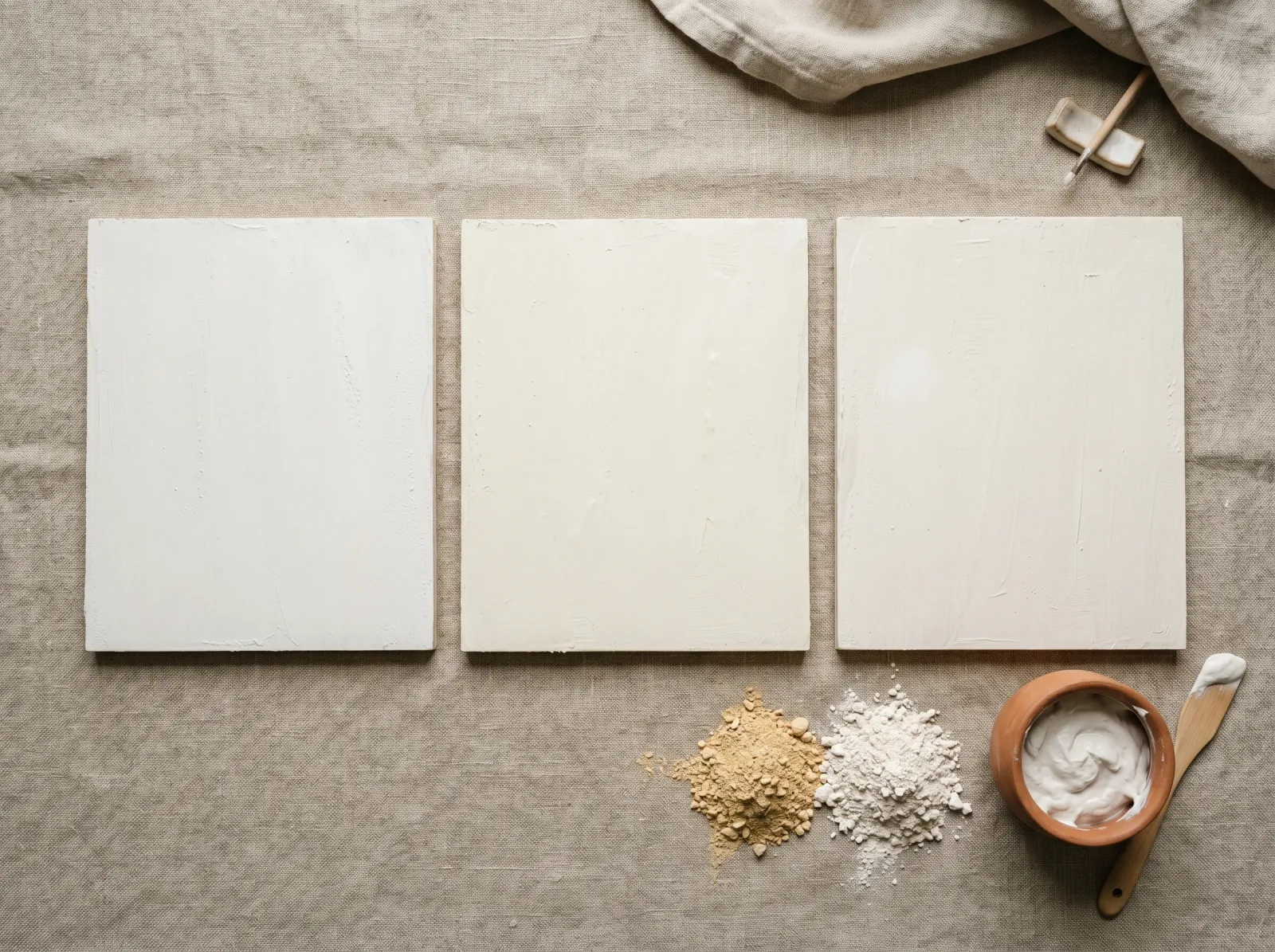 Clay, lime, and casein paints get their color from raw mineral pigment, not a tint machine. The finish reads chalkier and flatter than a synthetic matte.
How the Three Labels Compare
| Zero / No VOC | Natural (clay/lime) | Natural (plant-oil) | |
|---|---|---|---|
| What it measures | VOC content, at the can | Ingredient source | Ingredient source |
| Typical binder | Acrylic / vinyl-acrylic | Clay or lime | Linseed oil + resin |
| VOC after tinting | 5–60 g/L | Very low | Low to moderate |
| Third-party test | GreenGuard Gold common | Rare | Rare |
| Odor profile | Ammonia, surfactant | Faint, earthy | Terpene, can be strong |
| Best fit | Nursery, fast reoccupancy | Breathable walls, historic plaster | Wood, traditional finishes |
For the regulatory side of these numbers, the VOC explainer has the EPA, SCAQMD, and GreenGuard thresholds in full.
Which One Should You Actually Buy?
Pick by the decision in front of you, not by which word sounds greenest.
A nursery or bedroom with occupancy inside 30 days. Buy a certified low-VOC acrylic. GreenGuard Gold means the product was tested in a chamber and came back under 220 µg/m³ TVOC at 14 days. That is a measured emission figure you can point to. Most natural paints carry no equivalent test, so “natural” there is a trust exercise. See the best low- and no-VOC paint round-up for lines that hit the tinted ceiling. The nursery painting guide covers the ventilation timing.
Old lime or clay plaster you want to keep breathing. Buy a mineral or clay paint. A film-forming acrylic traps moisture against soft historic plaster and the paint peels; a vapor-open mineral paint lets the wall dry. This is a substrate decision, not an air-quality one.
Trim, doors, or wood you want a traditional oil look on. A natural linseed-based paint can be the right call, but ventilate like it has VOCs, because it does.
Common Mistakes
- Reading the base label and ignoring the colorant. The “zero VOC” sticker describes the can before tinting. Ask the store for the colorant’s VOC contribution, or pick a brand with a low-VOC colorant system if you are tinting deep.
- Treating “natural” as a synonym for “low emission.” Plant-oil and terpene-solvent paints are natural and can still off-gas more than a synthetic GreenGuard Gold acrylic. Source is not emission.
- Assuming low VOC means low odor. Ammonia stabilizes the pH, biocides have a plastic note, surfactants carry a faint sweetness. None of these move the Method 24 number, and all of them are in your air. Ventilate for 72 hours either way.
- Putting a film-forming acrylic over breathable lime plaster. The wrong binder traps moisture and peels. Match the paint chemistry to the wall, not just to the VOC claim.
- Trusting the word over the certificate. A GreenGuard Gold or GreenSeal mark is a test. “Eco,” “green,” and “natural” with no certification behind them are adjectives.
Where to Buy
For tinted lines that actually hold under the strictest U.S. ceiling, see the best low- and no-VOC paint round-up. If breathability on plaster is the goal rather than indoor air, the mineral paint explainer covers the lime-based options.
FAQ
Is there a real difference between zero-VOC and no-VOC paint?
Not in any way the regulators recognize. Both are marketing phrases for a base paint that tests below 5 g/L by EPA Method 24 before colorant is added. There is no separate legal definition for “no VOC” that requires it to be lower than “zero VOC.” Treat the two as identical, and read the colorant label, which is where the real number changes once the paint is tinted.
Does natural paint have zero VOCs?
Usually low, not zero. Clay, lime, and casein paints carry very little petroleum-derived solvent, but plant oils, citrus thinners, and natural resins can still off-gas measurable VOCs and terpenes. Some people react more to natural terpene odor than to a synthetic low-VOC acrylic. Low petrochemical content is not the same as zero emission.
Why does my zero-VOC paint still smell?
Because VOC content and odor are not the same thing. Ammonia, surfactants, biocides, and residual monomers all carry smell while adding little or nothing to the Method 24 number. A paint can test at 5 g/L and still smell sharp for a day. Ventilate for 72 hours regardless of the label.
Which paint is best for a nursery, zero-VOC or natural?
Pick by certification, not by the word on the can. A GreenGuard Gold acrylic, tested under 220 µg/m³ TVOC at 14 days, gives you a measured emission figure. Most natural paints carry no equivalent chamber test, so you are trusting the ingredient list. For a room a baby sleeps in within 30 days, the certified number is the safer bet.
Does tinting a zero-VOC base ruin the zero claim?
Often, yes. Universal colorants run 5 to 15 g/L per fluid ounce of the carrier they add, so a deep accent color can push a “zero VOC” base to 30 to 60 g/L in the mixed gallon. Brands with proprietary low-VOC colorant systems hold the tinted product under 50 g/L. Most store-tinted lines do not.