What Is Pigment in Paint?
Pigment gives paint its color and its hide. Prime pigments do the work; extender pigments fill space. Why deep tints cover poorly, and what TiO2 actually does.

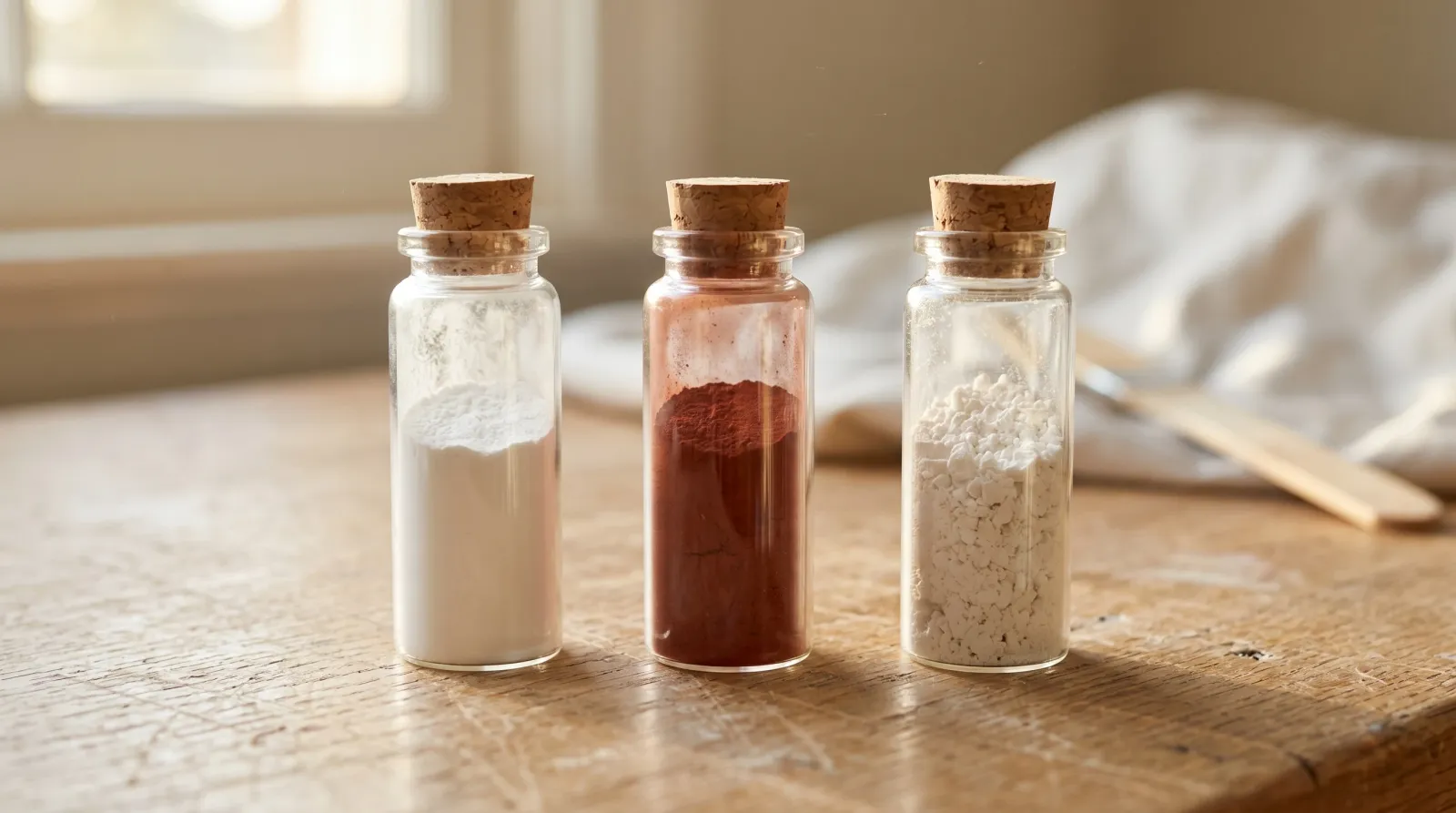
Most people look at a paint can and assume the color inside is the paint. The color is the easy part. The pigment is what carries the color and, more importantly, what hides what’s underneath. And “pigment” on the back of the can almost always means two very different categories of solid powder doing two very different jobs. Half of what you’re paying for is probably not even contributing to the color.
The reason for that is pigment isn’t one thing. It’s a family. Some pigment particles are there to add color and block the substrate. Others are there to fill space cheaply so the formula can hit a price and a sheen. The cured film looks like a single continuous color, but under a microscope it’s a packed mosaic of two ingredient classes, and which class dominates is most of what separates a $30 gallon from an $80 one.
Prime Pigments vs Extender Pigments
The industry splits pigment into two camps: prime pigments and extender pigments. A premium interior paint usually runs around 25–35% pigment by weight in the wet can. Of that, the prime fraction is what actually does the work.
Prime pigments are the high-refractive-index particles that scatter or absorb visible light. They give the paint its color and its hide (the ability to block what’s underneath in one or two coats). Titanium dioxide is the prime pigment for white and the workhorse of every tintable base. Iron oxides (red, yellow, brown, black) carry the earth tones. Organic pigments like phthalo blue, quinacridone red, and carbon black do the saturated colors that mineral pigments can’t reach. These cost real money. TiO2 alone has run $2,500–4,500 per metric ton over the last few years, and the high-chroma organics run higher still.
Extender pigments are the cheap mineral powders. Calcium carbonate (ground limestone), kaolin clay, talc, mica, silica, barium sulfate. They have a refractive index close to the binder around them, so they don’t scatter light and they don’t add meaningful hide. What they do is take up volume. They bulk the formula, control sheen, improve sandability, and let the manufacturer hit a sellable price-per-gallon without slashing the prime pigment load too far.
A premium interior wall paint might run 60% prime, 40% extender within its pigment fraction. A bargain contractor flat can run the inverse, 25% prime and 75% extender, relying on the high extender load to drop sheen and stretch the gallon. The wet paint looks the same color in the store. The dried film tells a different story by year three.
TiO2: The Workhorse White
Titanium dioxide deserves its own paragraph because it’s the single most expensive ingredient in most architectural paint and the one that decides almost everything about hide.
TiO2 is a synthetic white pigment with a refractive index of about 2.7. That number matters because hide is mostly a function of how strongly a pigment particle bends light relative to the medium around it. The binder in a latex paint has a refractive index near 1.5. The bigger the mismatch, the more light each particle scatters, and the more efficiently the film blocks the substrate. TiO2’s 2.7 is the highest of any commercially viable white pigment. Zinc oxide is around 2.0. Calcium carbonate, the most common extender, is around 1.6, barely different from the binder, which is exactly why it adds almost no hide.
Every white base in every paint store is essentially a TiO2 delivery vehicle. The deep base, medium base, and pastel base differ mostly in how much TiO2 was loaded at the factory. A pastel base carries a full TiO2 load because pastel tints don’t compete with the white for hide. A deep base carries almost none, because the machine is going to pour in colorant that would muddy or chalk against a high white load.
Why Deep Tints Cover Poorly
This is the part most homeowners get blindsided by. They pick a deep navy or a saturated red off the chip, the store tints it from the deep base, and three coats later the wall is still ghosting through.
The reason for that is the deep base started with almost no TiO2. The colorants the machine added are doing the coloring, but they do it by absorbing certain wavelengths of light rather than scattering all of them the way TiO2 does. Absorption tints the wavelength that reaches your eye. Scattering blocks the surface behind it. Color and hide are separate optical jobs, and a high-chroma organic pigment is great at the first and weak at the second.
So a deep tint, by chemistry, has less hide than a pastel in the same product line. Two coats often won’t get there. The fix is a gray-tinted primer underneath. Sherwin-Williams ships a Deep Base primer specifically for this, and Benjamin Moore’s Fresh Start is commonly tinted gray for the same reason. Equalize the substrate to a mid-tone gray and the deep color hides in two coats instead of four. The pigment in the topcoat hasn’t changed; you’ve just stopped asking it to do hide and color at the same time.
How Pigment Loading Shows Up in the Cured Film
The ratio of total pigment to binder in the dried film is called pigment volume concentration, or PVC. The deeper conversation lives in the binder explainer, but the short version is this: every paint has a critical PVC above which the binder can no longer fully wrap every pigment particle. Cross that line and the film goes porous, chalky, and matte. That’s why budget paint chalks under a damp finger. The extender load was cranked up so far that the binder ran out before it could lock everything down.
You can read PVC indirectly off the sheen. A flat paint runs high PVC on purpose to kill sheen. A semi-gloss runs lower PVC to keep the film smooth and reflective. So within the same product line, the flatter the sheen, the more pigment (and almost always more extender) is loaded into the formula relative to binder. The label calls it all “pigment.” The chemistry is closer to “color particles plus filler.”
What to Look For on the Can
The front of the can almost never breaks pigment down by class. The technical data sheet (TDS) does — manufacturers publish one as a PDF on every premium product page. Look for these lines:
- “Titanium dioxide” listed first or by percentage. Usually a sign the manufacturer is proud of the TiO2 load. Premium whites run 18–25% TiO2 by weight in the wet can.
- “Calcium carbonate,” “kaolin,” “nepheline syenite,” “silica”. Extenders. Their presence isn’t bad, but if they outweigh TiO2 by a large margin in a tinted base, the paint will hide poorly.
- “Iron oxide red/yellow/black”. Earth-tone prime pigments. Stable, lightfast, common in beiges, taupes, and historic colors.
- “Phthalocyanine blue/green,” “quinacridone,” “naphthol red”. High-chroma organic pigments. Strong color, expensive, modest hide on their own. Common in saturated accent colors.
A premium gallon advertises its TiO2 loudly. A budget gallon either doesn’t publish the breakdown or buries TiO2 under a long list of extenders. Either way, the TDS is the honest document.
The Practical Takeaway
Two rules end the pigment conversation for most homeowners.
First, if you’re painting a wall a deep or saturated color, ask the store for a gray-tinted primer underneath, and plan for two finish coats. The chemistry of deep tints means hide and color are fighting each other in the same can. Equalize the substrate first, then let the topcoat do color.
Second, when comparing two paints at the same sheen, the one with more TiO2 and less extender will hide better and stay washable longer. The price difference is mostly buying you prime pigment and binder. The cheap can isn’t bad paint. It’s a different formula tuned for a different job. Use it where it belongs (a closet, a rental, a ceiling) and buy the loaded version where the wall has to work.
For the round-up of brands that publish TiO2 loads and back them up on the wall, see our best interior paint picks.
Ask a Question