What Is Gloss Paint?
What is gloss paint, in gloss-unit numbers. Where the high shine helps, where it betrays you, and why the surface under it matters more than the can.

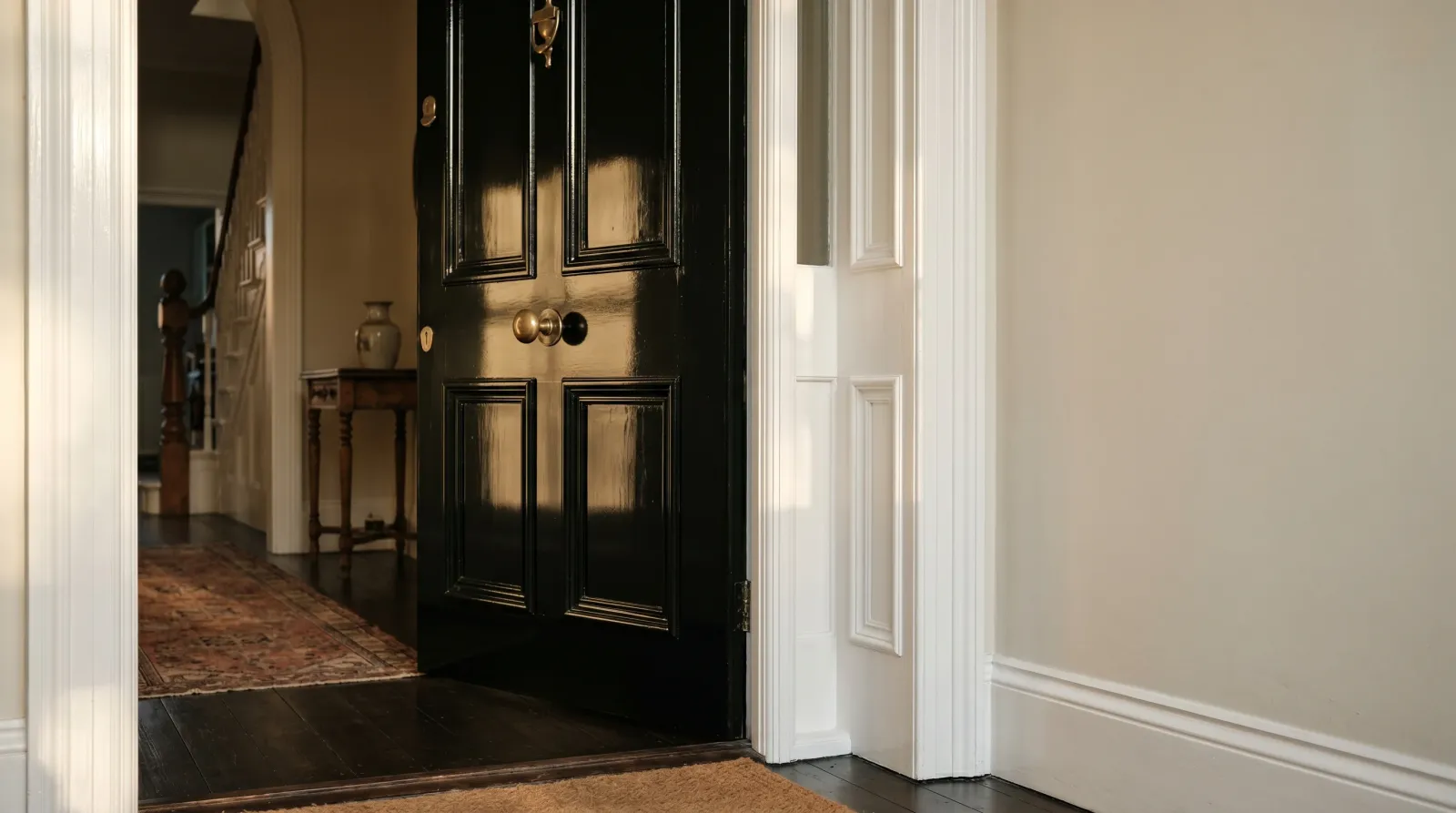
Gloss paint is the highest-sheen finish on the rack, reading 70 gloss units or more measured at 60°. That number tells you how much light bounces straight off the dried film and back at your eye. At 70-plus GU, almost all of it does, which is why a gloss door behaves like a mirror and a matte ceiling behaves like a sheet of paper. The high shine comes from chemistry, not magic: a gloss formula runs a low pigment volume concentration and a harder, more transparent binder, so the dried film cures to a smooth, dense, light-reflecting surface instead of a rough, light-scattering one.
That smoothness is the whole story. Light reflects cleanly off a flat film and scatters off a bumpy one. Anything that makes the film less than perfectly flat — a brush ridge, a dust nib, a patch that drank the paint unevenly — shows up as a dull spot or a glare line. Gloss doesn’t hide flaws. It advertises them.
TL;DR
- Gloss is 70+ gloss units at 60°. Semi-gloss tops out around 65, satin sits at 25–35, so gloss reads noticeably harder and shinier than either.
- It’s a finish for trim, doors, and cabinets, not for walls. The shine pops architecture and wipes clean of fingerprints.
- The film is hard and washable thanks to a low pigment load and a tougher binder. That’s the durability you’re paying for.
- It’s the least forgiving sheen cosmetically. Every dimple, scuff, and lap mark shows. Prep decides whether it looks like glass or like a mistake.
- Prime and sand first. Uniform absorption underneath is what lets the film cure to one even shine.
When to Use Gloss Paint
The high reflectance does two useful jobs: it makes a surface easy to clean, and it makes architecture read as a deliberate detail against a quieter wall.
Use it for:
- Front doors and exterior trim that you want to read as a statement. A gloss front door against satin siding is the classic move.
- Interior trim, baseboards, and crown molding where you want the woodwork to pop crisply off the wall. This is the most common interior gloss use.
- Cabinets and built-ins, where the wipe-clean surface earns its keep in a kitchen.
- Handrails, banisters, and stair stringers that take constant hand contact and need a hard, cleanable film.
- Statement furniture like a console, a tray, or a mirror frame where you want the lacquered look.
When NOT to Use Gloss Paint
Gloss fails on broad, imperfect, or heavily textured surfaces. The reason for that is optical: the flatter and more reflective the film, the more any deviation in the surface beneath it catches the light.
Don’t use it for:
- Walls, almost ever. A full wall plane in gloss turns every drywall seam, screw dimple, and roller texture into a visible ripple under raking light.
- Ceilings, which want the opposite. Flat ceiling paint exists to hide imperfection, not to spotlight it.
- Textured or older surfaces like knockdown drywall, plaster with trowel marks, or weathered wood. The shine maps every contour.
- Large surfaces you can’t keep a wet edge on. Gloss shows lap marks worse than any other sheen, and big planes are hard to coat before the leading edge sets.
If you want some shine and easier cleaning without the unforgiving glare, step down to semi-gloss. The paint sheen guide lays out all five levels with their gloss-unit numbers side by side.
How Gloss Compares to Other Sheens
| High-gloss | Semi-gloss | Satin | |
|---|---|---|---|
| Gloss units (60°) | 70+ | 35–65 | 25–35 |
| Hides imperfections | Very poor | Poor | Fair |
| Wipes clean | Excellent | Excellent | Good |
| Best surface | Doors, statement pieces | Trim, cabinets | Walls in wet rooms |
| Prep demand | High | Medium | Low |
Gloss and semi-gloss are close cousins, and the line between them blurs from brand to brand. For the full head-to-head on where one beats the other, see semi-gloss vs gloss.
What It Looks Like
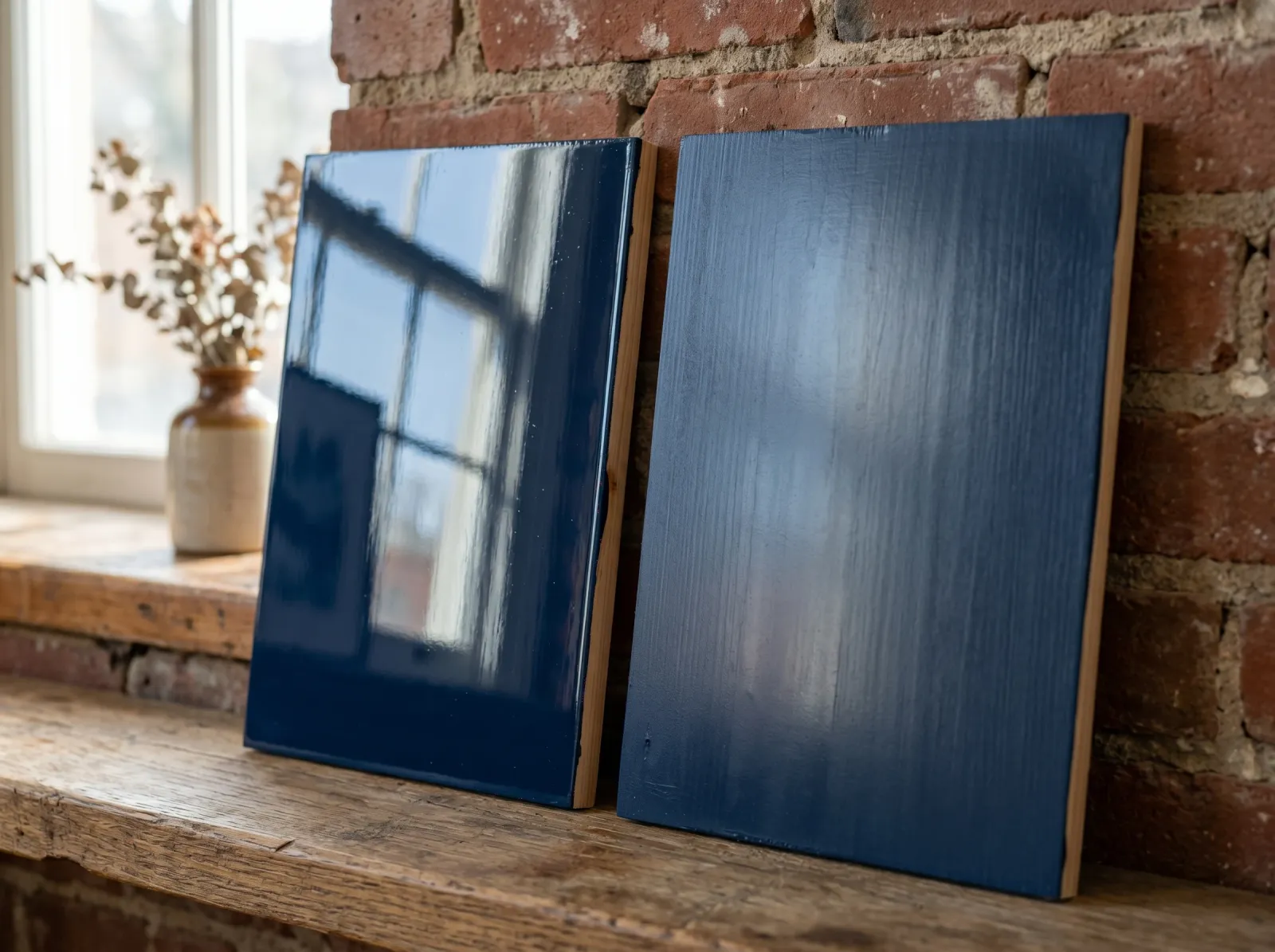
Side by side, gloss reads almost mirror-like while semi-gloss softens the reflection. The gap is most obvious in raking light, which is also where gloss shows surface flaws worst.
A sample board always reads more dramatic than a finished door, because a small board hides the lap marks and dust nibs that a full surface reveals. Test gloss on the actual piece, in the light you’ll see it under, before you commit the whole project to it.
Why Gloss Shows Every Flaw
Here’s the chemistry. A paint film reflects light two ways. Specular reflection bounces light off a smooth surface at a clean angle, the way a mirror does. Diffuse reflection scatters light in all directions off a rough surface, the way a flat wall does. Gloss formulas are built to maximize specular reflection: low pigment volume concentration, fine particle size, and a binder that levels to a glassy film as it cures.
That same smoothness is the trap. Specular reflection only looks even if the surface is even. A dust speck, a brush ridge, or a patch of substrate that pulled solvent out of the wet film faster than its neighbors will cure to a slightly different surface, and the reflected light reveals the difference instantly. Flashing — the dull-and-shiny patchwork you sometimes see on a glossed door — is almost always a story about the substrate, not the paint. Part of the surface was more porous, so it stole solvent from the film before it could level, and that spot dried duller. Primer fixes this by equalizing absorption so the whole film cures to one sheen. On bare wood especially, prime first. The how-to-paint-a-front-door project walks through the prep sequence that gets gloss to lie flat.
Common Mistakes
- Skipping primer on bare or patched surfaces. Uneven absorption is the number-one cause of flashing in gloss. Prime so the film forms uniformly.
- Not dulling the old finish. Gloss won’t bond to gloss. Scuff-sand any existing shiny coat to give the new film something to grip, or it’ll peel at the first knock.
- Loading the brush too heavy. Gloss runs and sags more readily than flat paint, and the sags cure into permanent glare lines. Thin even coats, two or three of them, beat one thick pass.
- Working too slowly across a big surface. The leading edge sets, you roll back into it, and the lap mark catches light forever. Keep a wet edge or break the surface into panels.
- Recoating before the previous coat is dry. Trapped solvent under a fresh gloss coat dulls and wrinkles the surface. Wait the full recoat window on the can.
Where to Buy
Gloss is sold as both a trim/door enamel and a dedicated high-gloss finish. For the cabinet and built-in version, a hard-curing alkyd-modified or waterborne enamel like Benjamin Moore Advance is the usual pick. For trim and baseboards specifically, see our best interior trim paint round-up for the SKU-level picks. Don’t grab a flat-wall paint in a gloss tint and expect it to behave; the binder and pigment load are formulated differently for trim work.
Ask a Question