What Is Color Capping?
Color capping is the limit on how much pigment a paint base can hold. Here is why your deep accent color needs a different base and how to avoid a weak, washed-out mix.

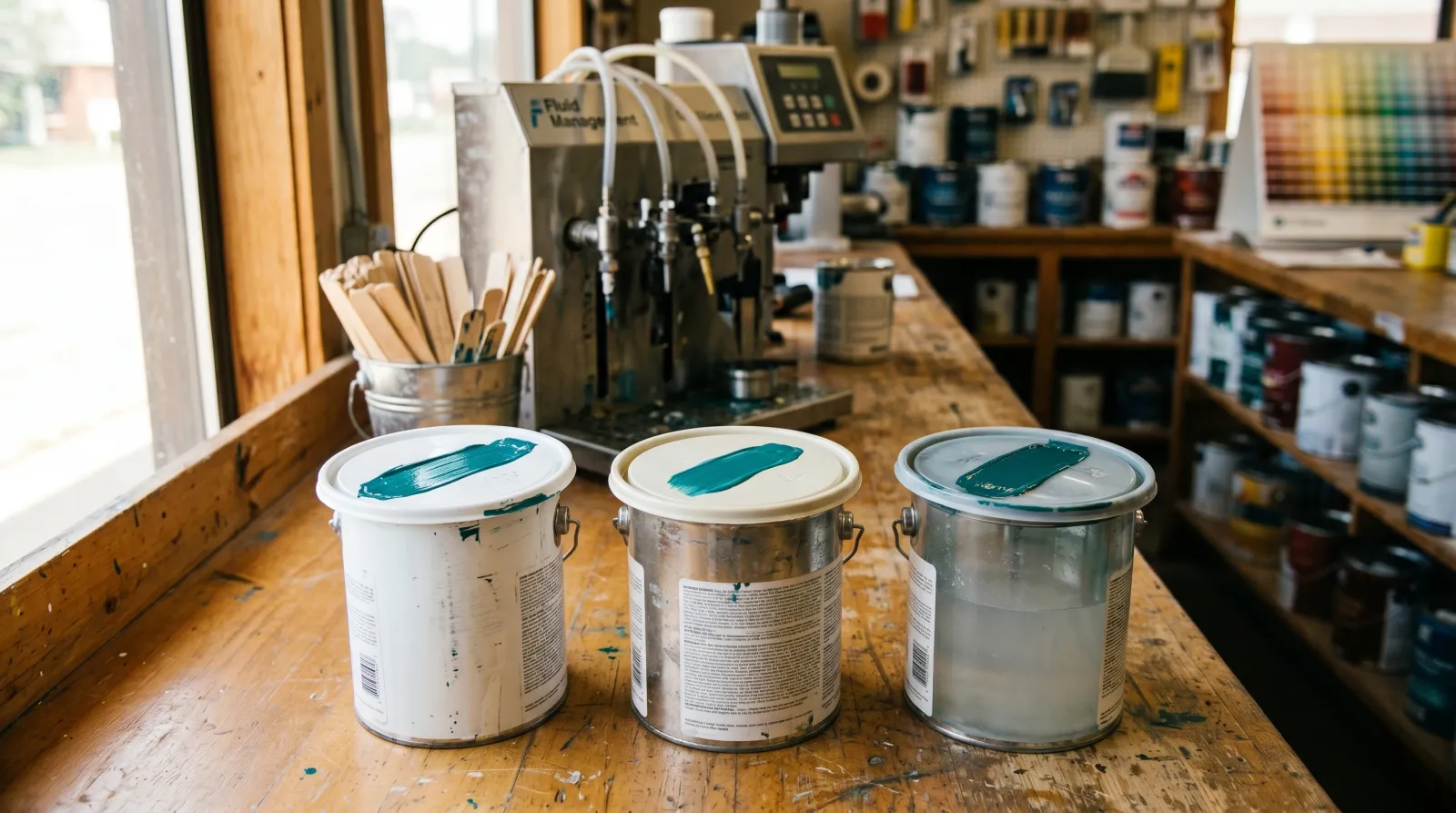
The color looked right in the can and wrong on the wall. A client had her heart set on a deep, inky teal, and what landed on the wall was a thin, grayed-down version of it, patchy where the roller overlapped. The store had mixed her color into a white base, and a white base can only hold so much pigment before it gives up. That ceiling is what painters and store staff mean by color capping.
Color capping is the limit on how much colorant a given paint base can carry while still drying to a sound, covering film. Every base has a number. A white base usually tops out around 2 to 4 fluid ounces of colorant per gallon. A deep accent base, which starts with almost no white in it, can hold 8 to 12 ounces or more. Push past the cap and the extra pigment has nothing to bind to. The color stops getting deeper and the paint starts getting weaker.
So when you want a rich color, the question isn’t only “what color.” It’s “which base.”
TL;DR
- Color capping is the maximum colorant a paint base can hold before the film breaks down.
- Bases run from white (low capacity) through medium and pastel up to deep / accent (high capacity).
- A deep color forced into a white base reads weak, patchy, and chalky. It hit the cap.
- The store’s computer assigns the correct base to each formula. Ask which one yours calls for.
- Deep bases cover less on their own, so plan on a tinted primer and two to three coats.
Why Bases Have a Ceiling
Paint is pigment held in a binder. The binder is the glue; it surrounds each particle of color and locks it to the wall. A white base already carries a heavy load of titanium dioxide, the white pigment that gives paint its hiding power. There’s only so much room left in the binder for more color on top of that.
Add a few ounces of tint and the binder copes. Add too many and you’ve asked the same amount of glue to hold more pigment than it can wet out. The film that dries is under-bound. It looks flat and grayed because the white is still in there fighting your color, and it rubs off when you wash it because the binder ran short.
A deep base solves both problems at once. It leaves out most of the white, which clears space for pigment and removes the white that was muddying your hue. The trade is hiding power. With little titanium dioxide in the can, a deep base barely covers on its own, which is why deep colors need more help underneath.
When Color Capping Comes Into Play
You’ll run into it when:
- You pick a saturated or dark color: true reds, deep teals, forest greens, navy, charcoal, black.
- You want a high-chroma accent wall and the rest of the house is in light neutrals.
- You’re matching an existing deep color and the formula calls for a base you don’t have on the shelf.
- You’re buying a small sample pot, which sometimes ships in a generic base that caps lower than the gallon.
It rarely matters when:
- You’re painting whites, off-whites, and pale greiges that sit high on the LRV scale. These live comfortably in a white or pastel base.
- You’re doing trim in a soft, low-pigment color. A standard base holds it fine.
- The color you chose was already formulated for the base the store stocks, which is most light-to-mid colors.
The deeper and more saturated the color, the more the base matters. A pale blue and a midnight navy can be the same hue family and need completely different cans to get there.
How the Bases Compare
Most brands sell four or five bases. Names vary, the logic doesn’t. They run from most white inside to least.
| White / Ultra White base | Medium / Pastel base | Deep / Accent base | |
|---|---|---|---|
| Starting white content | High | Moderate | Very low to none |
| Colorant capacity | ~2–4 oz/gal | ~4–8 oz/gal | ~8–12+ oz/gal |
| Natural hiding power | Strong | Moderate | Weak (needs primer) |
| Best for | Whites, off-whites, pastels | Mid-tone walls | Deep, saturated, dark colors |
| Coats to full depth | 1–2 | 2 | 2–3 + tinted primer |
The capacity numbers are typical, not law. Each brand publishes its own per-base limits, and the store’s tinting software won’t let a formula exceed them, which is exactly why it picks the base for you.
Common Mistakes
- Trusting the can label over the formula. A lid that says “white base” tinted to a deep color is the classic capped mix. If the formula card calls for a deep base and the can says white, stop and ask. The label is the base, not the color.
- Reusing leftover light-base paint for a dark touch-up. People try to “darken” half a gallon of pale paint by having color added. You can’t tint your way past the cap. Once the base is wrong, it stays wrong.
- Skipping the tinted primer under a deep color. Deep bases barely hide. Painting straight over white drywall means the first coat looks streaky and the wall fights you for three coats. A gray-tinted primer matched to your color’s depth cuts a coat and evens the coverage.
- Judging the color wet, in the can. Tinted deep base looks darker and glossier wet than it dries. Brush a sample on a board and read it dry, in the room, at the hour you live there.
- Assuming the sample pot equals the gallon. Sample formulas sometimes use a different base than the full-size can. A sample can read truer or weaker than the gallon you’ll actually roll. Confirm the production gallon uses the right base.
What a Capped Color Looks Like on the Wall
A capped mix gives itself away. The color reads grayed and lifeless next to the chip, like someone left a veil over it. Coverage is uneven, with the roller overlaps showing as lighter and darker bands because the thin film couldn’t hide consistently. And weeks later, a damp cloth picks up color, because the under-bound film never reached full scrub resistance.
That last one is the tell I trust most. A correctly based deep color cleans up; a capped one chalks off on the rag.
Where to Buy and What to Ask For
Any full-service paint counter, hardware store, or big box can mix into the correct base. The base is determined by the formula, not the brand, so the move is the same everywhere: tell them the color, let the computer assign the base, and don’t let anyone substitute a lighter base they happen to have open.
For a deep, washable accent wall, look for a brand whose deep base is paired with low-VOC colorants and good scrub ratings. Benjamin Moore Aura and Sherwin-Williams Emerald both hold heavy pigment loads well in their accent bases. For trim and millwork in a rich color, a quality enamel in the right base reaches depth without the chalking that plagues an over-tinted wall paint.
Before they pull the trigger on the tint, ask one question: which base does this color call for? If the answer matches what’s in the can, you’ll get the color you fell for. If it doesn’t, you’ll get the veiled, patchy version, and no amount of extra coats will fix a color that hit its cap.
Ask a Question