TSP vs TSP Substitute: Which to Use for Paint Prep
TSP substitute for paint prep, explained. What phosphate-free cleaners actually do, when to use them, and when only real trisodium phosphate at 1/2-cup per gallon works.

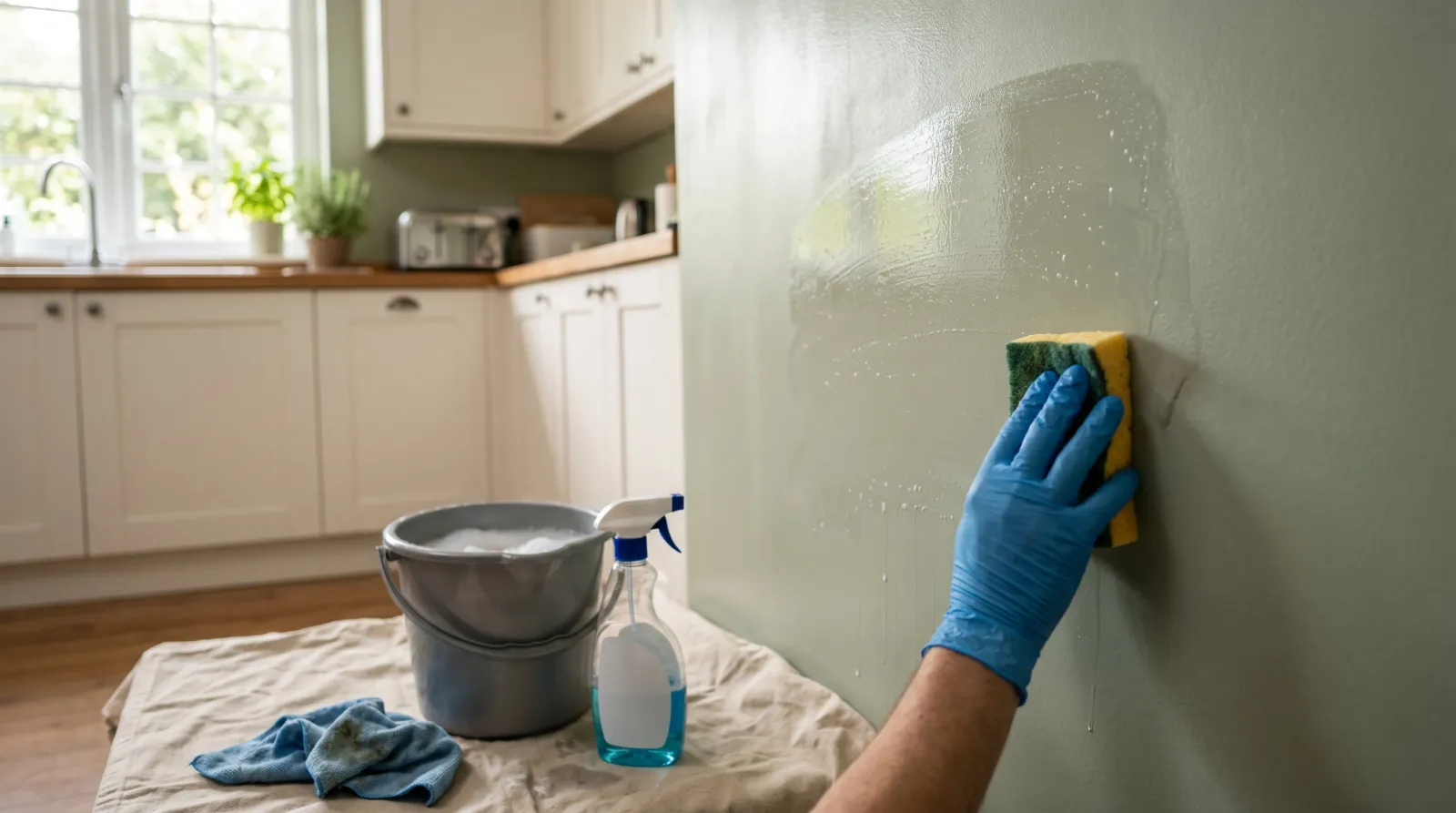
A TSP substitute is a phosphate-free heavy-duty cleaner used to wash walls, trim, and cabinets before painting, sold as a swap for trisodium phosphate (TSP) where phosphates are restricted. Most substitutes are built on sodium carbonate, sodium metasilicate, or sodium sesquicarbonate, mixed at roughly 1 to 2 tablespoons per gallon of warm water. They cut household grime, dust, and a light film of grease, and they raise the surface pH enough to lightly etch a glossy coat. They clean nearly as well as real TSP. Where they fall short is heavy degreasing, and that gap is the whole decision.
Here’s the chemistry behind that gap. Trisodium phosphate is a strong alkaline salt, and the phosphate ion is a good chelator. It grabs the metal ions in hard-water soap scum and in greasy soil, lifts them off the surface, and holds them in solution so a rinse carries them away. Phosphate-free substitutes hit a similar pH with carbonate and silicate salts, so they handle ordinary dirt fine. What they lack is that chelating muscle. Against baked-on kitchen grease, nicotine tar, or an old wax polish, the substitute works slower and needs more passes. The substrate is the same; the cleaner just has less reach.
Phosphates got pulled from consumer cleaners because they run off into lakes and feed algae blooms. Several states banned them outright, which is why most stores now stock the substitute next to a smaller supply of real TSP. Both still exist. You’re choosing between them, not settling for second-best.
When to Use a TSP Substitute
Use it for:
- Washing bedroom, hallway, and living-room walls before a repaint where the soil is dust and the occasional handprint
- Prepping previously painted trim and baseboards that aren’t near a cooktop
- Cleaning the no-rinse way when you want to wash and paint the same afternoon
- Any job where phosphate disposal is restricted by your state or septic system
- Light scuff-cleaning of a glossy surface ahead of a scuff-sand and prime
The substitute is the right default for the large majority of interior repaints. A wall that looks clean still carries an invisible film of skin oil, cooking aerosol, and settled dust, and that film is enough to keep new paint from biting. The cleaner removes it. For more on why a clean, gripping substrate matters under fresh paint, see what bonding primer does.
When NOT to Use a TSP Substitute
Reach for real TSP instead when:
- You’re degreasing a kitchen wall, range hood surround, or cabinets directly over a stove
- The room belonged to a smoker and the walls carry a yellow-brown nicotine film
- You’re cleaning chalky, weathered exterior siding before an exterior repaint
- There’s old furniture polish, wax, or silicone-based cleaner on the surface
- A previous coat is peeling and you need the substrate stripped clean to bare, sound paint
Heavy grease and tar are exactly the soils where the chelating phosphate earns its keep. Pushing a weaker cleaner through three passes to match what TSP does in one wastes time and leaves more chance of residue. On exterior chalking and a peeling repaint, get the surface genuinely clean first; the fix-it walkthrough for paint that’s lifting off the wall starts with surface contamination for a reason.
Don’t use either product as a deglosser and stop there. Neither one removes enough gloss from a hard enamel to skip mechanical scuffing.
How TSP and Its Substitutes Compare
| TSP substitute | Real TSP | Liquid deglosser | |
|---|---|---|---|
| Cleans dirt and dust | Yes | Yes | No |
| Cuts heavy grease | Light | Strong | No |
| Removes gloss | Slight etch | Slight etch | Chemical dulling |
| Rinse required | Usually no | Yes, twice | No |
| Phosphate | None | Yes | None |
| Replaces sanding | No | No | Partly |
The substitute and real TSP are both cleaners that lightly etch. A liquid deglosser (Krud Kutter Gloss-Off, Klean-Strip Easy Liquid Sander) is a different tool — it softens gloss chemically but doesn’t degrease the way TSP does. On a greasy glossy cabinet you may want both: degrease with TSP, then deglossy. None of the three replaces a scuff-sand on a genuinely hard urethane or oil film.
Common Mistakes
- Skipping the cleaning step because the wall looks clean. The film that defeats adhesion is invisible. Skin oil and cooking aerosol are clear. Wash anyway, then watch your new paint actually bond.
- Treating the cleaner as a deglosser. A TSP wash dulls the surface a little, not enough to skip sanding on enamel. Wash, then scuff-sand 150 to 220 grit, then prime.
- Leaving real TSP unrinsed. Phosphate residue is alkaline and sits between the wall and the new film. It reads as good adhesion on day one and as peeling 18 months later. Rinse twice with clean water.
- Mixing it too strong. More cleaner doesn’t clean more; it just leaves more residue and dulls trim unevenly. Stick to the label dose, around 1 to 2 tablespoons per gallon for the substitute, 1/2 cup per gallon for real TSP.
- Painting over a damp surface. Let a washed wall dry fully (a few hours, longer in humidity) before priming. Trapped moisture in a porous patch makes the film form unevenly and can flash.
What It Looks Like
A clean test tells you whether your wash worked. Wipe a small section with the cleaner, let it dry, then press a strip of painter’s tape down hard and pull it. Tape that lifts a greasy or chalky residue means the surface still isn’t ready. Tape that comes off clean means the cleaner reached the substrate. On a glossy enamel, run a fingertip over a washed-and-dried patch — a faint drag instead of a slick glide means the light alkaline etch took, and a scuff-sand will key it the rest of the way.
Where to Buy / What to Look For
TSP substitute sells in powder boxes and ready-to-mix bottles under names like Savogran TSP-PF, Klean-Strip Phosphate-Free TSP, and Sunnyside TSP Substitute. Real TSP sits beside them where state law allows. Read the active ingredient: “phosphate-free” or sodium carbonate/metasilicate is the substitute; “trisodium phosphate” is the original. For a no-rinse interior job, the substitute is the simpler buy. For grease, tar, and exterior chalk, spend the rinse time on real TSP.
After cleaning, the prep chain runs into primer. If you’re painting a slick or unpainted surface, the primer explainer covers which type actually grips a clean substrate, and the laminate furniture guide walks the full clean-scuff-prime sequence on the hardest case.