Mineral Paint vs Mineral Wash: What's the Difference?
Mineral paint vs wash, explained in plain words. One is a solid silicate coat that lasts decades; the other is a thinned, cloudy wash you brush on for texture.

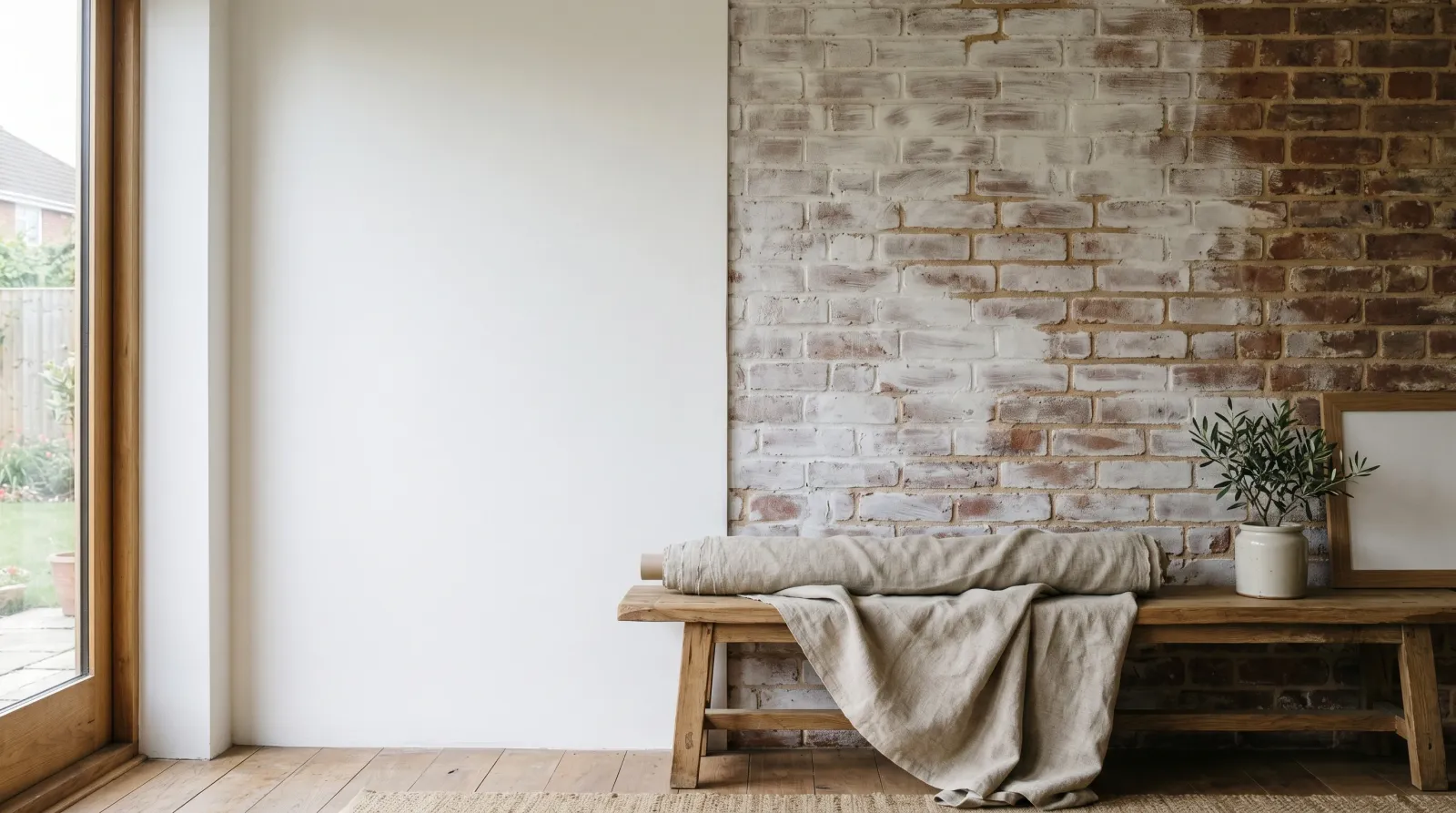
Mineral paint and a mineral wash come from the same family, and the difference is how much water is in the bucket. Mineral paint is a full-strength silicate (or lime) coating that goes on in two coats and covers masonry in one even, opaque color that lasts 40 to 60 years. A mineral wash is that same coating thinned way down, usually two or three parts water to one part product, brushed on loose and cloudy so you still see the texture of the wall through it. One gives you a solid color. The other gives you a soft, streaky, lived-in veil over whatever is underneath. Same chemistry, two completely different looks.
The thing to hold onto is what each one does to a wall. Paint erases the surface and hands you color. A wash leaves the surface visible and lays a breath of color over it. That single choice decides almost everything else.
What a Mineral Wash Actually Is
Picture a glass of milk, then water it down until you can read newsprint through it. That is the move. A mineral wash is the binder and pigment of mineral paint stretched thin enough to go translucent. Brush it on and the brick, stone, or plaster keeps showing through in soft, uneven clouds. Where your brush overlapped, the color deepens. Where it skipped, the wall peeks out. That variegation is the whole point. It reads warm and old and a little imperfect, the way a centuries-old plaster wall does.
Because a wash is so thin, it never builds a film. It stains into the surface and lets the wall breathe. That is why it sits so beautifully on porous things, raw brick, lime plaster, rough stucco, where a thick coat of anything would just look painted-on and flat.
When to Use a Mineral Wash
Use it for:
- Interior brick or stone you want softened, not hidden. The wash knocks the brick down to a quiet, chalky tone while the mortar lines still read.
- Cottage and old-world looks, where the cloudy, hand-brushed texture is the feature, not a flaw.
- Lime plaster and raw stucco that you want to tint without flattening the natural movement in the surface.
- A wall where you actively want to see brush movement and depth instead of a uniform field of color.
Don’t use it for:
- Trim, doors, cabinets, or anything you scrub. A wash is a porous, dusty finish and it will not hold up to a sponge.
- Drywall or wood. There is no calcium or silica there for the binder to bite into, so it just sits as chalky residue.
- Any wall already wearing acrylic or latex paint. The film blocks the bond.
- A clean, modern, solid-color look. If you want one flat even color, you want the paint, not the wash.
When NOT to Use Mineral Paint
Mineral paint has the same hard rules, plus a few of its own. Skip it when:
- The surface is wood, MDF, metal, or plastic. The silicate reaction needs masonry. On anything else it powders off.
- The wall already wears standard paint and you can’t or won’t strip it. Reach for a sol-silicate hybrid instead, or pick a different coating.
- You want the soft, see-through, variegated texture. Full-strength paint covers in one even tone, so you lose the brushy depth that makes limewash and washes charming.
- You’re working below about 46°F or in direct hot sun. The cure depends on a slow, even chemical set, and temperature extremes leave you with patchy color and weak adhesion.
How Mineral Paint and Mineral Wash Compare
| Mineral wash | Mineral paint | Standard acrylic | |
|---|---|---|---|
| Coverage | Translucent, texture shows | Opaque, one even color | Opaque, even |
| Look | Cloudy, variegated, soft | Velvet matte, uniform | Matte to gloss, flat |
| Surface | Bare masonry, plaster | Bare masonry, plaster | Almost anything |
| Breathability | High | High | Low (forms a film) |
| Lifespan | 5–7 yrs (lime), 15+ (silicate) | 40–60 years | 7–15 years |
| Can peel | No, stains in | No, bonds in | Yes, films lift |
For the chemistry behind why a silicate coat fuses into the wall instead of sitting on top, see what mineral paint is. The short version is that the binder swaps ions with the masonry and crystallizes into the same family of bonds that hold concrete together. A wash does the identical thing, just with far less material, so the bond is real but the color is sheer.
Common Mistakes
- Treating a wash like thinned wall paint. It behaves more like a stain. Work in loose, crossing strokes and keep a wet edge, or you’ll trap hard lines where one section dried before you reached it.
- Putting either one over old paint. This is the number-one failure. The silicate has nothing to grab, so it chalks off in a week. Strip to bare masonry or choose a hybrid product made to grip aged coatings.
- Judging the color wet. A mineral wash dries 40 to 60% lighter than it goes on, and it shifts as the binder cures. The wet wall lies to you. Brush out a test patch and wait a full day before you commit.
- Skipping the fixative on chalky walls. Old, porous, dusty masonry drinks unevenly and the coat flashes in blotches. A thinned silicate fixative first evens out the suction. This matters more for the wash, where every blotch shows.
- Sealing it with acrylic afterward. People panic at the dusty feel and roll a clear acrylic over the top. That suffocates the breathable finish and you lose the entire reason you chose mineral in the first place.
What It Looks Like
In north-facing daylight, a mineral wash reads quiet and a little cool, the brushwork showing as soft tonal drift across the wall. The texture underneath, brick edges, mortar joints, the slight wave of old plaster, all stays visible through the color, which is what gives the finish its depth and its age. Move into warm afternoon light and the same wash glows, the pigment warming while the brushy clouds soften further.
Mineral paint, by contrast, lays down as a dense velvet matte with no sheen to catch the light and no texture from the product itself. The wall’s own texture may still read, but the color sits flat and even, the way a well-painted plaster room does.
Where to Buy / What to Look For
Both finishes come from the same short list of brands. Keim and Romabio make true silicate mineral paints and washes for masonry; most “limewash in a can” products at the home center are lime-based washes. Read the label for the binder. Potassium silicate or sodium silicate means a hard, long-life mineral coating. Slaked lime or lime putty means a softer, more weathered, more frequently refreshed wash. Either way, buy the matching fixative or primer from the same line so the chemistry agrees.
For specific product picks and how each one brushes out, see the best limewash round-up, and if your project is an outdoor wall, the guide to painting exterior brick walks through the prep that keeps a mineral coat from flashing.
Ask a Question