Acrylic Enamel vs Latex Enamel
Acrylic enamel vs latex enamel, explained by binder chemistry: which one hardens harder, holds a sheen, and survives a kitchen scrub, plus where each one belongs.

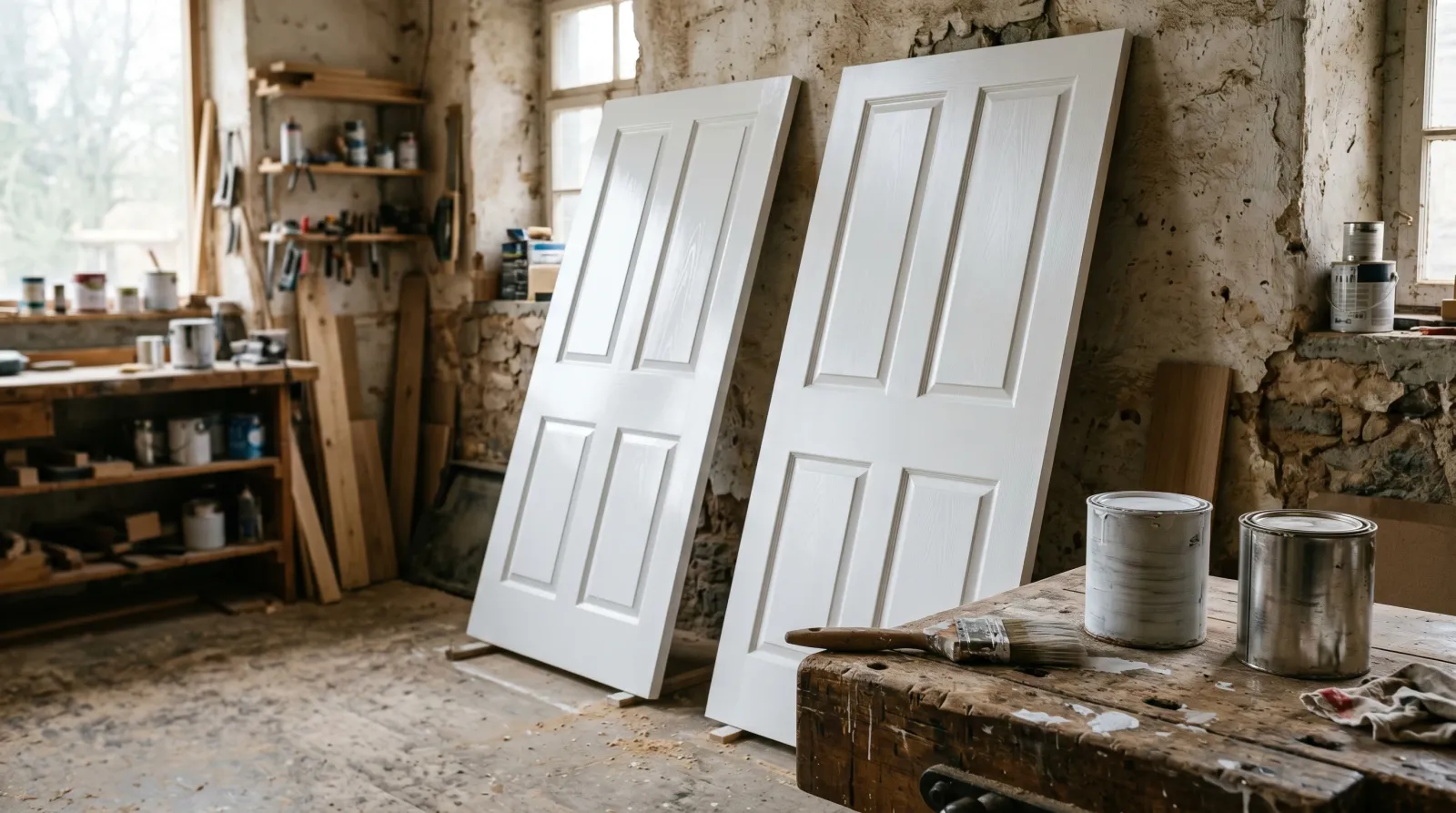
Run a fingernail across two enamel doors a month after they dry, and one of them dents while the other shrugs it off. Both cans said “enamel.” Both went on water-based and cleaned up in the sink. The difference is the binder underneath, and “enamel” doesn’t actually tell you which binder you bought.
Enamel is a finish description, not a chemistry. It means a paint that cures to a hard, smooth, washable film, usually in satin, semi-gloss, or gloss, the kind you put on trim, doors, and cabinets. Acrylic enamel and latex enamel both fit that description, but they get there through different resins. Acrylic enamel uses 100% acrylic binder. Latex enamel typically uses a vinyl-acrylic (PVA-acrylic) blend. That single substitution changes how hard the film gets, how well it sticks, and how long it survives a sponge.
What the Words Actually Mean
“Latex” in American paint is a misnomer left over from the 1940s. There’s no rubber latex in it. It’s a catch-all for any water-based paint where the binder particles are suspended in water and fuse into a film as the water leaves. For the longer version of that story, see what latex paint actually is.
The split that matters is the resin doing the binding.
- Acrylic enamel uses pure acrylic polymer. The film cross-links tightly, stays flexible, and resists water, UV, and abrasion well. It’s the more expensive resin.
- Latex enamel usually means a vinyl-acrylic blend. Vinyl acetate is cheaper and stretches the formula. The film is softer and a little more porous, but still washable and far easier on the wallet.
Both are water-based. Both clean up with soap and water. The marketing word on the can is “enamel”; the word that predicts performance is the resin in the fine print.
When to Use Acrylic Enamel
Use it for:
- Trim, baseboards, and crown molding that get bumped, kicked, and dusted. See the trim paint round-up for specific picks.
- Doors and door frames, where the surfaces touch and need to release cleanly without blocking (sticking shut).
- Kitchen and bathroom cabinets, the hardest-wear painted surface in most homes.
- Window sashes and any wood that sees direct sun, since acrylic holds up to UV better.
- Anywhere you want a high semi-gloss or gloss to flow out flat with minimal brush marks.
The reason acrylic earns the harder jobs is film formation. A pure acrylic binder coalesces into a denser, more continuous film with tighter cross-linking, so the cured surface is harder and less permeable. That’s what lets it shed fingerprints and survive repeated scrubbing without burnishing (going shiny where you rub).
When to Use Latex Enamel
Use it for:
- Bathroom and kitchen walls that need to wipe down but don’t get handled.
- Hallways, laundry rooms, and high-traffic walls where you want washability without the cabinet-grade price.
- Closets, utility rooms, and rental turnovers where budget and easy application matter more than maximum hardness.
- Large flat areas where the softer binder’s longer open time helps you avoid lap marks.
Latex enamel is the value play. It gives you most of the wipeability of a true enamel at a lower cost, and the softer film is more forgiving to brush. On a wall you’re never going to scrub with a degreaser, the extra hardness of acrylic is wasted money.
When NOT to Use Either
- Bare metal, with no primer. Waterborne enamels flash-rust ferrous metal and bead on slick aluminum. Use a bonding or metal primer first.
- Floors and stair treads. Neither is a floor coating. Foot traffic burnishes and scuffs them fast. Use a dedicated floor enamel or porch paint.
- Over uncured oil-based enamel. If old alkyd trim is glossy and not fully cured, a waterborne coat can crawl or peel. Scuff-sand and prime first.
- Exterior wood without the right line. Interior enamel isn’t UV- or mildew-stabilized for outdoor service. Use an exterior-rated acrylic.
- Knotty or tannin-rich wood, with no stain-blocking primer. Pine knots and cedar bleed through water-based enamel within weeks. Spot-prime with shellac.
How Acrylic Enamel Compares
| Acrylic Enamel | Latex Enamel | Oil-Based (Alkyd) Enamel | |
|---|---|---|---|
| Binder | 100% acrylic | Vinyl-acrylic blend | Alkyd resin |
| Cured hardness | Hard | Medium | Hardest |
| Cleanup | Soap and water | Soap and water | Mineral spirits |
| Yellowing | None | Minimal | Yellows over time |
| Leveling (brush marks) | Good | Fair | Excellent |
| VOCs | Low | Low | High |
| Best for | Trim, doors, cabinets | Wet-room walls | Maximum-wear specialty trim |
Oil sits in the table because it’s the third option people weigh and the one acrylic enamel was built to replace. For the water-vs-solvent decision in full, see oil-based vs water-based paint. For the resin-level comparison without the enamel framing, the latex vs acrylic paint head-to-head goes deeper.
Common Mistakes
- Recoating too soon. Enamel is dry to the touch in an hour but doesn’t reach full hardness for two to four weeks. Tape it, scrub it, or stack books against it early and you’ll print the texture into the soft film. Wait.
- Skipping the scuff-sand on glossy surfaces. Enamel grips a slightly toothed, porous surface. On old gloss trim or factory-slick MDF, a quick pass with 220-grit and a clean wipe is the difference between adhesion and a coat that peels in sheets.
- Brushing acrylic enamel like it’s wall paint. Acrylic has a shorter open time. Overworking it after it starts to set drags the film and leaves ropey marks. Lay it on, tip it off once, and leave it. The sheen guide explains why higher sheens punish overbrushing more.
- Expecting latex enamel to act like cabinet paint. A vinyl-acrylic enamel on kitchen cabinets blocks and chips at the touch points. The softer binder isn’t built for that load. Step up to a true acrylic or alkyd-modified cabinet enamel.
- Buying on the word “enamel” alone. Two cans can both say enamel and differ by a full hardness grade. Read the resin line or the product datasheet, not just the front label.
Where to Buy and What to Look For
On the can or the datasheet, look for “100% acrylic” if you want the harder, trim-and-cabinet-grade film, and a stated sheen of satin or higher. Benjamin Moore Advance (a waterborne alkyd-acrylic hybrid), Sherwin-Williams ProClassic Acrylic, and Behr Urethane Alkyd are the lines most painters reach for when they want acrylic-enamel hardness with water cleanup. For wet-room walls, a quality interior latex in semi-gloss does the job at half the price.
For specific cabinet and trim picks tested side by side, see the best interior trim paint round-up.
Ask a Question