What Is 100% Acrylic Paint?
100% acrylic paint uses an all-acrylic resin binder — harder film, better adhesion, more flex than vinyl-acrylic. Here's the chemistry and where it matters.

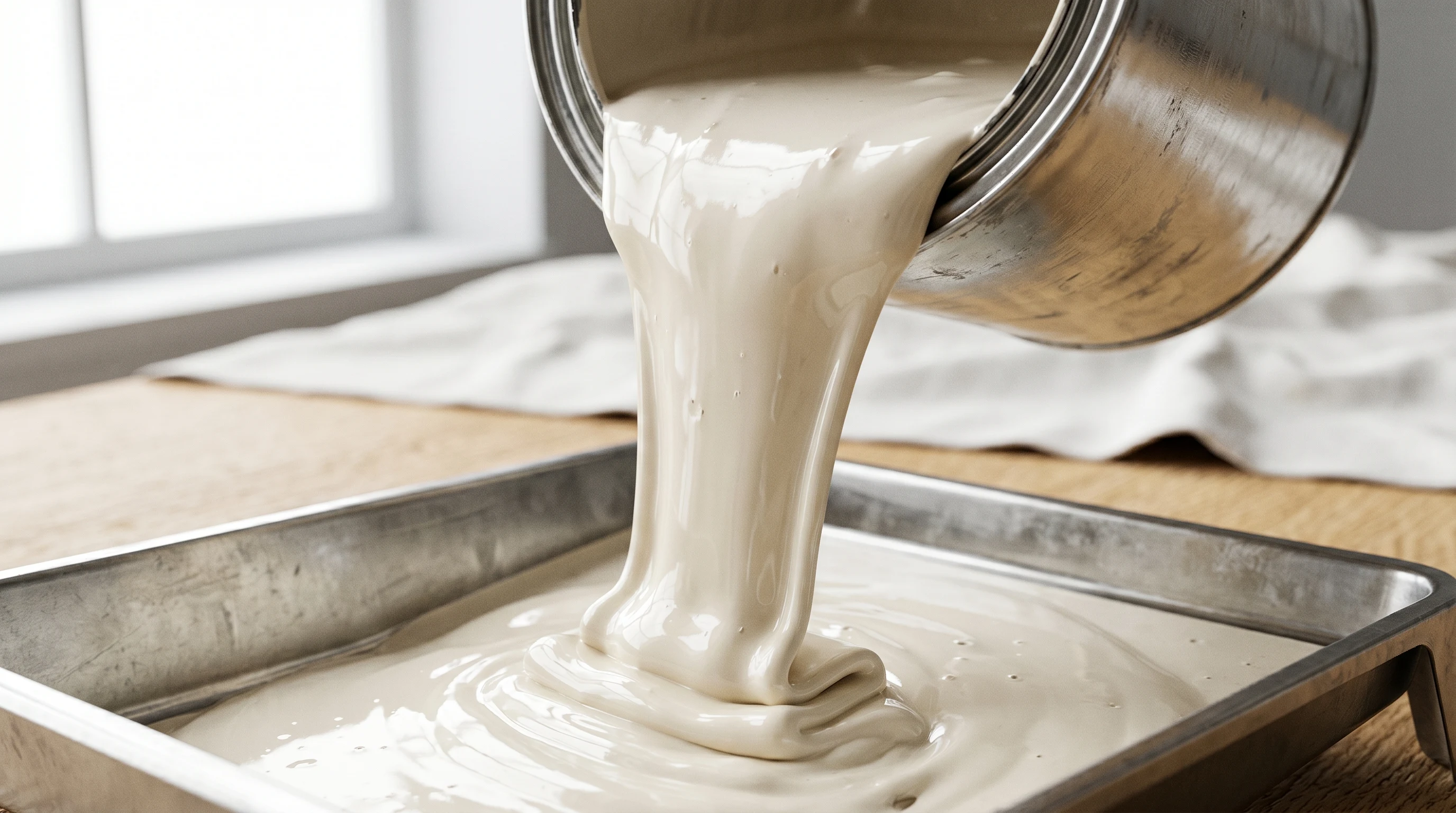
Two cans on the shelf both say “acrylic latex” on the front. One costs $42 and one costs $78. Read the back of the cheaper one and you’ll find the binder listed as “vinyl-acrylic copolymer.” The expensive one says “100% acrylic resin.” Same color, same sheen, same gallon. The film they leave on the wall behaves very differently in year three.
That difference is the binder. A 100% acrylic paint uses an all-acrylic resin (polymerized acrylic and methacrylic esters) as the polymer that fuses into the dried film. A vinyl-acrylic paint blends acrylic with polyvinyl acetate, usually 30–70% acrylic with the rest PVA. Both are water-borne. Both look identical when wet. But the all-acrylic film is harder, more flexible, and bonds to chalky and glossy substrates that vinyl-acrylic slides off of. The premium tier (Aura, Emerald, Duration, Marquee) is 100% acrylic across the board for that reason.
What “100% Acrylic” Means at the Molecular Level
Acrylic resin is built from acrylate monomers, most commonly methyl methacrylate and butyl acrylate, polymerized in water into a stable emulsion of microscopic particles. Each particle is a long chain of acrylate units bonded into a tough, slightly flexible polymer. When you roll the paint on, water evaporates, particles pack together, and the surface tension of the particles themselves drives them to fuse into a continuous film. That’s coalescence.
A vinyl-acrylic paint does the same thing, but a meaningful fraction of the particles are polyvinyl acetate instead of acrylate. PVA is cheaper to make and the film it forms is softer. It’s also more sensitive to water once cured. A fully cured PVA-heavy film will soften and chalk faster under repeated washing and direct sun. The acrylate particles in the blend pick up the slack, but the film is only as strong as the weakest fraction of polymer in it. On a bedroom wall, that’s fine. On south-facing siding, it’s a three-year paint job instead of a ten-year one.
Why the All-Acrylic Film Wins on Adhesion and Flex
Two things separate 100% acrylic from the vinyl-acrylic blend, and both matter most on surfaces that move or that have already been painted before.
Adhesion to difficult substrates. Acrylic resin has a higher concentration of carboxyl groups along the polymer chain. Those groups form hydrogen bonds with chalk, oxidized alkyd paint, and even the silica in glossy mineral substrates. PVA has fewer of them. So when you’re painting over a thirty-year-old exterior with a layer of chalked alkyd on the surface, or repainting glossy oil-based trim that you scuffed but didn’t strip, the 100% acrylic bonds and the vinyl-acrylic peels. This shows up six months later as flaking along the edges where the previous paint was glossiest. I see it constantly on porch railings.
Flexibility through temperature cycles. Acrylate polymers have a lower glass transition temperature than PVA, which in practical terms means the film stays elastic through a wider temperature range. Wood siding expands and contracts by 1–2% across a humidity swing. Vinyl siding moves even more. A 100% acrylic film stretches with the substrate. A vinyl-acrylic film starts micro-cracking after the third or fourth seasonal cycle, and once water gets behind a crack, you’ve got peel. This is why every premium exterior on the market is 100% acrylic and why nobody serious sells a vinyl-acrylic exterior paint.
The same flex matters indoors on door jambs, window casings, and crown molding — anywhere two pieces of wood meet at a joint that opens and closes a hair with the seasons. Trim painted with 100% acrylic enamel holds the line. Trim painted with cheaper vinyl-acrylic develops a hairline crack along the miter inside two years.
Where the Price Difference Is Worth It
Match the binder to what the surface will actually do. The premium isn’t always justified.
Always 100% acrylic. Exterior siding of any kind. Trim, interior or exterior. Kitchen walls and cabinets. Bathroom walls and ceilings. Front doors. Anywhere the surface gets washed, hit by sun, or moves with humidity. The cost difference per gallon is real, but a repaint cycle is much more expensive than the upgrade.
Vinyl-acrylic is fine. Bedroom walls, closet interiors, living-room ceilings, hallway walls in low-traffic homes. Flat sheen on a wall that won’t be touched. The film won’t see weather, won’t be scrubbed often, and the lower price drops the cost of a whole-house repaint by hundreds of dollars.
Skip both, use straight PVA. Contractor flat ceiling paint. Builder-grade flip work where the paint just has to look fresh for the listing photos. PVA is the cheapest binder there is and a ceiling that never gets touched doesn’t need anything more.
The trap people fall into is using vinyl-acrylic on a bathroom or an exterior because the gallon was on sale. The paint goes on identically. Same coverage, same flow, same dry time. The failure shows up at the eighteen-month mark when the bathroom ceiling starts to spot or the south wall starts to chalk. By then the can is in the recycling and the painter is blaming the surface prep.
What to Look for on the Label
The front of the can won’t tell you. “Acrylic latex” is legal to print on both 100% acrylic and vinyl-acrylic paint. Flip the can over and read the data sheet.
Look for one of these phrases under composition or vehicle: “100% acrylic resin,” “all-acrylic latex,” or “acrylic copolymer” with no mention of vinyl. If the binder is listed as “vinyl-acrylic,” “PVA-acrylic,” or “acrylic-vinyl copolymer,” it’s a blend. If the can only says “acrylic” with no qualifier, check the manufacturer’s technical data sheet online. Premium lines advertise 100% acrylic loudly because it justifies the price; blends stay vague because the vagueness is the point.
For a kitchen, a bathroom, anything exterior, or any trim that closes against another piece of wood, buy the can that says 100% acrylic on the spec sheet, and budget for the extra $30 a gallon. For everywhere else, the blend is honest paint and you’ll never know the difference.