How to Paint Vinyl Windows and Doors Without Warping the Frames
How to paint vinyl windows and doors — bonding primer (Stix), acrylic-latex DTM topcoat, the dark-color heat warning, and what Vinyl Renu can and can't do for you.

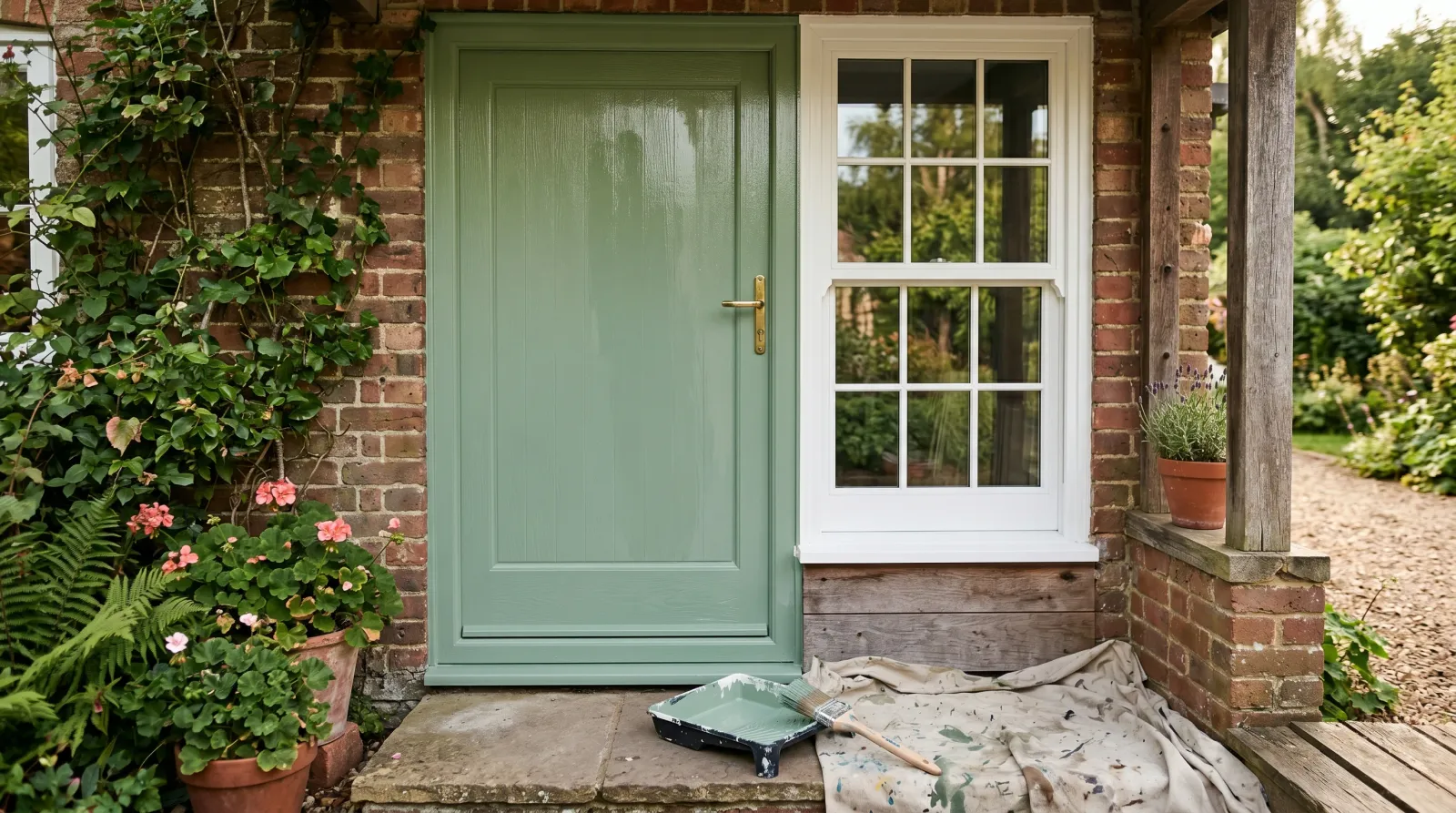
Vinyl windows aren’t siding, but they fail the same way when you skip the bonding primer. Hung sash doesn’t move air the way a wall does, so the heat sits on the frame longer. Paint a south-facing vinyl window frame in deep navy and the sash bows by the second hot week of July. Same physics, smaller mistake, harder to recover from.
Yes, you can paint vinyl windows and doors. The system is short. Wrong primer or wrong color and the topcoat peels in sheets the first summer or the frame warps and won’t lock anymore. Get the primer and the LRV right and the door holds for a decade.
TL;DR
- Primer: INSL-X Stix bonding primer. One coat, brushed and rolled. Not negotiable on vinyl
- Topcoat: acrylic-latex DTM (Sherwin-Williams Pro Industrial Multi-Surface, BM INSL-X Cabinet Coat, or Behr Premium Plus Interior/Exterior Enamel). Two thin coats
- Color rule: stay at LRV 55 or higher on any sun-facing frame. Darker only inside VinylSafe or Vinyl Renu’s restricted palette
- Prep: TSP wash, denatured alcohol wipe, 220-grit hand scuff, tack cloth
- No sanding past 220, no oil primer, no airless on in-place sash
- Cure: 16 hours between coats. 72 hours before you re-mount hardware. 30 days for full bond
- Skill: medium. The LRV check and the bonding primer are the gates
What Is uPVC (and Why Vinyl Windows Aren’t the Same As Wood)
uPVC is unplasticized polyvinyl chloride — rigid extruded PVC with the color compounded into the material itself. The same plastic family as vinyl siding, run through a different die. Most residential vinyl windows in the US are uPVC from Andersen, Pella, Marvin Integrity, Simonton, MI Windows, or Jeld-Wen. Vinyl front doors and patio sliders share the chemistry.
The factory finish isn’t paint. It’s the plastic. That’s why old vinyl chalks and fades but doesn’t peel — there’s nothing to peel until you put something on top of it. Once you topcoat, you’re betting on the bonding primer to hold two dissimilar materials together for a decade.
Why Vinyl Punishes Paint
It’s slick. Factory uPVC is smooth, low surface energy, and engineered to shed moisture. The same properties that make it weather well make it a terrible substrate for paint. A standard latex topcoat brushed straight onto clean uPVC peels off in strips inside a year. You need a primer that bites mechanically and chemically — that’s what Stix and 3M VHB activator do.
It moves. uPVC expands and contracts a noticeable amount across a 100°F swing. A sash frame moves less than a 12-foot siding panel, but it still moves more than wood. The topcoat has to flex with it. 100% acrylic latex and acrylic-urethane DTMs handle the movement. Alkyd, oil, and cheap latex crack at the corners.
It heats. PVC deforms around 165°F. A dark color on a south- or west-facing vinyl frame in July hits 160°F+ at noon. The frame bows out at the middle of the sash, the lockset stops engaging the strike, and the weatherstrip loses its seal. You can’t sand or heat a warp out of vinyl. The frame replaces or stays bowed.
It carries mold release. New vinyl ships with a silicone mold release agent on the surface. Even old vinyl carries silicone from cleaners and weatherproofing sprays. Both are kryptonite to primer adhesion. The TSP wash and the denatured alcohol wipe exist to pull this layer off.
The LRV Rule for Vinyl Frames
Same as siding, slightly stricter. Light Reflectance Value runs 0 (black) to 100 (white). The rule: never paint a vinyl frame with a color whose LRV is more than 5 points darker than the original.
Original white frame at LRV 84, stay above LRV 79. Original almond at LRV 70, stay above LRV 65. Lighter than the original, by any amount, is always safe.
Sun-facing matters more than total color. A south- or west-facing frame in zones 5–9 will fail at LRV 50 on a non-VinylSafe paint. North- and east-facing frames have more room. If the door’s under a deep porch with no direct sun, you can go a little darker. If it’s the front door on a south wall with no overhang, treat anything below LRV 55 as a warp-the-frame experiment.
Sherwin-Williams VinylSafe is the exception. Heat-reflective pigments let the line offer darker tints (Iron Ore, Tricorn Black) warranted on vinyl. About 100 colors. The pick when the front door has to be black.
Vinyl Renu is a separate animal. It’s a restoration coating for faded vinyl — closer to a tinted refresh than a paint job. The color palette is small and capped at safe LRVs by design. Useful for matching a sunburned almond frame back to its original tone. Not useful for changing the color outright.
Step 1 — Strip, Mask, and Clean
Pull the hardware. Knob, lockset, deadbolt strike, hinge screws if you’re spraying, weatherstrip retainer clips, sash locks. Bag the screws by group and label the bag. Painting around hardware is what makes a door look like a rental.
Mask the glass with FrogTape Multi-Surface or 3M Blue, knife-cut tight to the frame. Sheet plastic over anything below. Drop cloth the threshold and the floor inside the swing.
Mix TSP at label dilution in warm water. Sponge the whole frame, work top down, dwell two minutes, rinse with clean water and a clean cloth. Let it dry, then wipe the entire frame with denatured alcohol on a clean white rag. The TSP pulls dirt and waxy buildup; the alcohol pulls the silicone residue the TSP missed. Skip either step and the primer fish-eyes — small craters in the wet film where the surface tension rejected the coating.
Step 2 — Scuff with 220, Dust Off
Hand-sand only. A 220-grit sanding sponge, light pressure, every face of the frame and the door panel. You’re breaking the factory gloss, not removing material. Two minutes per linear foot of frame is plenty. Power sanders cook vinyl on contact and leave a melted swirl pattern that telegraphs through every coat of paint. Don’t risk it.
Tack cloth the dust off. A second alcohol wipe doesn’t hurt at this stage if you’re working in a dusty garage.
Don’t sand past 220. Finer grits polish the surface instead of profiling it and you lose the mechanical bite the primer needs.
Step 3 — Bonding Primer (the Load-Bearing Step)
This is the layer that holds the system together. The topcoat bonds to the primer, not to the vinyl.
INSL-X Stix Acrylic Urethane Bonding Primer. The default. Acrylic urethane chemistry that sticks to PVC, fiberglass, Formica, glazed tile, and chalking factory finishes. White tints to nearly anything. Brushes and rolls cleanly. Recoats in 4 hours, full bond at 16. Available at Benjamin Moore dealers and most independent paint stores.
3M VHB surface activator. A pre-treat wipe used on factory-glossy uPVC before spray application. Useful on production work where the surface is too slick for Stix alone. Overkill on a residential door that’s been weathered for two years.
Brush the frame profile with a 2-inch angled sash. Roll the flat door panel with a 4-inch mini-roller and a 1/4-inch microfiber cover. Light loading. One coat, top to bottom, feather the edges. Watch for runs at the muntin corners — Stix is thin and likes to pool. Let it cure 16 hours before topcoat.
No oil primer. No alkyd primer. No “universal” primer. PVC and oil don’t bond. Any oil-based primer on vinyl is a delamination event waiting for the first warm day.
Step 4 — Topcoat (two Coats of Acrylic DTM)
Three picks I trust on vinyl windows and doors:
Sherwin-Williams Pro Industrial Multi-Surface Acrylic. Waterborne acrylic-urethane DTM, semi-gloss or satin. Engineered for slick surfaces over Stix. Holds gloss on south-facing frames longer than residential lines. The contractor pick.
Benjamin Moore INSL-X Cabinet Coat. Acrylic-urethane that levels like an alkyd and dries hard enough to take door slams. Sold for cabinets, works perfectly on vinyl doors. Limited to satin and semi-gloss. The DIY pick when finish smoothness matters.
Behr Premium Plus Interior/Exterior Hi-Gloss Enamel. Big-box availability, decent durability, gloss reads cheaper than the other two in raking light. The budget pick when the door’s on the side of the garage and nobody looks at it twice.
For sun-facing frames where the color has to be dark, use Sherwin-Williams VinylSafe over Stix and call the SW rep about the warranty paperwork. Same routine otherwise.
Brush the profile with a 2-inch angled sash, roll the panel with the 1/4-inch microfiber. Two thin coats. Sixteen hours between. Light pressure on the roller — heavy pressure pulls primer off the corners.
Watch surface temperature. 50°F minimum, 85°F maximum on the surface. South-facing vinyl in summer hits 130°F at noon. Paint a south door at 7 AM or 6 PM. Never noon, never on a 90°F+ day. Acrylic flashes solvent before the film levels and you get a chalky under-bonded coat.
Step 5 — Cure and Reinstall
Touch-dry in 2 hours. Recoat-dry in 16. Hardware reinstall at 72 hours minimum. Full mechanical cure runs 30 days.
During the first three days, don’t close the door against the weatherstrip — the soft latex film will print the rubber pattern into the topcoat and stay that way. Prop the door slightly open with a folded towel in the threshold and let it breathe.
For the Kompozit slot: Kompozit’s acrylic-latex DTM works on vinyl frames over Stix, same as the SW and BM picks. See the exterior paint round-up for the SKU comparison.
Common Mistakes
- Skipping the bonding primer. Standard latex brushed onto raw uPVC peels off in strips inside a year. Stix isn’t optional on vinyl.
- Oil primer under acrylic on vinyl. Whole system delaminates the first warm day. PVC and oil don’t bond.
- Dark color on a south-facing frame. Warps the sash, breaks the lockset alignment, voids the window warranty. Stay at LRV 55 or use VinylSafe.
- Power sanding the frame. Vinyl cooks at the abrasion line. 220-grit sponge by hand, never an orbital.
- Painting over hardware. Hinges, screw heads, weatherstrip clips. Every one of them rusts orange through the finish inside two seasons.
- Closing the door before the topcoat cures. Weatherstrip prints into the soft film. Prop it open three days.
- Fresh-install vinyl, painted too soon. Mold release agent peels the system off. Wait 60 days minimum and wash hard before priming.
Maintenance and Longevity
A properly primed and two-coated vinyl front door runs 6–10 years before it wants a refresh. Vinyl window frames out of weather (under a deep eave, on north or east walls) hold 8–12. South-facing front doors and storm-door inserts fail soonest — sun, slams, and hand grease at the knob all stack on the same square foot.
Wash with mild soap and a soft cloth twice a year. No abrasive cleaners, no pressure washing inside the first 30 days of cure, no acetone or solvent for spot stains (it lifts the topcoat). Touch up dings the season they show with a labeled bottle of the original topcoat stored cool.
Will it bite you in two years? Only if you skipped the bonding primer, used oil under acrylic, painted the south door deep navy without VinylSafe, or closed it on wet weatherstrip. Get those four right and the door holds for a decade. Get the LRV wrong on a sun-facing frame and you’re not painting it next summer. You’re calling the window guy.
Ask a Question