How to Paint Metal Siding
Painting metal siding the right way: pressure wash and TSP, self-etching primer over chalky old enamel, then a DTM acrylic topcoat that survives ten summers.

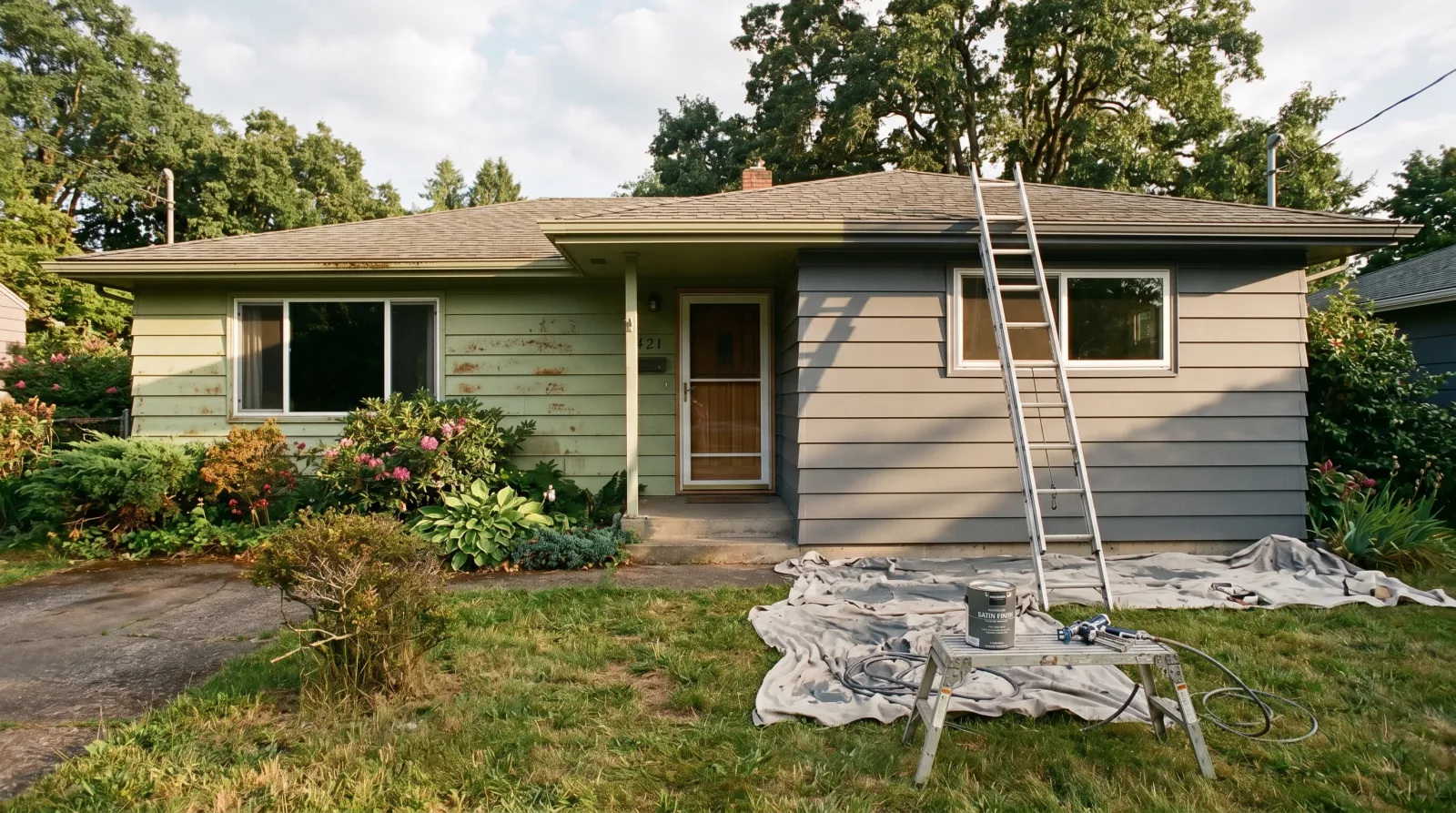
Metal siding is a chalk-and-oxidation problem before it’s a paint problem. You can buy the best DTM acrylic on the shelf and it’ll still peel in two summers if you laid it over a dusty, glazed, half-rusted panel. Wash twice. Spot-treat the rust. Bond with the right primer. Topcoat with a DTM acrylic. Five steps, three of which are prep, and the painting is the easy part.
TL;DR
- Prep: Pressure-wash twice with TSP at 1,500 PSI, 25-degree tip. Wire-wheel any spot rust to bright metal, brush rust converter over the pitting.
- Primer: Self-etching bonding primer over the old enamel. Rust-Oleum Self-Etching for spot work, INSL-X Stix for whole elevations.
- Paint: DTM acrylic topcoat. SW Pro Industrial DTM Acrylic Gloss is the contractor default. INSL-X Cabinet Coat for any panel that takes daily mechanical abuse.
- Cure: Recoat at 4 hours. Full cure 14 days before weather exposure, 30 days before a pressure wash.
- Skill: Medium. The painting is straightforward. The prep is the work.
What Counts as Metal Siding
The phrase covers more than one product. Painted steel siding is the big category: lap or corrugated panels with a baked factory enamel, common on midcentury ranches, barndominiums, and outbuildings. Galvanized steel siding is zinc-coated steel or factory-painted galvanized; older agricultural buildings and post-2000 metal-clad homes. Aluminum siding is its own animal and has its own guide because the prep changes. This article is for the steel and galvanized cases. If you’ve got aluminum, jump to the aluminum siding guide and come back.
A quick way to tell. Tap the panel with a knuckle. Aluminum sounds dull and rings briefly; steel rings harder and longer. A magnet sticks to steel; it slides off aluminum. If the panel has rust freckles, it’s steel.
Why Metal Siding Is Different From Wood
Two reasons, and both decide the system.
Metal moves with temperature more than wood does. A south-facing steel elevation in July goes from 75°F at dawn to 140°F at 3 p.m. and back to 70°F by midnight. The panel expands a quarter-inch across an eight-foot run. 100% acrylic flexes with it. Alkyd and oil don’t, not for long. Old factory enamel gets brittle around year 25 and micro-cracks at the lap edges. That’s where the rust gets in, and that’s why you’re on a ladder in 2026 repainting a panel installed in 1978.
Metal has no porosity. A wood primer soaks into the grain and locks in. A metal primer has to grip a smooth, glazed surface chemically. That’s the whole job of the bonding primer. Skip it, and the topcoat sits on top of the panel like a sticker on a fridge. First hot summer, the panel expands and the sticker peels.
Step 1 — Prep
This is most of the job.
The Chalk Wipe-Test
Before anything else, run a clean white rag down a sunny elevation. If the rag comes back gray, the panel is chalking. That’s loose oxide from the original enamel breaking down under UV. Paint sticks to oxide; oxide doesn’t stick to the panel; the new paint peels off with the old chalk. The wipe-test is the diagnostic that decides whether you wash once or twice.
Pressure-Wash With TSP
1,500 PSI ceiling, 25-degree tip, stand four feet back. Higher pressure dents soft panels and drives water behind the laps where you don’t want it. TSP or TSP substitute in the wash water at the rate on the bottle. Brush the laps with a soft-bristle car-wash brush on a pole as you go; the water alone won’t lift baked-on chalk and pollen. Rinse top to bottom. Let the wall dry overnight.
Wipe-test again the next morning. If the rag still grays, wash a second time. On heavily chalked 1970s siding, three washes isn’t unusual. Stop when the rag comes back clean.
Mildew On the Shaded Faces
North and east elevations carry mildew under the chalk on most older siding. Mix bleach 1:10 with water, brush onto the affected panels, leave 15 minutes, rinse. Bleach kills the spores; without that step the mildew grows right back through the new paint inside a year.
Spot-Rust Treatment
Walk the wall after it’s dry. Any rust freckles, scratches to bare metal, or pitted areas at the lap bottoms get hit with a drill-mounted wire wheel to bright metal. Then brush Krud Kutter Rust Converter or Rust-Oleum Rust Reformer over the pitting. The product reacts with the iron oxide and turns it into a stable black film you can prime over. Two-hour cure, dry to touch in 40 minutes.
Anything heavier than spot rust is a different conversation. A panel that’s rusted through at the seam needs a panel replacement, not paint. Cover Stain over a half-rotten panel is throwing money at a problem you haven’t solved.
Dent Repair
Light-body auto body filler (Bondo) on any meaningful dings. Feather the edges with a 220-grit sponge after it kicks. Don’t try to flatten every storm-dent on a 50-year-old wall. You’ll be at it for a week and the wall looks fine from the curb. Hit the ones that catch your eye from the driveway.
Scuff Sand the Sound Old Enamel
220-grit sanding sponge over every sound panel you’re recoating. Light pressure. You’re not trying to cut the paint; you’re knocking the glaze off so the primer has something to bite. Five minutes per panel face is enough. Vacuum the dust, then wipe with a clean dry rag.
Safety
Lead test before sanding any siding on a house built before 1978. RRP rule applies if you’re hiring out. P100 respirator for the wire-wheel work, eye protection, and gloves through the rust converter step. Tarps under the work to catch chips for proper disposal.
Step 2 — Primer
This is the layer most homeowners skip. The topcoat looks pretty; the primer is what holds the system to the metal.
Rust-Oleum Self-Etching Primer is the spot-work answer. Aerosol cans, sprays the etch chemistry directly onto the bare or scuffed metal at any spot the wire wheel exposed. Use it on rust-converted patches, scratches to bare steel, and any small areas where the original enamel is gone. Quick to dry (30 minutes), low odor enough for residential exterior work. Not what you want for a whole elevation. At $9 a can you’ll spend more than the gallon costs and the coverage gets thin.
INSL-X Stix Waterborne Bonding Primer is the whole-elevation answer. Bonds to the slick, glazed factory enamel that’s still on 90% of the wall surface after the chalk wash. Waterborne, dries in an hour, recoats in four. Tints to a gray base that lets the topcoat cover in two coats instead of three. Same primer the bath pros use under semi-gloss on glossy oil trim. Stix is the universal bonder on slick surfaces.
Two primer coats over the spot-rust patches, one coat over the rest. Brush the laps with a 2.5-inch angled sash and back-roll the flats with a 1/2-inch nap microfiber. If you’re spraying with an airless, run a 517 tip and back-roll behind the sprayer to flatten the lap shadow lines before the wet edge sets.
A note on “self-priming exterior” topcoats sold for metal. Those are written for sound, scuff-sanded previously-painted metal in good shape. Your 50-year-old chalky steel siding is not that surface. You need the bonding primer.
Step 3 — Topcoat: DTM Acrylic
DTM stands for direct-to-metal. The chemistry is engineered to bond to primed metal and flex through the temperature cycle without micro-cracking. Three picks cover the field.
Sherwin-Williams Pro Industrial DTM Acrylic Gloss is the contractor default for metal siding. Satin and semi-gloss available, full SW color deck including the deeper tints, low VOC. Holds gloss for 8–10 years on residential exposure before any visible chalking starts. The semi-gloss is what you want on a south elevation; the satin reads quieter on a darker color.
Behr Premium Plus DTM is the Home Depot pick. Cheaper per gallon, narrower color deck, performs respectably on residential metal in moderate climates. Two coats. The headline trade-off: shorter gloss-retention window than the SW Pro Industrial, more like 6–8 years before chalking starts. Fine for an outbuilding or a budget repaint.
Benjamin Moore INSL-X Cabinet Coat earns a slot for the hard-wear case. Any panel within reach (the lower 30 inches at a back-door entrance, the run of siding behind a trash-can pad, anywhere a wheelbarrow handle scrapes the wall) takes daily mechanical abuse that standard DTM acrylic won’t survive. Cabinet Coat’s cured film is harder than any of the wall-grade DTMs, which is why it’s the bathroom-vanity and kitchen-cabinet pick. On hard-wear panels of metal siding, it’s the same story.
Two coats. Always two coats. The first coat looks like it covered; the second is what gives you the mil thickness that survives ten summers. Aim for 4–6 mils total dry across both coats. For SKU-level picks across the broader exterior category, see the best exterior paint round-up.
Step 4 — Application
Brush, roll, or spray. The decision is panel geometry and how much wall you have.
Flat lap or corrugated panels. Back-roll with a 1/2-inch nap microfiber on a 9-inch frame. Cut the laps in with a 2.5-inch angled sash, then roll the flats while the cut-in is still wet. Don’t stop in the middle of a panel run. Stopping mid-run is how you get lap marks in the morning sun.
Whole-house elevations. Airless sprayer with a 517 tip, back-roll behind the sprayer. The back-roll is what locks the paint into the lap shadow lines and flattens the spray pattern. Wind kills metal-siding spray jobs. Overspray drifts onto every car within 50 feet. Spray on still mornings only.
Trim, J-channel, and corner posts. Brush only. A 2.5-inch sash for the long runs, a 1-inch for the J-channel returns. Cut the trim in last after the field is rolled; that way any drips you missed hit unpainted siding instead of fresh trim.
A surface thermometer answers the temperature question. Don’t paint metal below 50°F panel temperature or above 90°F. Below 50°F the acrylic doesn’t coalesce; above 90°F the film skins over before the body dries and you get blistering. South elevations in summer are a morning-only job.
Step 5 — Dry, Recoat, Full Cure
Touch-dry: 1–2 hours for the Stix primer, 4–6 hours for the oil-based self-etching aerosol if you used it for spot work. Recoat: 4 hours waterborne primer, 16 hours oil-based. Topcoat recoat: 4 hours for the DTM acrylics named above. Full cure: 14 days for normal weather exposure, 30 days before a pressure wash or hard scrub. Don’t lean a ladder on freshly painted siding for a week. The film looks dry; it isn’t hard yet.
Rain inside the recoat window washes off uncured topcoat in streaks. Check the forecast for the 24 hours after each coat. If it’s borderline, wait a day.
Common Mistakes
- Painting over chalky old enamel without washing. The chalk is loose oxide. Paint sticks to oxide; oxide doesn’t stick to the panel; the new paint peels with the old chalk inside two summers. Wipe-test before you paint.
- Wood-grade exterior paint on a metal wall. Cracks in two summers. Metal moves more than wood. Use DTM.
- Skipping the bonding primer. Self-priming exterior over glazed 50-year-old enamel is a marketing claim. Stix or self-etching is the difference between a 10-year job and a 2-year job.
- Painting in the wrong temperature window. Below 50°F the film doesn’t form. Above 90°F panel temperature, the film blisters. Surface thermometer answers it.
- Pressure-washing at full trigger. Above 2,000 PSI you dent the panel and drive water behind the laps. 1,500 PSI with a 25-degree tip is the metal-siding ceiling.
- One thick coat instead of two thin. Thick coats trap moisture and sag at the lap edges. Two coats at proper mil thickness is how the system reaches its rated life.
Maintenance and Longevity
Rinse the siding twice a year: spring after pollen, fall after leaf drop. Garden hose and a soft brush handle most of it. If you have to pressure-wash later in the system’s life, throttle to 1,500 PSI and stand four feet back. A well-prepped, two-coat DTM acrylic system over the right primer lasts 10–15 years on residential steel siding in zones 5 and 6, 5–8 years in coastal salt-air zones where the chloride accelerates everything.
Year three is the spot-check year. Walk the wall after a hard winter and look for single rust freckles bleeding through. A single freckle is a single pinhole. Sand it back to bright metal, dab self-etching primer, dab topcoat, done in 20 minutes. Ignoring it until the bottom panel is orange is a full strip-and-redo of one elevation.
The thing that’ll bite you in two years is the underside of the bottom lap on the north elevation. You couldn’t see it from the lawn, you didn’t bother to back-brush the primer in there, and water sits on that surface every time it rains. That’s where the rust always starts. Spend the extra ten minutes per elevation getting primer under the bottom lap. Future you on a ladder in 2028 will thank present you on a ladder in 2026.
Ask a Question