How to Handle Grooves When Painting Wood Paneling
Grooves in wood paneling read darker or shinier than the flats because the roller can't reach the bottom. Brush the grooves first, roll the faces, and they disappear.

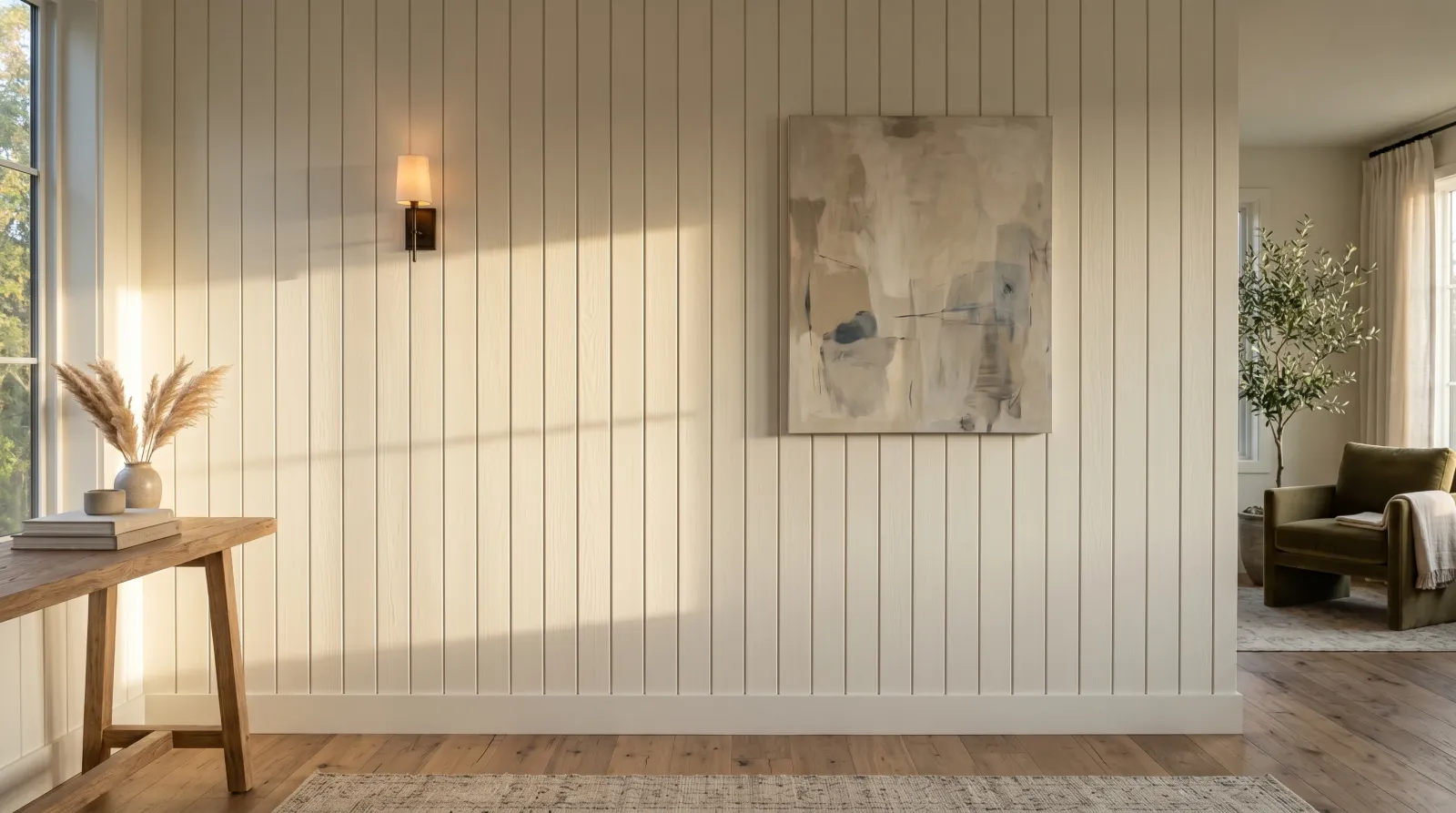
Grooves on wood paneling read wrong because the roller never touches the bottom of the channel. The flat faces get a full coat and the groove gets whatever wicks in off the edge, so the groove ends up thin, blotchy, or still showing the old finish. The fix is to brush every groove first and roll the faces second. Do it in the wrong order and the grooves fight you on every coat.
Does This Match What You’re Seeing?
Look at the wall under side light. The grooves tell you which problem you’ve got.
- Grooves darker than the flats, color looks right otherwise: plain shadow. A recess always reads darker under raking light. Mostly normal, partly thin film.
- Grooves glossy while the flats are flat: paint pooled in the channel and dried thicker. More film, more sheen.
- Grooves showing the old color or bare wood: the roller bridged the groove and never coated the bottom. Starved channel.
- Grooves blotchy, light and dark down their length: brush load ran out and you dragged a dry bristle through the channel.
- Whole panel peeling at the grooves first: no bonding primer over a slick factory finish. That’s an adhesion problem, not a texture one.
If the flats look great and only the grooves are off, you rolled without brushing the channels first. That’s the common one.
How Serious Is This?
Cosmetic on a sound panel. The wall is sealed and protected even when the grooves read uneven. You can live with it for years and nothing bad happens behind the paint.
The look is the whole problem, and grooves are right at eye level on a feature wall. Two triggers push this past cosmetic:
- Paint lifting at the grooves: the primer didn’t bond to the factory finish. Strip the loose film and re-prime. See why paint peels off trim and slick surfaces →.
- Pre-1978 home with old paneling: test before you sand anything. Old paneling and the wall behind it can both be lead. Lead test first.
Why This Is Happening (root Cause)
A roller is a cylinder. A groove is a valley. The nap rides across the top of the valley and the only paint that reaches the bottom is what runs down the side walls of the channel. So the groove gets maybe a third of the film the flats get. That’s the whole mechanism.
Three things make it worse.
The roller bridges the groove. A 3/8-inch nap spans a narrow V-groove without dropping into it. You roll the wall, the faces look perfect, and the groove bottoms never see fresh paint. Under light they show whatever was there before.
Paint pools where the groove is wide or shallow. On beadboard and some MDF paneling the channel is a soft U, not a sharp V. Excess paint off the roller runs down and puddles in the bottom. It dries thicker, so it dries glossier. Now the groove reads shinier than the flats even though it’s the same paint.
Old sheen and old prep telegraph. Most factory paneling is vinyl-faced or photo-printed with a satin or gloss finish. Latex doesn’t grip it. If you skipped the bonding primer, the grooves are where the topcoat fails first, because the channel holds the least film and flexes the most when the panel moves.
Run a finger down a dry groove. If it feels slick or you can see old color, the channel is starved. That’s your confirmation.
The Fix
The whole trick is sequence. Grooves first, flats second, every coat.
Step 1. Sand and Clean the Whole Panel
Scuff-sand the faces and the grooves with 150 to 220 grit until the factory sheen goes dull. A sanding sponge gets into the grooves where flat paper can’t. You’re not removing the finish, just knocking the gloss off so primer can bite.
Wipe the dust with a damp microfiber, then dry. On a kitchen or family-room panel there’s grease in the grooves whether you see it or not. Hit it with TSP substitute, rinse, and let it dry a few hours.
Step 2. Prime, Grooves First
Match the primer to the panel:
- Slick vinyl or factory-finished paneling: INSL-X STIX or Zinsser Bulls Eye 1-2-3 bonding primer. Grips the slick face latex can’t hold.
- Real wood paneling with knots or visible grain: Zinsser BIN (shellac) to lock tannin and knot bleed. Dries in 45 minutes, blocks anything.
- Raw MDF paneling edges: an oil or shellac primer. Water-based primer swells the MDF fibers. See how to paint MDF the right way →.
Cut a 2.5-inch angled brush down every groove first. Load the brush, run it the full length of the channel, work it into both side walls and the bottom. Then roll the flat faces with a 3/8-inch microfiber roller and feather the roller into the wet groove edges. One coat of primer. Let it dry per the can. BIN is 45 minutes; bonding primers want a couple hours.
Bonding primer is doing the real work here. Self-priming paint is a marketing claim on slick factory paneling. Your topcoat needs that grip coat or it peels at the grooves first.
Step 3. Brush the Grooves on Coat One
Same sequence, now in your topcoat color. Load the angled brush and pull it down each groove the full length of the wall before you touch the roller. Don’t overload. A heavy brush dumps paint that pools in the channel and dries glossy. Enough to wet the bottom and both walls, no puddle.
Work in sections you can keep wet. Brush four or five grooves, then roll the faces between them while the brushed paint is still wet. The two have to merge wet or you get a sheen line where they meet.
Step 4. Roll the Faces Into the Wet Grooves
A 3/8-inch microfiber roller for smooth paneling, 1/2-inch if the panel has any texture. Load it heavy. Roll the flat faces top to bottom and run the roller edge right up to the groove so the films marry while both are wet.
Same direction across the whole wall. Alternating roll direction reads as a sheen difference under side light, the same way it does on a flat wall. See how lap marks form and how to roll them out → for the full technique, because grooved paneling shows raking-light flaws worse than drywall does.
Don’t stop mid-wall. Finish corner to corner.
Step 5. Second Coat, Grooves First Again
Two coats. The grooves especially need the second one because the first coat sinks into the channel and looks thin no matter how careful you were.
Repeat the exact sequence. Brush every groove, roll the faces into them wet, same direction. Coat two is where the grooves finally match the flats. Skip the brushing on this coat and you’ll see why the order matters.
Safety
N95 while sanding. Cross-ventilate hard during priming, BIN and bonding primers off-gas strong. Eye protection if you’re cutting grooves overhead on a ceiling panel. Pre-1978 home means lead test before any sandpaper touches the panel.
What About Filling the Grooves Instead?
Some people don’t want paneling. They want a flat wall. That’s a different job.
Fill each groove with lightweight joint compound, two or three passes, sanding flush between coats. Tape the seams where panels meet if there are any, because those open back up when the wall flexes. Prime the whole skim-coated surface, then paint it like drywall. It’s a real weekend of mudding and sanding, and a flexing panel can crack the fill back open at the grooves down the line.
The cleaner permanent fix for a wall you hate is quarter-inch drywall hung right over the paneling, taped and finished. More work, but it never cracks back to a groove. If you only kind of mind the paneling, paint the grooves right and keep them. Cheaper, faster, and the look is intentional instead of a compromise.
Prevention
- Brush the grooves first, every coat. This is the one rule. Skip it and you’ll never match the channel to the flats.
- Two thin coats, not one thick one. A thick coat pools in the grooves and dries glossy. Thin and even keeps the sheen consistent.
- Bonding primer on any factory finish. STIX or 1-2-3 over vinyl-faced paneling. The topcoat fails at the grooves first without it.
- Don’t overload the groove brush. A puddle in the channel is what makes a groove read shiny. Wet the surface, don’t flood it.
- Choose your sheen down. Matte and eggshell hide groove unevenness. Satin and semi-gloss spotlight every thickness difference under side light. Go a step flatter than you would on flat drywall.
- Plan for the light. A feature wall facing a window gets raking light all afternoon. Roll the faces in one direction so the grooves are the only shadow lines, not your roll seams too.
When to Call a Pro
- Pre-1978 home where you’d be sanding old paneling or the plaster behind it. Lead test first; if it’s positive, RRP rules apply.
- A whole house of paneling you want gone. Drywall-over or full skim-coat is faster and cleaner in a pro’s hands than groove-by-groove.
- Paneling already peeling at the grooves across a wide area. That’s a bond failure, and a strip-and-reprime is more than a touch-up.
- Spray jobs on large grooved surfaces. Spraying lays an even film into every groove in one pass, but the masking and back-brushing is a two-person day.
What’ll Bite You in Two Years
You’ll repaint this wall someday. If this coat went on roller-only, the grooves are starved under the surface, and fresh paint rolled over them stays starved. The blotch telegraphs through the new color the same as it did the old one. Brush the grooves on the repaint too, or you’re just copying the problem in a different shade. The groove is the part everyone skips, and it’s the part everyone sees.
Ask a Question