How to Get Rid of Lingering Paint Smell
A lingering paint smell means solvents are still off-gassing. Find out why it stays, how to clear a room fast, and when the smell signals a real problem.

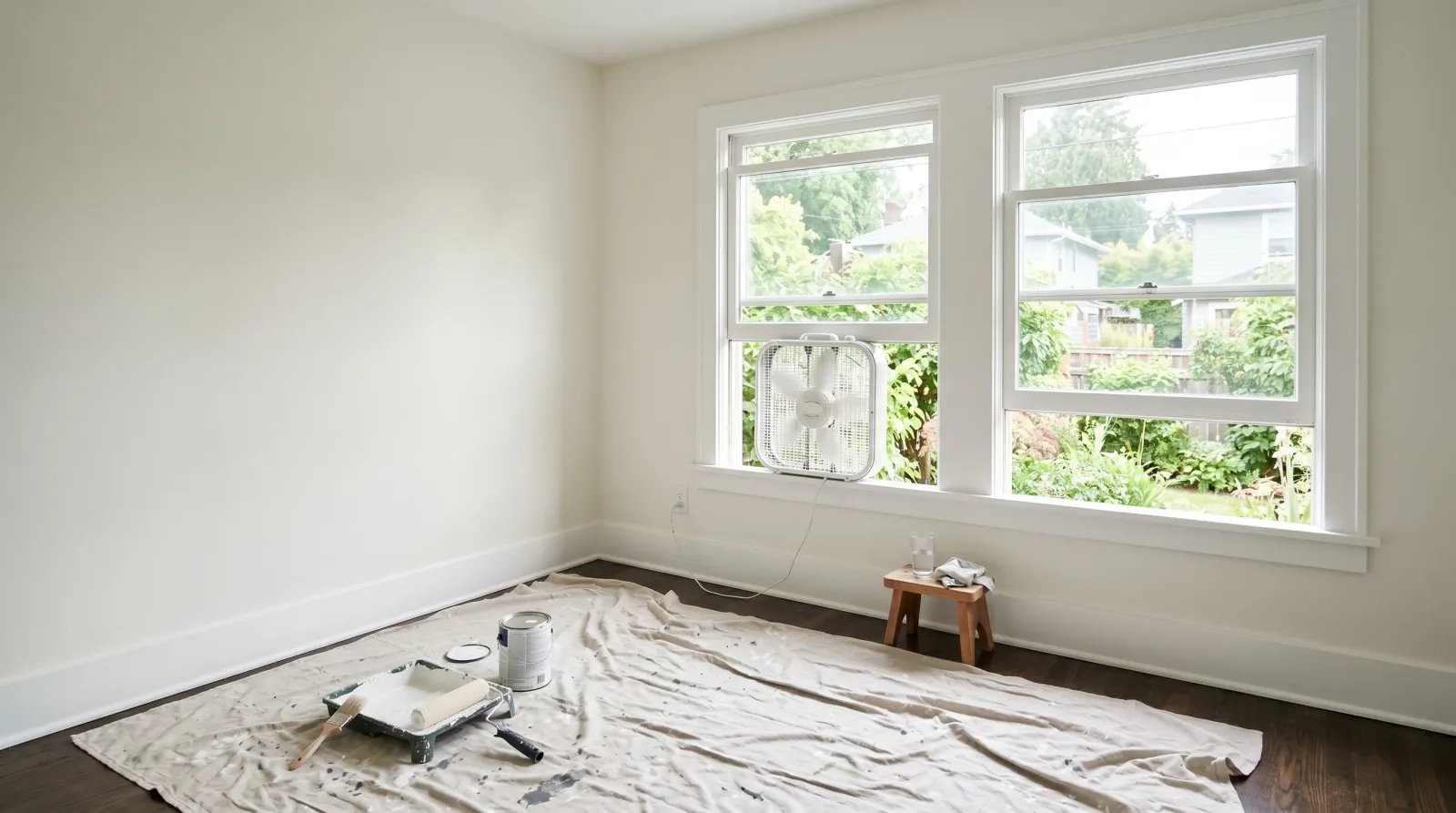
A lingering paint smell isn’t the paint going bad. It’s solvent still leaving the film. The smell sticks around because the coating hasn’t finished curing, or because the room has nowhere to send the fumes. Move the air, give it time, and it goes.
Does This Match What You’re Seeing?
Not every smell after a paint job is the same problem. Pin down which one you’ve got before you start opening windows.
- Sharp, fresh paint smell 1 to 3 days after a water-based job: normal off-gassing. Air it out and wait.
- Strong solvent smell a week or more after water-based wall paint: the cure stalled. Too cold, too humid, or coats too thick.
- Heavy chemical smell after oil-based trim, enamel, or shellac primer: expected. These take a week-plus and need real ventilation.
- Smell that returns when the room warms up or the heat kicks on: uncured film deeper in the coat releasing more solvent as it warms.
- Musty or sour smell, not a fresh paint smell: that’s not the paint. Mold, damp, or a slow leak behind the wall.
- Sweet or rotten-egg smell that started after painting but isn’t solvent: stop and check for a gas leak or a dry plumbing trap. Don’t write that one off as paint.
If the smell is fresh-paint sharp, the rest of this page is for you. If it’s musty or sour, jump to how to fix condensation on walls and check for moisture first.
How Serious Is This?
For most interior jobs, this is a nuisance, not a hazard. The VOCs that cause the headache, the scratchy throat, and the nausea drop off fast in a ventilated room. Give it a long weekend and you’re usually clear.
Three things push it up the ladder:
- A sleeping room, a nursery, or anyone with asthma in the house. Keep them out until the smell is gone, not until it’s “mostly gone.”
- A room you can’t ventilate. Interior bathroom, walk-in closet, a basement with one tiny window. Trapped fumes hang for weeks.
- A smell that’s getting stronger days later, or won’t fade at all. That’s a cure problem or a non-paint source. Diagnose before you live in the room.
Why This Is Happening (root Cause)
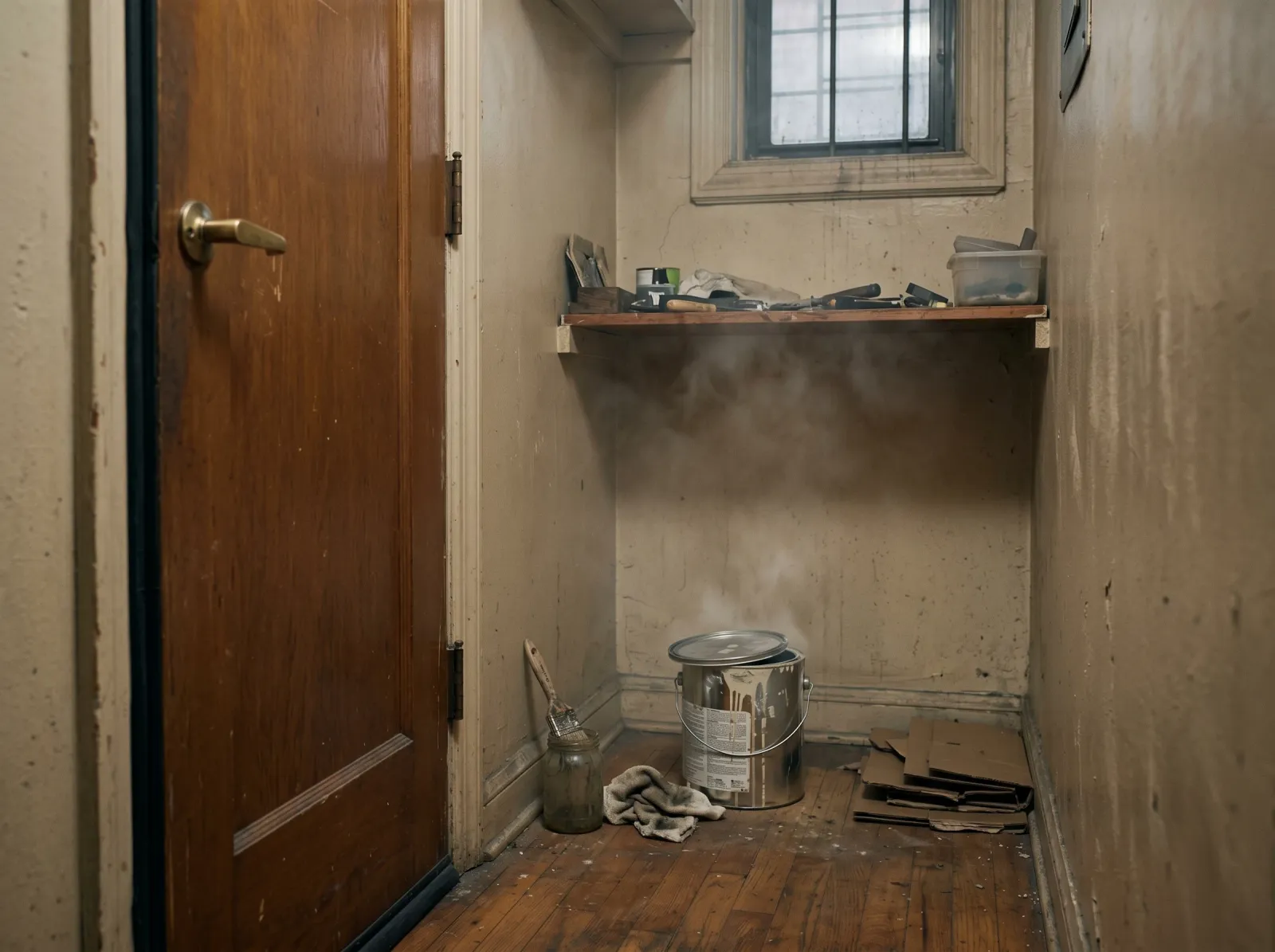 Door shut, no airflow, lid loose on the can. This is how a one-day smell turns into a one-week smell.
Paint smell is VOCs leaving the film as it cures. Volatile organic compounds are the solvents that keep paint liquid in the can. Once it’s on the wall, they evaporate, and that’s what you smell. Lower-VOC paint smells less and clears faster. The full breakdown lives in the VOC explainer, but for getting the smell out, three things decide how long it lasts.
The paint type. Water-based latex and acrylic give off mostly water and a little solvent. They’re near odorless in a few days. Oil-based paint, alkyd enamel, and shellac-based primers carry a lot more solvent and a lot more smell, and they cure slower. A coat of oil trim enamel can smell for a week even in a well-aired room. That’s the chemistry, not a defect.
The cure conditions. Paint cures right at 50°F to 85°F with moderate humidity. Cold air slows the solvent from leaving, so a room painted at 45°F in November holds its smell for days longer than the same paint in June. High humidity does the same thing. Damp air can’t pull moisture and solvent out of the film, so everything stalls.
The film thickness. Two thin coats clear faster than one slathered-on heavy coat. A thick film traps solvent deep in the layer, and it leaks out slowly for days. Heavy roller passes and gummy second coats applied before the first dried are the usual cause of a smell that just won’t quit.
If a low-VOC water-based wall paint still smells strong after a full week, one of those three went wrong. Usually it was cold or it was thick.
The Fix
Step 1. Move the Air, Don’t Just Open a Window
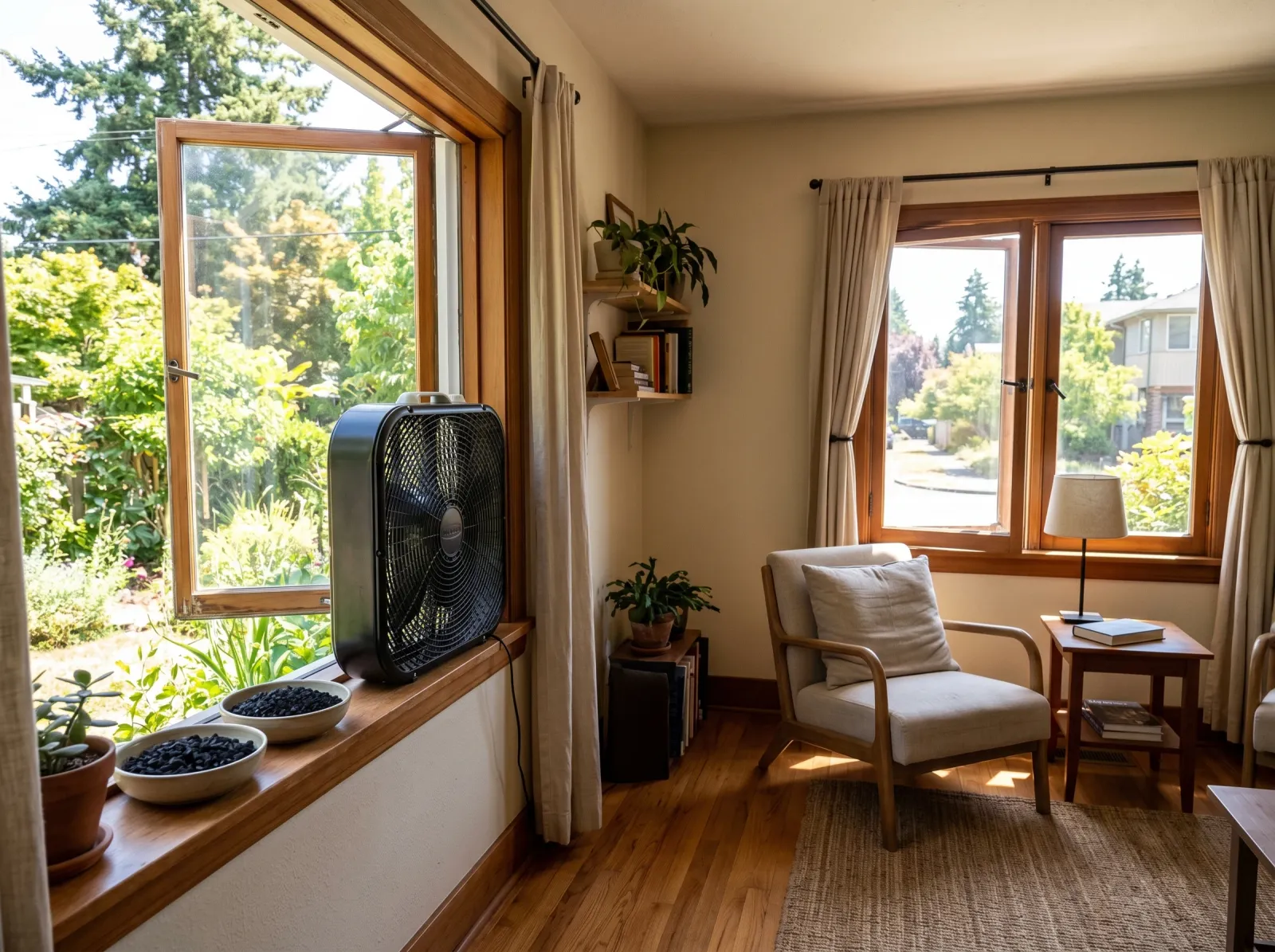 Cross-flow is the whole game. Fan blowing out one window, fresh air drawn in the other.
One open window does almost nothing. You need air moving through the room, not sitting in it.
Put a box fan in one window blowing out. Crack a window on the opposite wall to pull fresh air in. That cross-flow swaps the room’s air every few minutes instead of letting fumes settle. Run it day and night for the first 48 to 72 hours. Close interior doors to the rest of the house so you’re not pushing fumes into the bedrooms.
No second window? Put the fan in the doorway blowing out toward an exterior door down the hall, and open that door. You’re still creating a path for the air to leave.
Step 2. Heat It a Little, Then Vent
This sounds backward. A warm room cures faster and off-gasses faster, so a short bump in heat drives the solvent out quicker. Run the room to about 72°F to 75°F for an hour with the windows shut, then open up and vent hard for 30 minutes. The warmth speeds the release, the venting carries it out. Repeat a couple of times the first day.
Don’t crank the heat and leave it sealed. That just bakes the smell in and you breathe it later when the heat cycles on.
Step 3. Set Out Activated Charcoal
Activated charcoal pulls VOCs out of the air. Buy a few bags of activated-carbon odor absorber, or the bagged charcoal sold for fridges and basements, and set them around the room on the floor and windowsills. A pound or two per average bedroom. Leave them three or four days, then toss them.
Activated charcoal does real work. Bowls of onions, vinegar, and coffee grounds mask the smell or grab a trace of it. They don’t pull solvent from a curing film. Skip them.
Step 4. Run a Carbon-Filter Air Purifier (not Plain HEPA)
A HEPA purifier traps dust and pollen. It does next to nothing for gas. For paint smell you want a unit with a thick activated-carbon filter built in. Run it once you’ve done the heavy venting, with the windows shut, to mop up what’s left.
It’s a finisher, not a substitute for the fan. The window and the box fan do the bulk of the work.
Step 5. Wash the Surfaces Around the Job
Some of the smell rides on dust and overspray that settled on trim, sills, and floors. Wipe those down with a damp microfiber once the paint is dry to the touch. Don’t scrub the fresh paint film. Just clean the hard surfaces nearby that caught the haze.
Safety
Cross-ventilate the whole time paint is curing, not just while you’re rolling. Wear an organic-vapor respirator (not a dust mask) if you’re in the room for long stretches with oil-based product. Keep kids, pets, and anyone pregnant out until the smell is gone. Never run an unvented gas or kerosene heater in a freshly painted room to speed the cure. Solvent vapors plus an open flame is how you get a fire, and the combustion gases add to what you’re already breathing.
What Gets Rid of Paint Smell Fast?
If you need the room back tonight, stack the methods instead of picking one:
- Cross-ventilate with a box fan blowing out, all day.
- Warm the room, then vent in cycles to drive solvent out faster.
- Activated charcoal on the floor and sills to absorb what’s airborne.
- A carbon-filter purifier running after the big vent.
Stacked, those clear a water-based job in a day or two. Nothing makes oil-based or shellac primer disappear overnight. That smell is the solvent leaving, and there’s a lot of it.
Common Mistakes
- Sealing the room to “keep the smell in one place.” Trapped fumes don’t fade. They concentrate. Open it up.
- Using a plain HEPA purifier. It filters particles, not gas. You need carbon for odor.
- Painting over an uncured smelly coat. You bury the solvent and the smell lasts months. Let it cure or strip it.
- Cranking heat in a sealed room. Bakes the smell in. Warm, then vent.
- Relying on onions and vinegar. Folk remedies that mask, not remove. Charcoal and airflow do the work.
- Sleeping in the room the first night. The smell is strongest then. Give it 48 hours.
Prevention
The smell is easier to dodge than to chase out.
- Buy low-VOC or zero-VOC water-based paint for interiors. It’s the single biggest lever. See the best no-VOC paint round-up for products that cover without the headache.
- Paint in the right weather. 50°F to 85°F, moderate humidity, windows open. Cold or damp stalls the cure and stretches the smell for days.
- Two thin coats, not one thick one. Thin coats release solvent fast and clear quick. Heavy coats trap it.
- Skip oil-based indoors unless you need it. For trim that has to level like oil, an acrylic-alkyd hybrid like Benjamin Moore Advance gives you the finish with far less smell than true oil. The oil vs water-based breakdown covers when oil is still worth the fumes.
- Plan the nursery or bedroom early. Paint it two to four weeks before anyone moves in. The nursery painting guide walks through the low-VOC products and timing for a baby’s room.
When to Call a Pro
- The smell is musty, sour, or rotten, not fresh paint. That’s mold, damp, or sewer gas. Get it diagnosed.
- A sweet or rotten-egg smell that wasn’t there before. Leave the house and call the gas utility.
- A water-based job that still smells strong after two weeks with full ventilation. Something’s wrong with the product or the cure.
- Headaches, dizziness, or breathing trouble that don’t clear when you leave the room.
- A pre-1978 home where the smell came with sanding or scraping old paint. That’s a lead-dust question, not just an odor one.
What’ll Bite You in Two Years
Paint smell that “went away” but comes back every winter when the heat kicks on is telling you the film never fully cured. Cold-room jobs do this. The solvent that didn’t leave in November leaks out the next time the room gets warm and dry. There’s no fixing it from the air. Either you live with the seasonal whiff or you recoat in proper conditions and let it cure right the first time. Paint cold and you smell it for years.
Ask a Question