Why Paint Looks Different on Adjoining Walls
Paint looks different on adjoining walls because each wall catches the room's light at a different angle. Here is how to confirm the cause and what to do about it.

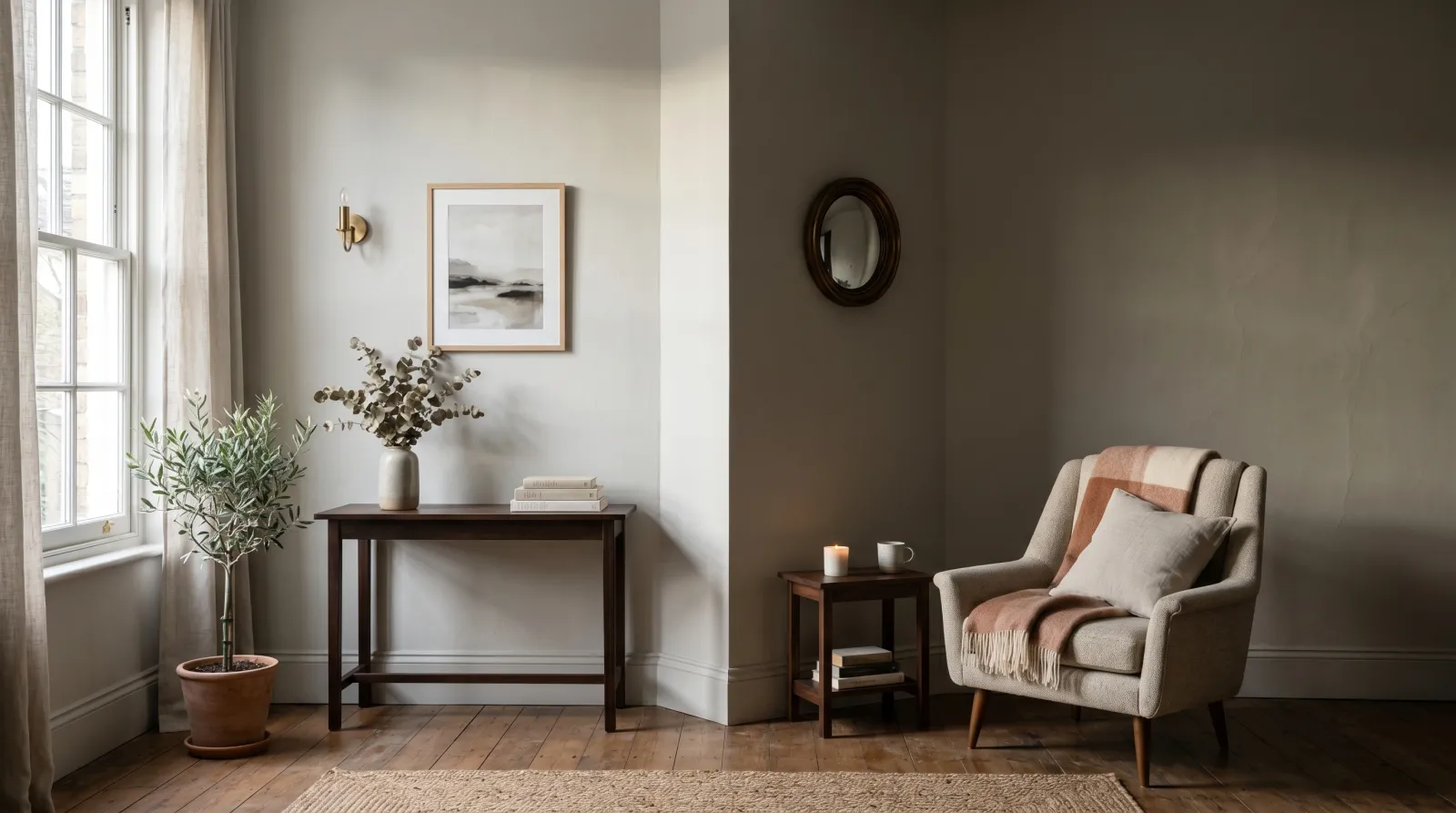
You painted the room one color, and now the wall by the window looks lighter than the wall beside it. Same can, same roller, same afternoon. The paint isn’t the problem and the painter probably didn’t slip. The two walls face the light differently, and light is what decides the color your eye actually sees.
TL;DR
- Two walls in a room rarely face the same direction, so each one catches the daylight at a different angle and returns a different amount of it to your eye.
- The wall the light hits straight on reads lighter and a little washed. The perpendicular wall sits in its own shadow and reads deeper and warmer.
- This is a light effect, not a paint defect. The same sample board changes as you walk it from one wall to the other.
- Rule out the real causes first: two sheens, two unboxed batches, or one thin coat ghosting the wall underneath.
- If the walls already disagree and you want them closer, add light to the dark wall before you reach for more paint.
Does This Match What You’re Seeing?
Look at the corner where the two walls meet, at the hour you actually use the room. The way they differ tells you whether it’s light or a genuine mismatch.
- The window-facing wall reads lighter, the perpendicular wall reads deeper: light, almost certainly. The bright wall takes direct daylight; the side wall sits in shadow. This shifts through the day.
- One wall looks warmer, the other cooler: still light. A wall catching warm afternoon sun reads warm; a wall in cool indirect light reads grey. Same color, two temperatures of light.
- The difference holds dead steady from morning to night, in every light: now check sheen and batch. A flat wall next to a satin wall will always read as two colors, and so will two cans that were never mixed together.
- One wall is patchy, streaky, or weaker than the other: that’s coverage, not the room. One coat is ghosting the old wall through. Two full coats even it out.
- The walls match by day and split only under the lamps at night: your bulbs. A single warm lamp throws warm light on the wall nearest it and leaves the far wall cooler.
If the two walls trade places through the day, the bright one going soft by evening, that’s the room breathing. It isn’t a flaw to fix.
How Serious Is This?
Cosmetic, in nearly every case. The paint is bonded and doing its job on both walls. Nothing is failing, nothing is spreading, and no wall is wrong. What you have is two planes of the same color sitting in two different pools of light.
So the question is whether it bothers you, and that depends on the color. A soft, light, balanced shade shrugs off uneven light and you’ll barely notice the split. A deep navy or a moody clay reads dramatically different from its lit wall to its shadowed one, and that contrast can feel like a mistake even though it’s physics. Sit with the room for a few days before you decide. A corner that looks jarring at 9am often settles once the afternoon light moves around.
The exception is exterior siding. Two sides of a house take wildly different sun, and the same color can look pale and bleached on the south wall while reading rich and true on the north. It’s worth sampling on more than one elevation before you order forty gallons.
Why This Is Happening (root Cause)
Color isn’t a fixed thing that lives in the can. It’s light bouncing off pigment and coming back to your eye, which means the light has as much say as the paint does. Two adjoining walls almost never sit in the same light, so they almost never look like the same color. Three things drive the split, and the first one does most of the work.
The angle of the light is the big one. Adjoining walls meet at a corner, which means they face different directions. One faces the window and takes daylight straight on. The wall beside it runs parallel to those incoming rays and catches almost none of them directly, so it sits in its own soft shadow. The lit wall returns more light to your eye and reads lighter and slightly washed. The shadowed wall returns less and reads deeper and a touch warmer. Walk a painted sample board from the bright wall to the dark one and watch the same board change in your hand.
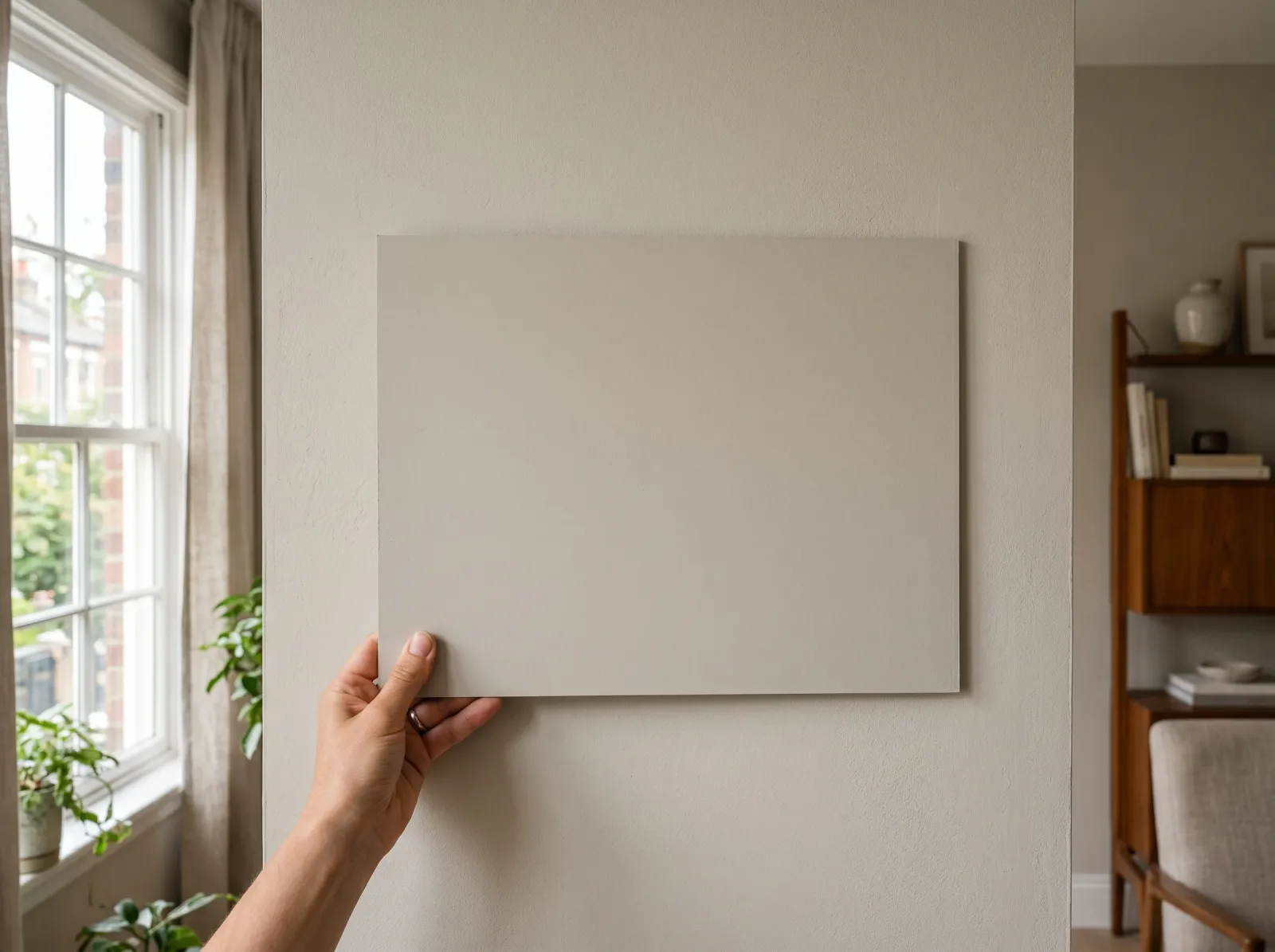 Held against the window-facing wall, the board reads light and matches.
The color of the light is the quiet one. North-facing daylight is cool and bluish; west-facing afternoon light is warm and gold. If one wall catches morning sun and the wall around the corner sits in cool shade, the same color reads warm on one and grey on the other. Your floor adds to it, bouncing its own tone up onto the lower part of each wall. This is the undertone in the color responding to the light it’s given, and a color with a strong lean will swing further between the two walls than a balanced one.
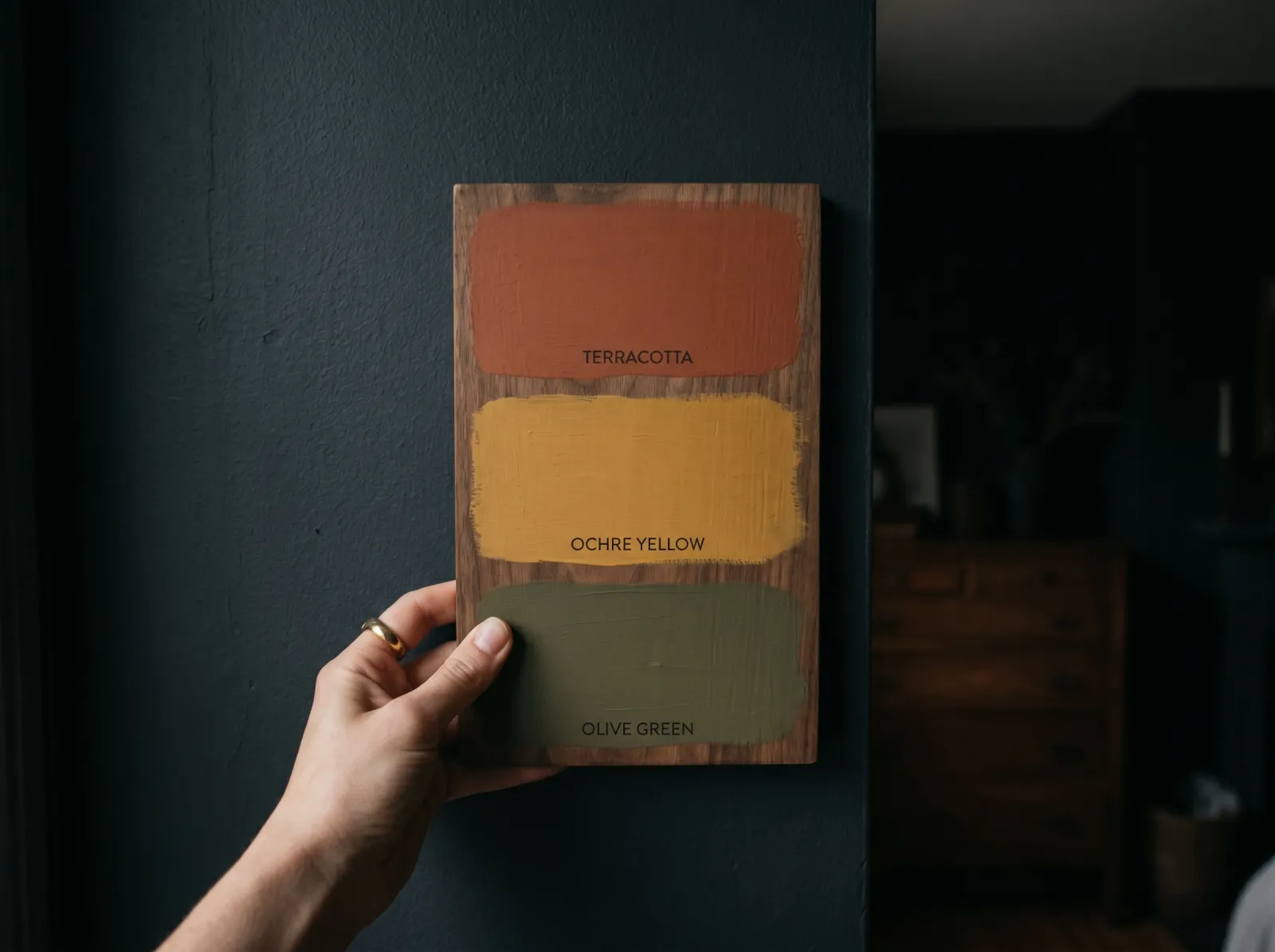 The same board against the shadowed wall reads deeper. The board didn’t change; the light did.
How light a color is set to begin with matters too. A color’s light reflectance value is how much light it throws back. A high-LRV color reflects a lot, so even the shadowed wall returns enough to stay close to its lit neighbor. A low-LRV color drinks light, so the gap between a lit wall and a shadowed one widens. That’s why a deep color looks like two colors across a corner while a soft greige barely flinches.
One more, and it’s the most common false alarm: two different sheens or two unboxed batches will mimic this exactly and never resolve. Rule those out before you blame the room.
The Fix
Start by finding out whether you’re fighting light or a real mismatch. The diagnosis decides everything.
Step 1. Confirm It’s Light, Not the Can
Take a painted sample board, or a peel-and-stick swatch of the exact color, and hold it flat against the bright wall, then carry it to the shadowed wall. If the board changes the same way the walls do, lighter on one, deeper on the other, the room is doing it and the paint is fine. If the board reads identical on both walls while the walls themselves differ, then the walls were painted with something different, and you move to Step 2.
Step 2. Check Sheen and Batch
Look across the corner in raking light. A sheen mismatch shows up as a difference in how the two walls shine, not just their color. Flat and eggshell, or eggshell and satin, will read as two colors under the same light. If you suspect it, touch up a test patch in the correct single sheen and see if it disappears.
Then check the cans. Different batches of the same color vary slightly. If one wall was cut from a fresh gallon and the others from an older one, that small batch difference can read at the corner.
Step 3. Even Out the Coats
If one wall looks weaker or patchier than the other, that’s thin coverage, not light. The old wall color or the primer is ghosting through a single coat. Roll a full second coat across the whole room, not just the lighter wall, so every plane is built to the same opacity. Judge nothing until two coats are dry. Wet, single-coat paint reads patchy and uneven by nature.
Step 4. Fix the Light Before You Repaint
If the diagnosis came back as light, and the color is deep enough that the split bothers you, the cheapest real fix isn’t paint. It’s light. Add a lamp or a sconce on the shadowed wall to lift it closer to its bright neighbor. Match your bulb color temperature throughout the room, around 2700K to 3000K for a warm living space, so one wall isn’t lit warm while another sits cool. Often that alone closes the gap a repaint couldn’t.
Step 5. If You Repaint, Choose for the Worst Light
When the color is the real problem, don’t pick the next one off a chip. Sample big, a square at least two feet across, and put a swatch on both the bright wall and the shadowed wall. Pick the color that still looks right on the darker wall, because a shade that holds up in the worst light in the room looks fine everywhere else. Lighter, softer, balanced colors win this test. It’s the same habit that solves a color that doesn’t match the sample: test on the actual wall, in your actual light, before you commit.
Prevention
The fix for next time is mostly about how you sample and how you mix.
- Box your paint. Pour every gallon of one color into a single large bucket and stir before you start. This kills any batch-to-batch variation, so no wall paints from an off can.
- Keep one sheen per color. Don’t touch up a flat wall with a leftover eggshell, even of the same color. Mismatched sheen reads as mismatched color under any light.
- Sample on the worst-lit wall. When you choose, put the swatch where the light is poorest. A color that looks good in the room’s shadow looks good in its bright spots too.
- Lean lighter and more balanced for uneven rooms. A high-LRV, soft-undertone color tolerates a corner that throws hard shadows. Save deep, strongly leaning colors for rooms with even, generous light, or for a single deliberate accent wall where you want the drama.
- Standardize your bulbs. Same color temperature throughout the room so the walls read consistently after dark, not warm near one lamp and cool across the room.
When to Call a Pro
- The two walls read different in flat midday light, the same sheen, the same boxed batch, and a sample board matches both. That combination is rare and points to a substrate or surface-prep issue worth a trained eye.
- One wall is patchy in a way two coats won’t fix. Uneven sheen or flashing across a wall can come from inconsistent primer or skipped prep. A painter can read whether it’s a recoat or a re-prime.
- It’s exterior siding across many gallons and several elevations. Getting an exterior color wrong is expensive to redo. A pro reads how each side’s sun will shift the color before you commit.
- You’ve repainted and it still splits. At that point you’re fighting a light condition you can’t see around. A color consultant, often free through a paint store or about $50 to $150 independently, will size the color to the room’s worst light.
FAQ
Why does the same paint look different on two walls in the same room? Light. The two walls face different directions, so each catches the daylight at a different angle. The window-facing wall takes direct light and reads lighter; the wall beside it sits in shadow and reads deeper and warmer. Same gallon, two angles of light.
Is it normal for paint to look darker on one wall? Yes. A wall in shadow returns less light to your eye, so it reads deeper than the wall the light hits straight on. Walk a sample board between the two and you’ll see the same board change. The paint is identical.
Did the painter use two different cans or sheens? Check before you assume. Two sheens of one color read as two colors, and so do two unboxed batches. But if the sheen matches and the difference tracks the light through the day, the cause is the room, not the can.
Will a second coat fix the difference? Only if the difference is thin, patchy coverage. Two full coats fix that. If both walls are evenly painted and still read different, more paint won’t change it. You’re looking at light, and paint can’t change the angle the sun comes in at.
Ask a Question