Why Chalk Paint Cracks on Fabric
Chalk paint cracks on fabric because the dry paint film is stiffer than the cloth under it. Here is why it splits and how to get a soft, crack-free finish.

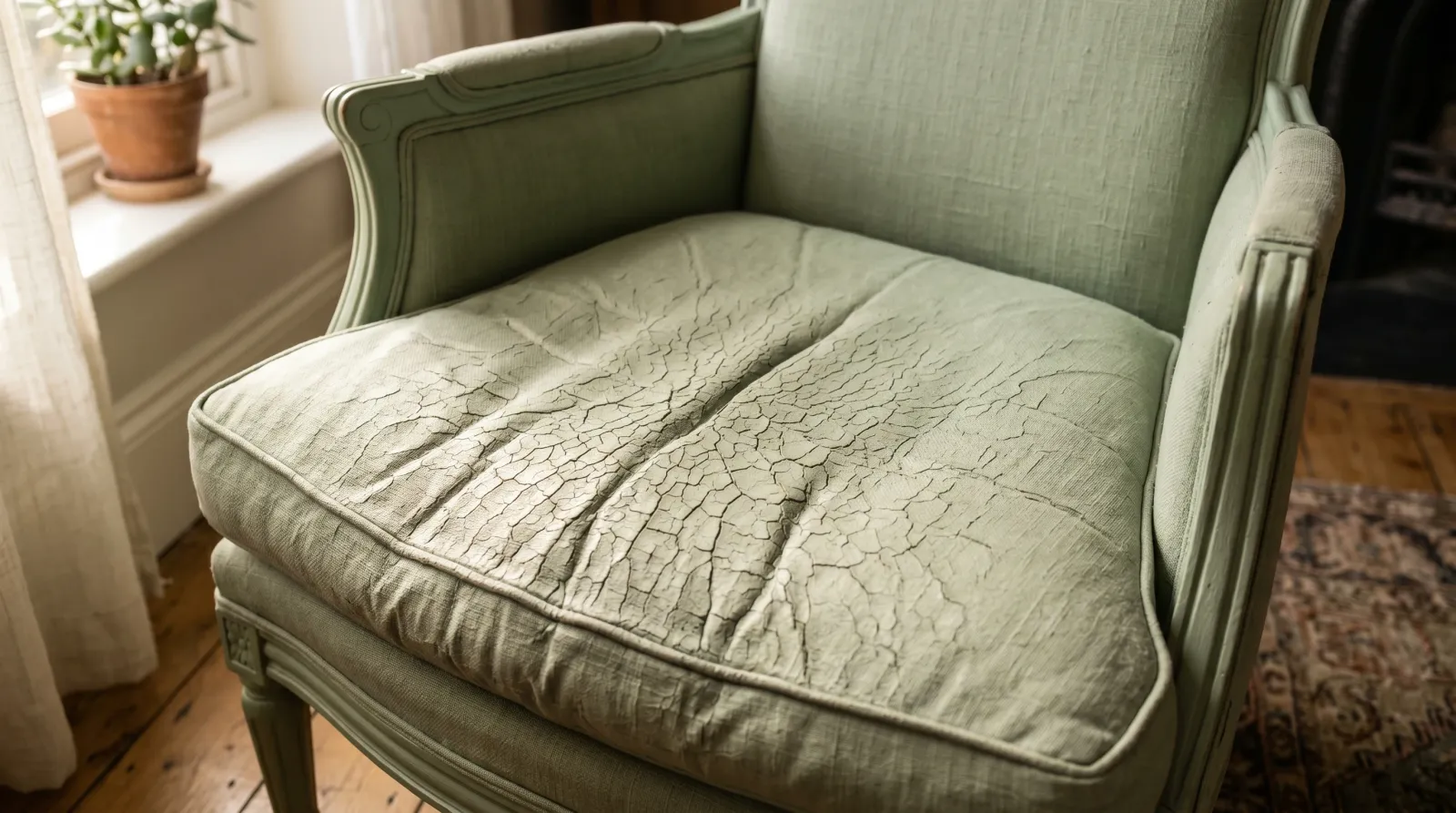
You painted the seat cushions in a soft sage, loved them dry, then sat down and watched a fine web of cracks open across the fabric like dry ground. The paint didn’t fail because you bought the wrong brand. It cracked because chalk paint dries into a stiff coat, and your fabric bends. A stiff thing on a bending thing splits. That’s the whole story, and the fix is to make the coat soft enough to bend with the cloth instead of breaking over it.
TL;DR
- Chalk paint dries into a rigid film. Fabric flexes. The film can’t follow the flex, so it cracks where the cloth moves most.
- Thick coats crack worst. The thinner the paint sits in the weave, the more it bends.
- The fix is three things stacked: thin the paint, add a fabric or textile medium, and seal with a soft, flexible topcoat. Wax and hard furniture poly crack right along with the paint.
- Cracks show up first on the seat, the cushion front edge, and any fold. Those are the high-flex spots.
- Painting over a brittle coat just cracks again. Sand or strip the rigid layer first, then repaint thin.
Does This Match What You’re Seeing?
Look at where the cracks are and how the fabric was treated. The pattern tells you which version of this you have.
- A fine web of hairline cracks across a seat or cushion you sit on: the classic flex crack. The film is too rigid for cloth that bends under weight.
- Cracks only along a fold, hem, or piped edge: the same cause, concentrated where the fabric bends hardest. Flat panels are fine, the creases split.
- The whole painted surface feels stiff, like cardboard, and crackles when you press it: the coat went on thick and undiluted. It set into a crust instead of soaking into the weave.
- Cracks that appeared after the first wash or a rainy day outdoors: water swelled the fibers, the rigid film couldn’t move with them, and it let go.
- Flaking and lifting at the edges, not just cracking: the paint never bonded into the fibers in the first place. It sat on top and is now peeling off as a skin.
If the fabric still feels soft and the cracks only show when you stretch it, you caught it early and the fix is gentler. If the cushion feels like a painted board, the coat is too thick and you’re looking at stripping it back.
How Serious Is This?
Cosmetic, in almost every case. Cracked paint on a chair seat is ugly, not dangerous, and nothing is spreading into the room the way mold or a moisture problem would. The damage is to the look and the hand of the fabric, which on a piece you sit on every day is reason enough to fix.
The honest part is this: cracked chalk paint on fabric rarely gets better on its own, and it usually gets worse. Every time you sit down, the crack web widens and the edges start to lift and flake. So it’s a same-weekend fix if you catch it while the fabric is still soft, and a strip-and-redo if the coat has gone to a hard crust. Neither is an emergency. Both are worth doing before the flaking starts.
One real limit: chalk paint will never make a soft cushion feel like fabric again. Even done perfectly, painted upholstery dries firmer than raw cloth. If you need a sofa seat to stay plush and yielding, paint isn’t the right tool, and a slipcover or reupholstery is the honest answer.
Why This Is Happening (root Cause)
Chalk paint is built for wood, not cloth. It’s a high-pigment, low-binder paint that dries to a flat, porous, matte finish, the look people love on dressers and side tables. That same chemistry is exactly what cracks on fabric.
The film is rigid, and fabric isn’t. When chalk paint dries on a dresser, the wood underneath never moves, so the stiff film has nothing to fight. Fabric is the opposite. Every time you sit, fold, or stretch it, the cloth elongates, and the dried paint film can only take a tiny amount of stretch before it splits. The seat of a chair flexes hard under your weight, so that’s where the web of cracks opens first. A flat panel that never bends can stay crack-free for years while the cushion two inches away is shattered. Same paint, different amount of movement.
Thickness makes it worse. A thick coat sits on top of the weave like a skin, bridging across the fibers instead of locking into them. A skin has nothing holding it down and no flexibility, so it cracks and then peels. A thin coat that soaks into the threads moves with the threads, at least a little, and that little is the difference between a finish that holds and one that fails. This is why brushing chalk paint onto fabric straight from the can, the way you would a table, almost always cracks. The coat is simply too heavy.
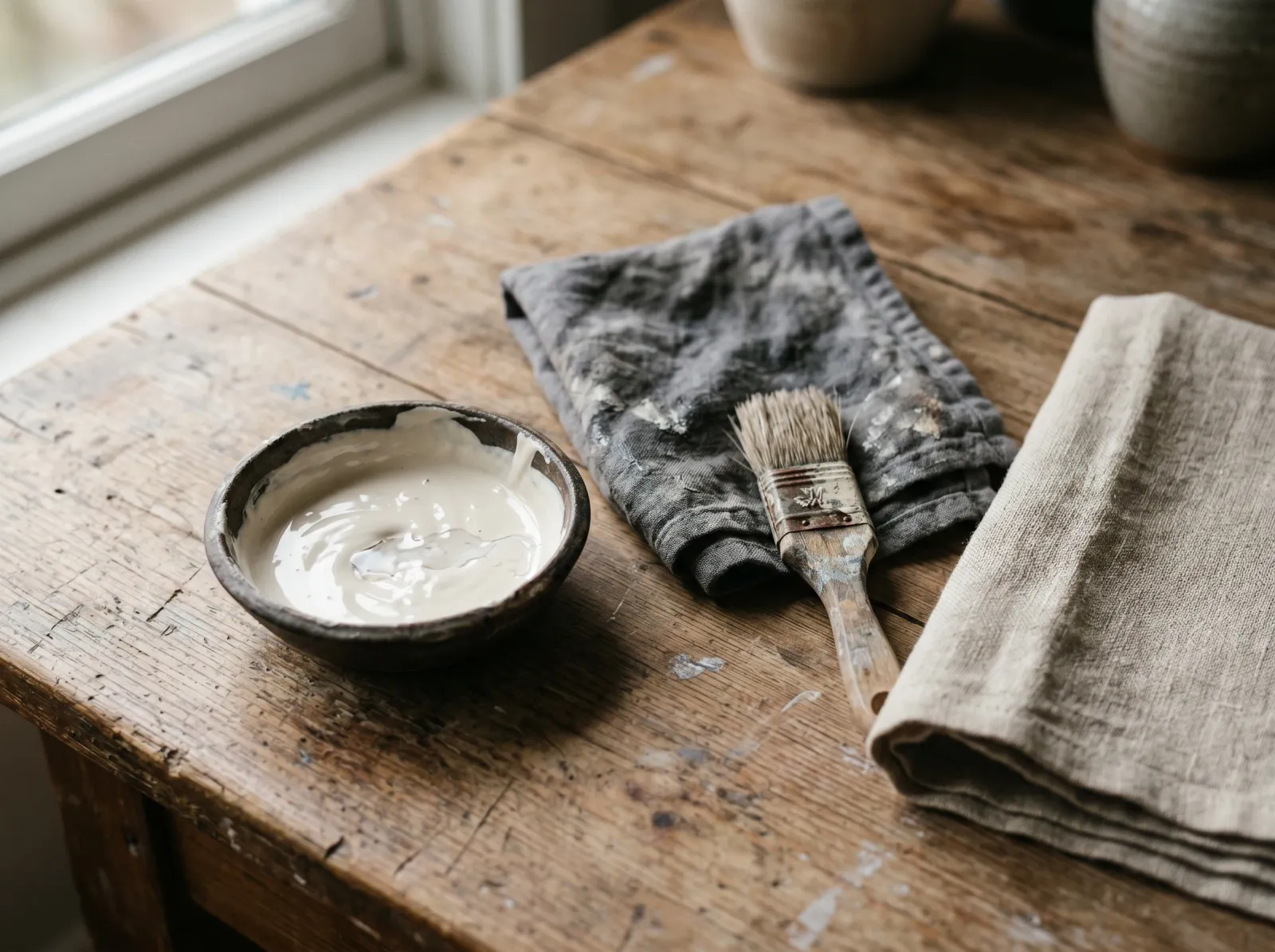 Thinned until it soaks into the weave instead of sitting on top. This one change prevents most cracking.
Water swells the fibers. Outdoor cushions and anything that gets washed take on moisture, the fibers swell, and the rigid paint film can’t follow that movement either. The crack that started small from sitting widens fast once water gets involved.
There’s a reason the chalk paint primer on the site talks about it as a furniture and cabinet finish. On a rigid surface it’s forgiving and beautiful. On something that bends, you have to change the paint itself to make it work.
The Fix
Two paths. If the fabric is still soft and the cracks are fine and shallow, you can sand smooth and recoat properly. If the coat has gone to a hard crust, strip it and start over. Both end the same way: a thin, flexible, sealed finish.
Step 1. Decide Whether to Sand or Strip
Press the painted fabric. If it still flexes and the cracks are hairline, sanding is enough. Knock down the cracked surface with fine 220-grit sandpaper until it’s smooth and the worst of the web is gone, then vacuum and wipe the dust off with a barely damp cloth. Let it dry fully, an hour or two.
If the cushion feels like a painted board and crackles when you press it, the coat is too thick to save. Soak a cloth in warm water and a little dish soap, lay it over the paint to soften it, and work the film off with a stiff brush or a plastic scraper. This is slow and it won’t all come off, but the goal is to get back to flexible fabric, not bare cloth.
Step 2. Mix a Soft, Thin Paint
This is the step that decides everything. Don’t paint from the can. In a dish, combine your chalk paint with a textile or fabric medium at roughly one part medium to one part paint, then add water a little at a time until the mix flows off the brush like thin cream and soaks into a test corner of the fabric rather than sitting on it. The fabric medium (most craft brands sell one, and Delta Ceramcoat and Liquitex both make a good textile medium) keeps the dried film soft and stretchy so it bends with the cloth instead of setting hard. Skipping it is the single most common reason a careful repaint cracks again.
Step 3. Build Two or Three Thin Coats
Brush the thinned paint into the weave, working it in rather than laying it on top. The first coat will look streaky and uneven. That’s correct. Let it dry fully, usually one to two hours in a warm room, then sand very lightly with 220-grit if it dried rough, and add the next thin coat. Two coats covers most fabrics; deep or dark colors take three. Thin and built up always beats one thick pass. A heavy coat is what cracked the first time.
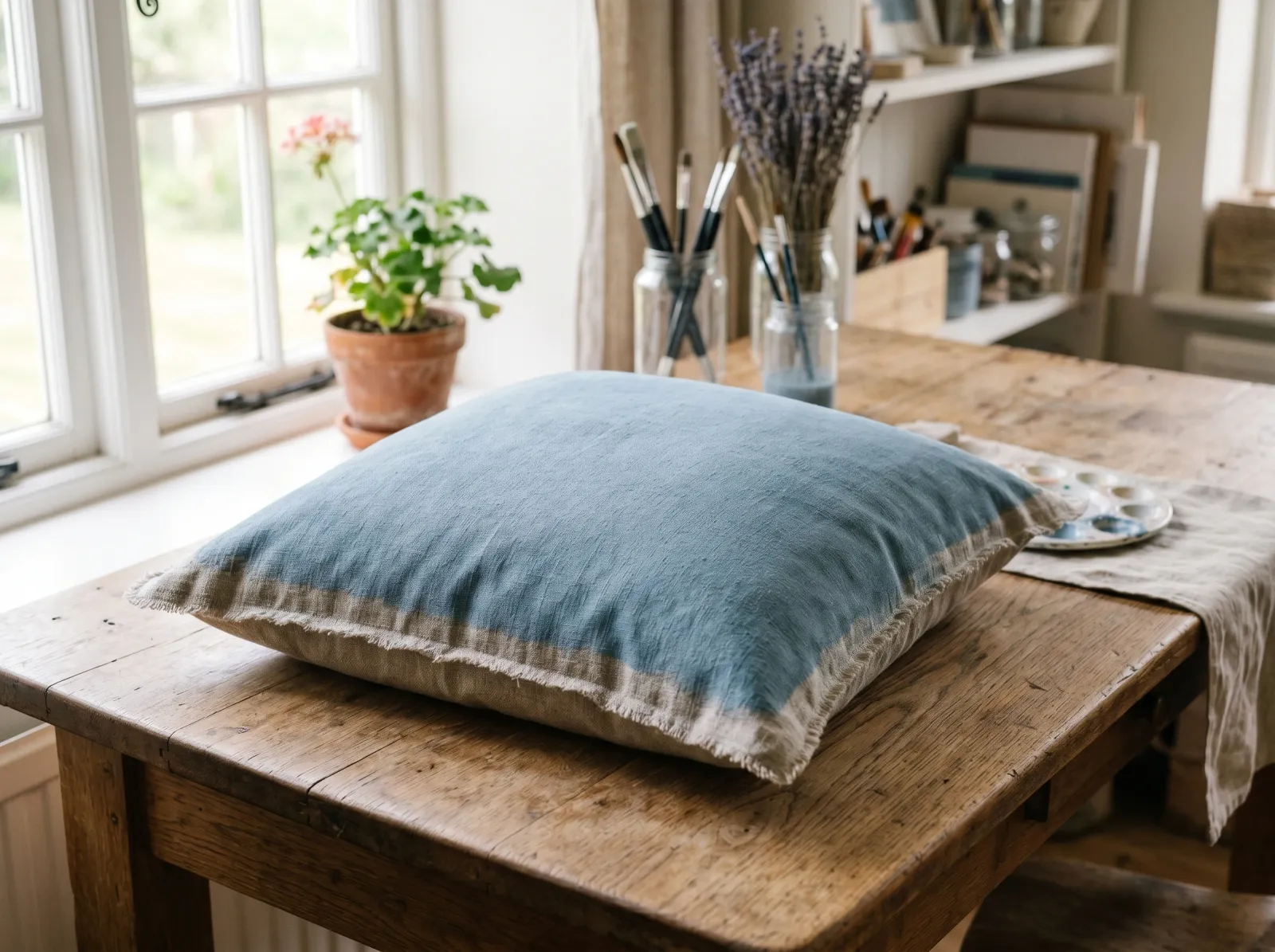 Thin coats worked into the weave dry soft and even, with no skin sitting on top to split.
Step 4. Seal With a Flexible Topcoat
Skip the wax and the hard furniture poly here. Both are made for wood that never bends, and they crack right along with the fabric. Reach instead for a flexible water-based topcoat, a soft fabric or textile sealer, or thin coats of a flexible matte polycrylic, brushed on in two light passes with full dry time between. The sealer adds wear resistance and locks the soft film in place. On a seat you actually use, this step is what keeps the finish from rubbing and cracking over the next year.
Recommended Approach
There’s no single can to buy for this. The reliable fix is the combination, not a product: chalk paint cut with a fabric medium, built thin, and sealed with a flexible topcoat. If you want a paint engineered for cloth from the start, a dedicated fabric or upholstery paint is formulated to stay flexible and skips the mixing, and it’s the gentler route for a piece you sit on daily.
For the brands that hold up best as a base, see the tested chalk paint round-up. For paints made for furniture you handle and use hard, the best furniture paint guide covers the more durable options.
Prevention
Getting it right the first time is mostly about respecting that fabric moves.
- Thin every time, and add fabric medium. Never brush chalk paint onto cloth straight from the can. A medium plus water is the whole difference between a finish that bends and one that shatters.
- Build thin coats, not one thick one. Two or three light passes that soak into the weave hold far better than a single heavy coat that sits on top as a skin.
- Match the paint to how the piece is used. A decorative throw pillow that never gets sat on tolerates a heavier hand than a daily chair seat. The more a surface flexes, the thinner and softer the coat needs to be.
- Seal flexible, never with wax on fabric. Wax and hard poly belong on wood. On cloth they crack. Use a flexible textile sealer or a soft polycrylic.
- Skip painting anything that has to stay plush. A sofa seat that needs to feel soft is the wrong candidate for paint. Choose a piece where a firmer, suede-like hand is acceptable.
If you’re new to this finish in general, the same low-binder behavior that cracks on fabric is also why chalk-painted furniture can stay tacky when it’s sealed wrong, and the same thin-coat discipline that works here carries over to harder surfaces like painting MDF.
When to Call a Pro
- The piece is antique, upholstered horsehair, or has real value. Paint is hard to reverse on fabric. An upholsterer can tell you whether reupholstery is the better call before you commit.
- The cracking is on outdoor cushions that stay wet. Constant moisture defeats most paint finishes on fabric, and a marine or outdoor upholstery specialist will steer you toward the right material instead.
- You need the seat to stay genuinely soft. If paint can’t deliver the hand you need, a reupholstery quote is the honest next step, not a fourth coat.
- The fabric is delicate, vintage, or you can’t identify the fiber. Strippers and mediums behave unpredictably on unknown blends. A pro tests first.
FAQ
Can you use chalk paint on fabric at all? Yes, but thinned and sealed, never straight from the can. Cut it with water and a fabric medium until it soaks into the weave, build two or three thin coats, then seal with a flexible topcoat. Painted thick like a dresser, it cracks within days.
Why does my chalk paint crack only where I sit? Because that’s where the fabric moves most. Chalk paint dries rigid, and a rigid film can only stretch so far before it splits. The seat, the cushion front edge, and any fold flex hardest, so the cracks open there first.
Will sealing chalk paint stop it cracking? A flexible sealer helps, but it can’t rescue a coat that’s already thick and brittle. Wax and hard poly crack right along with the paint. If the base coat is thin and soaked in, a soft topcoat keeps it intact. If it’s a crust, strip and repaint thinner.
Does fabric medium really make a difference? It does. A textile medium mixed into the paint keeps the dried film soft and stretchy instead of letting it set hard. It’s the single biggest change you can make, and on anything you sit on, use it.
Can I just paint over the cracks? Not over a brittle base. Fresh paint over a rigid cracked coat splits again the moment the fabric flexes. Sand the cracked film smooth or strip it first, then start over thin.
Ask a Question