What Is Alkali Burn (and How to Fix It)?
Alkali burn is fresh masonry attacking a paint binder, leaving faded chalky color on new stucco, concrete, and block. Why it happens and how to fix it.

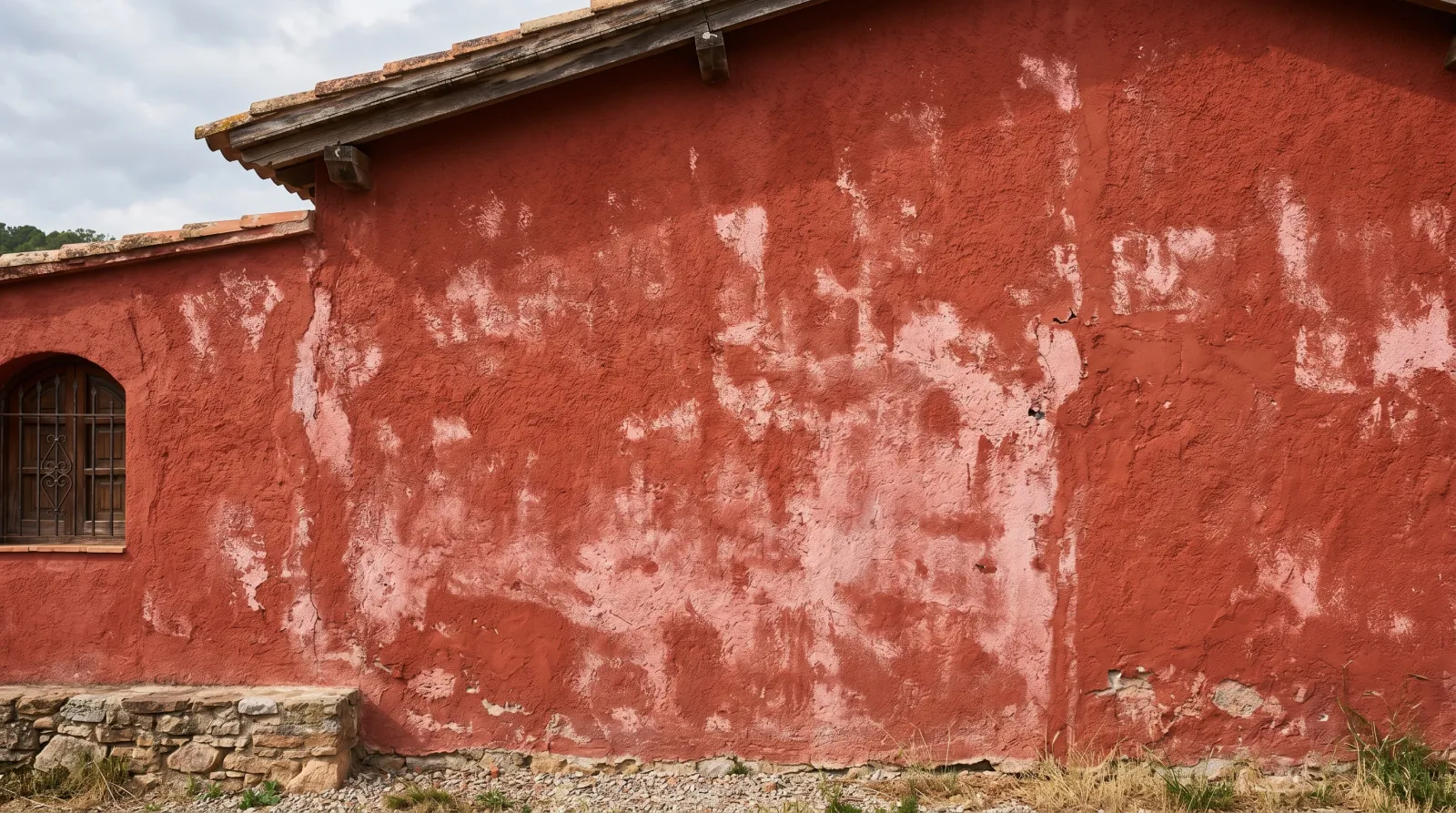
You paint a fresh stucco wall a deep terracotta, it looks right for a few weeks, and then the color starts going pale and patchy. Run a finger over a faded spot and it comes away with chalky pigment on it. That’s alkali burn, and it isn’t a defect in the paint. It’s the wall chemically taking the paint apart.
TL;DR
- Alkali burn is high pH eating the paint binder. Fresh masonry is strongly alkaline. The hydroxide in it breaks down a latex film and frees the pigment, so the color fades and chalks.
- It shows up on anything new and cementitious: stucco, poured concrete, concrete block, fresh mortar, sometimes brick.
- The cause is moisture plus time. Uncured masonry holds water that carries the alkali to the paint. The reaction stops when the surface is dry and cured.
- The fix: remove the chalked paint, let the wall cure and dry, seal with an alkali-resistant masonry primer, then repaint with a masonry-rated or mineral paint.
- Prevention is patience. Wait the full 28-day cure, or seal a green wall with a primer built to take the pH.
Does This Match What You’re Seeing?
Hold the wall under raking light and check the color, then the texture.
- Color faded to a pale, washed-out version of what you applied: classic burn. Strong colors go first because they have the most pigment to lose. A red goes pink, a navy goes powder blue.
- Chalky residue on your finger when you rub it: the binder is gone, and the pigment is sitting loose with nothing holding it down.
- Blotchy fade, darker and lighter patches across the same wall: the wall isn’t drying evenly. Wetter spots stayed alkaline longer.
- White crystalline powder on or through the film: that’s efflorescence, the salt cousin of this problem, often on the same wall. See how to fix efflorescence on brick.
- Color fine but the film peeling in sheets: that’s an adhesion or moisture failure, a different fix. Burn fades color before it lets go.
Uniform fade on a new wall is almost certainly alkali. Patchy fade on an old wall points to a water leak feeding moisture to the back of the masonry.
How Serious Is This?
Cosmetically obvious, structurally harmless. The wall is fine. The paint is the casualty.
A burned coat on a wall that has since cured is a one-weekend fix: strip, seal, repaint. The complication is timing. If the masonry is still green, painting now just feeds the next round of burn, so the honest answer is sometimes “wait.” Two things push this to higher urgency: burn that keeps returning on a cured wall (water is reaching the masonry from somewhere and that source has to be found first), and interior alkalinity paired with persistent damp (you can get mold behind the failing film). Otherwise this is a patience-and-prep problem, not an emergency.
Why This Is Happening (root Cause)
Here’s the chemistry, because the cause is the whole story with this one.
Portland cement, the binder in concrete, stucco, and mortar, hydrates when you mix it with water. That reaction produces calcium hydroxide, which is strongly alkaline. Fresh cementitious masonry sits around pH 12 to 13, in the neighborhood of oven cleaner. The surface is chemically aggressive in a way that has nothing to do with how it feels to the touch.
Most wall paint sold today is a latex: an acrylic or vinyl-acrylic binder carrying the pigment. That binder is an organic polymer, and a strongly alkaline surface attacks it. The technical term is saponification. The hydroxide hydrolyzes the polymer, the cross-linking that holds the film together breaks down, and the binder turns soft and water-sensitive. Once it fails, it can no longer hold the pigment against the surface. The color fades because the pigment is coming loose. Rub it and it powders off.
The reaction needs a carrier, and that carrier is water. Liquid moisture in the curing masonry dissolves the calcium hydroxide and brings those hydroxide ions up to the paint line where they do the damage. A bone-dry wall at the same pH does far less, because the ions can’t travel. That’s why burn is a problem of new, still-curing masonry and of older masonry getting wet from behind. Time and dryness bring the surface pH down into a range a normal binder survives, which is the reason the trade rule is to wait 28 days before painting fresh concrete or stucco.
So you have three ingredients: a high-pH surface, an organic binder that pH degrades, and moisture to connect them. Remove any one and the burn stops. The fix below removes the moisture and shields the binder from the pH.
The Fix
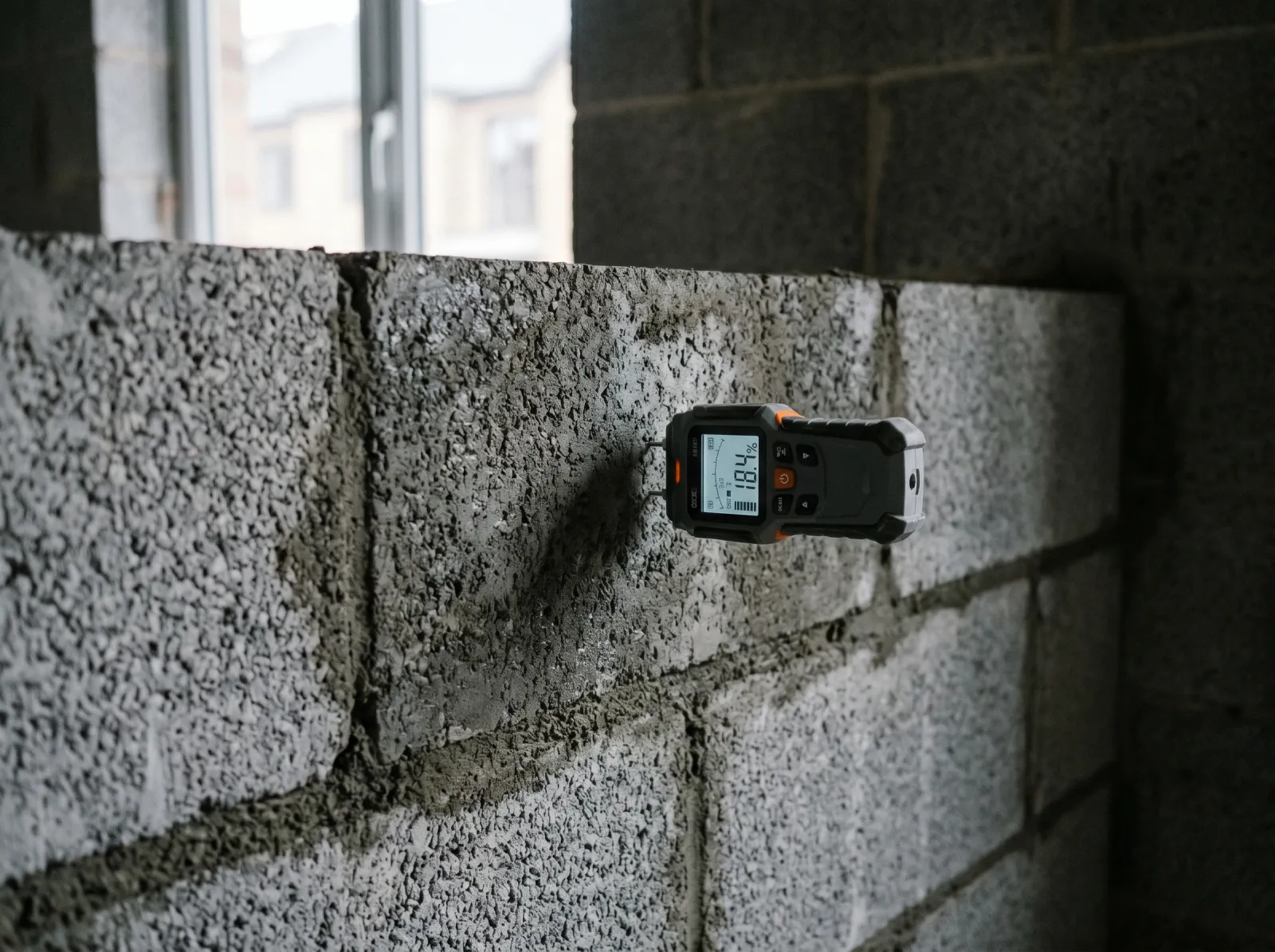 Check moisture and pH first. A wall that reads damp or above pH 10 is not ready for a standard topcoat.
Step 1. Confirm the Wall Is Ready
Test before anything else. Wet a small patch and press a pH strip or masonry pH pen flat against it for ten seconds. Below about pH 9, a masonry-rated paint holds. At 10 or above, you need an alkali-resistant primer between the surface and your color, or you need to wait.
Check moisture too. Tape a one-foot square of clear plastic to the wall overnight. Condensation underneath means the masonry is still giving up water and isn’t ready for a film-forming coat. A pin-type moisture meter reading under about 12 percent is the target. If the wall is freshly built, the simplest move is to wait out the cure: 28 days minimum, longer in cool or humid weather.
Step 2. Remove the Failed Paint
Scrape and sand off everything chalky and loose. A stiff wire brush or a 2-inch carbide scraper takes the bulk; follow with 80-grit on a sanding sponge to feather the edges of any sound paint that remains. Get down to a surface where what’s left is bonded tight.
Vacuum the dust with a HEPA filter, wipe with a damp sponge, and let it dry. Loose pigment and cement dust keep a primer from bonding.
Step 3. Neutralize or Seal the Alkalinity
The wall’s pH decides the route. For a wall that still tests high, an alkali-resistant masonry primer is the tool. These use binders that resist saponification and are rated over surfaces up to roughly pH 13. Sherwin-Williams Loxon and KILZ Adhesion are common choices. One coat, full coverage, back-rolled into the texture so the porous masonry gets a sealed face. Follow the can for recoat time, usually 4 hours or more on masonry.
For a wall that’s close to neutral and you just want insurance, the same alkali-resistant primer still earns its place. There’s no downside to the barrier.
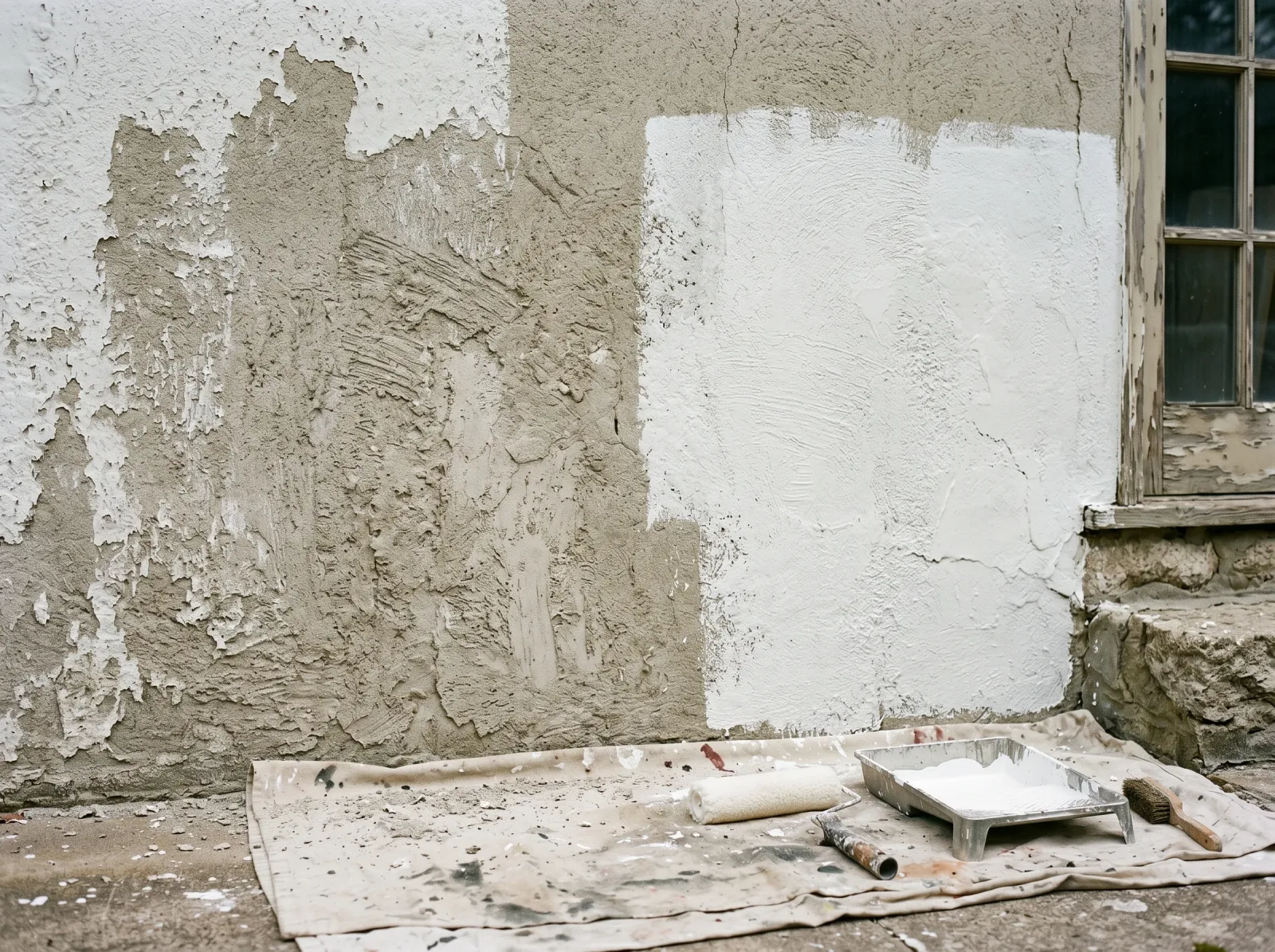 Strip the chalked color back to a sound surface, then seal with an alkali-resistant masonry primer before any color goes on.
Step 4. Repaint with a Masonry-Rated Coating
Now the color. Use a 100% acrylic masonry paint, or on a wall likely to stay damp, a breathable mineral paint. A mineral coating is silicate-based and bonds chemically into the masonry instead of forming a film on top, which makes it far more tolerant of alkalinity and moisture. For how those differ from latex, see what is mineral paint.
Two coats, the second once the first has cured per the label. On exteriors, don’t paint in direct sun or below 50°F overnight. The best masonry paint round-up covers matching the right product to the surface.
Safety
Wear gloves and eye protection. Never mix bleach with vinegar, ammonia, or hydrogen peroxide if you clean the wall first; the combination produces toxic gas. Cement dust is an inhalation hazard, so wear an N95 while sanding and work with cross-ventilation. Alkaline residue burns skin slowly, so rinse any contact with plenty of water.
Recommended Approach
No single product solves every case, so the call is about matching the coating to the wall. A cured wall that tests near neutral takes a 100% acrylic masonry paint over a masonry primer. A younger wall, or one that’s burned before, wants an alkali-resistant primer like Sherwin-Williams Loxon under a breathable topcoat. And masonry that stays damp by nature (a basement wall, a north-facing exterior in a wet climate) is best served by a silicate mineral paint, which doesn’t rely on an organic binder the pH can attack.
For interior concrete that sees foot traffic rather than weather, the calculus shifts toward coatings built for wear; the concrete floor painting guide walks through it.
Prevention
The cure for alkali burn is mostly patience and dryness.
- Wait the full 28 days on new concrete, stucco, or block. The surface pH drops as the cement finishes hydrating and the wall dries.
- Test pH and moisture, don’t guess. A two-dollar pack of strips tells you what your eyes can’t. Below pH 9 and under 12% moisture is the green light.
- Use an alkali-resistant primer when you can’t wait or the test reads high. It’s the barrier that keeps the next coat from going the way of the last.
- Stop water from reaching the back of the wall. Grade soil away from the foundation, fix downspouts, repair leaks. Recurring burn on a cured wall is always a moisture story.
- On chronically damp masonry, choose a breathable silicate coating from the start. A vapor-tight film over a wet, alkaline wall sets up the next failure.
When to Call a Pro
- The masonry is wet and you can’t find the source. That’s a building-envelope or drainage problem, not a paint job.
- Burn keeps returning after a proper reseal and repaint. Persistent moisture is reaching the wall and needs a contractor to trace.
- Large interior areas where alkalinity pairs with visible mold over more than about 10 square feet, the EPA’s DIY threshold.
- A historic building with lime stucco or render, where the wrong sealer can trap moisture and damage the substrate.
- Pre-1978 painted masonry you’d be sanding. Test for lead first and follow EPA RRP rules before any dust gets made.
Common Mistakes
- Painting fresh masonry on a deadline. The wall isn’t ready at two weeks no matter how dry it looks. The pH is still high underneath.
- Recoating straight over the chalk. A fresh film over loose pigment has nothing to bond to. Strip first.
- Using a standard interior latex primer. A general-purpose primer isn’t alkali-resistant and burns the same as the topcoat. Match the primer to masonry, not to drywall. For the difference between primers and what each one does, see what is primer.
- Sealing in trapped moisture. A vapor-tight coat over a wall that’s still releasing water pushes the failure deeper instead of fixing it.
- Treating it as a paint-quality issue. A more expensive latex burns just as readily. The binder chemistry is the same. The answer is the surface, not the can.