Painting Vinyl Siding vs Fiber-Cement (Hardie) Siding
Heat-warp limits on vinyl, primer-optional Hardie, two different paint chemistries. A five-dimension breakdown with a winner per category.

The 30-Second Answer
Hardie is the easier paint job. It accepts paint the way wood accepts paint — wash, spot-prime, topcoat with a 100% acrylic exterior. Any color you want.
Vinyl is the harder paint job. The plastic moves with temperature, dark colors warp it in summer sun, and adhesion fails fast if you skip the bonding primer or pick the wrong chemistry. Stay within the original LRV, use Stix or a vinyl-safe DTM acrylic, and it’ll hold. Pick the wrong paint and you’ll be scraping in two summers.
At a Glance
| Vinyl | Fiber-cement (Hardie) | |
|---|---|---|
| Prep difficulty | 🟢 (just clean) | 🟡 (clean + scrape + spot-prime) |
| Primer needed | 🟡 (bonding primer or DTM) | 🟢 (often skip if factory-coated) |
| Paint chemistry | 100% acrylic, vinyl-safe or DTM | 100% acrylic exterior |
| Color range | 🔴 (LRV-limited unless vinyl-safe) | 🟢 (any color) |
| Cost & coverage | $ | $$ |
How to Tell Which You’ve Got
Tap it. Vinyl sounds hollow and plastic-y, has visible interlocking seams every 12 feet, and flexes under thumb pressure on a hot day. Hardie sounds dense and dull, holds a nail head proud at the lap edge, and doesn’t flex at all. If you can see the cut end at a corner or trim board, vinyl shows a hollow J-channel profile and Hardie shows a solid gray cement edge. Thirty seconds, no guessing.
Side-by-Side Visual Pair
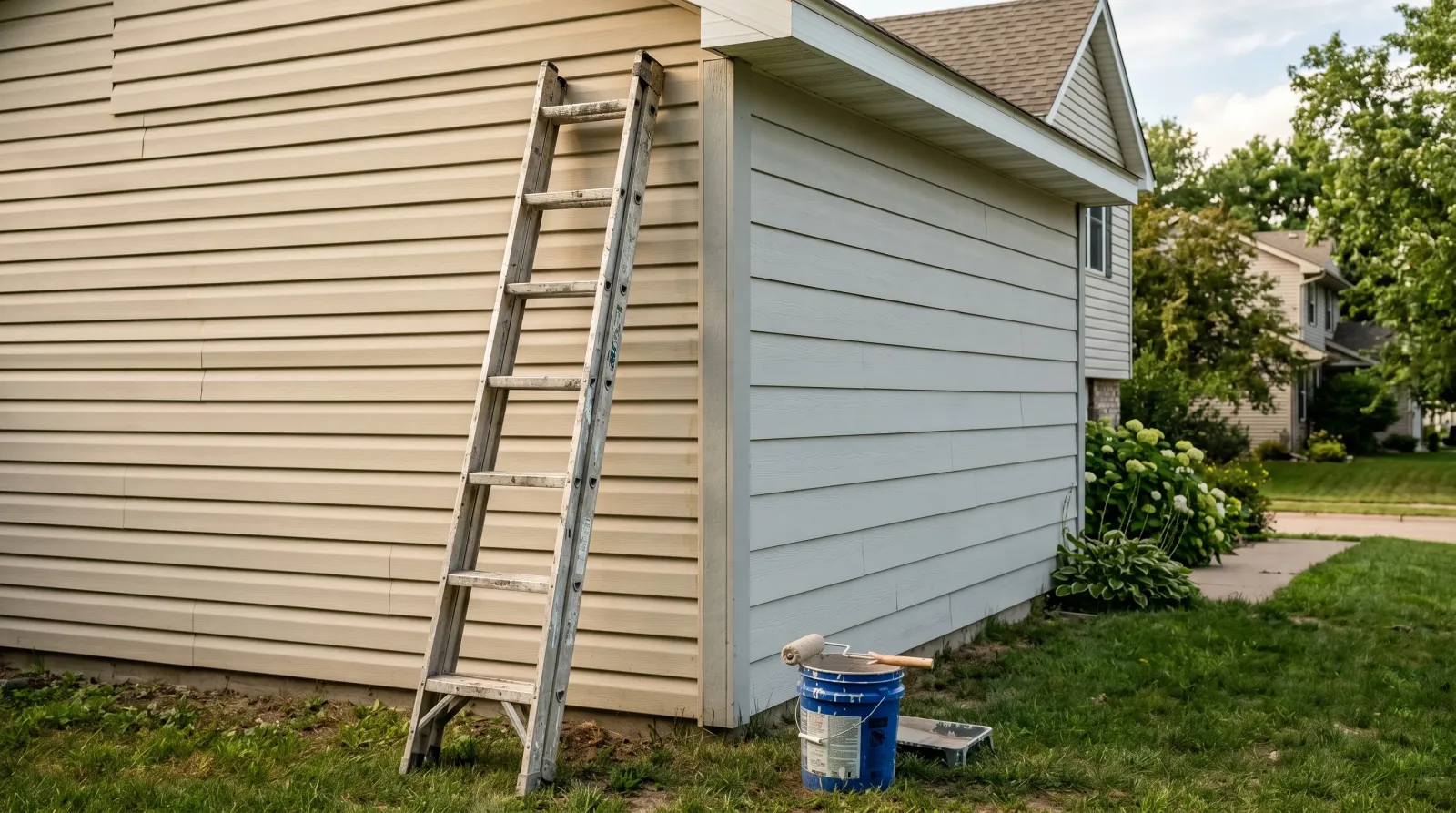
Picture two lap walls. The vinyl wall has slight wave to it on a hot afternoon, especially on the south side. The Hardie wall sits flat and reads more like wood lap from ten feet. That movement difference is the whole story — it’s why one substrate forgives any paint choice and the other doesn’t.
Prep
Vinyl prep is the easier of the two if the siding is sound. Wash with a pump sprayer of TSP-PF substitute, scrub the chalky areas with a soft brush, rinse with a garden hose. No scraping because there’s nothing to scrape — the original color is the plastic itself, not a coating. Mildew goes with a 3:1 water-bleach mix, rinsed twice.
Hardie prep takes longer because something is already painted on it. Factory finish chalks after 8–12 years and old field-applied paint can be peeling at the laps. Scrape the loose stuff, sand the edges to feather, wash with TSP-PF substitute, rinse. Spot-prime any bare cement before topcoat. Loose paint on Hardie that you cover instead of remove will telegraph through within a year.
Winner: Vinyl. Less mechanical work, fewer steps.
Primer Needs
Vinyl: bonding primer or direct-to-substrate acrylic. Standard exterior primer doesn’t grip plastic. Use INSL-X Stix (acrylic-urethane bonding primer, dries fast, sticks to anything) or skip the primer and use a DTM acrylic that’s engineered to self-bond to PVC. Sherwin’s Resilience and Duration with their vinyl-safe color list both work without primer when the substrate is clean.
Hardie: usually no primer needed. Factory-primed boards and previously-painted walls take a topcoat directly once they’re washed. Raw cut edges and any bare cement spots from scraping get a quick hit of 100% acrylic masonry primer. That’s it. Most premium exterior acrylics call themselves self-priming over sound previous coats, and on Hardie that claim is honest.
Winner: Hardie. One fewer can in the truck, one fewer step.
Paint Chemistry
Both substrates want 100% acrylic. Different reasons.
Vinyl wants acrylic because it stays flexible. Vinyl moves 1/2 to 5/8 inch across a 12-foot panel between January and August. Anything brittle (oil, alkyd, traditional latex) cracks at the joints within two seasons. The premium 100% acrylics — Sherwin Duration, Benjamin Moore Aura Exterior, Behr Marquee — flex with the substrate. Below that price tier, you’re rolling the dice.
Hardie wants 100% acrylic because cement is alkaline. Acrylic resists the alkali salts that bloom through the cement when moisture cycles through it. Oil and alkyd saponify (turn to soap) against alkaline substrates and lose adhesion. Latex with low acrylic content does the same thing slower. A real 100% acrylic exterior holds.
The same paint can serve both if you check the can. Sherwin’s Vinyl Safe color list, Behr Marquee Exterior, BM Aura Exterior — all of these are documented on both substrates.
Winner: Tie. Same chemistry, two different reasons for it.
Color Limits
This is where vinyl loses badly. The plastic softens at 165°F. A black or deep-charcoal vinyl wall in direct summer sun on a south or west exposure hits 180–200°F. The panels bow, the seams gap, the nails pull. There’s no fixing it — you replace the siding.
The workaround is the LRV floor. LRV (light reflectance value) measures how much light a color bounces back. Higher LRV = lighter = stays cooler. Most vinyl manufacturers say don’t go below the original siding’s LRV. If the siding is white (LRV 80+), you can repaint it almost anything. If it’s already a mid-tone tan (LRV 45), don’t go darker than that.
Vinyl-safe paint lines push the floor down. Sherwin’s Vinyl Safe palette includes colors with LRVs in the 20s on lines like Duration and Resilience because the paint contains heat-reflective pigments that keep the surface temperature low. Even with those, true black is off the table.
Hardie eats any color. Cement doesn’t soften, doesn’t warp, doesn’t care. Deep black, navy, hunter green — all fine. Color choice on Hardie is a design question, not a substrate question.
Winner: Hardie, by a mile.
Cost & Coverage
Both run 350–400 sq ft per gallon on smooth siding. Vinyl coverage drops to 275–325 sq ft per gallon on the rough side of the panel because the textured surface drinks paint.
Premium exterior acrylic runs $55–80 per gallon in 2026. That’s the same whether you’re using it on vinyl or Hardie. The cost difference is what else you buy:
- Vinyl job: paint + possible bonding primer ($45/gal for Stix) + soft wash setup. ~$200–350 in materials for an average ranch.
- Hardie job: paint + spot primer ($35/gal masonry primer, you’ll use half a gallon) + scrape tools + sanding pads. ~$250–400 in materials for the same house.
Labor-wise, Hardie takes 25–40% longer because of the scrape-and-spot-prime work.
Winner: Vinyl on materials cost and labor time, narrowly.
Verdict by Use Case
- Pick vinyl repaint if: the original siding is sound, you want to stay at or near the existing LRV, and you have a vinyl-safe 100% acrylic on hand or a can of Stix to back it up. Don’t go dark unless the product label specifically allows it.
- Pick Hardie repaint if: you bought factory-primed boards and the install crew never topcoated them, or the existing field paint is chalking and you want a 10-15 year reset. Any color you want.
- It’s basically a tie when: the wall is already painted Hardie in a mid-tone, the surface is sound, and you’re just refreshing — both substrates take the same can of 100% acrylic, with vinyl needing slightly less prep and Hardie taking any color shift you want to make.
Top Picks by Side
Repainting vinyl? See the best paint for vinyl siding round-up for the products with documented vinyl-safe color lists.
Repainting Hardie or other exterior? See the best exterior paint round-up for 100% acrylics that hold on alkaline substrates.
Substrate details? How to paint vinyl siding and how to paint fiber-cement siding cover the prep step-by-step.
What’ll Bite You in Two Years
On vinyl: you picked a color one LRV step too dark and the south wall warped by July of year two. There’s no recovery. Replace the panel.
On Hardie: you skipped the spot-prime over the bare-cement scrape areas and the topcoat dulled and chalked over those spots within 18 months while the rest of the wall held. Sand, prime, recoat the dull areas.
The vinyl mistake is the expensive one. Stay above the LRV floor and you avoid it.