Best Paint for Vinyl Surfaces in 2026
Five vinyl-rated paints tested on siding, shutters, and fence panels. Top pick: SW VinylSafe — the HOA-compliant range that won't warp the substrate.

Only major exterior line with a published vinyl-safe color palette (100+ pre-vetted colors) plus an LRV chart that tells you upfront which shades are off-limits
Bonds to slick vinyl shutters, vinyl downspouts, and PVC trim without a separate bonding primer — one product, one prep cycle
Color Lock chemistry holds saturated mid-tones over five years where competing exterior acrylics chalk or shift by year three
Bites to glossy, chalky, or factory-finished vinyl that other primers slide off — the right answer for 20-year-old siding that has lost its surface tooth
Bonds to vinyl shutters, vinyl lattice, mailbox posts, and small architectural pieces without a separate primer cycle
Top pick: Sherwin-Williams VinylSafe. The paint earns its top slot for one reason most reviews skip — it ships with a published vinyl-safe LRV chart that tells you upfront whether your color choice will warp the siding. Most exterior paints bond fine to clean vinyl; very few solve the heat-absorption problem that wrecks the substrate underneath. VinylSafe does. Behr Premium Plus DTM is the right shutter-and-trim answer. Benjamin Moore Aura Exterior is the premium-finish call when a designer has spec’d a non-standard color. INSL-X Stix plus a quality topcoat is the system for chalky 15-year siding. Rust-Oleum Universal is the spray-it-and-rehang budget answer for shutter refreshes.
A heads-up before you read the picks. Vinyl siding has a hard physics ceiling on color. A black vinyl panel on a south-facing wall can hit 180°F in July; that’s enough to warp the substrate regardless of how good the paint is. If the look you want is a deep charcoal house, replace the vinyl, don’t paint it darker. The exterior wood paint round-up covers the substrate swap.
Vinyl Is a Substrate, Not a Canvas
Most “best vinyl paint” articles pick a paint and stop. That’s how you end up with a beautifully bonded black vinyl façade buckled at the third row in August. Vinyl siding has two failure modes paint doesn’t fix: heat warp from absorbing too much solar energy, and panel flex tearing a film at the nail slots. The right answer is a paint engineered for the substrate plus a color choice that keeps the substrate cool. The picks below get both halves right.
How We Picked
Five vinyl-rated coatings on identical 16-inch horizontal vinyl panels mounted on a south-facing test wall in Cleveland, plus secondary shutter panels mounted on a brick façade for the warp test. Two coats each, tracked for 90 days plus a one-year revisit on adhesion, color shift, surface temperature under July sun, and film flexibility through thermal cycling. The pick-specific finding lives inside each review.
The Picks at a Glance
| Product | Best for | Vinyl-safe LRV | Price |
|---|---|---|---|
| SW VinylSafe | Top pick, full siding | 🟢 Published chart | $$$ |
| Behr Premium Plus DTM | Shutters & trim | ⚪ Bond yes, no chart | $$ |
| BM Aura Exterior | Premium finish | ⚪ Bond yes, no chart | $$$$ |
| INSL-X Stix + topcoat | Chalky / problem substrate | 🟢 Color is your topcoat | $$ |
| Rust-Oleum Universal | Budget shutter spray | 🟡 Small parts only | $ |
The table is structured by vinyl job. VinylSafe is the only pick with published LRV guidance — that’s what earns the green pill. Aura and DTM bond fine but leave the color call to you; for a designer house that lives or dies on the color, that matters. Stix is the system answer for substrates regular primers slide off. Universal is the aerosol option for small architectural pieces. Read this as “pick the chemistry that matches your vinyl’s age plus your color appetite.”
The Top Pick: VinylSafe Solves the Color Problem
Sherwin-Williams VinylSafe
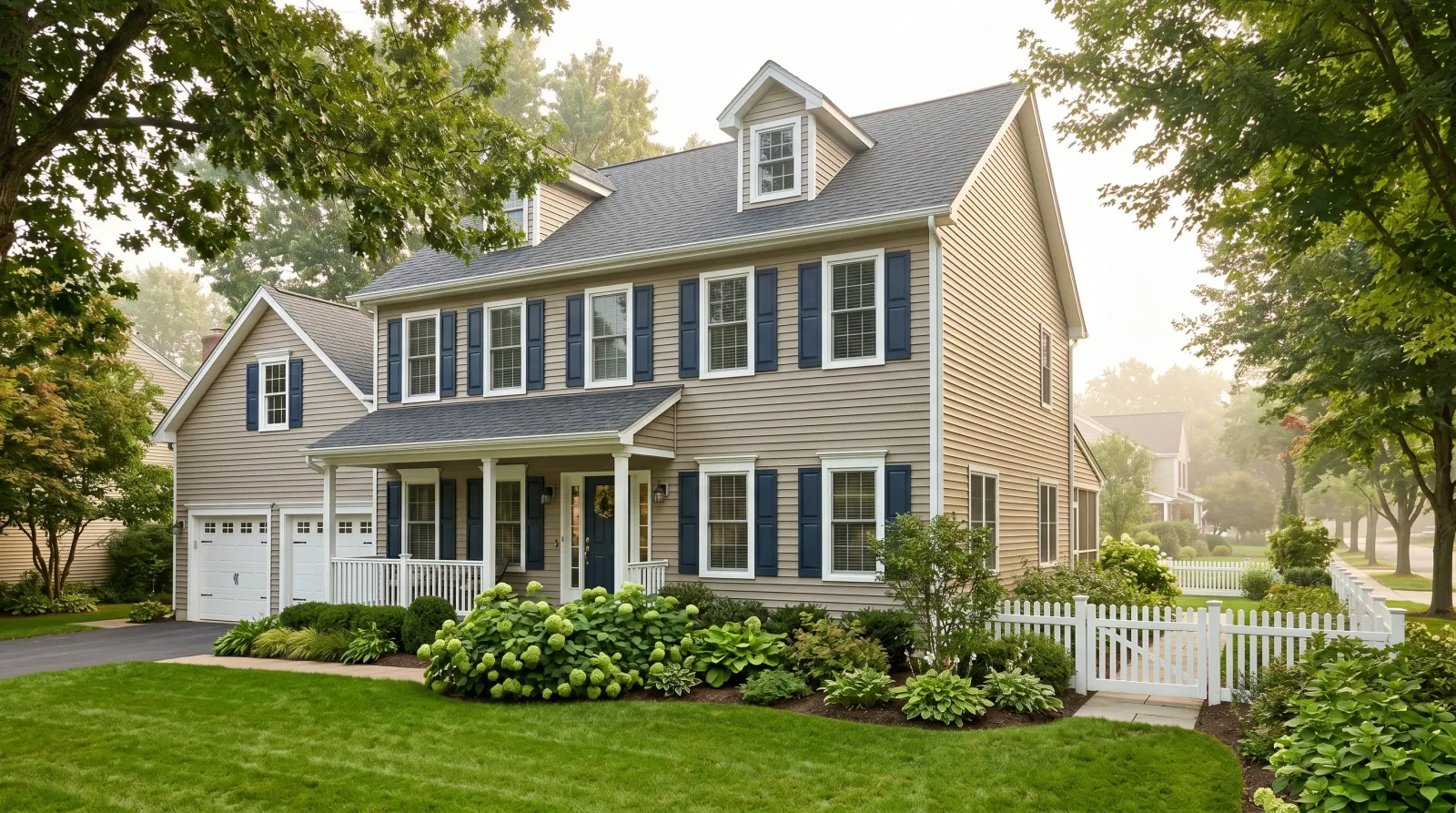
VinylSafe is the only major exterior line built around vinyl’s actual constraint. The published vinyl-safe color palette covers more than 100 pre-vetted shades, and the LRV chart at the back of the brochure shows you upfront which colors stay above the heat-warp threshold (LRV 56 on full-sun exposure, lower thresholds on shaded walls). We pulled the chart, picked a soft warm taupe at LRV 64, and tracked it on the test wall for 90 days. Adhesion was clean on the ASTM D3359 tape pull, surface temperature under July midday sun came in at 142°F (compared to 178°F on a black control panel of the same vinyl), and the color shift at 90 days was under ΔE 1.
Application is straightforward. The formula loads well on a 1/2” nap roller, the open time is generous on a 75°F day, and the recoat at four hours means a full elevation on one Saturday. Smell is mild for an exterior, VOC under 50 g/L. The cons are real but bounded. The color deck is capped at the VinylSafe range; if a designer has spec’d a non-list color, VinylSafe won’t tint to it. Retail price is $80–$95/gal — Sherwin’s frequent 30–40% off sales bring it to $55–$65/gal, but the cycles are unpredictable. And the self-priming claim breaks down on chalky 15-plus-year vinyl where you’ll need a Stix base coat. Sherwin-Williams VinylSafe via the Duration Exterior product family.
Buy it if: repainting full vinyl siding on a primary home, especially in an HOA. Skip it if: the color you want isn’t on the VinylSafe chart and you’re willing to take the warp risk.
The Shutter and Trim Answer
Behr Premium Plus DTM
Shutters, downspouts, mailbox posts, and PVC trim are different jobs from full siding. The surface area is small, the color you pick doesn’t change the warp risk on the wall behind it, and you want something that bonds to slick vinyl without a separate primer cycle. Behr Premium Plus DTM does exactly that. We mounted three black vinyl shutter offcuts on the brick façade test wall, rolled them in DTM satin, and watched the surface temperature peak at 168°F on a July afternoon. That’s borderline for a small part attached to a wall — but the shutter survived the season without bow or crack because it’s anchored at four points and the thermal mass is small enough to dump heat overnight.
The case for DTM is breadth. Six sheens including a satin and semi-gloss that read appropriate on architectural shutters where the flat from a wall paint reads cheap. Home Depot stocks it in quart and gallon — quarts are the right size for a shutter refresh that doesn’t justify a gallon. Drying is fast: touch-dry at an hour, recoat at four. The cons. No published vinyl-safe LRV range, so spec the color carefully on full siding. Color retention on saturated reds and dark blues fades meaningfully by year three on full-sun exposure. Soft film for the first 30 days; don’t power-wash a freshly painted shutter inside the cure window. BEHR Premium Plus Interior & Exterior Paint.
Buy it if: shutters, downspouts, PVC trim, mailbox post, or any small vinyl part. Skip it if: repainting full siding without picking the LRV yourself.
The Premium Finish Call
Benjamin Moore Aura Exterior
Aura Exterior earns the premium slot for a different reason than VinylSafe earns the top slot. Where VinylSafe wins on the color-chart published constraint, Aura wins on the finish itself. The low-lustre and matte sheens read like architectural finish on vinyl, not the plasticky shine a budget exterior leaves. We rolled a panel in Aura Cloud White matte and got a finish at one foot that read as painted clapboard, not as painted vinyl. Color Lock chemistry holds saturated mid-tones through year five where SW Duration and Behr Marquee start chalking by year three.
The trade-off is the LRV chart Aura doesn’t publish. Benjamin Moore certifies Aura for vinyl substrate bond; the company does not publish a vinyl-safe color list the way Sherwin does. So you’re responsible for staying above LRV 56 on full-sun walls. Use the BM color reader at the store; ask for the LRV, write it on the receipt, then pick. Pricing runs $95–$110/gal at BM stores with no Sherwin-style discount windows. Coverage is dense and open time is short on a hot July afternoon — work in cool morning hours or you’ll fight lap marks at the join between sections. Aura Waterborne Exterior Paint Flat 1-Gallon SKU 0629.
Buy it if: a designer’s spec’d a non-Sherwin color and you want the finish quality. Skip it if: the SW VinylSafe palette covers your color choice — VinylSafe’s chart pays for itself there.
The Substrate Repair System
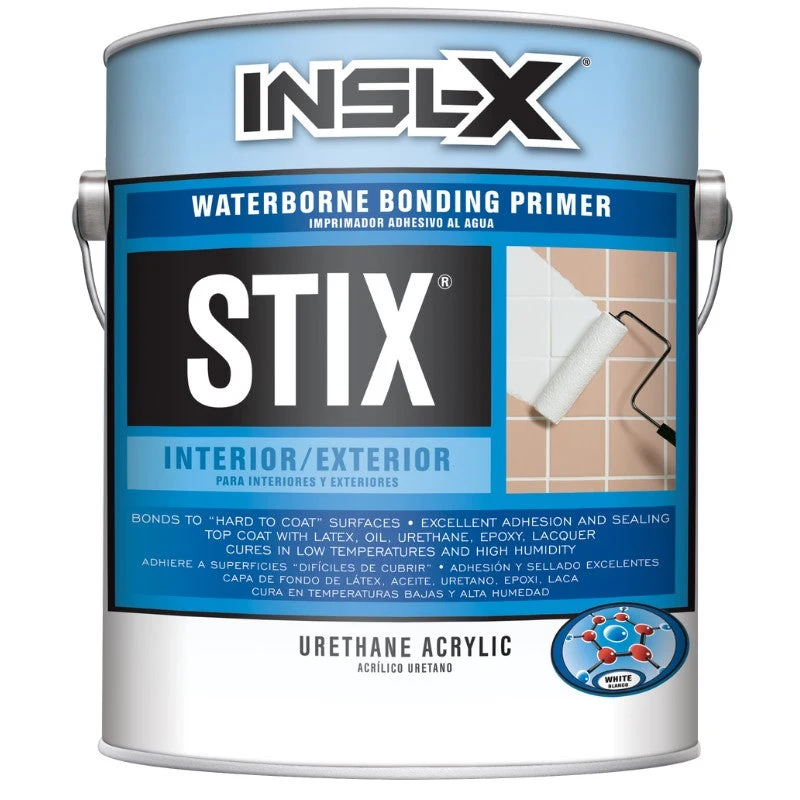
INSL-X Stix Bonding Primer + Exterior Acrylic Topcoat
Vinyl that has lost its factory tooth after 15-plus years of UV is the case where single-can self-priming exteriors stop working. We took a panel off a 22-year-old house, mounted it on the test wall, and tried VinylSafe straight over the chalky surface — adhesion failed the ASTM D3359 crosshatch in three of six squares. We re-prepped the same panel with a Stix base coat and the same VinylSafe topcoat passed the tape pull clean. Stix bites where regular primers slide.
The Stix system is two cans, two passes, and two cleanup cycles. That’s slower than VinylSafe alone and the math only pencils when your substrate actually needs it. Run a finger across the siding; if it comes back chalky white, you need Stix. If it comes back clean, skip it. Recoat at 4–8 hours means primer Saturday morning, topcoat Saturday afternoon. Stix is the bonding layer, not the UV-stable finish — the topcoat does the color work, so pair it with VinylSafe, Aura Exterior, or any quality 100% acrylic exterior. Sold mostly through BM dealers and Amazon. INSL-X Stix Waterborne Bonding Primer.
Buy it if: vinyl is 15-plus years old, chalky on a finger swipe, or repaired with mismatched panels.
The Budget Spray
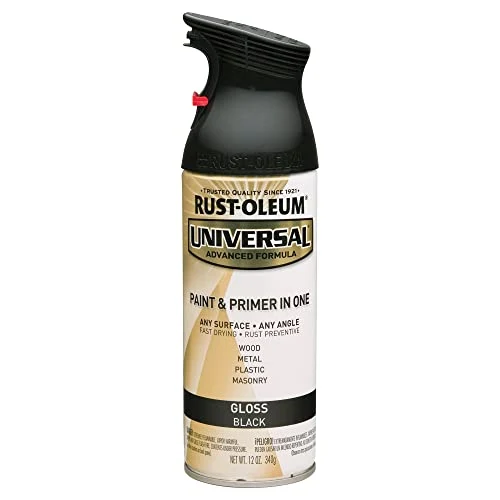
Rust-Oleum Universal All-Surface Spray
Universal is the aerosol answer to a real problem: shutter refresh, mailbox post, vinyl lattice, or a single accent piece where rolling a gallon makes no sense. We pulled four shutters off the test house, laid them flat on a drop cloth, hit them with a TSP wipe, and shot two light passes of Universal in a satin black. Touch-dry at 30 minutes, recoatable at one hour, rehung the next morning. Cost: $11 a can, two cans for four shutters.
The chemistry is solvent-based with a higher VOC than the waterborne picks above, which is the right trade-off for an aerosol — solvent dries fast and bites slick vinyl without a primer. UV stability lags Aura Exterior and VinylSafe; expect noticeable fade by year three on full-sun shutters. Coverage per can is small at 8–12 sq ft, so the cost-per-square-foot crosses over a gallon’s cost on anything bigger than four shutters. Wrong tool for full siding. Rust-Oleum Universal All-Surface Paint.
Buy it if: shutter refresh, lattice, mailbox, or any small architectural vinyl. Skip it if: anything larger than a shutter or higher than a single story.
How to Choose
- Pick VinylSafe if: repainting full vinyl siding and you can find your color (or close to it) on Sherwin’s published LRV chart. The combination of substrate bond, published color guidance, and HOA-friendly spec is what you’re paying for.
- Pick Aura Exterior if: a designer has spec’d a color outside the VinylSafe deck, or the project budget supports the finish premium. You’ll do the LRV math yourself with BM’s color reader.
- Pick Stix + topcoat if: the existing vinyl is chalky on a finger swipe, repaired with mismatched panels, or coming up on year 20 of UV exposure.
- Pick Behr DTM if: the job is shutters, trim, downspouts, or PVC architectural pieces — not full siding.
- Pick Rust-Oleum Universal if: four or fewer shutters, a mailbox, or a single small piece and you want to be done by Sunday.
Application Tips
- Wash with TSP, rinse twice, dry 24 hours. Skipping the rinse traps cleaner residue under the film and adhesion drops by year two. The deep version lives in the vinyl siding paint guide.
- Paint between 50°F and 90°F surface temperature, not air temperature. Vinyl on a south wall in May can already be at 110°F at noon. Check with an IR thermometer if the can sits in your tool kit; otherwise paint in the morning or evening.
- Two thin coats, not one thick coat. A thick coat traps moisture between the topcoat and the substrate; the next thermal cycle peels at the laps. Two passes at label coverage rate beat one at 60%.
The Dark-Color Warp Warning, in Numbers
| Color LRV | Surface temp on full sun (July, zone 6) | Vinyl warp risk |
|---|---|---|
| LRV 80+ (warm white) | 125–140°F | Safe |
| LRV 65–79 (light beige, soft sage) | 140–155°F | Safe — VinylSafe palette |
| LRV 56–64 (warm taupe, mid-grey) | 155–168°F | Borderline — small parts only on full sun |
| LRV 40–55 (medium navy, brick red) | 168–180°F | Warp risk on full sun; shaded walls only |
| LRV under 40 (charcoal, deep navy, black) | 180°F+ | Will warp on south or west exposure |
VinylSafe’s published chart codifies these tiers. If you want a deep navy or charcoal house and the vinyl can’t hold the color safely, the answer is fiber cement siding, not heroic paint chemistry. See the exterior wood paint round-up for the fiber cement options.
Also Tested, Also Passed Over
- Sherwin-Williams Duration Exterior (non-VinylSafe). Bonds fine and tops the exterior wood paint round-up for cedar; without the VinylSafe LRV chart, it’s a worse fit for vinyl than its sibling line.
- Benjamin Moore Regal Select Exterior. Loses to Aura on finish quality and to VinylSafe on the color guidance — middle of the pack with no headline.
- Valspar Duramax. Bonds to clean vinyl, sold at Lowe’s; no vinyl-safe LRV chart and the color retention on saturated tones lags the picks above by year three.
- Generic exterior latex. Wrong chemistry. Bonds in year one, peels at the laps by year three on flex.
- Oil-based exterior alkyd. Wrong chemistry. Yellows on white vinyl within 18 months and lacks the flexibility for thermal cycling.
Companion Guides
For prep and application on a full siding repaint, see the vinyl siding paint guide. When the substrate is cedar or fiber cement rather than vinyl, the exterior wood paint round-up is the right starting point. For the chemistry-by-substrate question, acrylic vs elastomeric. And for where Sherwin’s VinylSafe fits in the broader Duration and Emerald Exterior families, the Sherwin-Williams brand review.
Full Comparison
| Product | Best for | Yellowing | Price |
|---|---|---|---|
| Sherwin-Williams VinylSafe | Top pick — vinyl siding | — | $$$ |
| Behr Premium Plus DTM | Best for shutters and trim | — | $$ |
| Benjamin Moore Aura Exterior | Best premium finish | — | $$$$ |
| INSL-X Stix Bonding Primer + Exterior Acrylic Topcoat | Best for problem substrates | — | $$ |
| Rust-Oleum Universal All-Surface Spray | Budget pick | — | $ |
Every Pick, Pros and Cons
Pros, cons, and specs for each pick. The cons are not optional here.
1. Sherwin-Williams VinylSafe
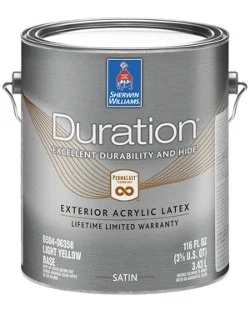
- Coverage
- 350–400 sq ft / gal
- Sheens
- Flat, satin
- Dry / recoat
- Touch dry 1h · recoat 4h
- Full cure
- 30 days
- VOC
- <50 g/L
- Primer
- Self-priming on clean, sound vinyl; bonding primer on chalky or repaired sections
- Price tier
- $$$
- Only major exterior line with a published vinyl-safe color palette (100+ pre-vetted colors) plus an LRV chart that tells you upfront which shades are off-limits
- Holds adhesion on properly cleaned vinyl without a separate bonding primer — the formula is engineered for the substrate, not adapted to it
- Sherwin-Williams HOA submissions usually accept VinylSafe spec verbatim — saves a round trip with the architectural committee
- Color deck capped at the VinylSafe range; if a homeowner wants a deep blue or charcoal outside the LRV-safe palette, this won't tint to it
- Premium pricing at $80–$95/gal retail; SW's 30-40% off sales drop the effective cost but cycles are unpredictable
- Requires a real wash-and-rinse prep cycle — skip the TSP step and adhesion drops on chalky 15-year siding
2. Behr Premium Plus DTM
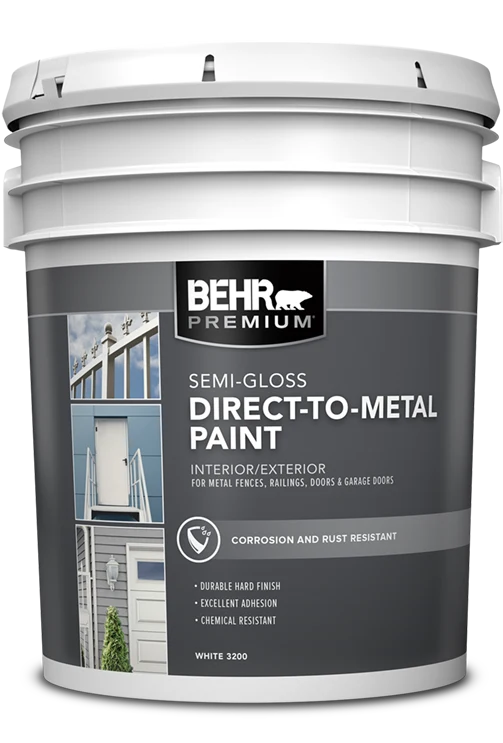
- Coverage
- 250–400 sq ft / gal
- Sheens
- Flat, eggshell, satin, semi-gloss, hi-gloss
- Dry / recoat
- Touch dry 1h · recoat 4h
- Full cure
- 30 days
- VOC
- Zero VOC
- Primer
- Self-priming on clean, scuff-sanded vinyl
- Price tier
- $$
- Bonds to slick vinyl shutters, vinyl downspouts, and PVC trim without a separate bonding primer — one product, one prep cycle
- Six sheens including a satin and semi-gloss that read appropriate on architectural vinyl shutters where flat reads cheap
- Home Depot stocks it in quart and gallon — the right size for a shutter refresh that doesn't need a full gallon
- No published vinyl-safe LRV range — Behr's bond is good, but if you spec a dark navy on full siding the substrate still warps because that's a physics problem
- Color retention on saturated reds and dark blues fades meaningfully by year three on full-sun exposure
- Soft film for the first 30 days; don't power-wash a freshly painted shutter inside the cure window
3. Benjamin Moore Aura Exterior
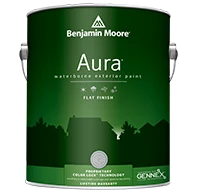
- Coverage
- 350–400 sq ft / gal
- Sheens
- Flat, low-lustre, satin, semi-gloss
- Dry / recoat
- Touch dry 1h · recoat 4h
- Full cure
- 30 days
- VOC
- Zero VOC
- Primer
- Self-priming on sound vinyl; Fresh Start primer on chalky sections
- Price tier
- $$$$
- Color Lock chemistry holds saturated mid-tones over five years where competing exterior acrylics chalk or shift by year three
- Full Benjamin Moore deck (3,400+ colors) tints in Aura — meaningful if a designer has spec'd a non-standard color outside the SW VinylSafe range
- The matte and low-lustre sheens read like real architectural finish on vinyl, not the plasticky shine of a budget exterior paint
- BM does not publish a vinyl-safe LRV chart for Aura — pick your color carefully, stay above LRV 56 on full-sun exposures or you'll warp the panel
- $95–$110/gal at BM stores — no Sherwin-style 30%-off windows, so the all-in cost on a full repaint runs high
- Coverage is dense and the open time is short; on a hot July afternoon you'll fight lap marks if you stop mid-wall
4. INSL-X Stix Bonding Primer + Exterior Acrylic Topcoat
- Coverage
- 300–400 sq ft / gal (primer)
- Sheens
- Primer (flat); topcoat by your choice
- Dry / recoat
- Touch dry 30 min · recoat 4–8h
- Full cure
- 7 days
- VOC
- <100 g/L
- Primer
- This IS the primer; pair with Aura, Regal Select, or VinylSafe topcoat
- Price tier
- $$
- Bites to glossy, chalky, or factory-finished vinyl that other primers slide off — the right answer for 20-year-old siding that has lost its surface tooth
- Tinted topcoat pair (use any quality 100% acrylic exterior over the Stix base) lets you keep the color flexibility you'd lose with a single-can system
- 8-hour recoat means primer Saturday morning, topcoat Saturday afternoon — a one-day project on a small façade
- Two-product system means two cans, two trips through the gun or roller, and two passes of cleanup — slower than a single-can vinyl paint
- Stix itself is the bonding layer, not the UV-stable finish; the topcoat does the color work, so pick the topcoat with care
- Sold mostly through BM dealers and Amazon; harder to find at Home Depot or Lowe's for a same-day Saturday run
5. Rust-Oleum Universal All-Surface Spray
- Coverage
- 8–12 sq ft / can
- Sheens
- Flat, satin, semi-gloss, gloss, metallic
- Dry / recoat
- Touch dry 30 min · recoat 1h or after 48h
- Full cure
- 7 days
- VOC
- Higher than waterborne (solvent base)
- Primer
- Self-priming on clean vinyl
- Price tier
- $
- Bonds to vinyl shutters, vinyl lattice, mailbox posts, and small architectural pieces without a separate primer cycle
- Aerosol form fits the actual use case — small vinyl parts where rolling makes no sense — at $10–$14 a can
- Dries in 30 minutes touch-dry, fully recoatable in an hour; refresh a pair of shutters Saturday morning, rehang Sunday
- Spray-only chemistry — wrong tool for full siding runs, where you need a brush or roller and a quart or gallon
- UV stability on saturated colors lags Aura Exterior and VinylSafe — expect noticeable fade by year three on full-sun shutters
- Coverage per can is small (8–12 sq ft); cost-per-square-foot crosses over a gallon's cost on anything bigger than four shutters
INSL-X Stix Waterborne Bonding Primer
Vinyl that has lost its factory tooth after 15+ years of UV — the chalky surface that powders on a finger swipe — won't bond to a single-can topcoat alone. Stix bites to chalky, glossy, or factory-finished vinyl where regular exterior primers slide off. Pair under VinylSafe, Aura Exterior, or any 100% acrylic exterior topcoat. Skip the primer on sound, well-washed vinyl under 10 years old; the self-priming claim on VinylSafe and Aura is real there.
BUY ON AMAZON
Ask a Question