Shur-Line Edger vs HomeRight QuickPainter
Shur-Line vs QuickPainter, tested room by room: cut-line quality, paint feed, pole reach, texture tolerance, cleanup, pad life, and real cost per room.

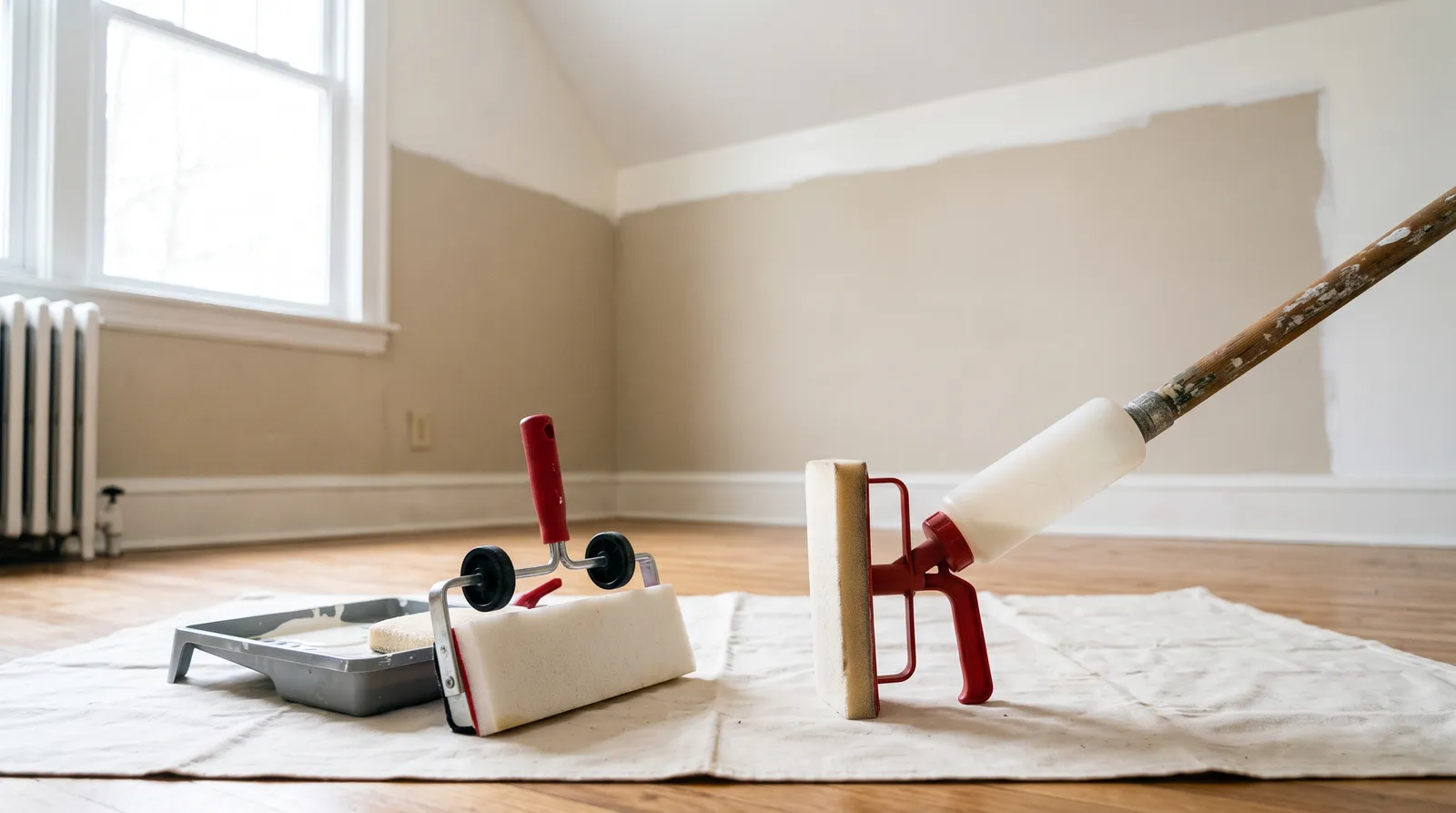
The 30-Second Answer
Top pick for most rooms: the Shur-Line 2006559 Premium. It cuts the sharper line, the tool runs under $12, and the flock pad refills cost about $4. The HomeRight Quick Painter wins one job outright and it is a big one. With 6 ounces of paint in the handle and a standard pole thread on the end, it cuts a ceiling line from the floor. Eight-foot ceilings and a stepladder you don’t mind moving: buy the Shur-Line. Stairwells, vaulted rooms, or a whole house of 9-foot ceilings: buy the Quick Painter and accept the cleanup.
At a Glance
| Shur-Line 2006559 Premium | HomeRight Quick Painter C800971 | |
|---|---|---|
| Price | $8-12 | $20-28 |
| Pad | 4-inch dense flock, replaceable | 4-inch foam, replaceable |
| Paint source | Dip in a tray | 6 oz onboard reservoir, thumb trigger |
| Guide system | Twin plastic wheels | Fixed pad shield |
| Pole thread | No | Yes, standard |
| Linear feet per load | 3-4 ft | 25-30 ft |
| Cut-line quality (smooth drywall) | 🟢 Sharpest in class | 🟡 Slightly feathered |
| Wavy drywall joints | 🟡 Bridges and gaps | 🟢 Foam conforms |
| Texture / knock-down | 🔴 No | 🔴 No |
| Cleanup | 2 min under a tap | 8-10 min, full disassembly |
| Pad life | 6-8 rooms | 3-4 rooms |
| Refill cost | ~$4 per two-pack | Higher per pad |
How the Two Tools Actually Work
They solve the same problem from opposite ends.
The Shur-Line is a dip tool. Load a shallow tray, press the flock pad in, wipe the wheels clean on the tray lip, pull. The wheels ride the ceiling and hold the pad a hair below it, which is what produces the line. Three or four feet later the pad is dry and you dip again.
The Quick Painter carries its paint. Unscrew the handle, fill the 6-ounce chamber, and squeeze a thumb trigger that pushes paint through a feed channel into the back of the foam pad. One fill cuts most of a room’s ceiling perimeter, and the tool threads onto an extension pole so you cut standing on the floor.
Everything below is what those two designs cost you.
Cut-Line Quality on Straight Runs
The Shur-Line wins on smooth drywall, and it isn’t close.
Dense flock releases paint at a steady rate across all 4 inches. No dry corners, no over-loaded bead in the middle. On a straight 8-foot pull along a clean drywall-to-ceiling joint, the edge lands as one continuous line. The two guide wheels are the real trick: they hold the pad at a fixed offset instead of letting your wrist decide, and wrist drift is what ruins every freehand cut.
The Quick Painter reads softer. The foam pad compresses under hand pressure, so the line comes out marginally wider and marginally feathered. In a photo you’d struggle to spot it. Standing three feet from the wall in raking afternoon light, you can.
Here is where the softness pays. Older houses have ceiling joints that wander an eighth of an inch over a 10-foot run. The Shur-Line’s stiff pad bridges that dip and leaves a thin unpainted sliver you go back and brush. The foam pad follows the wave. On a 1962 ranch with settled joints, the Quick Painter’s line looked better for exactly that reason.
Winner: Shur-Line on new or skim-coated drywall. Quick Painter on old wavy joints.
Paint Feed and Reloading
Twenty-five feet per fill against three feet per dip.
That number is the whole argument for the Quick Painter. A standard 12-by-12 bedroom has about 48 linear feet of ceiling perimeter. The Quick Painter does it in two fills. The Shur-Line does it in roughly 14 dips, and every dip means walking back to the tray.
The Quick Painter falls short on the first 30 seconds of every fill. The feed channel has to charge before the pad is evenly wet, so the first foot goes streaky if you start on the wall. Prime it on scrap cardboard. Once it’s running, the thumb trigger meters paint well and you can feel the pad going dry.
The Shur-Line’s dip cycle has a tax nobody mentions on the box. Every reload puts paint on the guide wheels, and a wheel with paint on the rim transfers it straight onto the ceiling. Wipe the wheels on the tray lip every single time. Miss once and you’re touching up with a damp rag.
Winner: Quick Painter.
Reach: Ceilings, Stairwells, and the Ladder Tax
The Shur-Line Premium has no pole thread. It is a hand tool, full stop.
For 8-foot ceilings that is survivable. Set a stepladder, cut what you reach, climb down, move four feet, climb up. One bedroom costs you around a dozen ladder moves. On a stairwell it stops being survivable and starts being a safety conversation, because the tray has to sit somewhere and there is no flat somewhere on a staircase.
The Quick Painter threads onto any standard American pole. Stand on the floor with a 4-foot pole and cut a 10-foot ceiling line. No tray underfoot, no ladder shuffle, no reaching sideways off the top step. In practice this is why the tool sells.
The trade-off is control. At full pole extension you lose fine feel and the line drops another notch below what the same tool does in your hand. If reach is your problem, price it against what you’d otherwise buy in the ladders for painting round-up.
Winner: Quick Painter. Decisively.
Wall Texture Tolerance
Both lose here.
A flat pad rides the peaks of orange peel and knock-down and never reaches the valleys, so the paint lands in stripes and the line waves. The Shur-Line’s stiffer flock is worse at it. The Quick Painter’s foam gets maybe another half-step of tolerance out of light orange peel before it gives up too.
Skip both if your walls are textured. Use a powered mini-roller edger, or tape the ceiling and cut in with a 2.5-inch angled sash brush. The painter’s tape round-up covers which tapes seal on a textured surface, and paint bleeding under tape covers the fix when they don’t.
Winner: neither. The Quick Painter loses by a smaller margin.
Cleanup and Pad Life
This one is lopsided.
The Shur-Line is a pad, a plastic frame, and two wheels. Pop the pad, rinse both under warm water, scrape the creep off the wheel rims with a thumbnail, hang it up. Two minutes. The flock pad holds a usable edge for six to eight rooms and refills run about $4 for a two-pack.
The Quick Painter charges you for the reservoir. Paint sits in the chamber, the feed channel, and behind the trigger valve, and all three have to be flushed before it sets. Budget eight to ten minutes and expect to disassemble it. Skip the flush once and dried latex bridges the feed channel, the trigger pushes air, and the tool is scrap. The foam pad also softens faster, three or four rooms against six to eight.
Wash within 20 minutes of the last pull, either tool. The math on when a tool is worth saving is in the tool care economics guide.
Winner: Shur-Line.
Price and Cost per Room
Shur-Line: about $10 for the tool, $2 per pad, seven rooms per pad. Call it 30 cents a room after the first purchase.
Quick Painter: about $24 for the tool, higher pad cost, 3.5 rooms per pad. Call it a dollar a room, plus ten minutes of cleanup every session.
One bedroom, the Shur-Line is a third the money and cuts better. A two-story house with 9-foot ceilings and a stairwell, the Quick Painter’s extra $14 buys back several hours of ladder work and the pad economics stop mattering.
Winner: Shur-Line on pure cost. Quick Painter on cost per hour saved when there’s height involved.
The Verdict by Use Case
- Pick the Shur-Line Premium if: ceilings are 8 feet, the drywall is smooth and reasonably new, the job is one or two rooms, or you want the sharpest freehand line available for the money.
- Pick the HomeRight Quick Painter if: you’re cutting a stairwell, a vaulted room, or anything 9 feet and up; the job is a whole house and the ladder moves are the real cost; or your ceiling joints wander and the softer foam will follow them.
- It’s basically a tie when: the room is a standard 8-foot bedroom with slightly imperfect joints. Pick on whether you’d rather move a ladder or clean a reservoir.
- Skip both if: the walls are knock-down or heavy orange peel. Tape the ceiling instead.
Top Picks by Side
Going with the Shur-Line? It’s the top pick in the paint edgers round-up, which carries current pricing, refill part numbers, and the two edgers that beat it on textured walls. The Wagner SMART Edge Roller there is the powered alternative for texture, and the Wagner brand hub covers the rest of that line.
Going with the Quick Painter? Same round-up, ceilings-without-a-ladder slot. Read the cleanup notes before you buy, because that’s the complaint in every negative review of this tool.
Still deciding whether to cut in by hand at all? Brush vs spray covers where masking beats edging outright.
FAQ
Which one gives the sharper line against the ceiling? The Shur-Line, on smooth drywall. Dense flock plus twin guide wheels holds a fixed offset your wrist can’t. The Quick Painter’s foam reads slightly feathered next to it. On wavy older joints the ranking flips, because foam conforms where flock bridges and gaps.
Can you put the Shur-Line on an extension pole? No. The Premium is a hand tool with no pole thread and it feeds from a tray, so anything above about 7 feet means a stepladder. The Quick Painter threads onto a standard pole and carries its own paint, which is the entire reason it exists.
How long does paint last inside the Quick Painter? About 20 minutes of idle time before the feed channel skins over. Stopping for lunch means flushing it. Latex that dries in the channel doesn’t come back out, and there’s no rebuild kit worth buying.
Related
- Best paint edgers: all five edgers tested, with current pricing
- Best painter’s tape: the tape route, if both edgers lose on your walls
- Ladders for painting: what the pole option competes against
- Paint bleeding under tape: the failure edgers avoid
- Paint tool care economics: when washing beats replacing
- Brush vs spray: the bigger prep decision above this one