Color Drenching vs an Accent Wall
Color drenching vs an accent wall, settled by how the room actually feels. Which one calms a space, which one adds energy, and how to pick for your light.

The 30-Second Answer
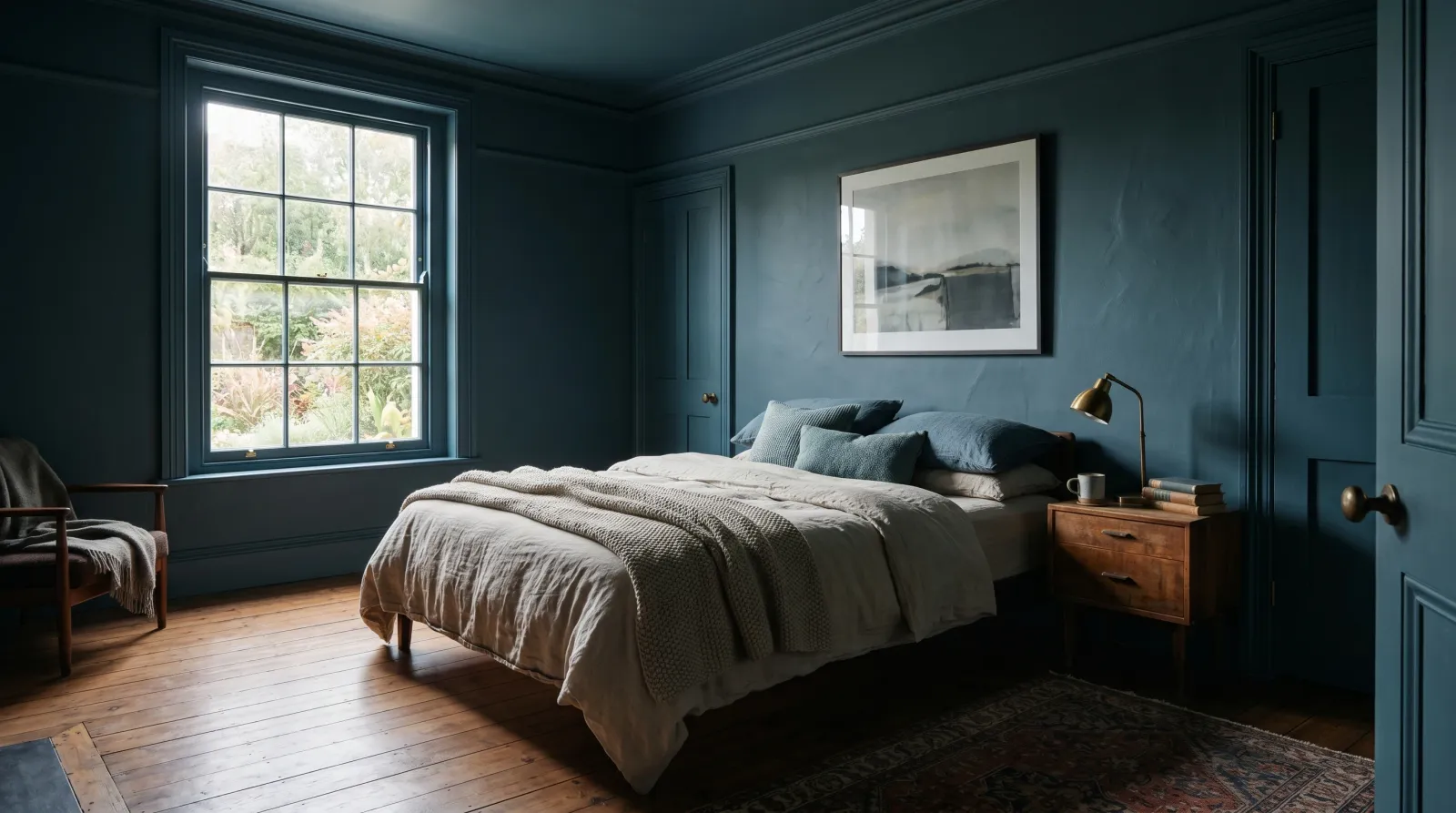
Color drenching wraps one color over the walls, trim, and ceiling so the room feels like a single enveloping field. An accent wall puts one color on one wall and leaves the rest pale. Drench when you want a small or north-facing room to feel quiet, deep, and bigger than it is. Pick an accent wall when you want one shot of color behind the bed or sofa, you’re renting, or you want a focal point without committing the whole room.
At a Glance
| Color drenching | Accent wall | |
|---|---|---|
| Mood it creates | Enveloping, calm, immersive | A focal point, a single note of energy |
| Effect on room size | Feels larger, edges dissolve | One wall steps forward, room reads shorter |
| How light behaves | Color holds across the day | Contrast shifts as light moves |
| Effort and cost | More paint, ceiling and trim included | One wall, fast and cheap |
| Hardest to get wrong | Needs the right undertone | Needs the right wall |
What Each One Actually Does to a Room
Walk into a color-drenched room and the first thing you notice is that you can’t find the corners. The walls, the trim, the ceiling, sometimes the inside of the door, all carry the same color, so the eye has nothing to catch on. The box dissolves. What’s left is a soft, continuous shape and a single mood that holds you in place. It reads quiet, deliberate, a little cocooning.
An accent wall does something almost opposite. It takes one plane and pushes it forward or pulls it back, depending on the color. The other three walls stay light and recede. You get a focal point and a clear sense of where the room wants you to look, usually the headboard, the sofa, or the fireplace.
Neither is better in the abstract. They solve different problems.
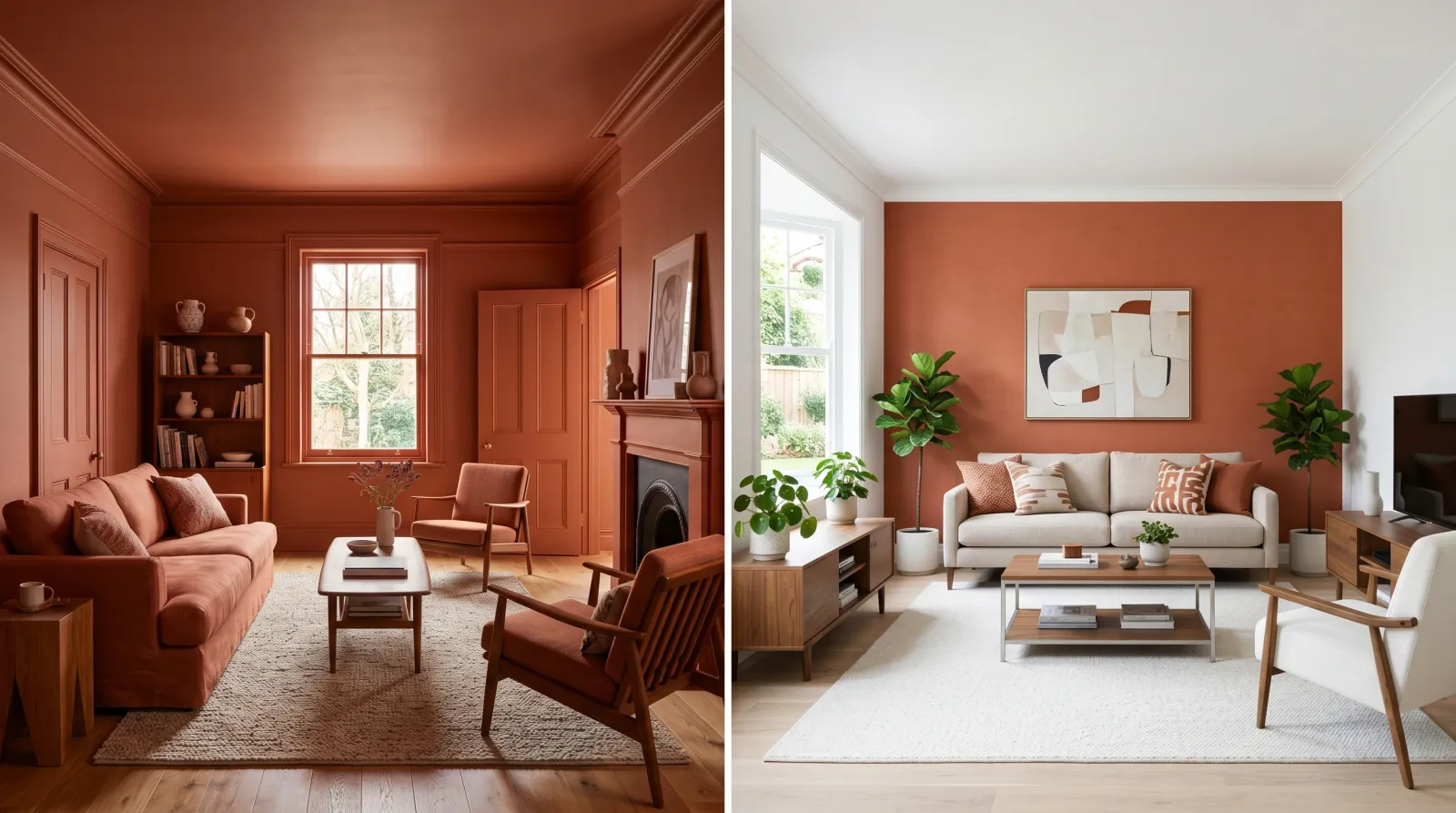 The same terracotta, two ways: drenched on the left wraps the room in warmth; on the right it sits on one wall behind the sofa as a single focal note.
Mood It Creates
Drenching is about immersion. One color on every surface removes the visual breaks that a white ceiling and white trim normally give you, and the room settles into a single emotional register. A deep green-blue goes still and library-quiet. A warm clay goes soft and held. This is why bedrooms, studies, and powder rooms take to drenching so well: those are rooms where you want one feeling, not a conversation between surfaces.
An accent wall keeps the conversation. The pale walls stay neutral and the one colored wall provides the accent, the punctuation. The mood is lighter and more sociable because most of the room is still open and bright. You’re adding a note, not changing the key.
Winner: Color drenching for a single committed mood. Accent wall if you want energy without changing the room’s overall lightness.
Effect on Room Size
This is where people get the most surprised. The instinct is that a dark, fully drenched room will feel small and closed in. In practice the opposite tends to happen. Without the contrast line where wall meets ceiling, the eye can’t measure the box, and the room loses its hard edges. A small north-facing study drenched in a deep teal often feels larger and more generous than the same room in flat white with white trim.
An accent wall shortens a room. The contrast wall advances toward you, which is exactly what you want at the end of a long narrow room to make it feel more square. Put that accent wall on the wrong plane and you’ve made a small room feel smaller.
Winner: Color drenching for making a small room feel bigger. The accent wall wins only when you specifically want a long room to read shorter.
How Light Behaves Across the Day
Color lives or dies by the light it sits in, and the two approaches handle changing light differently. A drenched room wears one color on every plane, so as the light moves the whole room shifts together. The color stays coherent at 8am and 6pm even as it warms or cools. Nothing fights anything else.
An accent wall is a contrast, and contrast is sensitive to light. In bright midday the colored wall reads sharp against the pale ones. By late afternoon, in a north-facing room where the light goes cool and flat, that same wall can go muddy or grey while the white walls stay bright, and the contrast can look heavier than you intended. Test both the accent color and the surrounding white in the room’s real light before you commit.
One rule for either approach: choose for the undertone, not the chip. A color with a warm undertone pushes back against cool north light; a cool undertone can go lifeless in it.
Winner: Color drenching for staying coherent as the light changes.
Effort and Cost
An accent wall is the cheapest, fastest way to change a room. One wall, often a single quart or gallon, an afternoon of work. No ceiling, no trim, no ladder gymnastics. For renters it’s the obvious move because it’s quick to do and quick to paint back. If you’re working out how much paint one wall actually needs, it’s almost always a single can.
Drenching costs more in paint and time. You’re covering walls, ceiling, trim, and sometimes doors, which can mean two or three times the paint and careful cutting-in where surfaces meet. The trim usually wants a slightly tougher finish than the walls, so you may buy the same color in two sheens. It’s a weekend, not an afternoon.
Winner: Accent wall on cost and speed, clearly.
Hardest to Get Wrong
The accent wall’s risk is location. Put it on a wall with no anchor, no bed, no sofa, no art, and it floats with no reason to exist. That’s the look that reads dated. The fix is simple: the accent wall should hold something. If there’s a focal piece of furniture against it, it almost always works.
Drenching’s risk is the color itself. Because one color covers everything, the undertone has nowhere to hide. A greige that looked neutral on the chip can wrap the whole room in a faint pink or green cast once it’s on the ceiling too. The stakes are higher because you can’t balance a wrong undertone against a neutral ceiling. Sample large, on more than one wall, and live with it for a couple of days.
Winner: Accent wall for being more forgiving of a mistake. Drenching demands you get the undertone right.
How to Color Drench a Room
If you go the drenching route, the order matters and so does the sheen.
- Pick the color in the room, not the store. Tape a large sample to two different walls and the ceiling line. Look at it morning and evening. This is the step people skip and regret.
- Choose a low, consistent sheen. Matte or eggshell on walls and ceiling. The flatter finish keeps the color reading as one soft field instead of catching light differently overhead.
- Run the trim a half-step up. The same color in eggshell or satin on baseboards and casings gives you durability where hands and shoes land, while still reading as one color.
- Cut in carefully where planes meet. With no contrast color to hide a wobbly line, your wall-to-ceiling cut needs to be clean. A good angled brush earns its keep here.
- Prime if you’re going dramatically darker or covering a stain. A tinted primer under a deep color saves you a coat and keeps the final color true.
Two coats, always two coats, on every surface. A single coat of a deep color over white leaves a patchy, thin film that the light will expose.
Common Mistakes
Treating drenching as “just paint the ceiling too.” It’s a commitment to one coherent color across surfaces, which means the undertone has to be right everywhere. Sample on the ceiling line, not only the wall.
Putting an accent wall on a wall with no anchor. The colored wall needs a reason: a bed, a sofa, a fireplace, art. A random colored wall by the door reads like an unfinished idea.
Choosing the color from a tiny chip. Both approaches fail the same way when you skip large samples in the real room. A chip is lit by store fluorescents and held at arm’s length. Your wall is lit by your windows at the hours you actually live there.
Matching every surface in the same high sheen. Drenching wants low sheen on the big planes. Gloss on a drenched wall turns drywall seams and roller texture into highlights and kills the soft, enveloping effect.
Verdict by Use Case
- Pick color drenching if: the room is small, north-facing, or one you want to feel quiet and enveloping. Bedrooms, studies, powder rooms, reading nooks. You want the room to feel bigger and more deliberate, and you’re willing to get the undertone right.
- Pick an accent wall if: you’re renting, you want one shot of color for little money, or you have a clear focal point (a headboard, a sofa, a fireplace) that a contrast wall would frame. You want energy without changing the whole room’s lightness.
- It’s basically a tie when: the room is mid-size, well-lit, and you just want more color than plain white. Either works. Drench for calm, accent for a focal point.
Top Picks by Side
Going with color drenching? A premium low-sheen wall paint in matte or eggshell holds a deep color best, with the same color stepped up to satin on the trim. See the master bedroom painting guide for working color over walls, trim, and ceiling, and the best interior trim paint for the durable trim finish.
Going with an accent wall? One quality wall paint in the sheen your other walls already wear. The accent wall walkthrough covers picking the right wall and getting a clean edge against the adjacent walls.
FAQ
Does color drenching make a small room feel smaller? Usually the opposite. When the walls, trim, and ceiling all wear the same color, the corners stop announcing themselves and the eye loses the edges of the box. The room reads as one continuous shape rather than a set of surfaces, so it feels larger and calmer. An accent wall does the reverse in a small room: the contrast wall jumps forward and shortens the space.
Is an accent wall outdated in 2026? Not outdated, just narrower in use than it was a decade ago. A single contrast wall behind a bed or sofa still works as a focal point. What reads dated is the random accent wall with no reason to be there. If the wall holds the bed, the fireplace, or the art, it has a job and it looks intentional.
What sheen should I use for color drenching? Keep it low and consistent. A matte or eggshell on walls and ceiling lets the color sit as one soft field without the ceiling catching light differently. Run the same color on the trim a half-step up, eggshell or satin, for durability. Avoid high gloss on the walls; it turns every drywall flaw into a highlight. The sheen guide walks through the levels.
Can I color drench a north-facing room? North-facing rooms are where drenching does its best work. North light is cool and flat, and a single deep color wrapped over every surface holds its own against that light instead of going grey in patches. Choose a color with enough warmth in its undertone to push back, and test it on the actual wall first.
Do I paint the ceiling the same color when drenching? Yes, that’s the whole idea. The ceiling, trim, and often the doors all wear the same color as the walls. You can drop the ceiling by a few percent in tint strength if you want it to feel slightly lighter overhead, but the same color family is what makes the room feel wrapped rather than capped with a white lid.