Rust-Oleum Cabinet Transformations vs Nuvo
Cabinet Transformations vs Nuvo, tested on prep, topcoat durability, color range, cure, and cost per kitchen. A reviewer's verdict on which kit fits your job.

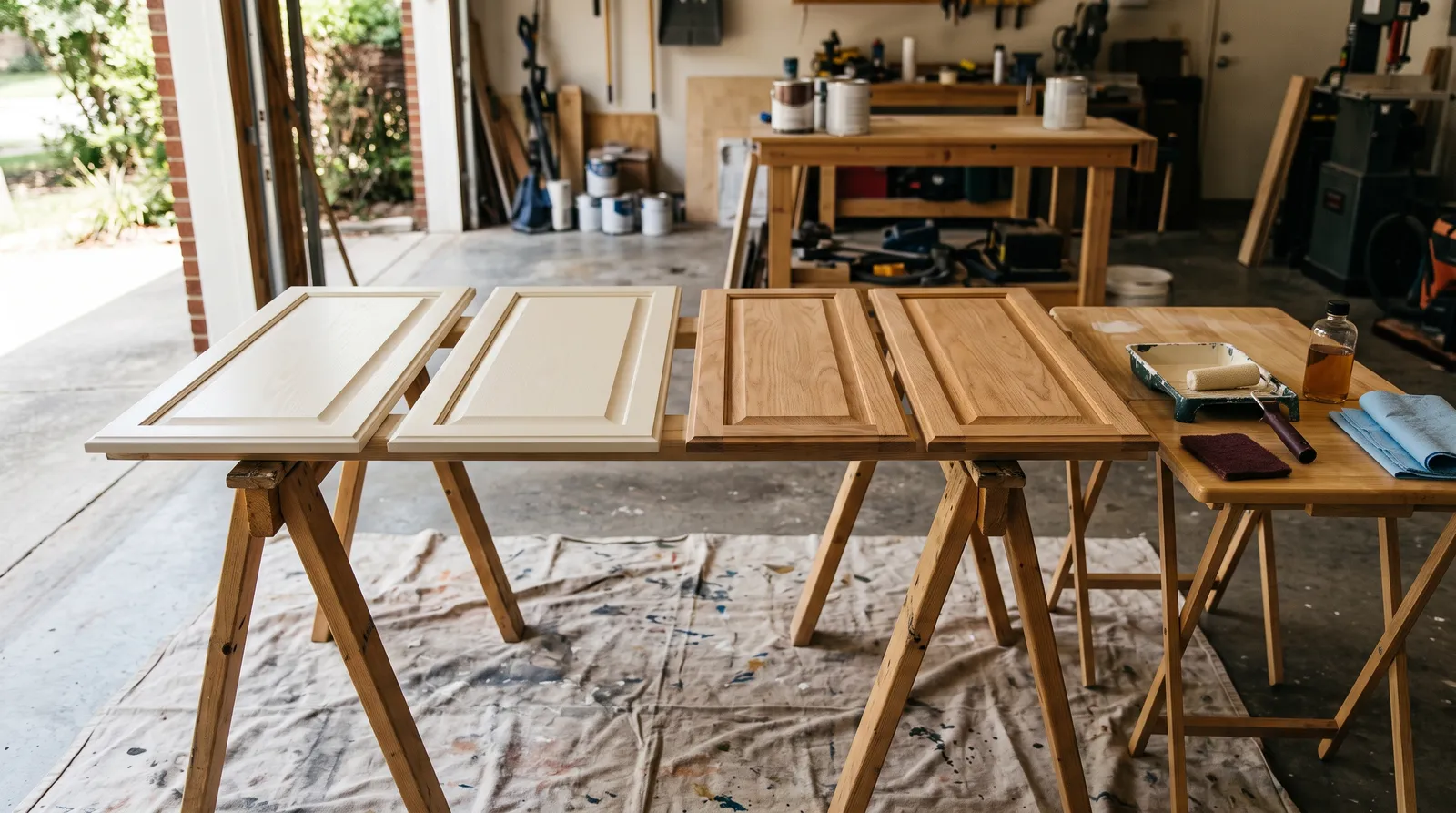
The 30-Second Answer
Cabinet Transformations for a kitchen you cook in. Nuvo for a rental, a vanity, or a weekend you’d like back. Rust-Oleum’s kit ships a separate protective top coat, and that clear layer is the whole reason a painted door survives four years of fingernails and dish soap. Nuvo skips it. What you get instead is two coats of a self-sealing acrylic, a fixed color, and a finished kitchen a day and a half sooner. The trade-off shows up at the pulls in year two.
At a Glance
| Rust-Oleum Cabinet Transformations | Nuvo Cabinet Paint | |
|---|---|---|
| What’s in the box | Deglosser + pad, bond coat, optional glaze, clear top coat | Paint, roller, tray, brush, tack cloth |
| Steps | Degloss, 2 bond coats, (glaze), top coat | 2 coats |
| Sanding required | No (chemical deglosser) | No |
| Topcoat included | Yes | No |
| Colors | Store-tinted, dozens on the deck | About a dozen fixed shades |
| Kit coverage | ~100 sq ft (small), ~200 sq ft (large) | ~100 sq ft |
| Kit price | $130–170 small, $220–270 large | $110–140 |
| Working time | 3 days | 1.5 days |
| Light use | ~24 hrs after top coat | 24 hrs |
| Full cure | ~7 days | ~30 days |
| Wear at year two | Slight dulling on leading edges | Visible polish at pulls and rails |
What You Actually Get in Each Box
Cabinet Transformations is four products in one carton. A bottle of deglosser with a scuff pad, a tinted bond coat, a decorative glaze you can skip, and a water-based protective top coat. Rollers, a stir stick, and an instruction booklet that runs longer than you’d expect from a paint kit.
Nuvo is one product plus tools. Two quarts of acrylic cabinet paint with the primer built into it, a roller frame and covers, a tray, an angled brush, a tack cloth. No deglosser, no glaze, no clear coat. The paint is the entire system.
That difference is the whole comparison.
Prep and Step Count
Neither kit asks you to sand, which is why both of them sell.
Cabinet Transformations handles it chemically. You wipe every door and face frame with the deglosser and the scuff pad until the sheen dies and the surface squeaks. On thirty-year-old kitchen doors carrying a decade of cooking film, this takes longer than the booklet suggests. Budget three hours for a standard kitchen, and hit the doors with a real degreaser first, or the deglosser is just spreading oil around. Done right, it’s the most dependable no-sand prep on the consumer shelf.
Nuvo asks for clean, dry, and dull, then a pass with the tack cloth. On factory oak with a worn sealer, it grabs fine. On glossy thermofoil or a slick conversion varnish it doesn’t, and no amount of tack cloth changes that. Whether a chemical deglosser beats an actual sanding block is its own fight, and the deglosser vs sanding breakdown settles it by substrate.
Winner: Cabinet Transformations. It ships the prep step instead of assuming you did one.
Durability and the Topcoat
This dimension decides the article.
Cabinet Transformations’ clear top coat is a separate wear layer over the color. Cabinet doors don’t fail in the middle of the panel. They fail at the leading edge, on the rail under your thumb, and in the ring around the pull. A dedicated topcoat puts something sacrificial between your hand and the color, and two coats of it carry a working kitchen four to six years before the edges start to dull.
Nuvo’s acrylic is formulated to cure hard enough to go without one. It does cure hard. It’s still a single film doing two jobs, and it’s thinner than a color coat plus a clear. In a house with kids, the polish shows up at the pulls somewhere in year two, then softens the bottom rails. Nuvo’s own instructions call for 30 days of cure before you scrub anything, which is honest advice that almost nobody follows.
On any door below counter height, I’d put a quart of water-based poly over Nuvo. Twenty-five dollars, and it changes the wear timeline.
Winner: Cabinet Transformations.
Color Range
Nuvo picked the colors for you. Around a dozen shades: Titanium Infusion at the white end, Cocoa Couture and Coconut Espresso in the browns, Driftwood and Oxford Blue covering the cool side. They’re well chosen and they photograph well. They’re also all you get. No custom tint, no matching the island, no going a hair deeper.
Cabinet Transformations tints at the store counter off Rust-Oleum’s kit deck, which puts dozens of options in play, including sage greens and warm off-whites that Nuvo doesn’t make. If you already pulled a cabinet color off a fan deck, this is the kit that can hit it.
Winner: Cabinet Transformations on choice. Nuvo wins on decision fatigue. If you want a white kitchen and you don’t want to spend three evenings on chips, Titanium Infusion is a good white and you’re out of the store in ten minutes.
Time to a Working Kitchen
Nuvo, comfortably.
Nuvo’s schedule fits a weekend with room to spare. Coat one Saturday morning, coat two after a couple of hours of dry time, doors back on hinges Sunday, light use Monday. The 30-day cure runs in the background while you use the kitchen normally.
Cabinet Transformations is a three-day job and the instructions admit it. Half a day of deglossing, bond coat one, a wait, bond coat two, then a full overnight before the top coat goes on. The top coat needs its own cure before hinges come back. In a cold or humid garage, call it four days. Shortening any step in that sequence is how the finish ends up soft.
Winner: Nuvo. It’s a day and a half faster to a kitchen you can actually cook in.
Cost per Kitchen
Coverage is the number that matters, not the sticker.
A standard ten-by-ten kitchen runs roughly 30 doors and drawer fronts plus face frames, which lands near the top of what one small kit covers. Cabinet Transformations small kits run $130–170 for about 100 square feet; the large kit is $220–270 for roughly double. Nuvo’s kit is $110–140 for about 100 square feet, with single quarts around $55.
On a vanity or a small kitchen, Nuvo saves $30 to $40 outright. Scale up and the math tightens: two Nuvo kits against one large Cabinet Transformations kit is close to a wash, and only one of those includes a topcoat. Add the quart of poly Nuvo needs on the lowers and the gap closes.
Winner: Nuvo on small jobs. Tie on a full kitchen once Nuvo buys its own clear coat.
Dried Finish and Brush Marks
Both level better than wall paint and worse than sprayed lacquer. That’s the ceiling on any roll-on cabinet kit, and no marketing copy moves it.
Nuvo lays down a soft satin with faint orange peel off the foam roller. The paint is thick and slow-setting, so it hides brush marks well. On flat slab doors it reads close to factory. On deeply profiled raised panels, the brushed corners telegraph against the rolled field.
Cabinet Transformations’ bond coat is thinner and will show lap marks if you overwork it. The top coat is what saves the job: it evens the sheen across the whole door and pulls the color together. The glaze step is where people get in trouble. It’s a wiped-on antiquing layer that looks sharp on a shaker profile and muddy on a slab, and it’s easy to overdo. Skip it unless you want the aged look and you’ve practiced on a spare drawer front.
If a true factory finish is the goal, neither roller gets you there. Spray it. The furniture paint sprayer round-up covers the HVLP units that atomize cabinet paint fine enough to leave no texture at all.
Winner: Nuvo straight off the roller. Cabinet Transformations once the top coat is on.
The Verdict by Use Case
- Pick Cabinet Transformations if: it’s your primary kitchen, the lower doors take daily knees and wet hands, you’ve already chosen a specific color, or you want the finish to still look intentional in year five. Give it the full three days.
- Pick Nuvo if: it’s a rental, a flip, a bathroom vanity, a laundry room, or a mudroom bench. Also pick it if you want white cabinets, you want them by Sunday night, and you don’t want to run a four-product sequence to get there.
- It’s basically a tie when: you’re doing uppers only in a low-traffic kitchen. Nobody drags a hip across an upper cabinet. Both finishes will look the same in three years, so buy on color availability and go.
Top Picks by Side
Going with Cabinet Transformations? The Rust-Oleum brand hub maps the rest of the line, including the Cabinet Transformations color deck and the Milk Paint and Chalked lines that cover furniture instead of kitchens. For how the kit ranks against Beyond Paint, Retique It, and the rest of the field, the cabinet refinishing kit round-up scores them on prep, cure, and wear.
Going with Nuvo? Same round-up, and it’s the place to compare Nuvo’s color set against the tintable kits before you commit to a fixed shade. Nuvo also makes a countertop line, and if you’re refinishing counters in the same weekend, the Daich vs Giani vs Nuvo comparison covers that side of the house. If a chalk-style furniture finish is closer to what you’re picturing, what chalk paint actually is explains why it’s the wrong chemistry for a kitchen door.
FAQ
Do I really not have to sand? Neither kit requires it, but they get there differently. Cabinet Transformations includes a deglosser and a scuff pad, and that step is mandatory. Nuvo assumes your surface is already clean and dull. On glossy thermofoil or conversion varnish, degloss before Nuvo anyway.
Does Nuvo need a topcoat? Not on uppers, vanities, or laundry cabinets. Yes on lower kitchen doors. A quart of water-based polyurethane at $25 to $35 buys real years at the pulls. Test it on a drawer front first, since some clears pull faint amber over bright whites.
Can I paint Cabinet Transformations over cured Nuvo? Yes, and it’s the easy direction. Clean the doors, scuff with the included deglosser and pad, lay the bond coat over. The reverse is harder: Nuvo has no bonding primer, so the Cabinet Transformations top coat has to be knocked down first.
Which one holds up better in a rental? Cabinet Transformations, if you’re keeping the unit long-term. Nuvo, if you’re turning it between tenants and expect to touch up. Nuvo touches up cleanly because there’s no clear coat to blend into.
Related
- Best cabinet refinishing kits: both kits ranked against the rest of the field
- Rust-Oleum brand hub: the full line, from Chalked to Cabinet Transformations
- Deglosser vs sanding: which prep actually holds on old cabinet doors
- Best furniture paint sprayers: the route to a no-texture cabinet finish
- Daich vs Giani vs Nuvo: the countertop kit comparison, same weekend
- What is chalk paint: why it belongs on furniture and not kitchen doors