Valve and Actuator Coatings: Corrosion Specifier's Guide (2026)
Valve coating systems compared for offshore, buried, and high-temp service. DFT, SSPC-SP grades, NACE TM0404 CUI testing, fusion-bonded epoxy, and the contractor path.

Disclosure: Affiliate links to retailers and manufacturer-direct programs. Recommendations are spec-driven, not commission-driven.
Use Case
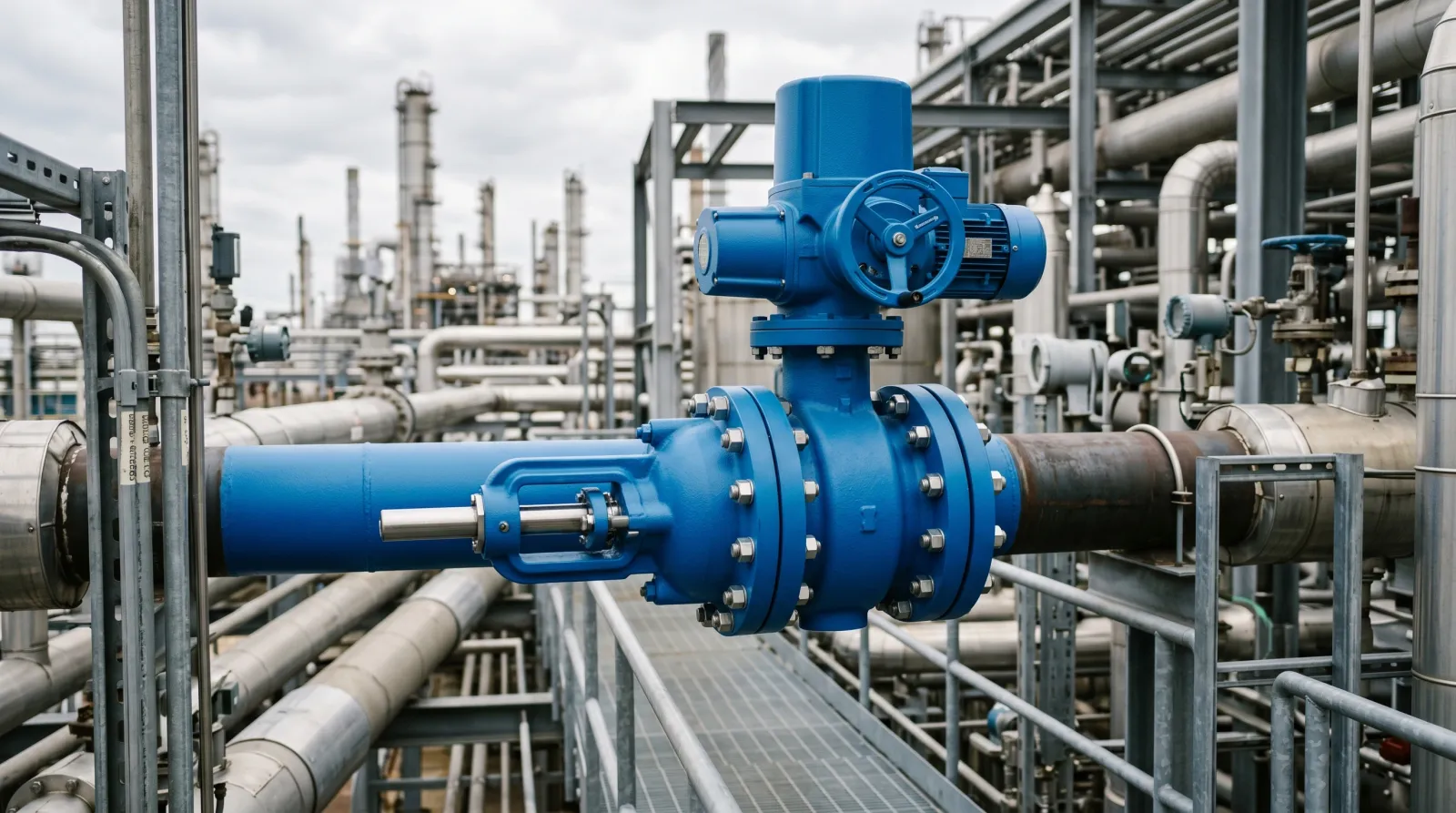
A valve is the hardest single asset on a process line to coat well. The pipe is a cylinder. A valve is a casting with flanges, a bonnet, stem threads, gland packing, actuator linkage, and a moving operator that has to keep moving for 20 years while the coating around it survives the same exposure as the line it sits on. The spec calls for one coating to hold corrosion off the body while leaving the operating mechanism free to turn. Most valve-coating failures trace to treating the valve like a length of pipe instead of like the geometry it actually is.
Valves and their actuators get coated across four exposure classes. Atmospheric process valves in refineries, chemical plants, and water-treatment facilities face ISO 12944 C4 to C5 corrosivity, salt, and washdown. Buried valves on transmission mains and gas distribution face soil corrosion and have to stay compatible with the line’s cathodic protection. Insulated hot valves on steam, hydrocarbon, and process-heat lines face corrosion under insulation between 250°F and 350°F, the most expensive failure band in the plant. Immersed and submerged valves on intakes, outfalls, and potable-water systems face full immersion and, in drinking water, the NSF/ANSI 61 requirement on every wetted surface.
Service-life expectations track the exposure and the system. A liquid-applied epoxy system on an atmospheric valve runs 10 to 20 years before recoat. Fusion-bonded epoxy on a buried valve runs 30 to 50 years matched to the pipeline design life. A CUI-qualified system on an insulated hot valve runs 15 to 25 years if the insulation jacket stays sealed. The actuator (gearbox housing, motor enclosure, hand-wheel) is usually a separate, lighter atmospheric system, because nobody wants 15 mils of epoxy seizing a worm-gear cover shut.
Spec Requirements
The spec block, before any product name. The categories hold across manufacturers; the numbers shift by exposure class and system.
| Spec | Value |
|---|---|
| Dry film thickness (DFT) — atmospheric liquid system | 8–16 mils total (primer + intermediate + topcoat) |
| DFT — CUI / high-temp system | 6–12 mils inert multipolymeric or silicone; per manufacturer TDS by temperature |
| DFT — buried fusion-bonded epoxy | 12–25 mils single-pass FBE |
| Coverage @ spec’d DFT | 100–180 sq ft/gal for high-solids epoxy at 8 mils; valve geometry adds 25–40% overspray loss |
| VOC | <340 g/L solvent-borne high-build epoxy (SCAQMD Rule 1113); <100 g/L waterborne primer |
| Standards | ASTM B117 salt spray, ASTM D4541 adhesion, ASTM G8 cathodic disbondment, NACE TM0404 / ASTM G189 CUI cycling, ISO 12944 C5/CX |
| Potable-water wetted surfaces | NSF/ANSI 61 listed; AWWA C550 epoxy interior lining |
| Substrate prep — atmospheric | SSPC-SP6 commercial blast, 1.5–3 mil profile |
| Substrate prep — immersion / buried / CUI | SSPC-SP10 near-white blast, 2–4 mil angular profile |
| Substrate prep — stainless / non-ferrous body | SSPC-SP16 with angular media; sweep blast to break foundry skin |
| Service temp | -20°F to 250°F ambient epoxy; to 400°F multipolymeric matrix; to 1200°F inert-pigment silicone |
| Cure to service (immersion) | 7 days at 70°F before immersion; high-temp silicones cure-on-heat per TDS |
| Holiday inspection | Required on immersion and buried film; wet-sponge detector ≤90 mils, high-voltage spark above |
| Ambient at application | 50°F to 110°F; relative humidity <85%; substrate ≥5°F above dew point |
Three numbers govern whether the valve coating lasts: the SSPC-SP prep grade relative to the exposure, the DFT held over the casting’s edges and corners, and the dew-point margin during application. Edges and corners are where valve coatings thin out and fail first; the spec calls for a stripe coat on every flange edge, bolt head, and weld bead before the full intermediate goes on. Skip the stripe coat and the corrosion starts at the sharpest edge on the body.
System Chemistry Compared
Four chemistry classes cover almost every valve and actuator spec. The choice is driven by service temperature and exposure, not by price first.
| Chemistry | Pot life @ 77°F | Recoat window | Service temp | UV stability | $/sq ft band | Best for |
|---|---|---|---|---|---|---|
| High-solids epoxy (amine/polyamide) | 2–4 hr | 4–24 hr | -20°F to 250°F | 🔴 Chalks; needs PU topcoat | $3–7 | Atmospheric bodies, immersion, potable water with NSF lining |
| Aliphatic polyurethane topcoat | 2–6 hr | 6–24 hr | -40°F to 250°F | 🟢 Excellent gloss/color hold | +$2–4 over epoxy | Color-coded valves, UV-exposed, gloss-critical |
| Inert multipolymeric matrix | 1–2 hr | 1–4 hr | to 400°F continuous | 🟡 Good | $5–9 | CUI service, insulated hot valves, cyclic wet-dry |
| Inert-pigment silicone (high-temp) | n/a single-component | per TDS | to 1200°F | 🟢 Excellent | $4–8 | Steam, exhaust, hot process valves, manifolds |
| Fusion-bonded epoxy (powder) | n/a thermoset | single pass | -40°F to 200°F | 🟡 Buried only | $6–12 applied | Buried valves, pipeline-matched CP-compatible lining |
High-solids epoxy is the workhorse for atmospheric and immersed bodies; it chalks under UV, so a polyurethane topcoat goes over it anywhere sunlight or color-coding matters. Above 250°F the epoxy is out and the choice is multipolymeric matrix or silicone, picked by the exact service temperature and whether the valve is insulated. Fusion-bonded epoxy is the buried-valve answer because it matches the pipeline coating and survives soil stress that liquid coatings do not.
Recommended Systems
Three full multi-coat stacks at different exposure points. System A covers atmospheric and immersion bodies, System B is the high-temp and CUI answer, System C is the buried fusion-bonded route. Verify the current TDS and SDS against your contact temperature and certification need before bid.
System a — Carboline Atmospheric / Immersion Epoxy
| Layer | Product | DFT |
|---|---|---|
| Primer | Carbozinc 859 inorganic zinc OR Carboguard 893 SG epoxy | 3–5 mils |
| Stripe coat (edges, bolts, flanges) | Carboguard 890 (brush-applied) | additive |
| Intermediate | Carboguard 890 cycloaliphatic amine epoxy | 6–10 mils |
| Topcoat | Carbothane 134 HG aliphatic polyurethane | 2–3 mils |
| Total | 11–18 mils |
Service life 12–20 years atmospheric, 10–15 years immersion. Carboguard 890 is a long-track-record cycloaliphatic amine epoxy with strong cathodic-disbondment numbers, which is why it shows up on immersion and buried-transition valve specs. The inorganic zinc primer is the upgrade for C5 and CX corrosivity; the SG epoxy primer is the lower-cost option for C4. The polyurethane topcoat is the color-coding and gloss-retention layer. Carboline product line.
System B — Sherwin-Williams High-Temp / CUI
| Layer | Product | DFT |
|---|---|---|
| Primer (ambient body) | Zinc Clad II Plus inorganic zinc | 3–5 mils |
| Intermediate (ambient body) | Macropoxy 646 fast-cure high-solids epoxy | 5–10 mils |
| High-temp / CUI coat (hot zones) | Heat-Flex 1200 inert-pigment silicone (to 1200°F) | 1.5–3 mils per coat, 2 coats |
| Total (hot zone) | 3–6 mils silicone; 8–15 mils on transition body |
Service life 15–25 years on insulated hot valves with a sealed jacket. Heat-Flex 1200 is the inert-pigment silicone for the hottest service: steam manifolds, exhaust valves, process-heat operators. For the 250°F–400°F CUI band specifically, Sherwin-Williams Heat-Flex CUI or an inert multipolymeric matrix (the Carboline Thermaline 4900 in System A’s manufacturer) qualifies to NACE TM0404 cyclic testing. Macropoxy 646 is the high-solids epoxy for the cooler valve body and flanges that stay below 250°F. Sherwin-Williams Protective & Marine.
System C — 3M Scotchkote Fusion-Bonded Epoxy (buried)
| Layer | Product | DFT |
|---|---|---|
| Surface prep + preheat | SSPC-SP10 near-white blast, preheat to 450°F | 2–4 mil profile |
| Fusion-bonded epoxy | Scotchkote 6233 electrostatic powder, single pass | 12–25 mils |
| Field-joint / cut-back repair | Scotchkote 323i liquid epoxy patch stick | 20–30 mils |
| Total | 12–25 mils |
Service life 30–50 years buried, matched to the pipeline design life. Fusion-bonded epoxy is a shop-applied thermoset. The cast valve body is blasted, preheated, and the powder is electrostatically fused, so this system is specified to valve manufacturers and FBE coating shops, not applied in the field. Field cuts and exposed flanges get the liquid 323i patch and a holiday check. FBE is the spec when the buried valve has to share the line’s cathodic-protection current without disbonding. 3M corrosion protection products.
A note on actuators: the gearbox and motor enclosure get System A’s epoxy/polyurethane stack at the lower DFT end (8–10 mils), never the high-build or FBE systems. Heavy film on a worm-gear cover or a yoke bolt is how you seize the operator. Mask the stem, the hand-wheel hub, and the gland follower; coat the housing, not the mechanism.
Systems Compared
| System | Total DFT | $/sq ft installed | Service life | Best for |
|---|---|---|---|---|
| A — Carboline epoxy / PU | 11–18 mils | $6–12 | 12–20 yr atmospheric; 10–15 yr immersion | Process valve bodies, immersion, NSF lining with C550 |
| B — S-W high-temp / CUI | 3–15 mils | $8–16 | 15–25 yr with sealed jacket | Insulated hot valves, steam, CUI band, exhaust |
| C — 3M Scotchkote FBE | 12–25 mils | $7–14 (shop) | 30–50 yr buried | Buried transmission/distribution valves, CP-matched |
Pricing assumes a multi-valve scope through a certified applicator with abrasive blast and stripe coat included; single-valve field retrofits run 40–90% higher per square foot because the mobilization and containment cost the same for one valve as for fifty. Over a 30-year horizon the FBE buried system and the CUI system both beat a recoat-every-10-years atmospheric approach on total cost of ownership, because the expensive line item on a buried or insulated valve is not the coating, it is the excavation or the scaffold-and-jacket removal to reach it again.
Application and Contractor Path
Spec-driven valve coating is not a maintenance-crew task. The two capabilities that decide whether the film lasts — an abrasive blast to the spec’d SSPC-SP grade and a holiday inspection on immersion or buried film — are exactly what an in-house crew almost never has. Small atmospheric touch-up on a non-critical valve, SSPC-SP3 power-tool cleaning and a brush-grade epoxy, is a reasonable in-house job if the prep and DFT are documented. Everything else routes to a contractor.
Specify a contractor holding one of the following:
- SSPC-QP1 certification for field industrial coatings, or SSPC-QP3 for shop-applied work.
- NACE/AMPP CIP Level 2 inspector on staff or sub-contracted for DFT and holiday inspection.
- Manufacturer applicator certification on the specific product line (Carboline Authorized Applicator, Sherwin-Williams certified, 3M Scotchkote applicator for FBE).
Three questions before signing the bid:
- What SSPC-SP grade will you blast to, and how is the profile verified? The answer should name a replica-tape or comparator method and a 2–4 mil target for immersion or buried work. A contractor who plans to power-tool a buried valve is bidding a failure.
- Who performs the holiday inspection on immersion and buried film, and with what detector? Wet-sponge below 90 mils, high-voltage spark above. No holiday report means no proof the film is pinhole-free, and a single pinhole on an immersed or buried valve is a corrosion cell.
- How is the stem, gland, and actuator masked? The crew should describe masking the operating mechanism and treating threads with anti-seize, not epoxy. If they plan to coat the whole assembly, the valve will not cycle.
The manufacturer-rep network on all three systems includes a free pre-job review of the valve schedule: exposure class per valve, system selection, and DFT target by geometry. Use it. A rep who flags that a 300°F insulated valve was spec’d with an ambient epoxy saves a CUI failure that costs more than the entire coating scope.
Failure Modes
Five failures cover most valve and actuator coating rejections and warranty claims.
- Edge and corner thin-out. Cause: high-build epoxy pulls away from sharp flange edges, bolt heads, and weld beads during cure, leaving the DFT below spec exactly where corrosion starts. Prevention: a brush-applied stripe coat on every edge, bolt, and bead before the full intermediate; DFT readings taken on edges, not just flats.
- Corrosion under insulation (CUI). Cause: the valve body was left bare or under-coated under an insulation jacket, on the assumption the insulation is the moisture barrier. Insulation traps water against steel in the 250°F–350°F band. Prevention: coat the full body and flanges with a NACE TM0404-qualified system before insulating; seal the jacket; treat insulation as thermal control, never as corrosion protection.
- Seized operating mechanism. Cause: structural epoxy applied over the stem threads, gland follower, or actuator linkage, which then can’t move. Prevention: mask the mechanism; anti-seize on threads; the housing gets coated, the moving parts do not.
- Cathodic disbondment on buried valves. Cause: a liquid coating with poor ASTM G8 numbers, or a holiday in the film, lets the line’s cathodic-protection current undercut and lift the coating from the steel. Prevention: fusion-bonded epoxy or a CP-compatible system with documented G8 performance; 100% holiday inspection before backfill.
- Adhesion loss from inadequate prep. Cause: hand-tool or power-tool prep where the spec called for an abrasive blast, leaving mill scale, foundry skin, or a flat profile the coating can’t key into. Prevention: SSPC-SP6 minimum for atmospheric, SSPC-SP10 for immersion and buried, with a verified 2–4 mil angular profile. Adhesion is set at the prep stage and no premium coating recovers a bad one.
Edge thin-out and prep shortcuts are the two failures I reject most on valve work, and both are decided before the topcoat ever goes on. CUI is the most expensive failure because you can’t see it until you pull the jacket, and by then the valve body is pitted.
Where to Buy / Spec
| Channel | Best for | Path |
|---|---|---|
| Carboline rep network | Spec’d immersion, buried-transition, and CUI valve work | Carboline products |
| Sherwin-Williams Protective & Marine | High-temp, CUI, and atmospheric process valves; local pickup | S-W Protective & Marine |
| 3M Scotchkote applicator / valve OEM | Buried fusion-bonded epoxy on transmission and distribution valves | 3M corrosion protection |
| Amazon Business | Touch-up kits, brush-grade epoxy, anti-seize, masking, small-scope stocking | Amazon Business account with net terms |
| Industrial distributor (Rawlins Paints US, ICA, KTA-Tator) | Multi-manufacturer projects and mixed-system bids | Distributor account, project pricing |
Manufacturer-direct is the recommended channel on any spec’d scope above a handful of valves. The rep services (exposure-class review, system selection, and holiday-inspection guidance) are worth more than any retail discount on the can. Amazon Business covers the touch-up consumables a maintenance crew stocks: brush-grade epoxy for non-critical bodies, anti-seize for stems, and masking for the operating mechanism.
FAQ
The Q&A above is mirrored in the page frontmatter and rendered by the layout.