High-Temp 1200F Paint for Stacks and Process Equipment: Specifier's Guide (2026)
High temp 1200F paint specified for stacks, exhaust, and process steel. Silicone DFT, SSPC-SP prep, cure schedule, CUI failure modes, and the contractor path.

Disclosure: Affiliate links to retailers and manufacturer-direct programs. Recommendations are spec-driven, not commission-driven.
Use Case
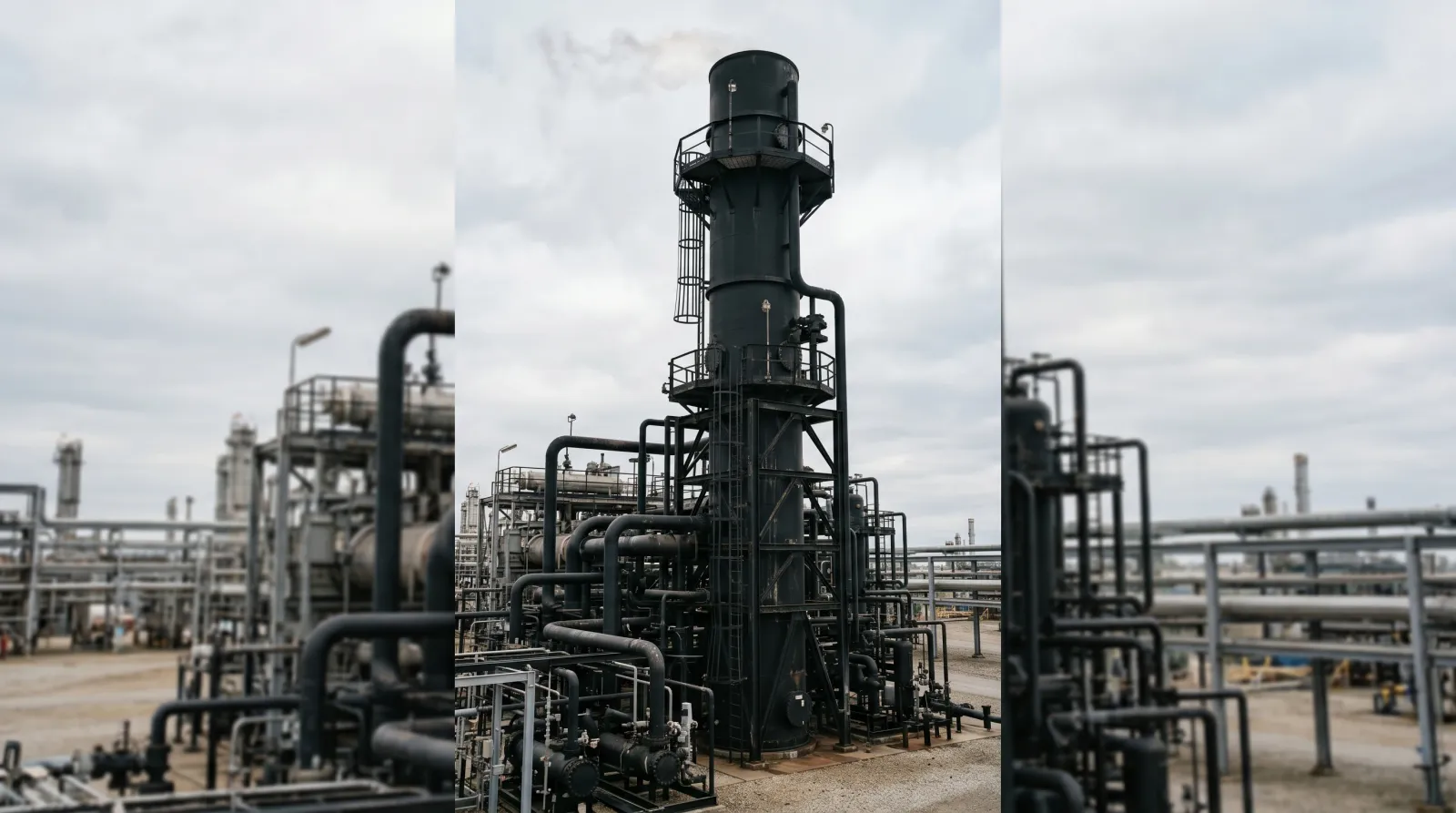
A 1200°F coating has one job that nothing else on the shelf can do: stay bonded and stay intact on steel that runs hotter than the flash point of most binders. The asset is an exhaust stack, a flue or breeching, an exhaust manifold, a kiln shell, a refinery heater, a boiler casing, a flare tip, or process piping that swings from ambient to red-hot and back on every cycle. Standard alkyd, epoxy, and urethane coatings char and burn off somewhere between 250°F and 400°F. Silicone-based high-temp coatings hold a continuous service temperature of 1200°F (650°C) and intermittent excursions higher, because the binder is a silicone resin that converts to a ceramic-like inorganic film as it cures.
The chemistry is the reason the whole system looks different from a normal industrial spec. Heat resistance comes from a silicone or modified-silicone resin, usually pigmented with aluminum, black iron oxide, or ceramic fillers that survive the temperature the organics cannot. The film is thin and rigid by design. It does not flex like an epoxy, it does not build like a tank lining, and it does not cure to full hardness until the metal underneath is heated.
Service life is where buyers get surprised. On a clean, well-prepped, continuously hot stack, a 1200°F silicone holds 7 to 15 years before it needs recoat. On cyclic service (a unit that fires, cools, sweats, and fires again) the same coating can fail in 2 to 4 years if the system was specified without an inorganic zinc primer to carry ambient corrosion resistance. The temperature rating is the easy part. The thermal cycle and the moisture exposure between cycles are what kill these coatings early, and they are what the spec has to address.
Spec Requirements
The spec block, before any product name. The categories hold across manufacturers even where the numbers move.
| Spec | Value |
|---|---|
| Continuous service temp | 1200°F (650°C) silicone; verify intermittent excursion rating on the TDS |
| Dry film thickness (DFT) | 1.0–1.5 mils per coat; 2.0–4.0 mils total over a 2-coat silicone system |
| Coverage @ spec’d DFT | 250–400 sq ft/gal at 1.5 mils; thin film, high apparent coverage |
| VOC | 340–520 g/L solvent-borne; confirm SDS against SCAQMD Rule 1113 and OTC caps |
| Standards | ASTM D2485 heat resistance; ASTM D2454 overbake; ASTM D4541 adhesion; ASTM D522 flexibility |
| Substrate prep — continuous hot service | SSPC-SP6 commercial blast minimum; 1.5–3.0 mil profile |
| Substrate prep — cyclic / CUI / coastal | SSPC-SP10 near-white metal; mandatory under inorganic zinc primers |
| Substrate prep — maintenance (no blast access) | SSPC-SP11 power-tool to bare metal; documented as a downgrade |
| Compatible primer (cyclic service) | Inorganic zinc silicate rated to matching temperature (Carbozinc 859, Dimetcote 9) |
| Ambient at application | 50°F to 100°F; relative humidity <85%; substrate ≥5°F above dew point |
| Recoat window between silicone passes | 30 min to 24 hr per TDS; do not exceed the maximum or the second coat lifts |
| Cure to service | Air-dry to handle; full cure on first heat ramp (typically 1°F/min to 400–500°F) |
Three numbers decide whether this coating lives or dies: the DFT (thin, never thick), the surface prep grade (silicone has no tolerance for marginal prep), and whether the system carries an inorganic zinc primer for the cool half of a cyclic duty. Get all three right and the temperature rating takes care of itself.
System Chemistry Compared
Four chemistry classes cover almost every high-heat spec. They are not interchangeable. The wrong class at the wrong temperature burns off, and the right class applied too thick spalls off.
| Chemistry | Max continuous service | Cure | UV / weather | $/sq ft installed | Best for |
|---|---|---|---|---|---|
| Single-component silicone | 1000–1200°F | Heat-cured (first cycle) | 🟡 Color fade; film holds | $2–5 | Stacks, exhaust, manifolds, continuous hot steel |
| Modified silicone-acrylic | 400–650°F | Air-cure | 🟢 Good gloss/color hold | $2–4 | Lower-temp engine, BBQ, mild exhaust; not 1200°F |
| Inorganic zinc + silicone topcoat | 750–1200°F (system) | IOZ ambient; topcoat heat-cured | 🟢 Excellent corrosion + heat | $6–12 | CUI, cyclic, coastal, insulated process steel |
| Inert multipolymeric matrix (IMM) | 400–1200°F single-coat | Ambient cure | 🟢 Excellent; CUI-rated | $8–16 | Insulated cyclic piping, wet-dry CUI, no primer needed |
Single-component silicone is the default for steel that stays hot and dry. The inorganic-zinc-plus-silicone system is the answer the moment moisture and thermal cycling enter the picture, because the zinc carries galvanic protection that bare silicone cannot. Inert multipolymeric matrix coatings (Carboline Thermaline 4900, the same chemistry family as Intertherm 50) are the premium answer for corrosion-under-insulation: they cure at ambient, tolerate immediate cycling, and run as a single high-build coat without a separate primer.
Recommended Systems
Three full systems at different price-performance points. System A is the workhorse continuous-hot spec. System B is the CUI / cyclic spec with galvanic protection. System C is the field-and-fleet maintenance spec. Verify the exact temperature rating and excursion limit on each manufacturer’s current TDS before bid.
System a — Sherwin-Williams Heat-Flex Hi-Temp 1200 (continuous Hot Steel)
| Layer | Product | DFT |
|---|---|---|
| Coat 1 | Heat-Flex Hi-Temp 1200 modified silicone (self-priming on blasted steel) | 1.0–1.5 mils |
| Coat 2 | Heat-Flex Hi-Temp 1200, second pass | 1.0–1.5 mils |
| Total | 2.0–3.0 mils |
Service life 7–15 years on clean, continuously hot stacks and exhaust steel. Heat-Flex Hi-Temp 1200 is the volume product on refinery heaters, boiler casings, and uninsulated stacks. It is self-priming on an SSPC-SP6 or SP10 surface and cures on the unit’s first heat ramp. Keep both passes thin; the most common rejection on this product is a crew building it to 4 mils and watching it check on the first fire. Sherwin-Williams Heat-Flex Hi-Temp 1200 product page.
System B — Carboline Thermaline 4900 over Carbozinc 859 (cyclic / CUI)
| Layer | Product | DFT |
|---|---|---|
| Primer | Carbozinc 859 inorganic zinc silicate | 2.0–3.0 mils |
| High-temp coat | Thermaline 4900 inert multipolymeric matrix | 4.0–6.0 mils |
| Total | 6.0–9.0 mils |
Service life 15–25 years on insulated cyclic piping and CUI-prone process steel. The Carbozinc 859 inorganic zinc carries galvanic corrosion protection through the cold, wet half of every cycle; Thermaline 4900 is an ambient-curing inert matrix that tolerates immediate thermal cycling and runs to 1200°F. This is the spec for refinery and petrochemical piping that sees wet-dry cycling under insulation, the single most expensive failure environment in the plant. Higher per-foot than a straight silicone, and worth it on any asset where a CUI repair means stripping insulation off live piping. Carboline Thermaline 4900 product page.
System C — Rust-Oleum High Heat 1200°F (maintenance and Fleet)
| Layer | Product | DFT |
|---|---|---|
| Coat 1 | Rust-Oleum High Heat silicone enamel | 1.0–1.5 mils |
| Coat 2 | Rust-Oleum High Heat silicone enamel | 1.0–1.5 mils |
| Total | 2.0–3.0 mils |
Service life 3–7 years on smaller maintenance scopes: manifolds, mufflers, smokers, grill bodies, smaller exhaust runs, and shop equipment. Rust-Oleum High Heat is the spray-can and quart product that crews keep on the truck for touch-up and small assets where mobilizing a blast crew makes no sense. It is not the spec for a 40-foot stack, and it depends on a clean SSPC-SP11 power-tool prep to hold. For the maintenance tier it is the right tool. The broader Rust-Oleum industrial line overview covers where the rest of their protective range fits.
A fourth product worth naming for federal and Navy work is the MIL-PRF-24712A high-temp aluminum silicone (sold through PPG and Sherwin-Williams marine channels); specify it where the contract calls out the military performance spec by number.
Systems Compared
| System | Total DFT | $/sq ft installed | Service life | Best for |
|---|---|---|---|---|
| A — S-W Heat-Flex Hi-Temp 1200 | 2.0–3.0 mils | $3–6 | 7–15 years | Continuous-hot stacks, heaters, boiler casings |
| B — Carboline Thermaline 4900 + Carbozinc 859 | 6.0–9.0 mils | $8–14 | 15–25 years | CUI, cyclic insulated piping, coastal process steel |
| C — Rust-Oleum High Heat 1200°F | 2.0–3.0 mils | $2–4 (DIY-applied higher per sq ft) | 3–7 years | Maintenance, fleet, manifolds, small assets |
Pricing assumes a 5,000+ sq ft surface scope through a manufacturer-rep certified contractor with blast prep included. Small maintenance scopes run 40–100% higher per square foot because the prep and mobilization do not scale down. The CUI system carries the highest install cost and the lowest lifecycle cost on insulated piping. The math only works when you price the avoided cost of a mid-life insulation strip and re-coat, which routinely runs five to ten times the original coating budget on live process lines.
Application and Contractor Path
High-temp silicone on a small, cool asset (a manifold, a smoker, a muffler, a shop heater) is within reach of a competent in-house maintenance crew using the Rust-Oleum tier, provided they hit a real SSPC-SP11 power-tool prep and keep the film thin. That is the honest small-scope answer.
Anything bigger is a specified, contractor-installed job. Stacks, heaters, insulated CUI piping, and any 1200°F asset over a few hundred square feet need a contractor with industrial high-heat experience, blast capability, and the discipline to apply silicone at 1.0 to 1.5 mils when every instinct from normal coating work says build it thicker. Specify a contractor with one of the following:
- SSPC-QP1 certification for field-applied industrial coatings, or QP2 where hazardous-substance removal is in scope.
- Documented high-temperature silicone experience on a comparable asset class in the last 24 months.
- AMPP/NACE CIP Level 1 or Level 2 inspector for DFT and prep verification, especially on CUI systems where the primer and the prep grade carry the warranty.
Three contractor-qualifying questions before signing:
- What wet and dry film thickness are you applying per coat, and how are you measuring it? The correct answer is thin, with a wet-film gauge in continuous use. A crew that talks about building mils is a crew that will spall the job on the first fire.
- How does the coating reach full cure, the unit’s startup ramp or a controlled bake, and what is the ramp rate? A crew that does not know the cure happens on the heat cycle has never run high-temp work.
- On a CUI or cyclic spec, what primer carries the cold-cycle corrosion protection, and is it rated to the same temperature as the topcoat? “No primer, the silicone handles it” is the wrong answer on cyclic service and a guaranteed early failure.
The manufacturer-rep network on all three systems (Sherwin-Williams P&M, Carboline, Rust-Oleum Industrial) will review the asset, the service temperature, the cycle profile, and the insulation condition before bid, and recommend the prep grade and system. On CUI work especially, use the rep. The difference between SP6 and SP10 prep under an inorganic zinc primer is the difference between a 5-year and a 20-year service life.
Failure Modes and How to Prevent Them
Five failures account for the bulk of premature high-temp coating rejections and warranty calls.
- Applied too thick, spalls on first heat. Cause: a crew applies silicone at 3 to 5 mils out of habit from normal coating work. The rigid film cannot flex with the steel’s thermal expansion, so it checks and sheets off on the first cycle. Prevention: wet-film gauge in continuous use; 1.0–1.5 mils per coat; reject any pass over 2 mils. Thin is the whole strategy.
- Corrosion under insulation (CUI) on cyclic service. Cause: a straight silicone with no zinc primer was specified on piping that cools, sweats, and sits wet under insulation between fires. Bare silicone has almost no ambient corrosion resistance, so the steel rusts under an intact-looking film. Prevention: inorganic zinc silicate primer or an IMM coating rated to temperature; SSPC-SP10 prep; the rusted-steel prep and priming guide covers the substrate side of why this matters.
- Marginal surface prep, early disbonding. Cause: silicone applied over mill scale, a tight rust bloom, oil, or an SSPC-SP3 hand-tool prep. Silicone has low surface tolerance and will not bond through contamination. Prevention: SSPC-SP6 minimum, SP10 for any moisture or cyclic exposure, SP11 power-tool only where blasting is impossible and documented as a downgrade.
- Solvent blistering on cure ramp. Cause: the first heat ramp was too fast and trapped solvent flashed through the film, leaving blisters and pinholes. The blister diagnosis and prevention guide walks the broader mechanism. Prevention: controlled ramp around 1°F per minute to 400–500°F; let solvent escape before the film fully fuses; do not fire a freshly coated unit to full temperature in one step.
- Color fade and chalk mistaken for failure. Cause: silicone pigments fade and chalk at high temperature; an aluminum-pigmented stack greys out, a black one dulls. This is cosmetic, not a coating failure, and a panicked recoat over a sound film just adds thickness that then spalls. Prevention: judge the film by adhesion and corrosion, not color; recoat on adhesion loss, not appearance.
Over-application and CUI are the two that cost real money. Over-application is a training and gauge-discipline problem on the crew. CUI is a specification problem that has to be caught before bid, because once insulation is back on the line, the next look is years and a shutdown away.
Where to Buy / Spec
| Channel | Best for | Path |
|---|---|---|
| Sherwin-Williams P&M rep | Spec’d stacks, heaters, continuous-hot steel; Heat-Flex 1200 | Heat-Flex Hi-Temp 1200 page |
| Carboline rep network | CUI, cyclic insulated piping; Thermaline 4900 over Carbozinc 859 | Carboline Thermaline 4900 page |
| Rust-Oleum Industrial / Amazon Business | Maintenance scopes, fleet, manifolds, small assets | Rust-Oleum High Heat page |
| Industrial distributor (Rawlins Paints US, KTA-Tator, local protective-coatings house) | Mixed-system projects, contractor accounts, bulk | Distributor account with project-specific pricing |
Manufacturer-direct is the recommended channel on any stack, heater, or CUI scope above a few hundred square feet. The rep review of service temperature, cycle profile, and insulation condition determines the prep grade and the primer decision, and those two calls set the service life. Amazon Business and pro-retail are the right channel for the Rust-Oleum maintenance tier and for stocking touch-up product on the truck.
FAQ
The questions a facility buyer actually asks live in the frontmatter faq block above: whether the system needs a primer, why the DFT is so thin, how the coating cures, what surface prep the spec calls for, and whether the product is VOC-compliant in California. Each answer is spec-driven and keyed to the systems above.