Exhaust and Muffler Paint: High-Temp Specifier's Guide (2026)
Exhaust paint specified for manifolds, headers, mufflers, and downpipes. Silicone DFT, SSPC-SP prep, the cure bake, VOC by state, failure modes, and the shop path.

Disclosure: Affiliate links to retailers and manufacturer-direct programs. Recommendations are spec-driven, not commission-driven.
Use Case
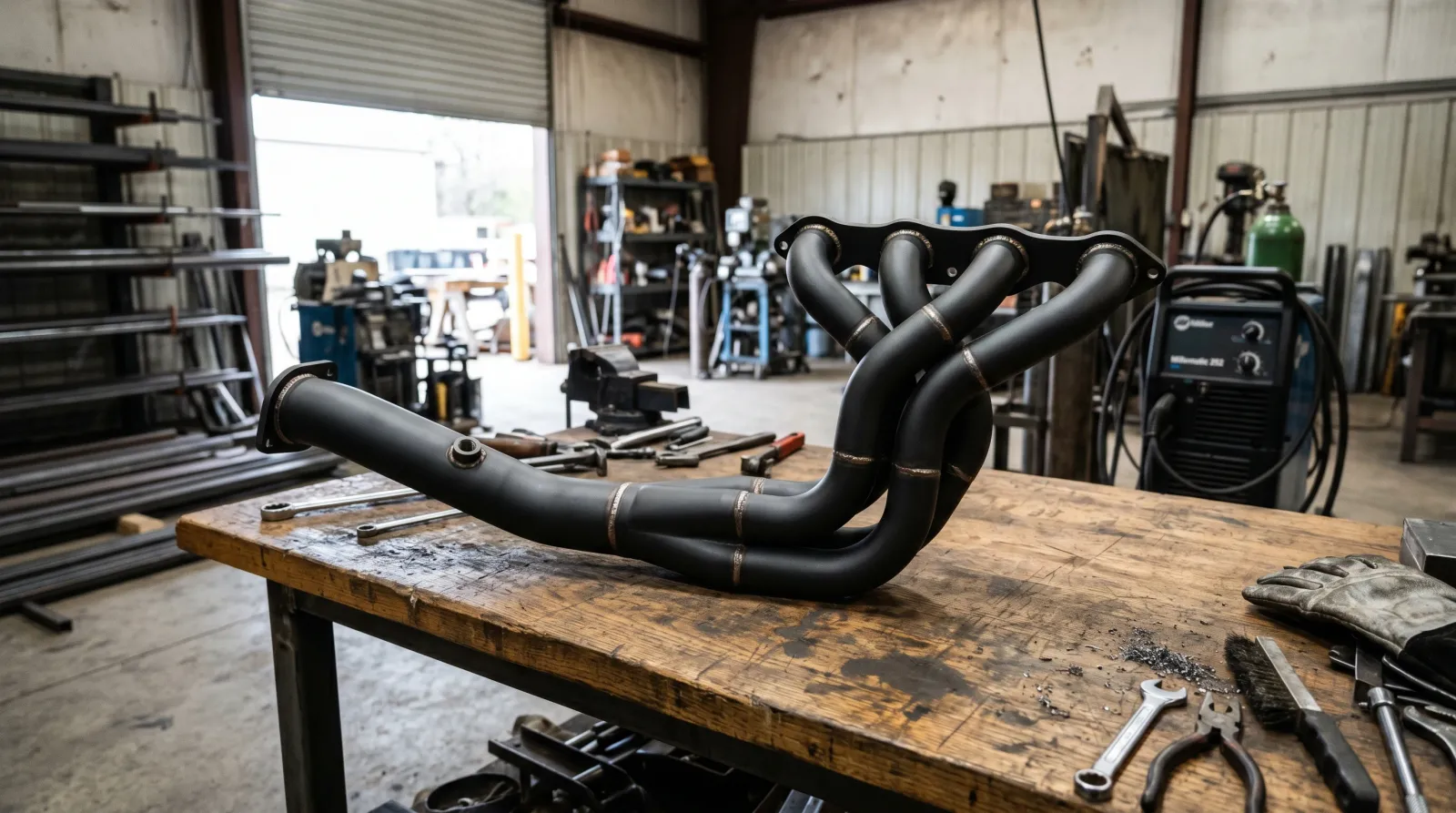
Exhaust paint has a job most buyers underspecify: stay bonded to steel that runs from cold and wet at a stoplight to red-hot on a sustained pull, every drive, for the life of the part. The asset is an exhaust manifold, a tubular header, a downpipe, a turbo housing, a muffler, a resonator, a tailpipe, or the full exhaust run on a fleet truck, a generator set, a marine engine, or shop equipment. Standard alkyd, epoxy, and engine enamels char and burn off somewhere between 250°F and 400°F. The exhaust gas path does not care. A cast-iron manifold or a header collector on a hard-working engine sees 900°F to 1200°F at the hottest point, and the coating has to hold there without flaking into the engine bay.
The temperature is not uniform across the part, and that is the first thing the spec has to address. The manifold and the header primaries near the head run hottest. The muffler, the resonator, and the tailpipe downstream of the catalytic converter run far cooler, often under 500°F. A single can rated to 1200°F covers the whole run, but a 500°F-rated enamel will burn off the manifold while holding fine on the tailpipe. Spec to the hottest point on the part, not the average.
Heat resistance comes from a silicone or silicone-ceramic resin pigmented with aluminum, black iron oxide, or ceramic fillers that survive the temperature the organic binders cannot. The film is thin and rigid by design. It does not flex like an engine enamel, it does not build, and it does not cure to full hardness until the part is heated.
Service life on exhaust is shorter and harder to predict than on a static industrial stack, because the part cycles hard and lives in a corrosive, vibrating, road-salt environment. A well-prepped header in a dry climate holds 3 to 6 years before color fade and a recoat. The same coating on a fleet truck running winter brine, or a marine wet exhaust that sits cold and damp between starts, can show rust-through in 1 to 2 years if it was specified without a primer to carry the cold-cycle corrosion. The heat rating is the easy half. The thermal cycle and the moisture between cycles are what end these coatings early.
Spec Requirements
The spec block, before any product name. The categories hold across manufacturers even where the numbers move.
| Spec | Value |
|---|---|
| Continuous service temp | Spec to hottest point: 1200°F (650°C) silicone for manifolds and header collectors; 500–800°F enamel acceptable downstream of the cat |
| Dry film thickness (DFT) | 0.8–1.5 mils per coat; 1.5–3.0 mils total over a 2-coat system |
| Coverage @ spec’d DFT | 250–400 sq ft/gal at 1.5 mils; aerosols cover far less per can by design |
| VOC | 340–520 g/L solvent-borne; confirm the SDS against SCAQMD Rule 1113 and OTC caps |
| Standards | ASTM D2485 heat resistance; ASTM D2454 overbake; ASTM D4541 / D3359 adhesion; ASTM B117 salt spray |
| Substrate prep — bare fabricated steel | SSPC-SP6 commercial blast or 80-grit abrasion to bright metal; 1.0–2.0 mil profile, then solvent degrease |
| Substrate prep — used / corroded part | Strip old coating and oxidation to bare steel; SSPC-SP11 power-tool minimum; degrease |
| Substrate prep — fleet / marine / coastal | SSPC-SP10 near-white metal; mandatory under an inorganic zinc primer |
| Compatible primer (wet-cold cyclic service) | Inorganic zinc silicate rated to matching temperature (Carbozinc 859, Dimetcote 9) |
| Ambient at application | 50°F to 100°F; relative humidity <85%; substrate ≥5°F above dew point; OSHA 1910.94 spray ventilation |
| Recoat window between passes | Wet-on-wet within a few minutes, or after full air-dry per TDS; do not recoat in the tacky middle window |
| Cure to service | Air-dry to handle; full cure on a controlled bake (typically 250°F / 400°F / 600°F steps) or the engine’s first heat cycle |
Three numbers decide whether an exhaust coating lives or dies: the DFT (thin, never thick), the surface prep and degrease (silicone has zero tolerance for oil or scale), and the bake (the film is not cured until it has been heated). Get those three right and the temperature rating takes care of itself.
System Chemistry Compared
Three chemistry classes cover almost every exhaust spec, plus the inorganic-zinc system for the wet-cold fleet and marine case. They are not interchangeable. The wrong class on the manifold burns off, and the right class applied too thick spalls off.
| Chemistry | Max continuous service | Cure | Color / UV hold | $/sq ft band | Best for |
|---|---|---|---|---|---|
| Silicone-ceramic enamel (1200°F) | 1200°F | Heat-cured bake | 🟡 Fades and chalks at the hot end | $2–5 | Manifolds, headers, downpipes, turbo housings |
| Modified silicone-acrylic (500–800°F) | 500–800°F | Air-cure to light bake | 🟢 Better gloss and color hold | $2–4 | Mufflers, resonators, tailpipes, tips downstream of the cat |
| Inorganic zinc + silicone topcoat | 750–1200°F (system) | IOZ ambient; topcoat heat-cured | 🟢 Excellent corrosion + heat | $6–12 | Fleet, marine wet exhaust, road-salt and coastal exposure |
| Engine / appliance enamel (mislabeled) | 250–400°F | Air-cure | 🟢 Good | $1–3 | Valve covers and brackets only; not the gas path |
Silicone-ceramic enamel is the default for the hot end of any exhaust. A 500–800°F modified silicone holds better color and gloss downstream of the catalytic converter, where the gas has cooled. The inorganic-zinc-plus-silicone system is the answer the moment the part sits wet and cold between runs, because the zinc carries galvanic protection that bare silicone cannot. Engine enamel belongs nowhere in the gas path; it is on this table only because buyers reach for it by mistake and watch it burn off the manifold on the first drive.
Recommended Systems
Three full systems at different price-performance points. System A is the spec’d shop and fleet workhorse. System B is the maintenance and small-batch product crews keep on the bench. System C is the automotive-aftermarket ceramic that the header and downpipe market runs on. Verify the exact temperature rating and the bake schedule on each manufacturer’s current TDS before bid. For a fleet or marine part that sits wet between runs, add the inorganic zinc primer described under failure modes.
System a — Sherwin-Williams Heat-Flex Hi-Temp 1200 (spec’d Shop and Fleet)
| Layer | Product | DFT |
|---|---|---|
| Coat 1 | Heat-Flex Hi-Temp 1200 modified silicone (self-priming on blasted steel) | 1.0–1.5 mils |
| Coat 2 | Heat-Flex Hi-Temp 1200, second pass | 1.0–1.5 mils |
| Total | 2.0–3.0 mils |
Service life 4–8 years on clean, well-prepped exhaust steel in a dry climate. Heat-Flex Hi-Temp 1200 is the protective-coatings-grade silicone that fleet shops and industrial maintenance specify when they want a documented TDS, a VOC-compliance statement, and consistent batch quality across a recoat program. It is self-priming on an SSPC-SP6 or SP10 surface and cures on the part’s first heat ramp or a controlled bake. Keep both passes thin; the most common rejection on this product is a crew building it to 4 mils and watching it check on the first hard pull. Sherwin-Williams Heat-Flex Hi-Temp 1200 product page.
System B — Rust-Oleum High Heat (maintenance and Small-Batch)
| Layer | Product | DFT |
|---|---|---|
| Coat 1 | Rust-Oleum High Heat silicone enamel (aerosol or quart) | 0.8–1.5 mils |
| Coat 2 | Rust-Oleum High Heat silicone enamel, second pass | 0.8–1.5 mils |
| Total | 1.5–3.0 mils |
Service life 2–5 years on mufflers, tailpipes, smaller exhaust runs, smokers, grills, and shop equipment. Rust-Oleum High Heat is the aerosol and quart product crews keep on the bench for touch-up and small parts where mobilizing a blast crew makes no sense. It depends on a clean SSPC-SP11 power-tool prep and a thorough degrease to hold, and the can prints a three-step bake that needs to be followed. It is not the spec for a CUI-prone marine wet exhaust, but for the maintenance tier on dry-running parts it is the right tool. The broader Rust-Oleum industrial line overview covers where the rest of their protective range fits.
System C — VHT Flameproof / Exhaust Coating (automotive Aftermarket Ceramic)
| Layer | Product | DFT |
|---|---|---|
| Coat 1 | VHT Flameproof silicone-ceramic (no primer; bare blasted steel) | 0.8–1.2 mils |
| Coat 2 | VHT Flameproof, second light pass | 0.8–1.2 mils |
| Total | 1.5–2.4 mils |
Service life 3–6 years on headers, downpipes, and manifolds in performance and restoration work. VHT Flameproof is the silicone-ceramic the automotive aftermarket runs on for tubular headers and exhaust manifolds, rated to 1300°F continuous on the flat-black SKU. It is applied in light passes onto bare, abraded, degreased steel and cured on a strict multi-step bake before the part ever goes on a vehicle. The ceramic fillers buy a touch more cycle life and a more even matte finish than a straight silicone on a header collector. It depends entirely on the bake; a header bolted up without the cure schedule stays soft and burns off on the first dyno pull. VHT Flameproof product page.
A fourth route, for a part that has to survive heavy salt and road brine, is professional thermal spray or a commercial high-temp ceramic coating service rather than a brush or aerosol film. That is a send-out, not a shelf product, and it is the right call for a fleet that loses headers to corrosion before they ever wear out.
Systems Compared
| System | Total DFT | $/sq ft band | Service life | Best for |
|---|---|---|---|---|
| A — S-W Heat-Flex Hi-Temp 1200 | 2.0–3.0 mils | $3–6 | 4–8 years | Spec’d shop and fleet exhaust, recoat programs |
| B — Rust-Oleum High Heat | 1.5–3.0 mils | $2–4 (in-house higher per part) | 2–5 years | Maintenance, mufflers, small parts, bench touch-up |
| C — VHT Flameproof | 1.5–2.4 mils | $3–5 | 3–6 years | Headers, downpipes, manifolds, performance and restoration |
Pricing is hard to express per square foot on exhaust because the part is small and the prep and the bake do not scale down. Per-part economics dominate: a header costs $15 to $40 in product across two coats, and the labor and the bake are the real budget. The inorganic-zinc-primed fleet or marine spec carries the highest install cost and the lowest lifecycle cost on a salt-exposed part, because the avoided cost of a corroded manifold or a rusted-through downpipe at year two runs many times the original coating.
Application and Contractor Path
A muffler, a tailpipe, or a single header on a dry-running vehicle is within reach of a competent in-house shop or an experienced hobbyist mechanic using the Rust-Oleum or VHT tier, provided they hit a real bare-metal prep, degrease, keep the film thin, and run the full bake. That is the honest small-part answer, and it is most of the exhaust-paint market.
A fleet recoat program, a marine wet-exhaust spec, or any salt-exposed asset that has to survive a multi-year service interval is a specified job. It needs a shop or industrial coatings contractor with high-heat experience, blast capability, the spray ventilation to apply solvent silicone under OSHA 1910.94, and the discipline to apply silicone at 0.8 to 1.5 mils when every instinct from normal coating work says build it thicker. For the inorganic-zinc-primed fleet and marine spec specifically, specify a contractor with one of the following:
- SSPC-QP1 certification for field-applied industrial coatings, or QP2 where hazardous-substance removal is in scope.
- Documented high-temperature silicone experience on a comparable asset class in the last 24 months.
- AMPP/NACE CIP Level 1 or Level 2 inspector for DFT and prep verification on the primed marine and fleet systems, where the prep grade and the primer carry the warranty.
Three qualifying questions before signing a fleet or marine recoat:
- What wet and dry film thickness are you applying per coat, and how are you measuring it? The correct answer is thin, with a wet-film gauge in use. A crew that talks about building mils will spall the job on the first heat cycle.
- How does the coating reach full cure, the engine’s startup ramp or a controlled oven bake, and what is the schedule? A crew that does not know the cure happens on heat has never run exhaust work.
- On a marine or fleet spec, what primer carries the cold-wet corrosion protection between runs, and is it rated to the same temperature as the topcoat? “No primer, the silicone handles it” is the wrong answer on wet-cyclic service and a guaranteed early rust-through.
The manufacturer-rep network on the protective-grade systems (Sherwin-Williams P&M, Carboline for the zinc primer, Rust-Oleum Industrial) will review the asset, the service temperature, the cycle profile, and the moisture exposure before bid, and recommend the prep grade and system. On a salt-exposed fleet, use the rep: the difference between an unprimed silicone and an inorganic-zinc-primed system is the difference between a 2-year and an 8-year service life.
Why Does Exhaust Paint Keep Peeling Off?
Five failures account for the bulk of premature exhaust-coating peel and rust calls.
- Skipped or sloppy degrease. Cause: the part went into the booth with cutting oil, fingerprints, or handling grease still on it. Silicone has almost no surface tolerance and will not bond through any film of oil. This is the number one home and shop failure, and it shows up as the coating sheeting off in a month. Prevention: degrease to bare clean metal with a solvent wipe after abrasion and before the first coat; handle the part with clean gloves after that.
- Applied too thick, spalls on first heat. Cause: a crew applies silicone at 3 to 5 mils out of habit from normal coating work, or lays heavy aerosol passes to “cover faster.” The rigid film cannot flex with the steel’s thermal expansion, so it checks and sheets off on the first cycle. Prevention: light passes, 0.8 to 1.5 mils per coat, wet-film gauge or a calibrated eye; reject any pass that goes glossy-wet and runs.
- Never baked, stays soft, burns off. Cause: the part was air-dried, called done, and bolted up without the controlled cure bake. The silicone never fused, so it smokes, softens, and burns off on the first hard pull. Prevention: run the printed bake schedule (commonly 250°F / 400°F / 600°F steps) in an oven, or replicate it with the engine’s first idle-and-load cycle before any sustained run. The blister diagnosis and prevention guide covers the related solvent-flash mechanism when the ramp is too fast.
- Corrosion between cycles on wet-cold service. Cause: a straight silicone with no zinc primer was specified on a marine wet exhaust or a road-salt fleet part that cools, sweats, and sits wet between runs. Bare silicone has almost no ambient corrosion resistance, so the steel rusts under an intact-looking film. Prevention: inorganic zinc silicate primer rated to temperature, SSPC-SP10 prep. Cast-iron manifolds are especially prone to this; the cast-iron prep and painting guide covers the porous-substrate side of why the degrease and the primer matter more on castings.
- Color fade and chalk mistaken for failure. Cause: silicone pigments fade and chalk at the hottest point on the part; a black header greys at the collector, an aluminum muffler dulls. This is cosmetic, not a coating failure, and a panicked recoat over a sound film just adds thickness that then spalls. Prevention: judge the film by adhesion and corrosion, not color; recoat on adhesion loss or rust, not appearance.
Degrease and over-application are the two that cost the most jobs, and both are crew-discipline problems rather than product problems. Corrosion between cycles is a specification problem that has to be caught before bid, because once a fleet part has rusted under the film the only fix is strip and recoat.
Where to Buy / Spec
| Channel | Best for | Path |
|---|---|---|
| Amazon Business / pro retail | Aerosol and quart maintenance product, bench stock, fleet touch-up | Rust-Oleum High Heat page |
| Sherwin-Williams P&M rep | Spec’d shop and fleet recoat programs; Heat-Flex Hi-Temp 1200 | Heat-Flex Hi-Temp 1200 page |
| Automotive aftermarket retail | Headers, downpipes, manifolds; VHT Flameproof ceramic | VHT Flameproof page |
| Industrial distributor (Rawlins Paints US, local protective-coatings house) | Inorganic zinc primer for marine and fleet specs, mixed-system bids | Distributor account with project-specific pricing |
Amazon Business and pro retail are the right channel for the aerosol and quart maintenance tier and for stocking touch-up product. Manufacturer-direct is the recommended channel on any fleet recoat program or marine wet-exhaust spec, because the rep review of service temperature, cycle profile, and moisture exposure determines the prep grade and the primer decision, and those two calls set the service life.
FAQ
The questions a buyer actually asks live in the frontmatter faq block above: whether the system needs a primer, why the coating has to be baked, what surface prep it needs, whether it holds color, and whether it is VOC-compliant in California. Each answer is spec-driven and keyed to the systems above.