Anti-Graffiti Coatings: Specifier's Guide (2026)
Anti-graffiti coating systems compared: sacrificial vs permanent, DFT, ASTM D6578 cleanability cycles, VOC limits, masonry and metal prep, and the contractor path.

Disclosure: Affiliate links to retailers and manufacturer-direct programs. Recommendations are spec-driven, not commission-driven.
Use Case
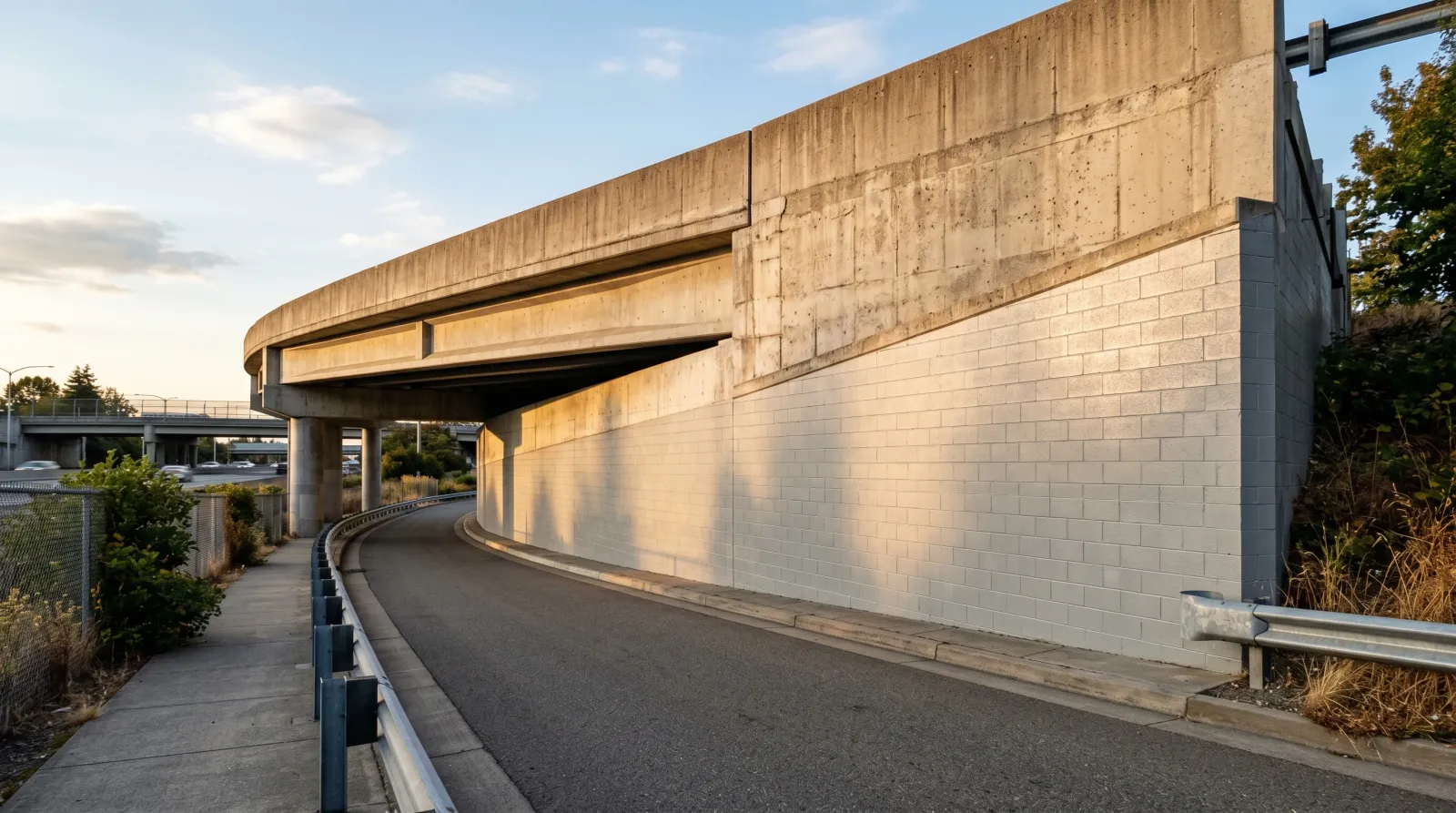
Anti-graffiti coating is specified to protect a vertical surface that gets tagged, so that the next removal returns the wall to its original appearance instead of leaving a ghost, a shadow, or a stripped patch. The asset list is consistent: highway underpasses and retaining walls, transit stations and rail corridors, public restrooms, school and stadium exteriors, bridge piers and abutments, utility boxes and substations, parking structure walls, and the lower 8 to 10 feet of any commercial building on a street frontage. The substrate is usually CMU, cast or precast concrete, brick, or coated steel.
The coating earns its place on a total-cost basis, not on the cost of the can. An unprotected concrete underpass that gets tagged absorbs aerosol pigment into the pore structure. Removal then means pressure washing, chemical stripping, or paint-out, each of which leaves a visible patch and damages the substrate over repeated cycles. A protected wall releases the same tag with a wipe of solvent remover or a hot-water wash, no patch, no substrate loss. On a chronically hit surface the labor delta per cleaning is the whole argument.
Two chemistries split the market. Sacrificial coatings are clear films that the graffiti bonds to instead of the substrate; the film and the tag come off together, and the film is re-applied. Permanent coatings are cured urethanes and fluoropolymers that resist penetration through many cleaning cycles. Service life runs differently by class. A sacrificial wax is consumed on each cleaning and re-applied as needed. A permanent fluoropolymer clear holds 7 to 15 years of weathering and 10 to 30+ cleaning cycles per ASTM D6578 before the substrate shows. The spec writer matches the chemistry to the hit frequency, the substrate’s tolerance for a permanent film, and whether the surface is historic or moisture-sensitive.
Zoned Recommendation Matrix
A campus or transit corridor is not one surface. Hit frequency and substrate vary by location, and a single product written across the whole site over-spends on low-hit walls and under-protects the chronic ones. The matrix below maps zones to the systems detailed further down.
| Zone | Typical substrate | Hit frequency | Recommended system | Why |
|---|---|---|---|---|
| Highway underpass / rail corridor wall | Concrete, CMU | Chronic | System C (permanent fluoropolymer) | High-cycle ASTM D6578 cleanability earns out fast |
| Transit station interior, restroom | Tile, coated CMU | High | System B (permanent urethane) | Solvent-wipe removal, durable, repaintable |
| Historic brick or stone facade | Unpainted masonry | Moderate | System A (breathable sacrificial wax) | Vapor-permeable, reversible, no sheen change |
| Suburban retaining wall, utility box | Concrete, galvanized steel | Low / occasional | System A (sacrificial) or System B | Low first cost; upgrade only if hits increase |
| Architectural concrete feature wall | Cast / precast concrete | Variable | System B or C with approved mockup | Sheen and color shift must be approved before full spec |
For a single-zone asset (one underpass, one substation enclosure) skip the matrix and write the one system the hit frequency calls for. Multi-zone is the rule for transit agencies, school districts, and DOT corridors.
Spec Requirements
The spec block before any product name. The values shift between sacrificial and permanent classes; the categories do not.
| Spec | Value |
|---|---|
| Dry film thickness (DFT) — sacrificial | 1.5–3 mils dry per application |
| Dry film thickness (DFT) — permanent | 2–5 mils dry per coat; 4–10 mils total system |
| Coverage @ DFT | 150–350 sq ft/gal sacrificial; 200–400 sq ft/gal permanent clear per coat |
| Cleanability | ASTM D6578 Level rating; specify the cycle count for the hit frequency |
| Graffiti resistance | ASTM D7089 pass for the spec’d remover chemistry |
| Abrasion | ASTM D4060 Taber CS-17, 1,000 g, ≤80 mg loss for permanent systems |
| VOC | <100 g/L waterborne sacrificial; <250 g/L waterborne urethane; <420 g/L solvent-borne under SCAQMD Rule 1113 |
| Substrate prep — masonry | SSPC-SP1 degrease; ICRI CSP 2 abrasive profile; remove old water repellents and cure-and-seal |
| Substrate prep — steel | SSPC-SP6 commercial blast; SSPC-SP1 degrease before primer |
| Moisture ceiling — masonry | Substrate dry, ≤4% moisture by surface meter; no active efflorescence |
| Ambient at application | 50°F to 90°F; relative humidity <85%; substrate ≥5°F above dew point |
| Recoat window | Per manufacturer TDS, typically 2–24 hours between coats at 70°F |
| Cure to service | 24–72 hours before first cleaning exposure; 7 days full cure for permanent fluoropolymer |
Three numbers govern the result. The CSP profile on masonry decides whether the film keys into the surface or peels at the first temperature swing. The moisture state of the substrate decides whether the coating blisters from the back. And the D6578 cycle count decides whether the wall still looks original after the tenth cleaning. Miss the prep and the durability number on the data sheet means nothing.
System Chemistry Compared
Four chemistry classes cover the field. The choice is driven by hit frequency, substrate sensitivity, and whether the surface has to breathe.
| Chemistry | Cleaning method | Cycles (ASTM D6578) | UV stability | $/sq ft band | Best for |
|---|---|---|---|---|---|
| Sacrificial wax / polysaccharide | Hot water 180–200°F, re-apply | Single (re-applied) | Good (breathable, clear) | $0.30–0.90 | Historic masonry, low-hit, vapor-open walls |
| Waterborne urethane (permanent) | Solvent graffiti remover wipe | 5–15 | Good | $1.20–2.50 | Transit interiors, restrooms, mid-hit |
| Solvent aliphatic urethane (permanent) | Solvent remover wipe | 8–20 | Very good | $1.80–3.50 | High-hit exterior, salt and weather |
| Fluoropolymer (Coraflon / PVDF type) | Solvent remover wipe | 15–30+ | Excellent | $3.00–6.00 | Chronic underpasses, long-cycle assets |
Sacrificial coatings carry the lowest first cost and the only fully breathable, reversible option for historic brick and stone. They lose on labor because the film is consumed on every cleaning. Permanent urethanes are the mid-market answer for transit interiors and restrooms where a solvent-wipe removal is acceptable and the wall does not need to breathe. Fluoropolymers carry the highest cycle count and the longest weathering, and they earn out only on a surface that gets hit often enough to spend the cleaning cycles. State VOC rules matter on the solvent grades: SCAQMD Rule 1113 and the OTC states cap industrial maintenance coatings, so verify the SDS before specifying a solvent-borne urethane in California or the Northeast.
Recommended Systems
Three full systems at different price-performance points. System A is sacrificial, B and C are permanent. Verify the specific product data sheet and cleanability rating against the project’s hit frequency before bid.
System A — Sherwin-Williams Sacrificial Anti-Graffiti (Breathable Clear)
| Layer | Product | DFT |
|---|---|---|
| Surface prep | SSPC-SP1 degrease; pressure-rinse; dry to ≤4% moisture | — |
| Sacrificial topcoat | Sherwin-Williams clear sacrificial anti-graffiti wax (two coats) | 1.5–3 mils total |
| Total | 1.5–3 mils |
The breathable, reversible option. Re-applied after each cleaning, which is the model on historic masonry that cannot take a permanent film. Removal is hot water at 180–200°F that strips the wax and the tag together, followed by re-coat. First cost is low and in-house maintenance crews can handle re-application on accessible walls. The trade-off is labor on every cleaning, which is why this system is wrong for a chronically tagged underpass. Sherwin-Williams ProIndustrial Anti-Graffiti page.
System B — Rust-Oleum Permanent Anti-Graffiti Urethane
| Layer | Product | DFT |
|---|---|---|
| Surface prep | SSPC-SP1 degrease; CSP 2 abrasive profile on masonry | — |
| Primer (porous masonry) | Rust-Oleum masonry / DTM primer | 2–3 mils |
| Topcoat | Concrete Saver / Sierra Performance permanent anti-graffiti urethane (two coats) | 2–4 mils per coat |
| Total | 6–11 mils |
The mid-market permanent system. Solvent-wipe graffiti removal, 5 to 15 ASTM D6578 cycles, good UV stability for exterior service. Right for transit station interiors, restrooms, school exteriors, and any wall hit often enough that re-applying a sacrificial film on each cleaning costs more in labor than a durable film costs up front. Repaintable when the cycles are spent. Rust-Oleum Concrete Saver / Industrial page.
System C — PPG Permanent Fluoropolymer System (High-Cycle)
| Layer | Product | DFT |
|---|---|---|
| Surface prep | SSPC-SP6 blast (steel) / CSP 2 profile (masonry); SSPC-SP1 degrease | — |
| Primer | Amercoat 68HS epoxy or Pitt-Tech DTM primer | 3–4 mils |
| Build coat | Amerlock 400 epoxy intermediate | 3–5 mils |
| Topcoat | PSX 700 siloxane or Coraflon aliphatic fluoropolymer | 2–4 mils |
| Total | 8–13 mils |
The high-cycle, long-weathering system for chronic-hit assets. The fluoropolymer or siloxane topcoat carries 15 to 30+ ASTM D6578 cleaning cycles and 7 to 15 years of UV and weathering before the substrate shows. Specify this on highway underpasses, rail corridors, and any wall where the cleaning crew is out monthly. The three-coat build adds first cost; the payback is in the cleaning labor saved over a 10-year horizon. PPG Protective & Marine Coatings.
Systems Compared
| System | Total DFT | $/sq ft installed | Service life / cleanability | Best for |
|---|---|---|---|---|
| A — SW Sacrificial Wax | 1.5–3 mils | $0.60–1.40 | Re-applied per cleaning; breathable | Historic masonry, low-hit, vapor-open walls |
| B — Rust-Oleum Urethane | 6–11 mils | $2.00–4.00 | 5–15 cycles; 5–10 years | Transit interiors, restrooms, mid-hit exterior |
| C — PPG Fluoropolymer | 8–13 mils | $4.50–8.00 | 15–30+ cycles; 7–15 years | Chronic underpasses, rail, long-cycle assets |
Installed pricing assumes a 5,000+ sq ft scope through an SSPC-QP1 contractor with prep included. Small-scope work and hard-access surfaces (high walls, traffic-controlled corridors) run 30 to 80% higher per square foot. The cost comparison that decides the spec is not the per-square-foot install figure. It is the install cost plus ten years of cleaning labor. On a wall tagged twice a month, System C’s higher install is paid back inside two to three years by the cheaper, non-destructive solvent-wipe removal.
Application & Contractor Path
The contractor call splits on chemistry. Sacrificial wax on accessible masonry is within reach of trained in-house maintenance staff. The film rolls or sprays on, cures fast, and gets re-applied after each cleaning. The skill is in the cleaning step (hot water at the right temperature and pressure) more than the coating step.
Permanent urethane and fluoropolymer systems are not an in-house job on any surface that matters. They require degreasing to SSPC-SP1, an abrasive profile to CSP 2 on masonry or SSPC-SP6 commercial blast on steel, controlled film build at the spec’d DFT, and recoat timing inside the manufacturer’s window. Specify a contractor with one of the following:
- SSPC-QP1 certification for industrial coatings on complex structures.
- Manufacturer applicator approval on the specific product line (PPG PMC certified, Sherwin-Williams Protective & Marine network).
- A documented surface-prep and DFT inspection protocol with a wet-film gauge during application and a dry-film gauge after cure.
Two contractor-qualifying questions before signing. First, what is the masonry moisture and CSP-profile acceptance protocol, and who signs off before the first coat goes down. A contractor who cannot describe the moisture meter reading and the profile target should not be on the bid list. Second, will the crew run a mockup on the actual substrate where appearance is governed. The sheen and color shift on a clear permanent coating over porous masonry has to be approved before the full wall, not discovered after.
The manufacturer-rep networks on all three systems (Sherwin-Williams, Rust-Oleum Industrial, PPG PMC) include a pre-bid substrate review and a product-to-substrate compatibility check. Use it. Catching an incompatible existing water repellent at the survey stage costs an hour; catching it after the first coat blisters costs the whole wall.
Failure Modes & How to Prevent Them
Five failures cover the bulk of anti-graffiti rejections and premature replacements.
- Delamination over an old water repellent or cure-and-seal. Cause: the masonry carried a silane/siloxane water repellent or a cure-and-seal compound that acted as a release layer under the new film. Prevention: survey for existing repellents with a water-drop bead test, strip incompatible coatings, and confirm a clean, profiled, paint-free substrate before coating.
- Blistering from substrate moisture. Cause: the masonry was coated wet, or vapor drives moisture out from behind a non-breathable permanent film on a wall with no other escape path. Prevention: meter the substrate to ≤4% surface moisture, confirm no active efflorescence, and choose a breathable sacrificial coating on walls that take groundwater or wind-driven rain from behind.
- Sheen and color shift on historic or architectural masonry. Cause: a clear permanent urethane or fluoropolymer was applied without a mockup, and the wet-look darkening was unacceptable after the fact. Prevention: mockup on the actual substrate, approve the sheen, and default to a breathable sacrificial clear where appearance is governed.
- Cleanability cycles spent faster than expected. Cause: a mid-tier urethane was specified on a chronic-hit underpass and the substrate began showing after a season. Prevention: match the ASTM D6578 cycle rating to the real hit frequency, and step up to a fluoropolymer on chronic assets instead of repainting a urethane that is out of cycles.
- Adhesion failure on under-profiled masonry. Cause: the surface was coated without abrasive prep, so the film never keyed in and peeled at the first freeze-thaw. Prevention: open the surface to a CSP 2 profile, confirm cross-hatch adhesion to ASTM D3359 on a test patch, and reject any contractor planning to coat a smooth, unprepared wall.
Substrate moisture and an unstripped old repellent are the two failures I see most on retrofit work. Both are caught at the survey, not after the first coat. The cleanability-cycle mismatch is the most expensive design error because the only fix is to strip and re-spec the wall to a higher chemistry class.
Where to Buy / Spec
| Channel | Best for | Path |
|---|---|---|
| Manufacturer-direct | Spec’d projects, rep substrate review, bulk pricing | Sherwin-Williams Anti-Graffiti · PPG PMC |
| Pro retail (S-W, BM Pro stores) | Local pickup, contractor pricing on sacrificial and mid-tier | Counter account with project pricing |
| Industrial distributor | Multi-manufacturer bids, fluoropolymer high-cycle systems | Distributor account with project-specific pricing |
| Amazon Business | Small in-house jobs, sacrificial wax restocking | Rust-Oleum Concrete Saver / Industrial |
Manufacturer-direct is the recommended channel on any permanent-system project above 2,500 sq ft. The rep substrate review (existing-repellent check, moisture protocol, mockup approval) is worth more than any retail discount on the pail.
FAQ
See the frontmatter for the full Q&A set, rendered below by the layout.