Sherwin-Williams Tricorn BlackvsSherwin-Williams Iron Ore
Why this comparison: SW’s true black against its soft near-black — the most-asked dark paint question. Tricorn Black and Iron Ore are close but distinct (ΔE 6.76). Visible difference on the wall, especially in flat daylight.

Built from our full reviews of both colors — same measured data, same real-room photos. About the testing process →
The Numbers
Iron Ore is slightly lighter (LRV 6 vs 3, 3-point delta).
What Each Color Really Is
A black with no story. Most "blacks" in a fan deck are really very dark something — a very dark brown, a very dark navy, a very dark green-gray — and they show it the moment sunlight lands on them. Tricorn Black carries almost no color pigment steering it anywhere, so it does not perform in the light. That sounds boring until you have lived with a black door that turns eggplant at 5 p.m. Choosing a color with no undertone is a real design decision, not a lack of one: it means the black stays the frame and lets your siding, counter, or wood do the talking.
At LRV 3 it is about as dark as mixed house paint gets. The useful comparison is Iron Ore (SW 7069) at LRV 6 — on paper a small gap, in a room a big one. Iron Ore reflects roughly twice as much light and reads as charcoal in daylight, softening on siding and on a full wall. Tricorn Black does not soften. It holds the same depth at noon and at dusk, which is the whole point on trim and doors and the whole problem on four walls of a dark room.
It is a near-black charcoal that is only barely a color at all. Saturation sits at 7 percent — a hair away from pure gray — with the hue at 210 degrees, which is the blue part of the wheel. That means you will almost never look at an Iron Ore wall and think "blue." What you notice instead is what is missing: there is no brown in it. Put it beside a warm charcoal and Iron Ore looks scrubbed clean and a little steely. This is also why people argue about it online — one person swears theirs went green, the next swears theirs went navy. Both are right. A color this close to neutral has almost nothing of its own to show, so it borrows from whatever is bouncing into it: a lawn pushes it green, a bright sky pushes it navy, a warm bulb pushes it soft and inky.
LRV 6 means it reflects about six percent of the light that hits it and absorbs the rest. The useful comparison is Tricorn Black (SW 6258) at LRV 3. Three points sounds like nothing; on a wall it is the whole difference. Tricorn is a flat hole in the room — light goes in and nothing comes back. Iron Ore keeps just enough reflectance that in a sunbeam or under a picture light you can still see it is charcoal, with the edges of trim and panel molding readable instead of dissolved. It is black with dimension left in it, which is exactly why it beat every other black on cabinets and facades.
Specs Side by Side
| Spec | Tricorn Black | Iron Ore |
|---|---|---|
| Brand | Sherwin-Williams | Sherwin-Williams |
| SKU | SW 6258 | SW 7069 |
| Hex | #2F2F30 | #434341 |
| RGB | 47, 47, 48 | 67, 67, 65 |
| LRV | 3 | 6 |
| Undertone | true neutral | true neutral |
| Family | Black | Black |
How Light Changes Them
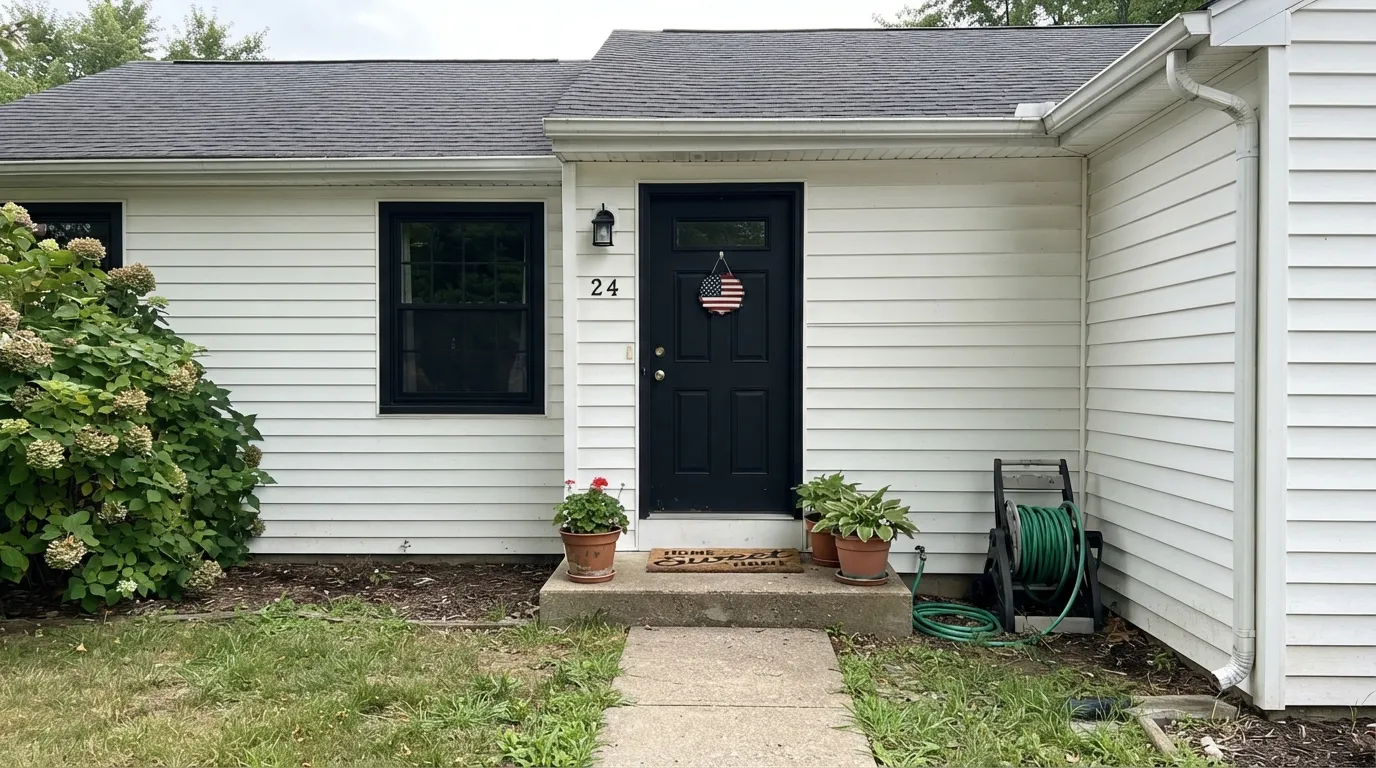
Cool even light makes it look its most velvety and matte. Beautiful on doors, heavy on four walls.
Strong sun lifts the sheen and reveals brush marks and roller texture. Spray or lay off carefully.
Warm 2700K bulbs keep it inky and soft. Away from a lamp it flattens into a solid shape with no depth.
Reads slightly lifted and chalkier over the years, and the surface runs hot. Satin and a quality exterior line matter here.
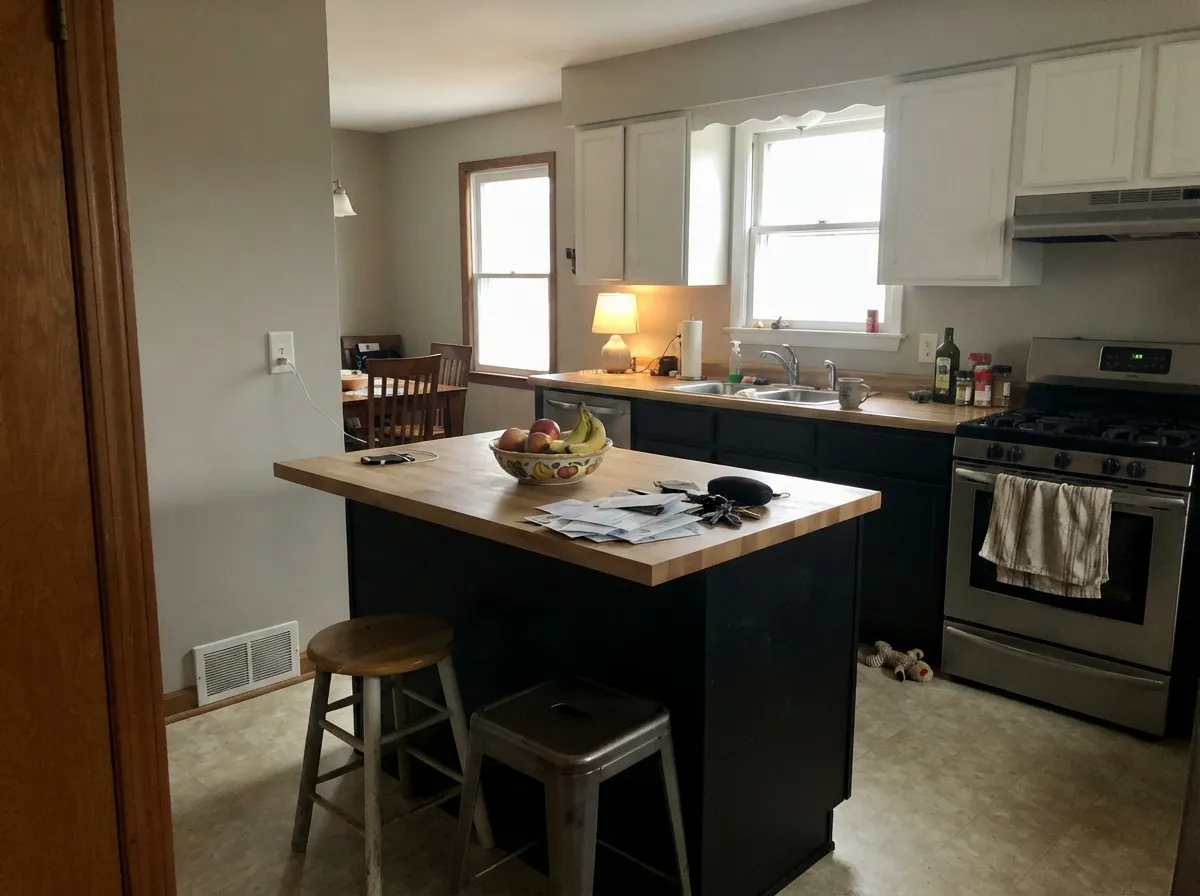
Cool weak light kills the charcoal and it reads flat black. Fine on cabinets, heavy on walls.
Strong light lifts it to a real dark charcoal — this is where you see it as a color, not a void.
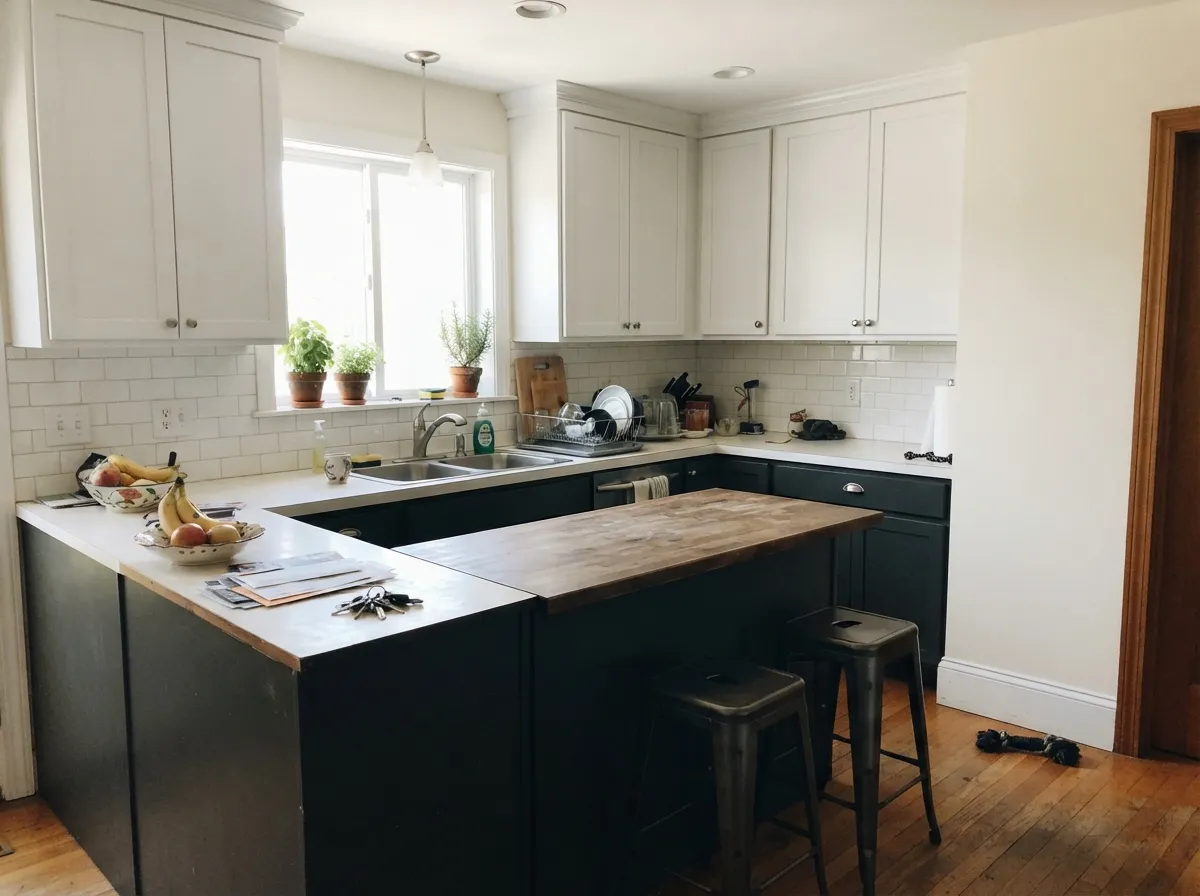
2700K bulbs soften it into an inky soft black. It genuinely looks better at night.
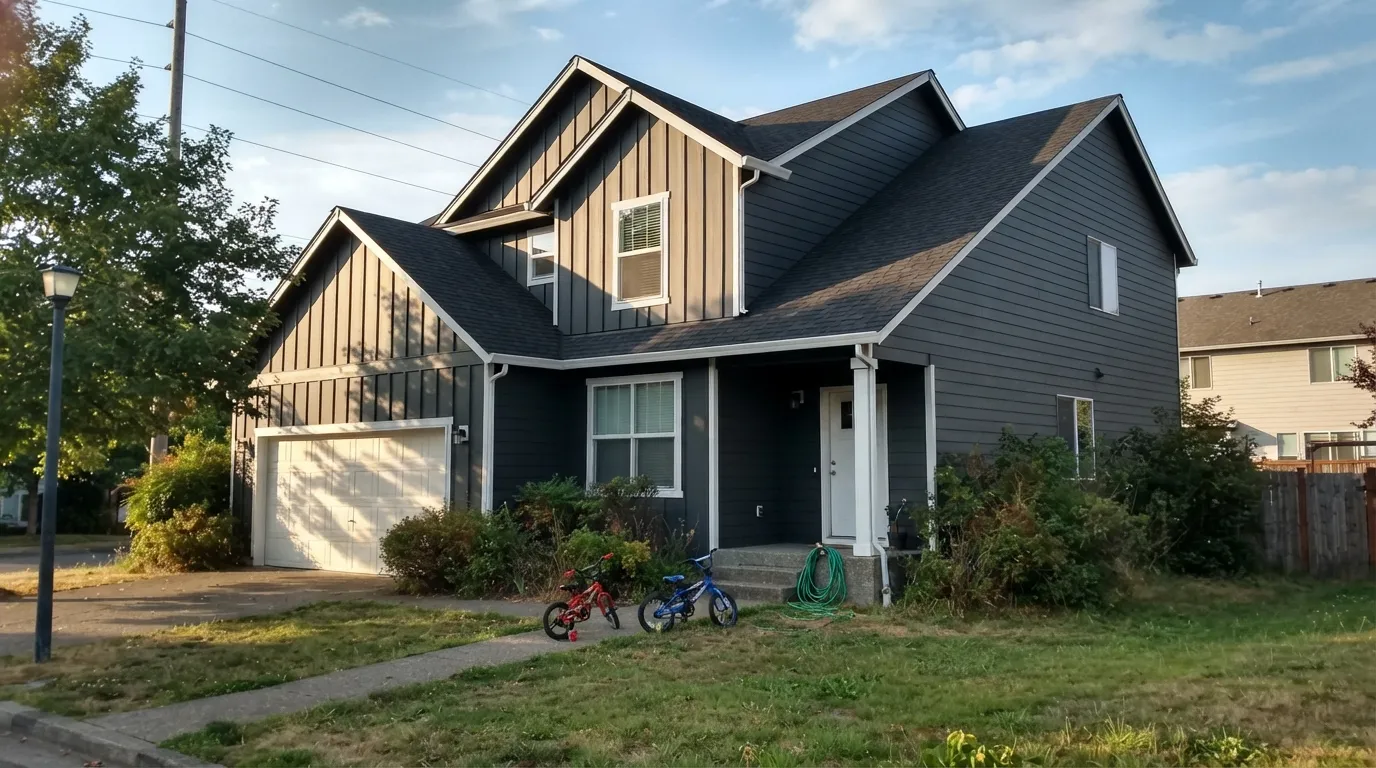
Sky and lawn bounce straight into it. Expect the shaded side and the sunny side to disagree.
Both Colors in Real Rooms
Photos from our full reviews — the same rooms and captions, so you can judge each color where it actually lives, not on a chip.
When to Pick Which
Front doors, shutters and window sash · kitchen islands and cabinet bases · interior doors, trim and built-ins · anyone who wants black with zero color agenda
Your room is small, dim and has one window · your walls are wavy old drywall · black factory windows or appliances sit right next to it · you want a softer near-black that forgives touch-ups
Whole exteriors, siding and shutters · front doors against light siding · kitchen islands, cabinets and built-ins · a study, library or powder room you want to feel enveloping
The room is small, dim and north-facing · your windows, gutters or roof are already true black · you are painting vinyl siding · you actually want a warm, cozy dark
No comparison page can see your light. Upload one photo of your room and try both colors on the same walls, seconds apart.
Tricorn Black vs Iron Ore FAQ
Which is lighter, Tricorn Black or Iron Ore?
Iron Ore is lighter: LRV 6 vs 3. Iron Ore is slightly lighter (LRV 6 vs 3, 3-point delta).
Which is warmer, Tricorn Black or Iron Ore?
They share the same undertone family — both read true neutral. The difference between them is lightness and depth, not temperature.
How similar are Tricorn Black and Iron Ore?
Tricorn Black and Iron Ore are close but distinct (ΔE 6.76). Visible difference on the wall, especially in flat daylight. The only reliable test is seeing both in your own room and light — a side-by-side on a screen or chip flattens the difference.
Can I use Tricorn Black and Iron Ore together in one house?
Yes, in separate rooms. They are close enough to feel related but different enough to notice, so give each its own room and connect them with a shared trim white. Avoid putting them on adjoining walls.
Ask a Question