Sherwin-Williams Sea SaltvsSherwin-Williams Comfort Gray
Why this comparison: Comfort Gray is Sea Salt’s grayer strip-mate; both flip between green and blue with the light. Sea Salt and Comfort Gray are very close (ΔE 3.71). The difference shows up most in side-by-side comparison and under specific light.

Built from our full reviews of both colors — same measured data, same real-room photos. About the testing process →
The Numbers
Sea Salt is slightly lighter (LRV 63 vs 54, 9-point delta).
What Each Color Really Is
Sherwin-Williams files Sea Salt under greens, and that is the honest starting point: it is a soft, dusty green that has been grayed almost all the way down. What makes it behave the way it does is the small amount of blue-black in the mix. That colorant is what keeps the green from ever looking minty, and it is also the thing that steps forward the moment the light in the room goes cool. So there are really three hues sitting on the wall at nearly equal strength — green, gray, and a little blue — and the room picks the winner, not the can.
At LRV 63 it reflects a bit more light than Agreeable Gray, the greige most people already have somewhere in the house. That is a useful way to picture it: the same easy brightness everyone likes about a greige, except this one shows real color instead of disappearing. It is light enough to keep a small bathroom feeling open, and soft enough that it never announces itself as "a green room." The catch is that low-saturation colors like this have very little of their own personality to push back with, so whatever your windows and bulbs hand them, they accept.
Comfort Gray belongs to the same Sherwin-Williams family as Sea Salt, Oyster Bay, Rainwashed, Quietude, and Retreat — the green-gray strip that quietly became one of the most-used color groups in the deck over the last decade, mostly through exterior renovations rather than magazine spreads. Sea Salt (LRV 63) is the palest and the famous one; Retreat (LRV 21) and Rosemary sit at the deep, committed end. Comfort Gray lands dead center at LRV 54 — heavier and more grounded than its airy family reputation would suggest, and it shares that exact LRV with Rainwashed, though the two read differently: Rainwashed leans blue-green and watery, Comfort Gray leans plainer and greener, closer to a soft khaki-gray.
At LRV 54 it holds real pigment instead of washing pale the way Sea Salt does, which is exactly why it works on exteriors — siding needs a color with enough body to survive full sun and still look intentional, and Comfort Gray has it. Indoors, that same mid-depth means it reads as an actual wall color rather than a barely-there tint, closer in weight to Mindful Gray or Anew Gray than to a pale spa neutral. Push it into strong, direct light and the green surfaces plainly; pull it into flat overcast or dim interior light and it settles back toward a soft, slightly muted gray.
Specs Side by Side
| Spec | Sea Salt | Comfort Gray |
|---|---|---|
| Brand | Sherwin-Williams | Sherwin-Williams |
| SKU | SW 6204 | SW 6205 |
| Hex | #CDD2CA | #BEC3BB |
| RGB | 205, 210, 202 | 190, 195, 187 |
| LRV | 63 | 54 |
| Undertone | green / cool | green / cool |
| Family | Gray | Gray |
How Light Changes Them
Warm strong daylight brings the green forward. This is the spa look people bought it for.
Cool light strips the green and the blue takes over. Sample it here or skip it.
2700K bulbs warm it back to green. Cool 4000K LEDs push it clinical — change bulbs, not paint.
With no daylight the color drains to a plain gray. Readers call it muddy. Pick something deeper.
Overcast skies or a window with real exposure keep it balanced — soft gray-green, no mud, no yellow flash. Its most flattering light.
Without real daylight reaching the wall, the green drains out and it settles into a flat, muddy khaki-gray. Readers describe this as "looks nothing like the swatch."
Strong west or south sun pushes the green forward, sometimes toward a soft olive on exteriors. Expected, not a defect — walk the house at different hours before choosing trim.
2700K bulbs keep it warm and gray-green; cool white LEDs flatten it toward a plain, slightly cold gray. Match your bulbs to the mood you want.
Both Colors in Real Rooms
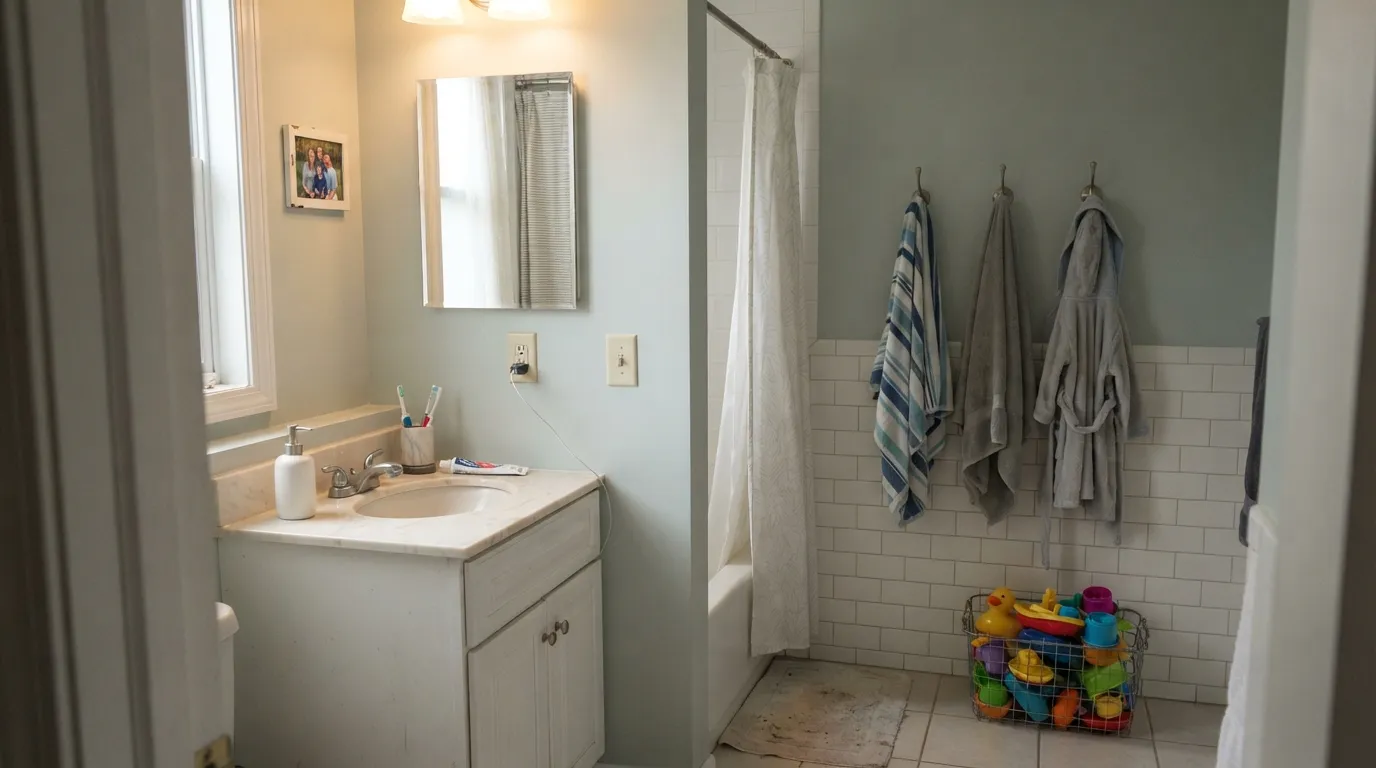
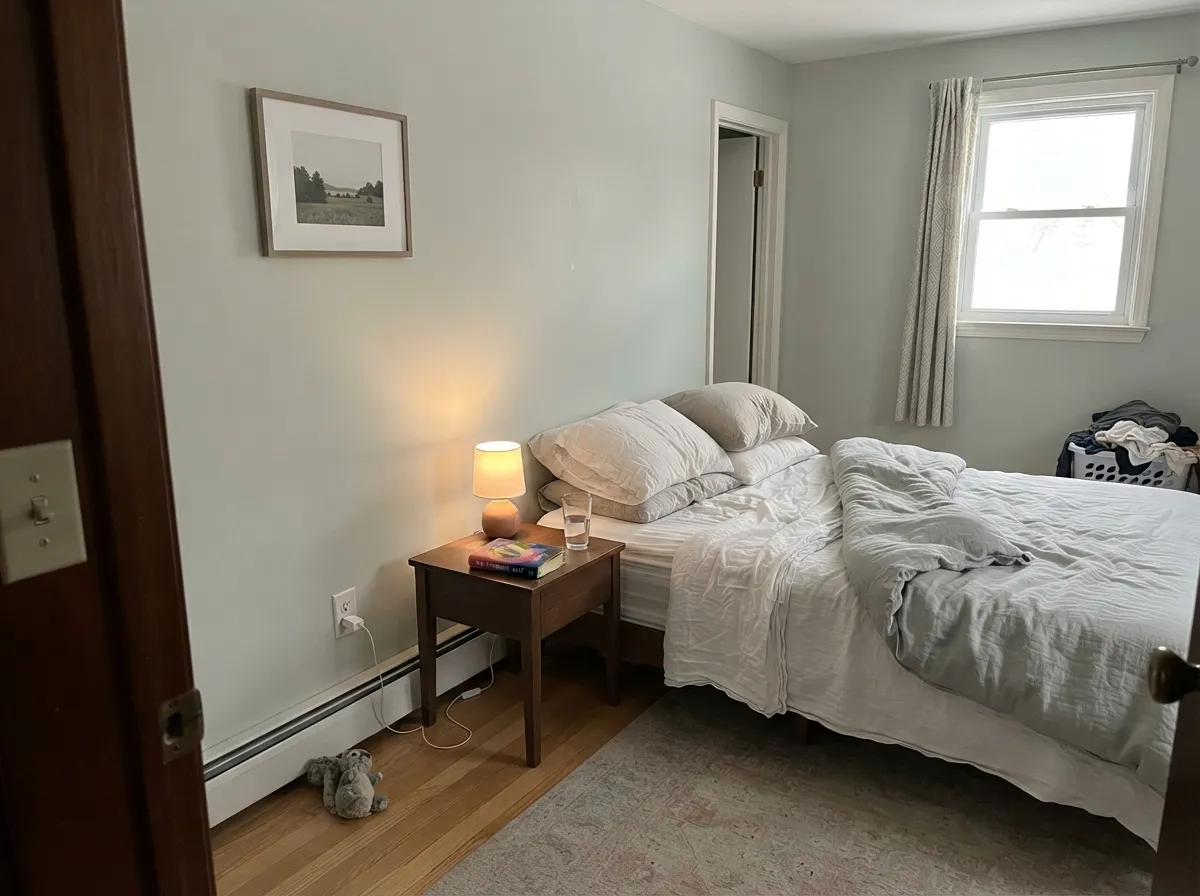
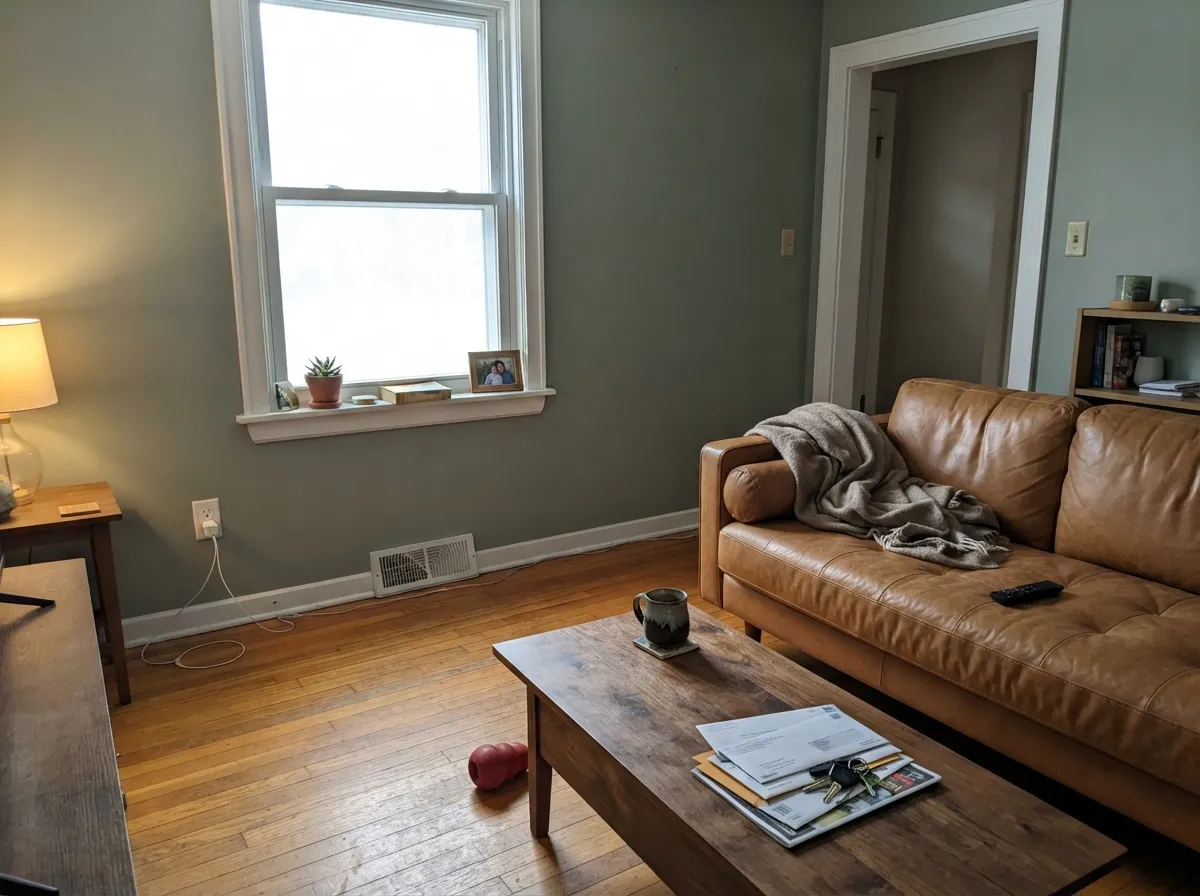
Photos from our full reviews — the same rooms and captions, so you can judge each color where it actually lives, not on a chip.

When to Pick Which
Bathrooms with clean white tile and trim · bedrooms that need to feel calm · vanities and laundry cabinets · anyone who wants color that still behaves like a neutral
Your room faces north and you want green · you have beige travertine or honey-oak floors · your trim is a warm cream · you want the coastal color to be obvious
Exterior siding on a modern-farmhouse or craftsman house · living rooms and dens with real daylight · anyone who wants a gray-green without committing to full sage · pairing with black windows, white trim, or stone
You want a color people recognize on sight · your room is dim and north-facing · your fixed materials are cool blue-gray stone or tile · you want zero green, ever
No comparison page can see your light. Upload one photo of your room and try both colors on the same walls, seconds apart.
Sea Salt vs Comfort Gray FAQ
Which is lighter, Sea Salt or Comfort Gray?
Sea Salt is lighter: LRV 63 vs 54. Sea Salt is slightly lighter (LRV 63 vs 54, 9-point delta).
Which is warmer, Sea Salt or Comfort Gray?
They share the same undertone family — both read green / cool. The difference between them is lightness and depth, not temperature.
How similar are Sea Salt and Comfort Gray?
Sea Salt and Comfort Gray are very close (ΔE 3.71). The difference shows up most in side-by-side comparison and under specific light. The only reliable test is seeing both in your own room and light — a side-by-side on a screen or chip flattens the difference.
Can I use Sea Salt and Comfort Gray together in one house?
Not in the same room, and be careful in the same house. At ΔE 3.71 they are so close that two walls in each will read as a tinting mistake, not a design choice. Pick one, or keep them on different floors where they are never seen together.
Ask a Question