Sherwin-Williams Accessible BeigevsSherwin-Williams Shiitake
Why this comparison: Shiitake is the trending mushroom beige; Accessible Beige the proven default. Accessible Beige and Shiitake are very close (ΔE 2.92). The difference shows up most in side-by-side comparison and under specific light.

Built from our full reviews of both colors — same measured data, same real-room photos. About the testing process →
The Numbers
Accessible Beige is slightly lighter (LRV 58 vs 51, 7-point delta).
What Each Color Really Is
A tan built on a real gray backbone — which is exactly why people argue about whether it is beige or greige. It sits on the line. The useful way to see it is by how it is put together compared to its rival: Agreeable Gray is a gray that has been warmed up with beige, and Accessible Beige is a beige that has been steadied with gray. The gray is doing a specific job. Old builder beige was mixed with yellow-orange pigment, which is what made it go gold under lamplight and eventually look dated; the gray in Accessible Beige cancels that gold before it can show up. Take the gray out and you have 1998 back.
LRV 58 means it bounces back a little under 60% of the light that lands on it — mid-light, not pale. That number is worth sitting with, because Agreeable Gray is LRV 60, which is effectively the same lightness. If Accessible Beige looks darker to you on the chip, you are reading the extra brown in it, not less light. Against a clean trim white like Pure White at LRV 84 there is a clear step, so trim reads as trim. In a room with real windows it behaves like a light neutral. In a room without them, it stops being light and starts being a mid-tone — same paint, different job.
A muted mushroom-taupe from Sherwin-Williams' food-named neutral cluster — Shiitake sits in the same drawer as Perfect Greige and Mega Greige, and the name is doing real work: it is trying to signal "earthy, not beige" the way those two do. The hex #C8BCAB reads as a warm greige on paper, but on a wall the color behaves less like a fixed number and more like a negotiation between your light and your undertone.
That negotiation is the whole story. Reviewers describe it landing anywhere from a soft dusty rose-taupe to a cool pebble gray depending on the room, and both descriptions are accurate — they're just describing different lighting conditions on the same paint. At LRV 51 it reflects a middle amount of light, deep enough to hold real color on the wall, light enough to stay out of "moody accent" territory. That mid-LRV range is exactly where undertone drift shows up hardest; a very light or very dark neutral hides its shift, a mid-tone one wears it on its sleeve.
Specs Side by Side
| Spec | Accessible Beige | Shiitake |
|---|---|---|
| Brand | Sherwin-Williams | Sherwin-Williams |
| SKU | SW 7036 | SW 9173 |
| Hex | #D1C7B8 | #C8BCAB |
| RGB | 209, 199, 184 | 200, 188, 171 |
| LRV | 58 | 51 |
| Undertone | red-orange / warm | red-orange / warm |
| Family | Neutral | Neutral |
How Light Changes Them
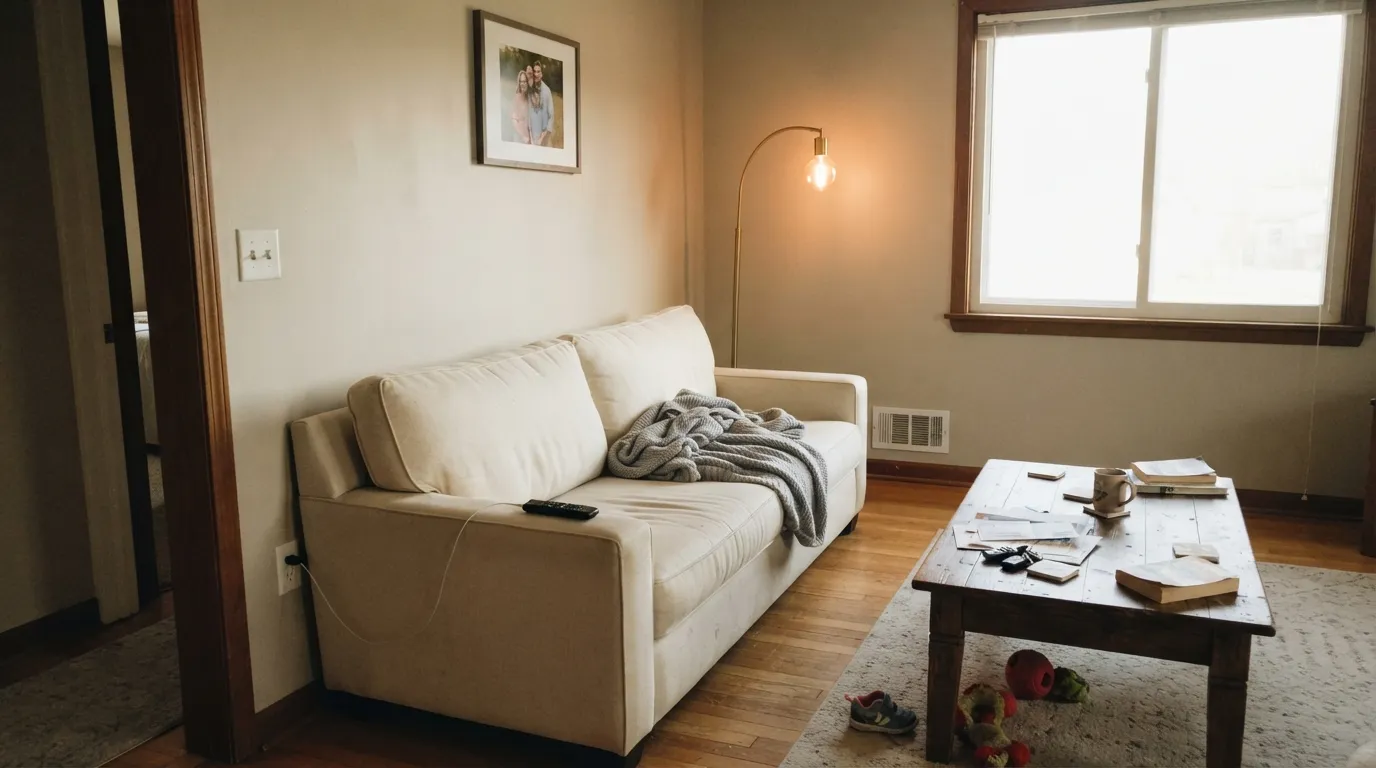
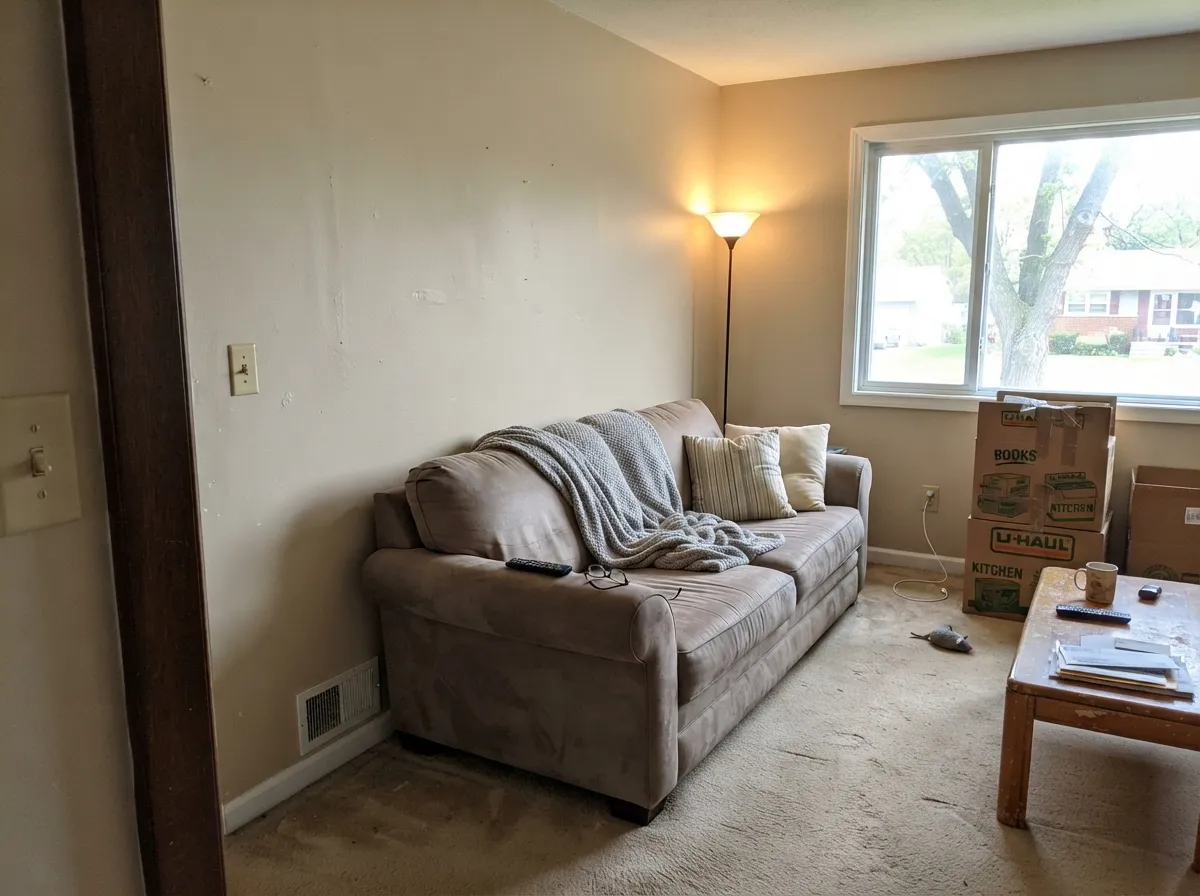
Strong warm sun all day pushes the tan forward. Soft, creamy, and never orange.
Cool daylight kills the warmth and the gray takes over. Reads taupe, sometimes drab. Sample first.
2700K bulbs make it warm and cozy. Cool LEDs above 3500K flatten it to gray — change bulbs, not paint.
With no daylight it loses its lift and can read dingy or faintly pink-taupe. Go lighter or warmer here.
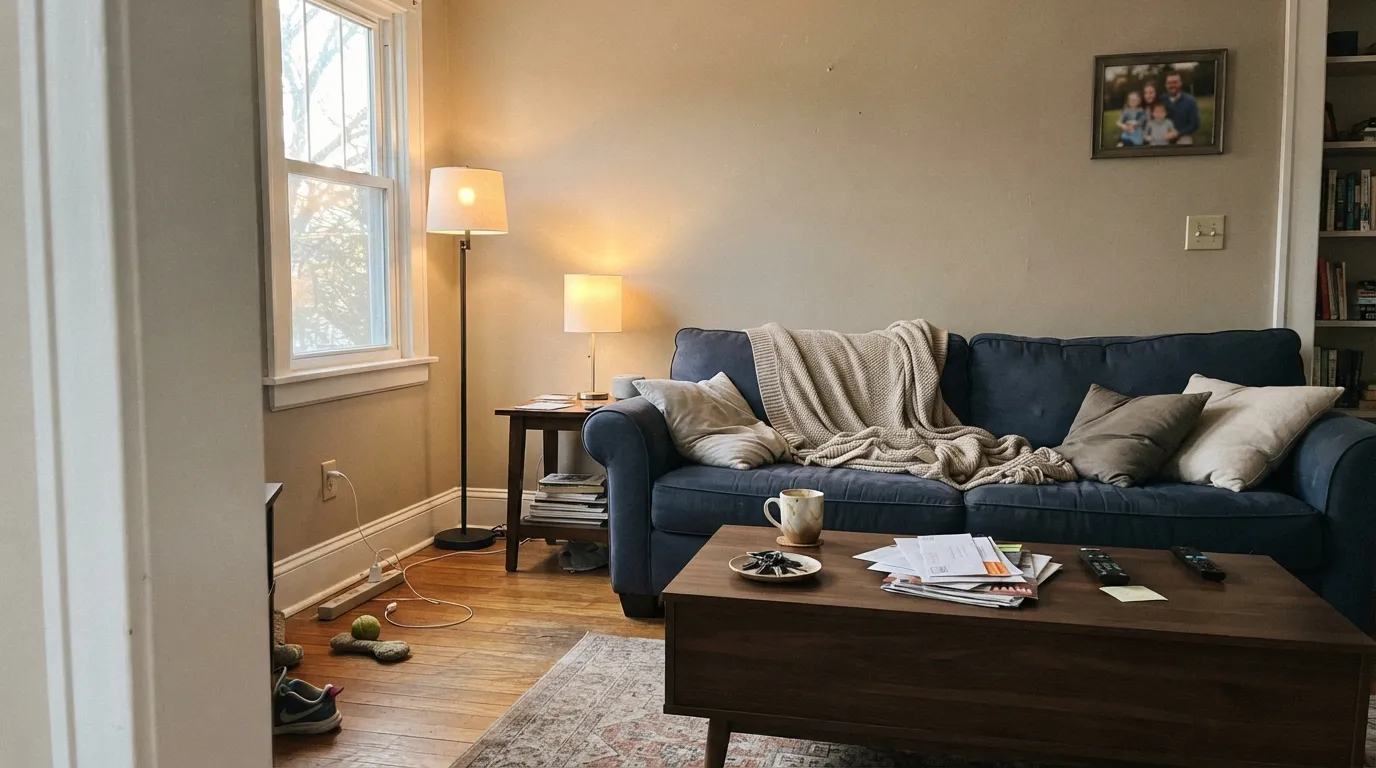
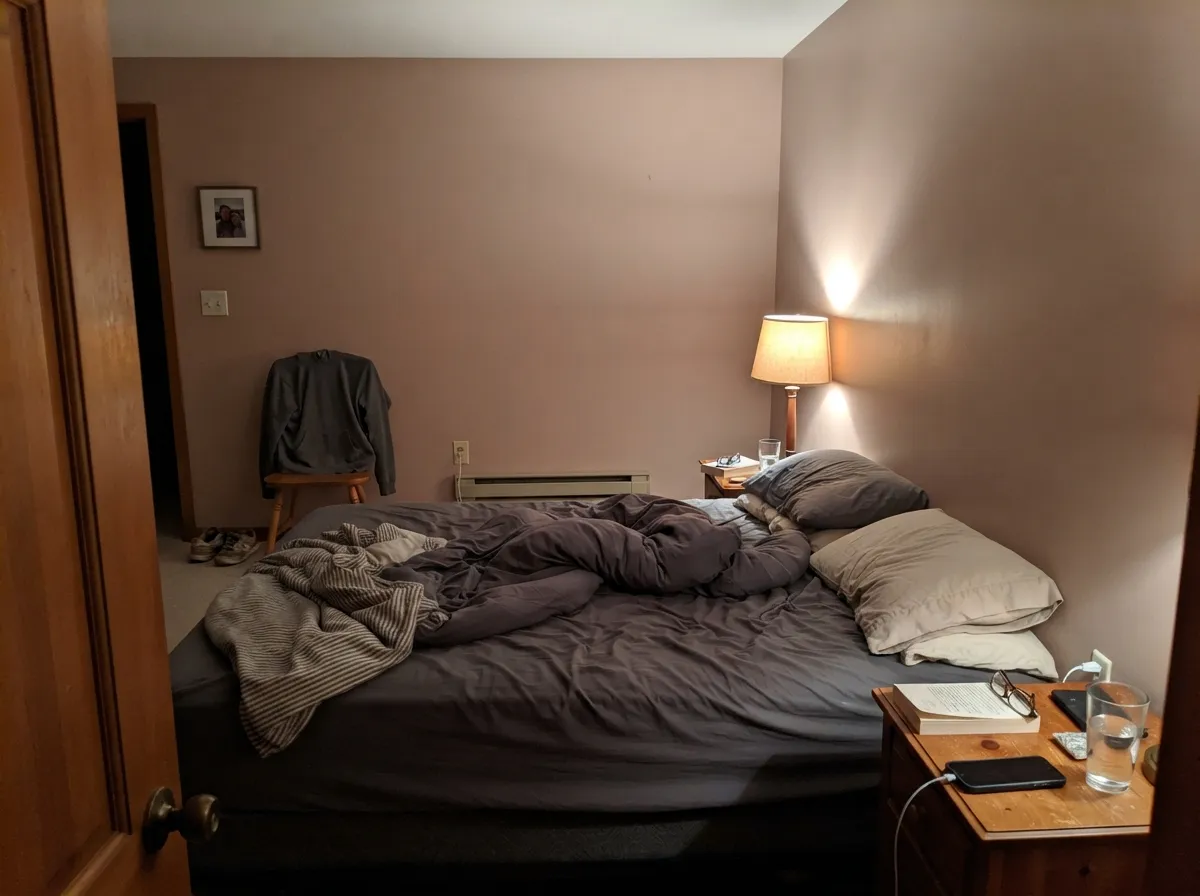
The taupe holds its warmth and edges toward a soft dusty rose without tipping into pink. The most flattering, most photographed version of this color.
Strips the warmth out and leaves a flat pebble gray with none of the character that sold the sample. Swap bulbs before you repaint.
Cooler and more restrained at midday, warmer and rosier as the light angles low. Most owners like the movement; test at both ends of the day first.
2700K warm bulbs bring the dusty-pink side forward for a cozy night read. Cool white LEDs push it back toward flat gray — the single biggest lever you control without repainting.
Both Colors in Real Rooms
Photos from our full reviews — the same rooms and captions, so you can judge each color where it actually lives, not on a chip.
When to Pick Which
Open-plan main floors that need one color everywhere · south and west rooms with real daylight · resale prep and rentals · warm wood, brass, and cream furnishings
Your room faces north and stays dim · your floors are red-toned cherry or red oak · your trim is a warm white like Alabaster · you want a beige that reads clearly beige, not taupe
Living rooms and bedrooms with mixed daylight · rooms already planning a navy or dark-wood accent · buyers who want greige with more personality than Agreeable Gray · a mushroom-family neutral that isn't Perfect Greige
You need one fixed color you can predict from the chip · your room runs on cool LEDs all day with little daylight · you're pairing it with a stark cool-white trim and expecting a clean match · you want a color people never argue about
No comparison page can see your light. Upload one photo of your room and try both colors on the same walls, seconds apart.
Accessible Beige vs Shiitake FAQ
Which is lighter, Accessible Beige or Shiitake?
Accessible Beige is lighter: LRV 58 vs 51. Accessible Beige is slightly lighter (LRV 58 vs 51, 7-point delta).
Which is warmer, Accessible Beige or Shiitake?
They share the same undertone family — both read red-orange / warm. The difference between them is lightness and depth, not temperature.
How similar are Accessible Beige and Shiitake?
Accessible Beige and Shiitake are very close (ΔE 2.92). The difference shows up most in side-by-side comparison and under specific light. The only reliable test is seeing both in your own room and light — a side-by-side on a screen or chip flattens the difference.
Can I use Accessible Beige and Shiitake together in one house?
Not in the same room, and be careful in the same house. At ΔE 2.92 they are so close that two walls in each will read as a tinting mistake, not a design choice. Pick one, or keep them on different floors where they are never seen together.
Ask a Question