Farrow & Ball Strong WhitevsFarrow & Ball Ammonite
Why this comparison: Strong White is the cooler architectural white; Ammonite tips into pale gray. Strong White and Ammonite are very close (ΔE 2.79). The difference shows up most in side-by-side comparison and under specific light.

Built from our full reviews of both colors — same measured data, same real-room photos. About the testing process →
The Numbers
Strong White is slightly lighter (LRV 76 vs 67, 9-point delta).
What Each Color Really Is
A grey-based white — that is Farrow & Ball's own description, and it is the right one. Most "greige" whites lean warm first and let a little grey mute the yellow; Strong White does the opposite. The pigment base is closer to a pale stone than a cream, so on the wall it reads cool and mineral, almost like unpolished limestone, rather than the soft buttery off-whites (Swiss Coffee, White Dove) that dominate the American market. Farrow & Ball groups it in the Contemporary Neutrals collection alongside All White, Elephant's Breath and Ammonite specifically because it plays the cool, structural role in a scheme.
At LRV 76 it reflects a lot of light, but it is not a bright white — sit it next to its own sibling All White (LRV 84) and Strong White noticeably dims and greys down. That gap is deliberate: All White is F&B's true near-white with almost no undertone, and the brand's own room schemes typically put Strong White on the walls and All White on the trim and ceiling, letting the ceiling lift the room while the wall does the quieter, more textured work.
Ammonite is named for the coiled fossils that wash out of the cliffs along the Dorset coast near Farrow & Ball's original workshop, and the name fits: it is a soft, sedimentary gray, closer to weathered stone than to paint-chip gray. The undertone is calibrated warm — not beige-warm, just warm enough to keep the color from reading cold or clinical the way a lot of "true" grays do in real houses. That single calibration decision is most of why it became the brand's best-known export: gray enough to feel current, warm enough to feel livable.
At LRV 67 it sits in the bright half of the deck — close enough to white that in strong daylight some rooms read it as an off-white with a gray cast rather than a gray with a light cast. Put it next to a genuine F&B white like Wevet (LRV 83) or Strong White (LRV 76) and the gray body becomes obvious again; that's exactly how F&B stages it in its own showrooms. On its own, expect a light, quiet, stony neutral, not a statement gray.
Specs Side by Side
| Spec | Strong White | Ammonite |
|---|---|---|
| Brand | Farrow & Ball | Farrow & Ball |
| SKU | No. 2001 | No. 274 |
| Hex | #E4E2DC | #D8D6CF |
| RGB | 228, 226, 220 | 216, 214, 207 |
| LRV | 76 | 67 |
| Undertone | red-orange / warm | yellow / warm |
| Family | White | Gray |
How Light Changes Them
Strong sun keeps the grey base crisp and stony instead of dull — the color at its most architectural.
Without direct sun the cool base takes over and the wall goes flat, dishwater-grey. Sample before committing in a dark room.
Cooler and greyer in shade, a touch stonier and warmer at midday sun. The shift is subtle, not dramatic like a saturated color.
2700K warm bulbs soften the grey noticeably at night; cool white LEDs push it colder and flatter — pick warm bulbs if you want any coziness after dark.
Reads its truest calibrated self — a light stone gray, neither warm nor cold, the version the swatch promises.
Without real light it goes flat, grey-on-grey and loses the stone warmth. Owners in heavily shaded rooms describe it as coming up "very grey."
Cool and clean in morning east light, softer and a touch warmer as afternoon west sun arrives — a gentle shift, not a color change.
2700K lamps warm it toward its stone-beige side; cool LEDs keep it crisper and grayer. Pick bulbs based on which side you want to lean.
Both Colors in Real Rooms
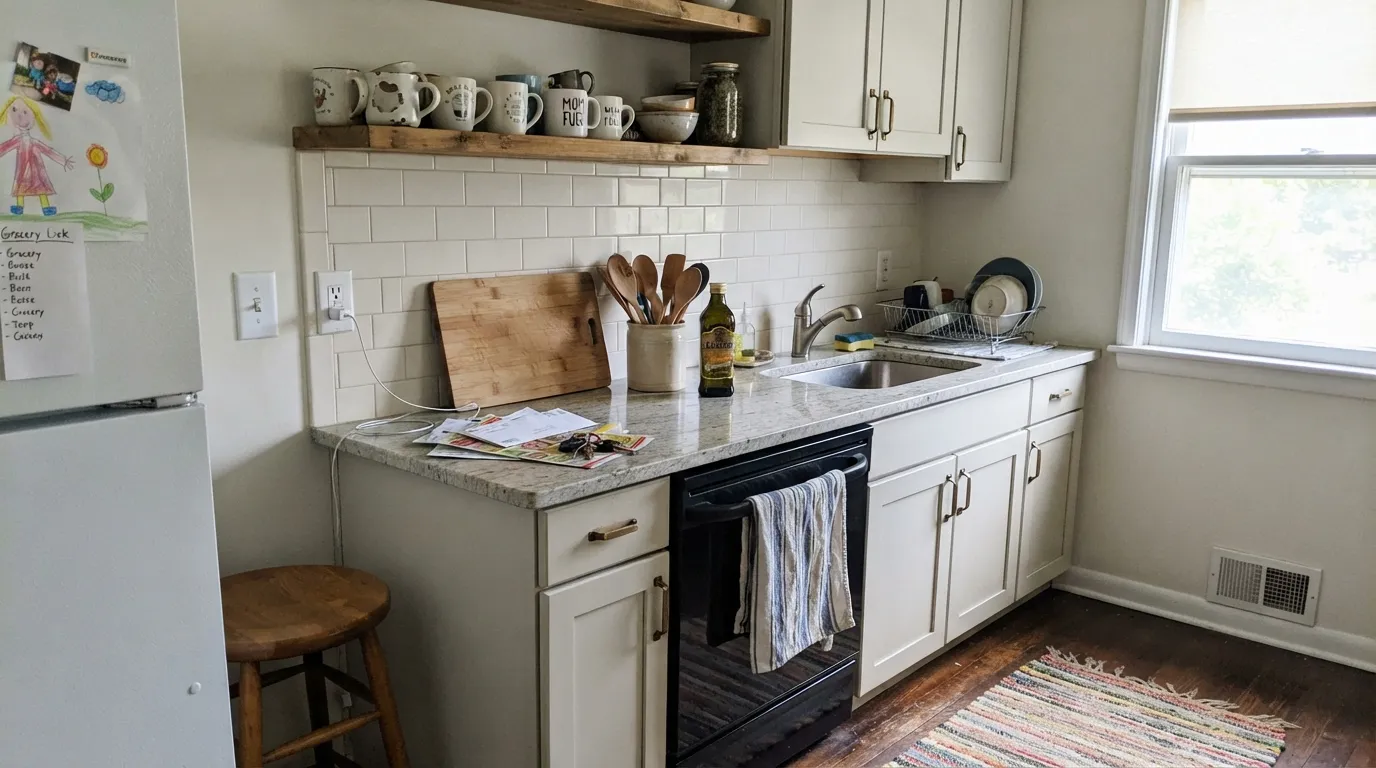
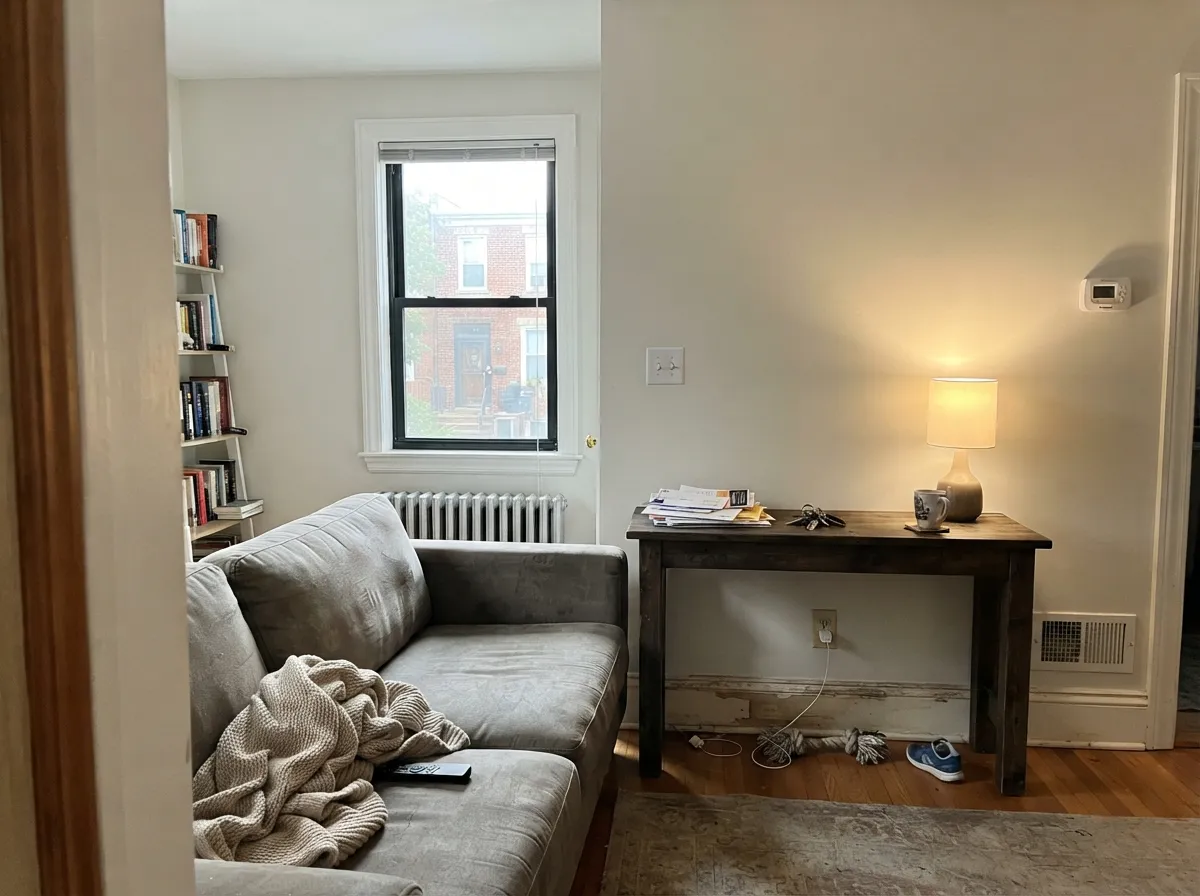
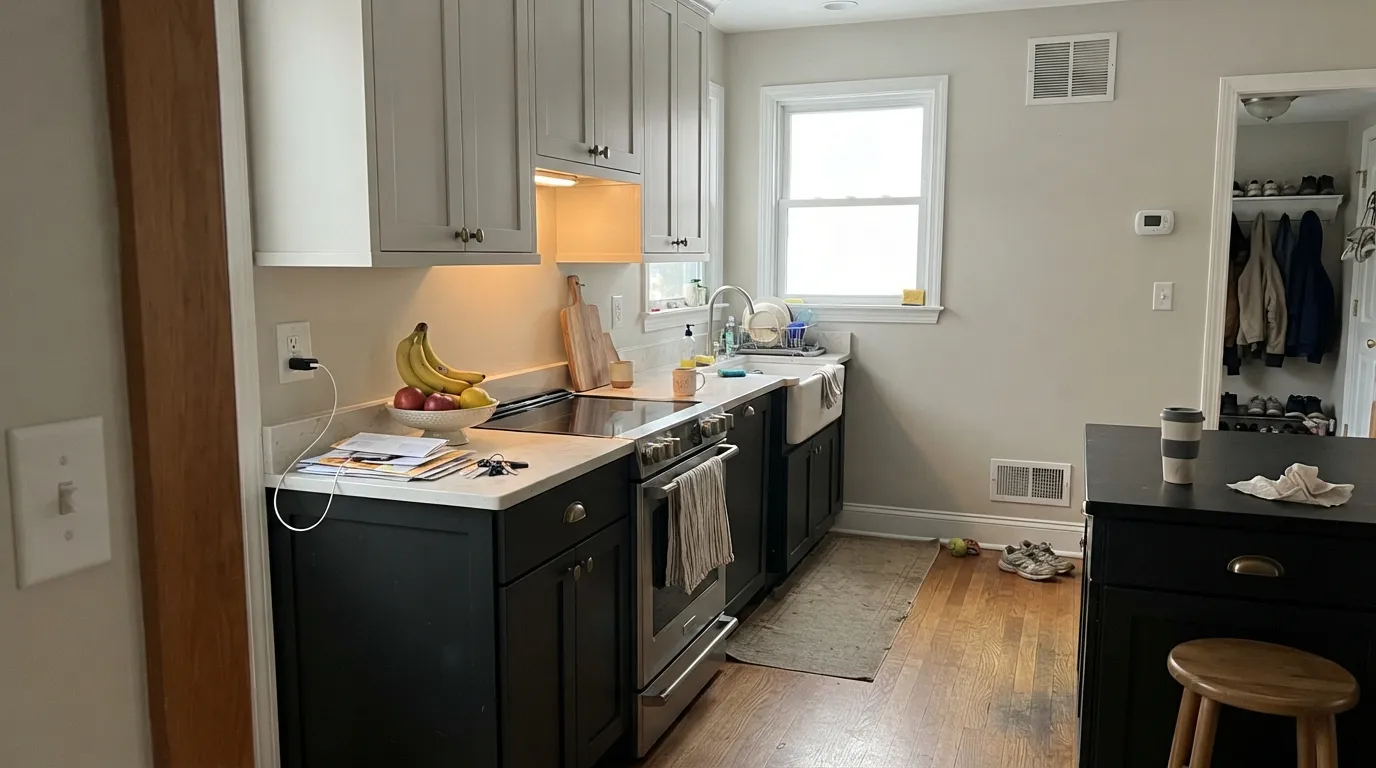
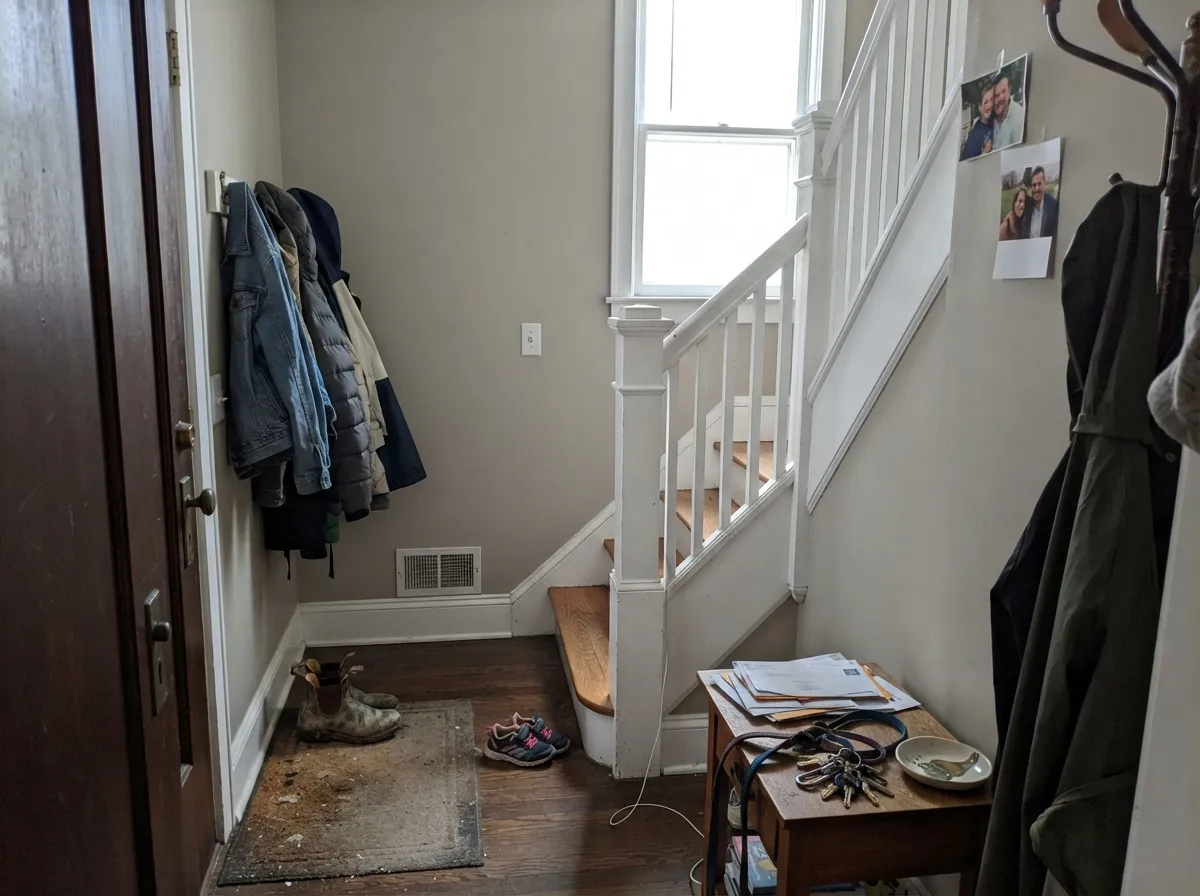
Photos from our full reviews — the same rooms and captions, so you can judge each color where it actually lives, not on a chip.
When to Pick Which
Kitchens with stone counters and black or brass hardware · period townhouses that want a modern edge · hallways and entries with plenty of daylight · anyone who has decided warm creamy whites feel dated
Your room is north-facing and dim · you want something soft and cozy, not architectural · your wood tones are orange-toned honey oak · you're not ready to pay Farrow & Ball prices and buy extra coats
Whole-house neutrals — hallway to bedroom to trim · kitchens paired with a near-black island · period homes with natural stone and pale wood · anyone who wants gray without the risk of it going cold
Your room is dim, north-facing and tree-shaded · your furniture and textiles run warm cream and honey · you repaint high-traffic walls often and want a scrubbable finish · you're on a tight paint budget
No comparison page can see your light. Upload one photo of your room and try both colors on the same walls, seconds apart.
Strong White vs Ammonite FAQ
Which is lighter, Strong White or Ammonite?
Strong White is lighter: LRV 76 vs 67. Strong White is slightly lighter (LRV 76 vs 67, 9-point delta).
Which is warmer, Strong White or Ammonite?
They sit in the same temperature family: Strong White reads red-orange / warm, Ammonite reads yellow / warm. Side by side, undertone is not the deciding factor here.
How similar are Strong White and Ammonite?
Strong White and Ammonite are very close (ΔE 2.79). The difference shows up most in side-by-side comparison and under specific light. The only reliable test is seeing both in your own room and light — a side-by-side on a screen or chip flattens the difference.
Can I use Strong White and Ammonite together in one house?
Not in the same room, and be careful in the same house. At ΔE 2.79 they are so close that two walls in each will read as a tinting mistake, not a design choice. Pick one, or keep them on different floors where they are never seen together.
Ask a Question