Farrow & Ball RailingsvsFarrow & Ball Off-Black
Why this comparison: Railings is the blue-black, Off-Black the softer true black — Farrow & Ball’s dark duo. Railings and Off-Black are visually nearly identical (ΔE 1.25). Most eyes can't tell them apart on a wall — pick whichever is easier to source.

Built from our full reviews of both colors — same measured data, same real-room photos. About the testing process →
The Numbers
LRV is essentially equal (7 vs 6) — both reflect light the same.
What Each Color Really Is
A soft black built on blue. Farrow & Ball puts Railings on its black chart and describes it as more blue than black — the point is that the blue takes the deadness out. Straight blacks flatten in low light and swallow the shape of a room; Railings holds a little color in the dark, so corners still read as corners. It is named after the ironwork it was made to suit, which tells you where it came from: gates, railings, front doors, window frames. The walls came later, and they came fast — it is now one of the most-specified darks the brand sells.
At LRV 7 it is genuinely near-black. That number matters more than the undertone: a wall in Railings reflects almost nothing back into the room, so whatever light you have is what you get. Big windows, pale floors, a white ceiling and real lamps make it look rich. One north window and a dark floor make it look dim. This is the single decision that separates the people who love this color from the ones who repaint.
A soft, slightly cool near-black — one of the colors Farrow & Ball started with, sitting on the card next to Off-White with the same plain-spoken name. That age matters more than it sounds. Off-Black was mixed to sit on Georgian and Victorian joinery, where a hard modern jet black would have looked like a mistake, so it was built shallow on pigment tricks and long on softness. Put it beside a true black and you can see the difference immediately: the true black is a hole in the wall, Off-Black is a color.
At LRV 6 on our deck it is deep enough to be black in every practical sense. Nothing about that number is forgiving: a wall in Off-Black absorbs nearly all the light that lands on it, so the room's brightness now depends entirely on the windows, the lamps and the ceiling. This is why the same paint reads expensive and velvety in one house and grim in another — it is not a color that generates atmosphere on its own, it amplifies whatever light you give it.
Specs Side by Side
| Spec | Railings | Off-Black |
|---|---|---|
| Brand | Farrow & Ball | Farrow & Ball |
| SKU | No. 31 | No. 57 |
| Hex | #45494C | #454749 |
| RGB | 69, 73, 76 | 69, 71, 73 |
| LRV | 7 | 6 |
| Undertone | true neutral | true neutral |
| Family | Gray | Gray |
How Light Changes Them
Real sun is where it stops being a black hole: the blue comes forward and you can see the wall has color in it. Sample here first.
Cool but weak light drains it to a flat lightless charcoal, and the room reads smaller by mid-afternoon. Lamps or a lighter color.
Cooler and bluest in morning light, warmer and more graphite as the sun drops. Golden hour on a west wall is its most flattering hour.
2700K lamps mute the blue and give a soft warm black — the cozy version. Cool 4000K LEDs push it navy and can read cold and hard.
2700K lamps and open flame are what this color was made for. The faint blue vanishes, the wall goes velvety, and the room reads warm and enclosed instead of dark.
Cool, weak daylight flattens it into a closed gray-black with no depth left. This is the light behind almost every disappointed review of the color.
Bright morning or low golden-hour sun is the only time the cool cast shows itself; direct light also reveals roller texture and lap marks on a dark matte wall. Midday south sun simply reads it as flat black.
At 2700K it is soft and slightly brown-black. Swap to 4000K daylight LEDs and the blue steps forward, the wall turns slate and the room goes cold. Bulbs are part of this paint job.
Both Colors in Real Rooms
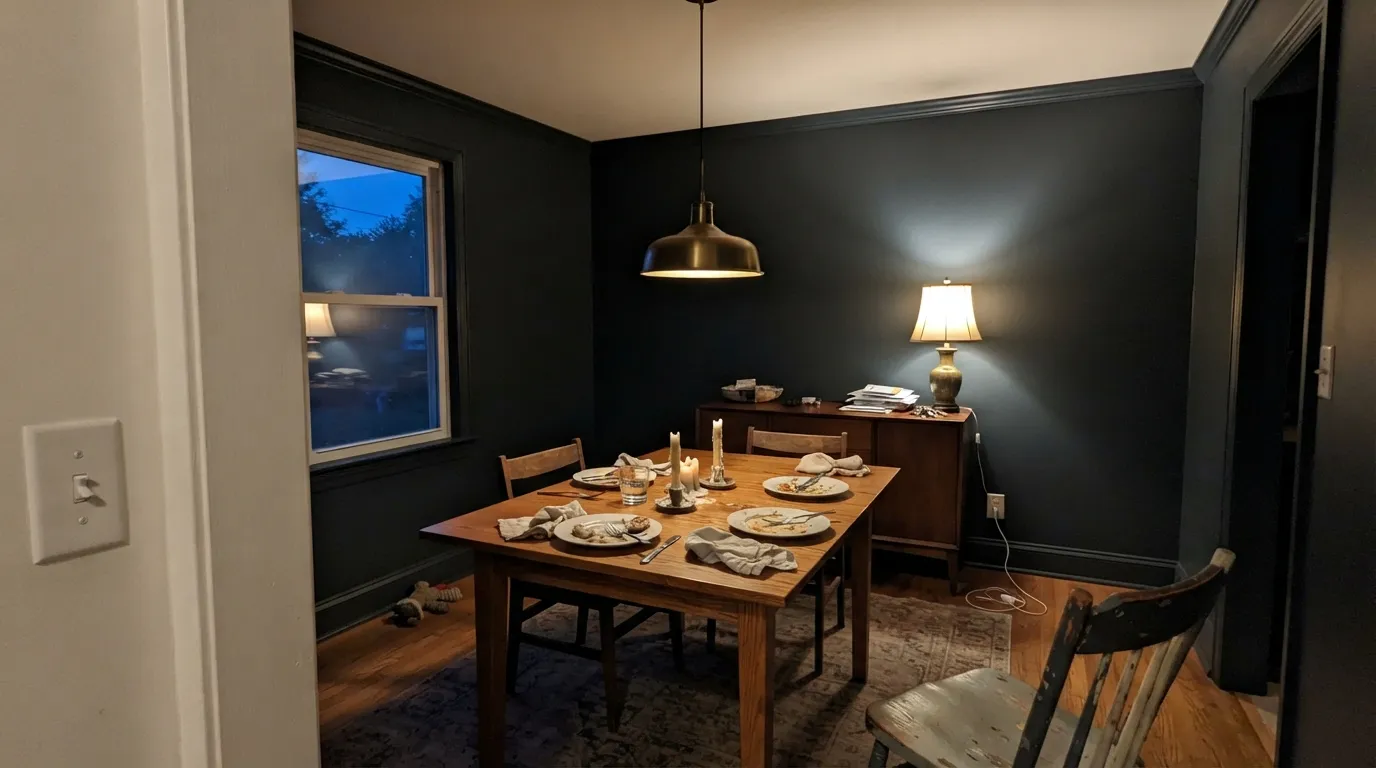
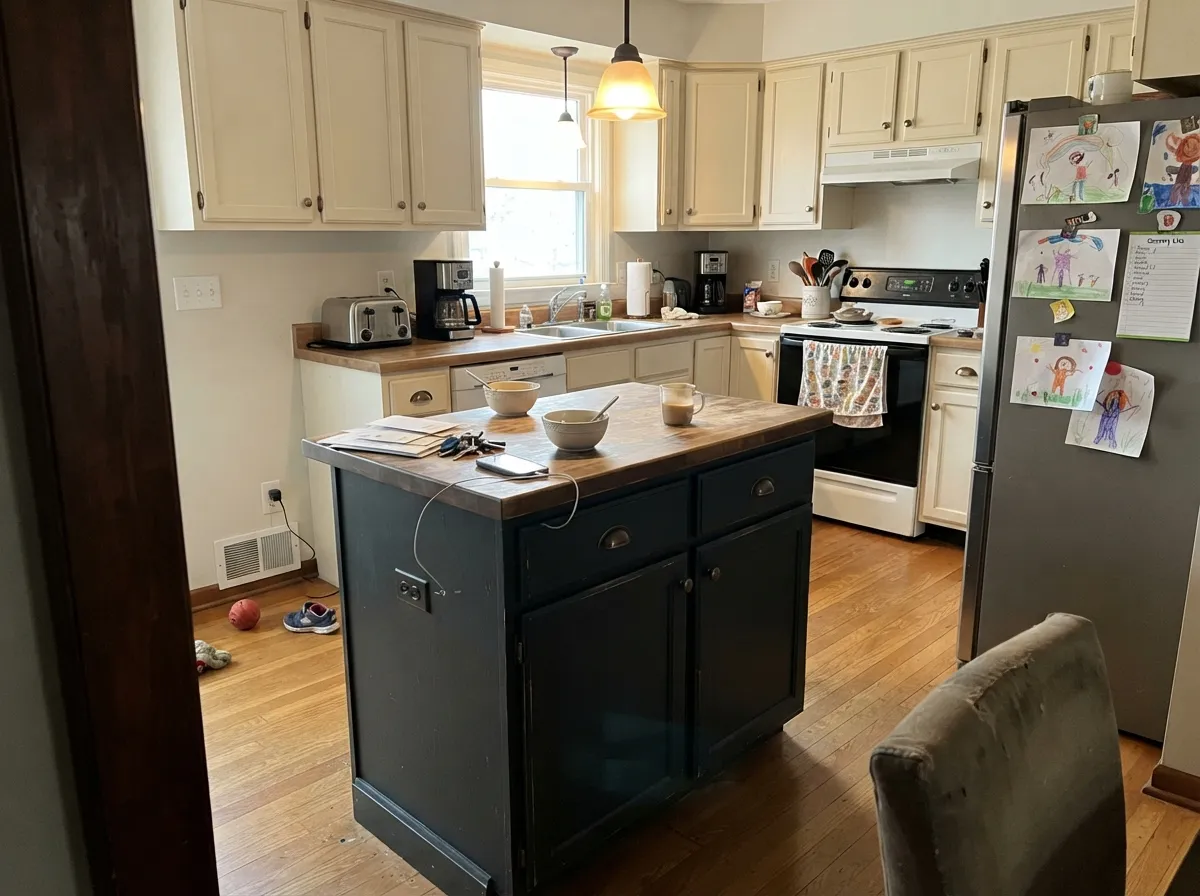
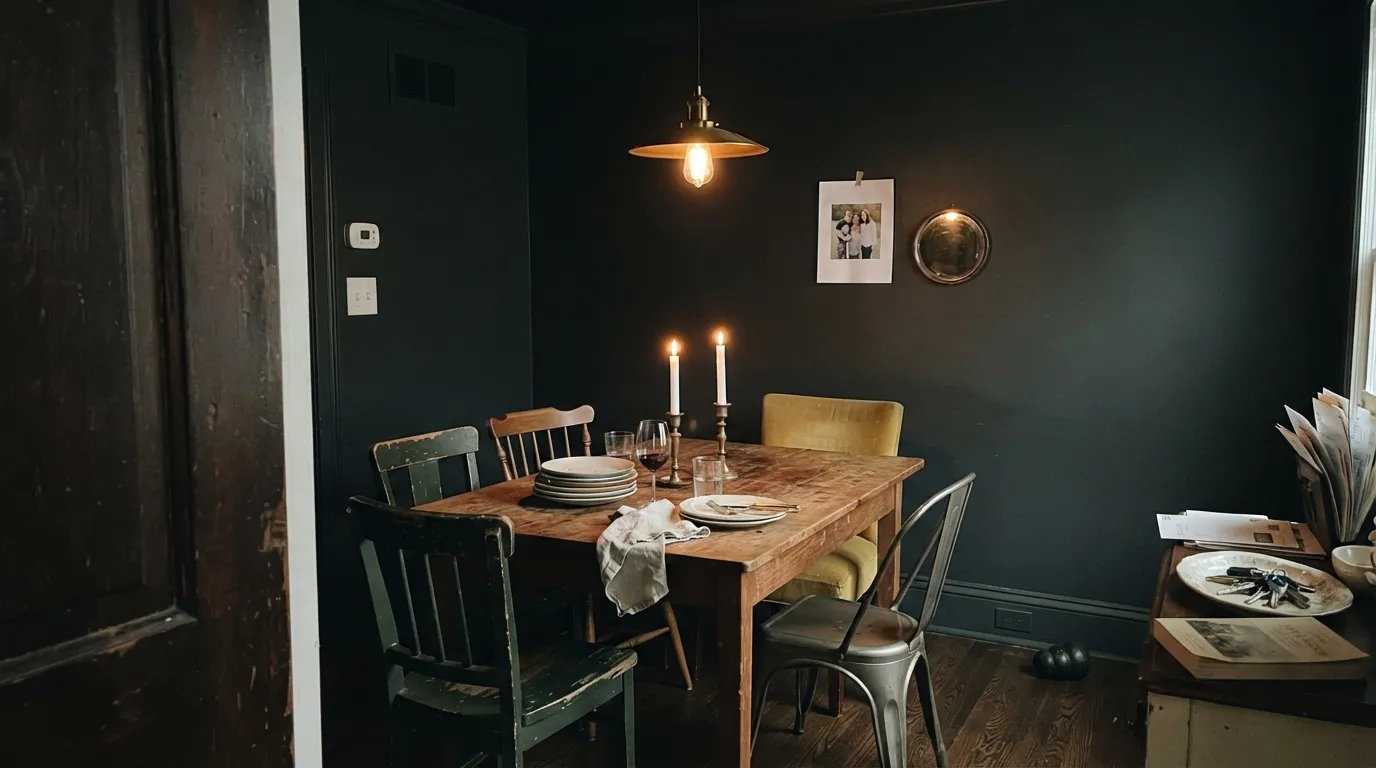
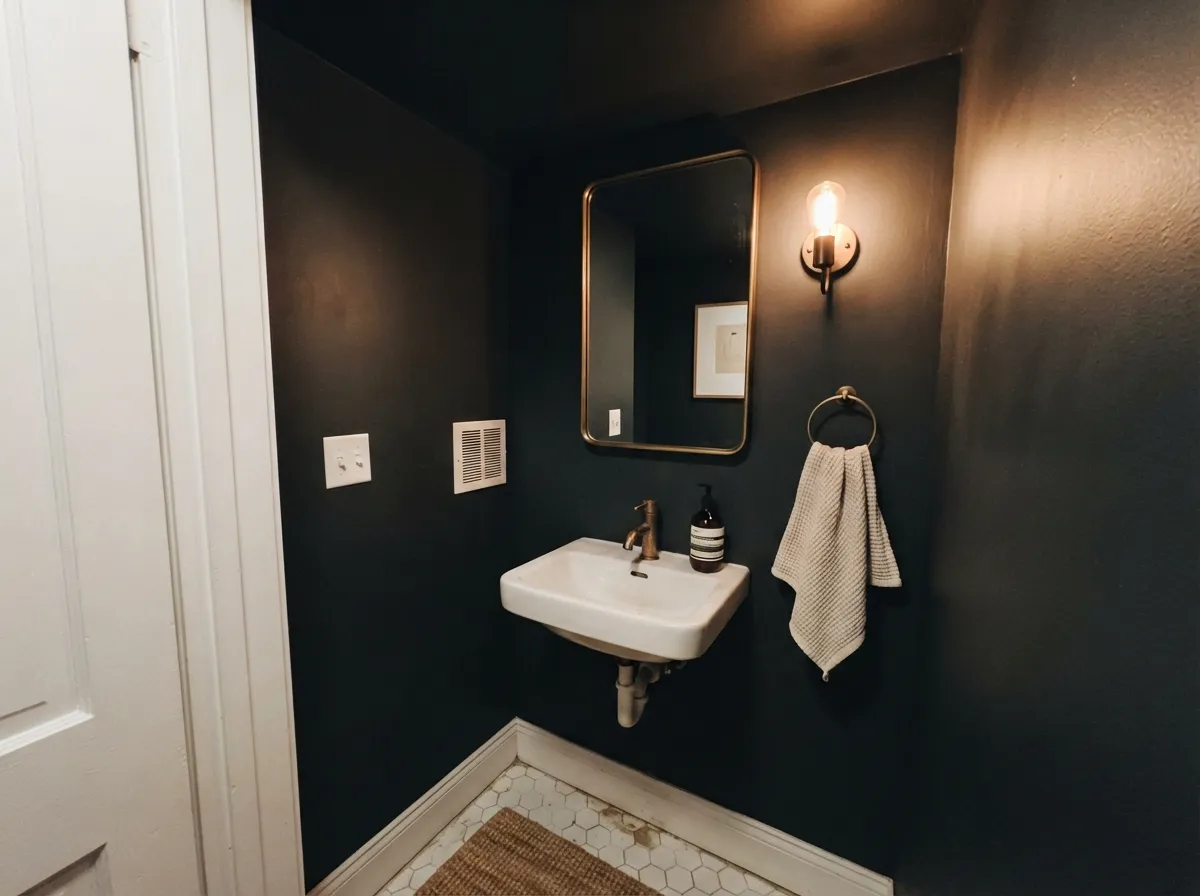
Photos from our full reviews — the same rooms and captions, so you can judge each color where it actually lives, not on a chip.
When to Pick Which
Dining rooms you actually use after dark · kitchen islands and cabinets · front doors, railings and ironwork · studies, libraries and small powder rooms · anyone who wants black without the hard edge
Your room is dim, north-facing and has one small window · you want an obvious navy · your walls take daily scuffs and you plan on chalky matte · you need a cheap gallon
Drenched dining rooms and dark, lamplit rooms · powder rooms · libraries, dens and home offices · kitchen cabinets and islands · front doors, window sashes and joinery in gloss
The room has one small window and you refuse to add lamps · you want a warm brown-black · you want the moody navy-black look (that is Railings) · your budget is a box-store gallon · you need a wipe-hard wall in a busy family room
No comparison page can see your light. Upload one photo of your room and try both colors on the same walls, seconds apart.
Railings vs Off-Black FAQ
Which is lighter, Railings or Off-Black?
They are practically the same lightness — LRV 7 vs 6. Neither will make the room brighter than the other.
Which is warmer, Railings or Off-Black?
They share the same undertone family — both read true neutral. The difference between them is lightness and depth, not temperature.
How similar are Railings and Off-Black?
Railings and Off-Black are visually nearly identical (ΔE 1.25). Most eyes can't tell them apart on a wall — pick whichever is easier to source. The only reliable test is seeing both in your own room and light — a side-by-side on a screen or chip flattens the difference.
Can I use Railings and Off-Black together in one house?
Not in the same room, and be careful in the same house. At ΔE 1.25 they are so close that two walls in each will read as a tinting mistake, not a design choice. Pick one, or keep them on different floors where they are never seen together.
Ask a Question