Benjamin Moore SootvsBenjamin Moore Hale Navy
Why this comparison: Soot is BM’s almost-black navy; Hale Navy reads clearly blue beside it. Soot and Hale Navy are close but distinct (ΔE 5.84). Visible difference on the wall, especially in flat daylight.

Built from our full reviews of both colors — same measured data, same real-room photos. About the testing process →
The Numbers
LRV is essentially equal (6 vs 8) — both reflect light the same.
What Each Color Really Is
Soot is Benjamin Moore's blue-charcoal black — a near-black built on a cool blue-gray base rather than a true neutral black or a warm brown-black. In daylight it settles into deep charcoal-navy instead of flat black; in direct sun it can look almost gunmetal. The blue is quiet on the chip, easy to miss in a store, but on four walls or a full run of cabinetry it becomes the whole personality of the color — the same way any undertone amplifies at scale.
At LRV 4, this is one of the very darkest colors in the BM deck — a full step darker than Wrought Iron, Benjamin Moore's best-known soft black. That depth is why it swallows light: in a room with real windows it reads as a rich, dimensional charcoal-navy; without them, corners disappear and the color goes flat and cave-like. Reviewers describe the same trade over and over — spectacular with light, punishing without it.
A dark blue with a heavy pour of charcoal in it — that is the whole color in one sentence. Most navies on the fan deck are built on a clean blue pigment that stays obviously blue no matter where you put it. Hale Navy is knocked back with gray, so the blue only steps forward when light lands on it directly. Stand a Hale Navy sample next to a true black like Onyx 2133-10 and the blue is unmistakable. Stand it alone on a wall across the room and most people will call it charcoal. Both reactions are correct, and which one you get depends almost entirely on where the color sits relative to your windows and lamps.
At LRV 8 it hands back only a few percent of the light that hits it. Practically, that means the wall contributes nothing to the brightness of the room — every bit of light you have has to come from the windows and the fixtures, and the corners farthest from both will go flat and dark. This is also why paper samples lie: a two-inch chip is floated in a sea of white paper that bounces light back into it, so it looks like a rich blue in your hand and like a shadow once it covers a wall. Paint a large sample board, lean it where the actual surface will be, and look at it at 9 a.m., 4 p.m., and after dinner.
Specs Side by Side
| Spec | Soot | Hale Navy |
|---|---|---|
| Brand | Benjamin Moore | Benjamin Moore |
| SKU | 2129-20 | HC-154 |
| Hex | #373C41 | #434B56 |
| RGB | 55, 60, 65 | 67, 75, 86 |
| LRV | 6 | 8 |
| Undertone | blue / cool | blue / cool |
| Family | Black | Blue |
How Light Changes Them
South and west sun let the charcoal come forward and the blue turn rich rather than cold. This is where Soot looks most expensive.
Cool, flat daylight strips the warmth out and leaves a slate-navy cast readers call "more gray than black." Test first.
Cooler and bluer in the morning, warmer and more charcoal by late afternoon. The swing is real but gentle at this depth.
2700K lamps push it velvety and warm. Cool white LEDs flatten it toward cold slate-blue — swap bulbs, not paint.
Steady warm daylight lifts it into a real, readable navy most of the day.
Cool gray light drains it toward slate, then near-black by late afternoon.
2700K lamps blacken it. 3000–3500K keeps the navy legible. Bulbs matter here.
It will close the space in. Great in a powder room or den, wrong in a family bath.
Both Colors in Real Rooms
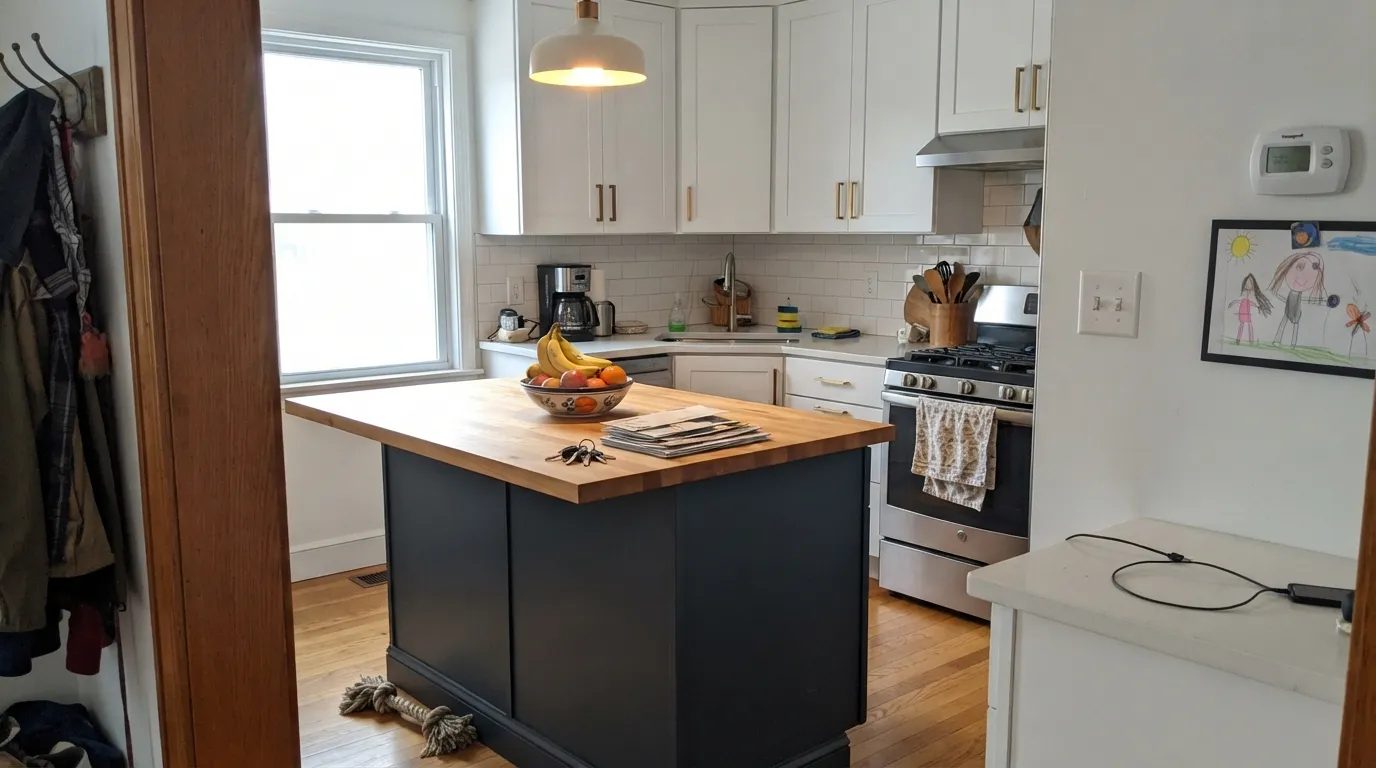
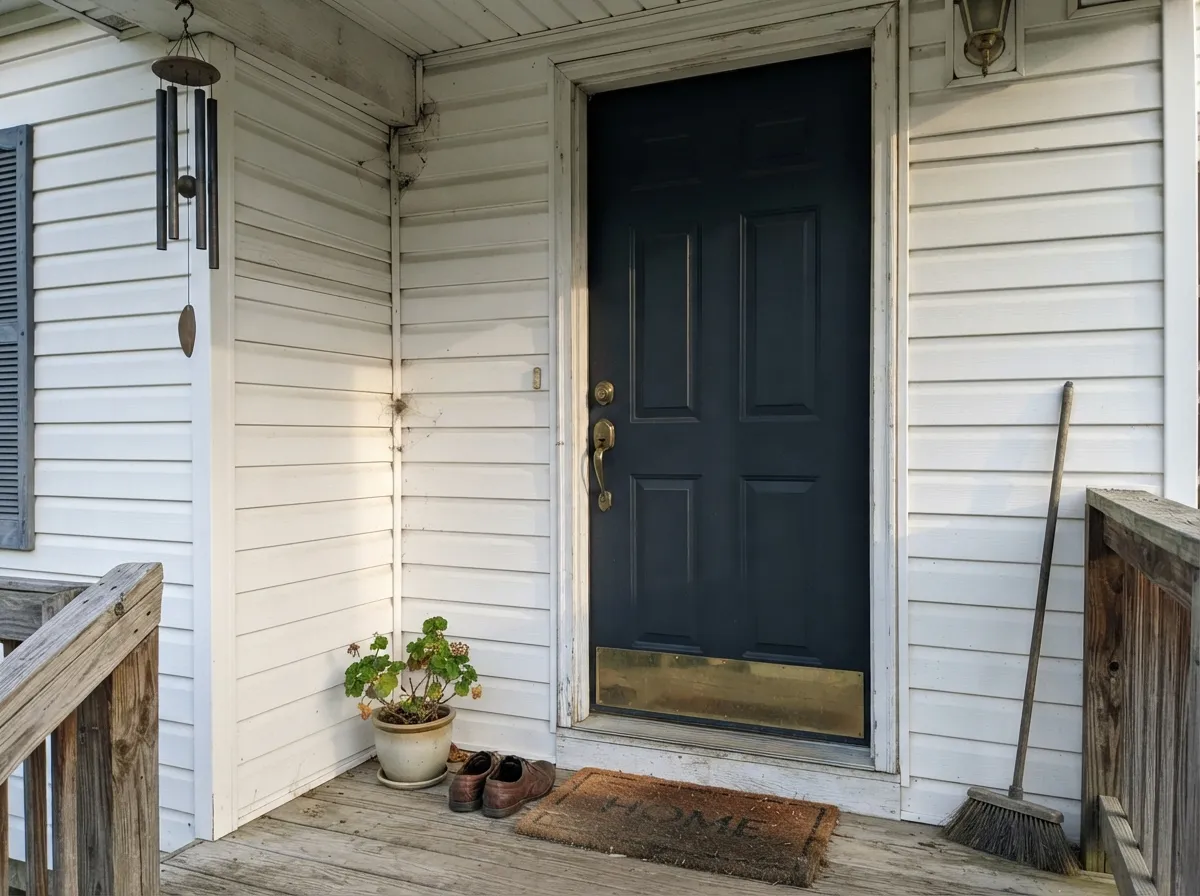
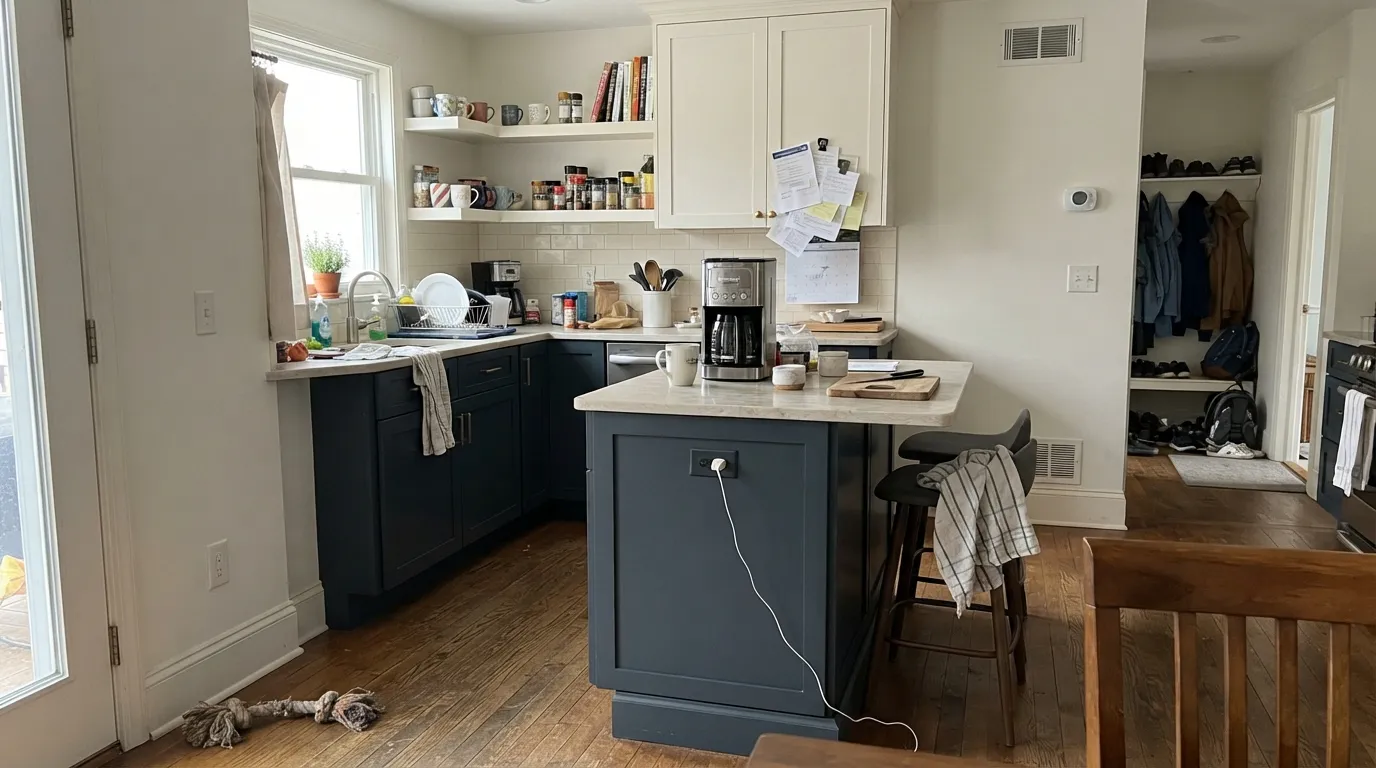
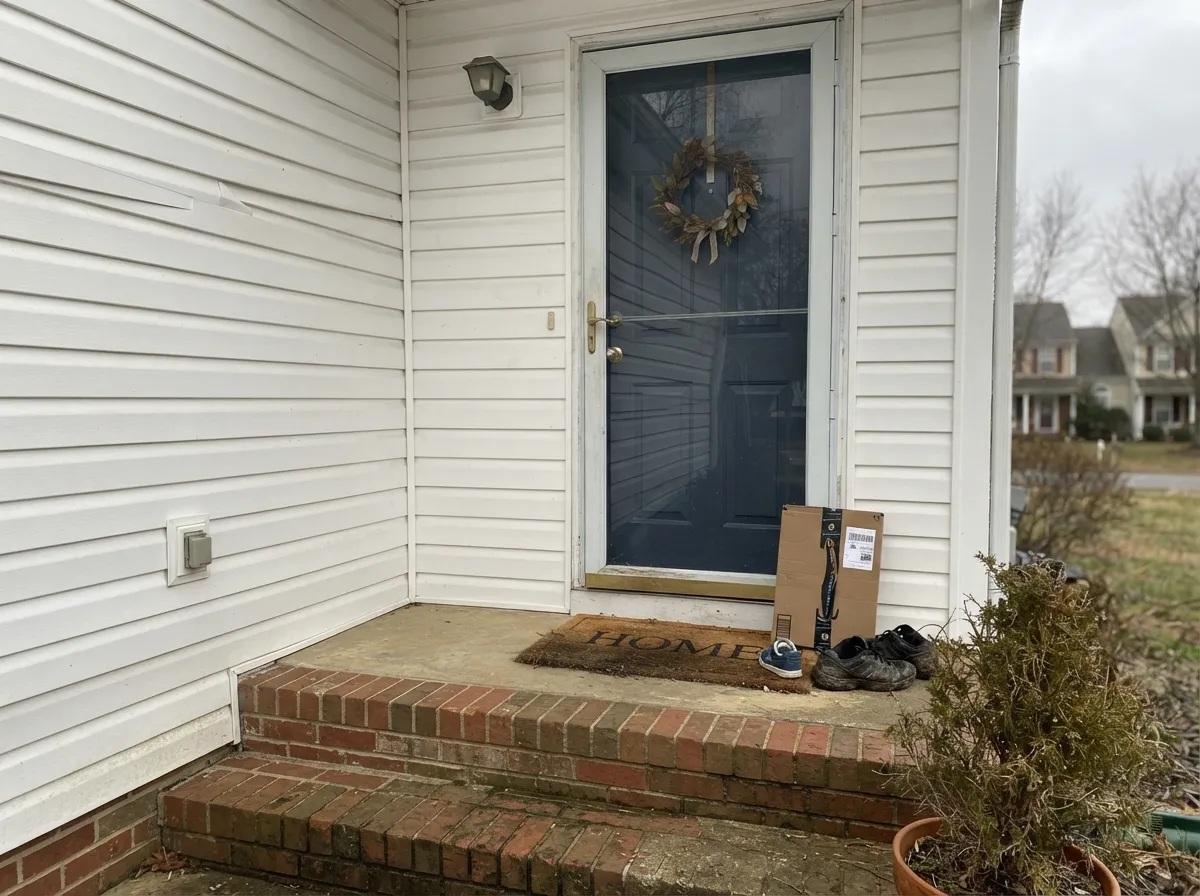
Photos from our full reviews — the same rooms and captions, so you can judge each color where it actually lives, not on a chip.
When to Pick Which
Kitchen islands + cabinets against white counters and brass · front doors and shutters that want quiet drama · powder-room vanities · one accent wall in a room with real daylight
You want a true neutral black with zero undertone · your room has one window or none · you're painting all four walls with no plan for warm lamps · you need it to match black hardware elsewhere exactly
Kitchen lowers and islands with light counters · front doors on white, gray, or brick · built-ins and a fireplace wall · a bright south-facing office or dining room
Your room faces north and is small · you want people to see blue, not near-black · you are hand-brushing cabinets with rough prep · the surface bakes in direct sun all day
No comparison page can see your light. Upload one photo of your room and try both colors on the same walls, seconds apart.
Soot vs Hale Navy FAQ
Which is lighter, Soot or Hale Navy?
They are practically the same lightness — LRV 6 vs 8. Neither will make the room brighter than the other.
Which is warmer, Soot or Hale Navy?
They share the same undertone family — both read blue / cool. The difference between them is lightness and depth, not temperature.
How similar are Soot and Hale Navy?
Soot and Hale Navy are close but distinct (ΔE 5.84). Visible difference on the wall, especially in flat daylight. The only reliable test is seeing both in your own room and light — a side-by-side on a screen or chip flattens the difference.
Can I use Soot and Hale Navy together in one house?
Yes, in separate rooms. They are close enough to feel related but different enough to notice, so give each its own room and connect them with a shared trim white. Avoid putting them on adjoining walls.
Ask a Question