Benjamin Moore Chelsea GrayvsBenjamin Moore Kendall Charcoal
Why this comparison: BM’s two charcoal staples for islands and exteriors; Kendall Charcoal is the darker, browner one. Chelsea Gray and Kendall Charcoal are clearly different colors (ΔE 12.06). Don't substitute one for the other.

Built from our full reviews of both colors — same measured data, same real-room photos. About the testing process →
The Numbers
Chelsea Gray is slightly lighter (LRV 23 vs 15, 8-point delta).
What Each Color Really Is
Chelsea Gray is Benjamin Moore's Historical Collection entry HC-168, and the collection tag matters: this is not a trend color invented for a Pinterest moment, it is a decades-old warm charcoal-gray that the current farmhouse-exterior and moody-kitchen-island trends simply rediscovered. Where a lot of "greige" paints split cleanly into either warm-beige or cool-gray, Chelsea Gray's undertone is genuinely layered — a brown base carries the weight, a real green surfaces in strong daylight, and in cooler or artificial light a violet flash can show through. Reviewers who chart its undertone in detail (Kylie M Interiors, Brick & Batten, and others who've painted it in multiple homes) consistently land on this same three-way mix rather than a single clean answer, which is unusual even among BM's more complicated grays.
At LRV 23 it sits in real charcoal-greige territory: noticeably lighter and less committed than Kendall Charcoal (LRV 13), but far too deep to function as a whole-house interior neutral the way a beige or a light gray would. That depth is the point on an island, a front door, or one accent wall — it reads as a deliberate color choice, not "we couldn't decide." Multiple reviewers note it looks noticeably brighter and warmer in direct exterior sunlight than the chip or a north-facing interior sample suggests, which is why so many owners test it indoors, think it looks almost black-brown, then paint the exterior and get a color that reads a full step lighter and warmer once the sun hits it.
A dark gray that is very nearly neutral, with the smallest possible lean toward warm. The saturation is only about 4 percent, which is far too little to call it a brown or a greige — but the hue underneath sits in the yellow-tan range, and that is enough to change how it behaves. In practice that faint warmth shows up as a soft, drab, almost olive quality in bright light. That is why you will read people say it looks green: they are not wrong, they are just seeing the warm base in strong sun. It is never blue, and that is the point of the color.
At LRV 15 it reflects almost nothing back at you, and the number matters more here than it does for a mid-tone. Put it beside Chelsea Gray HC-168 at LRV 22 and Kendall looks like a different family — Chelsea is a gray you can live in, Kendall is a gray that surrounds you. Put it beside Wrought Iron 2124-10 at LRV 6 and the opposite happens: Kendall suddenly reads soft, gray, almost gentle. It lives in the narrow band where a color is dark enough to feel dramatic but still light enough to show its color instead of just reading as a shadow.
Specs Side by Side
| Spec | Chelsea Gray | Kendall Charcoal |
|---|---|---|
| Brand | Benjamin Moore | Benjamin Moore |
| SKU | HC-168 | HC-166 |
| Hex | #86847C | #676662 |
| RGB | 134, 132, 124 | 103, 102, 98 |
| LRV | 23 | 15 |
| Undertone | true neutral | true neutral |
| Family | Gray | Gray |
How Light Changes Them
Warms up and brightens a full step from how it reads indoors — the brown-green comes forward and it looks richer, not muddier. This is the light it was made for.
The same warmth that flatters it outdoors can tip visibly green for an hour or two on west-facing walls and islands. Sample at 4-6pm before committing to that wall.
Cools down and can read flatter, with the violet undertone more visible than the green. Fine if you like it moodier; test first if you expected pure charcoal.
Warm 2700K lamps deepen it toward a cozy brown-charcoal. Cool white LEDs pull the violet forward and flatten it — swap the bulbs before you blame the paint.
Warm sun lifts it and the soft greige character comes out. The version of this color people fell in love with.
Cool, weak light drains it toward near-black and flattens the depth. The one exposure to test properly.
2700K lamps make it rich and warm. Cool daylight LEDs push it toward hard, greenish slate — change bulbs, not paint.
Reads several steps lighter than indoors, and the shaded elevation reads several steps darker. Sample every side.
Both Colors in Real Rooms
Photos from our full reviews — the same rooms and captions, so you can judge each color where it actually lives, not on a chip.
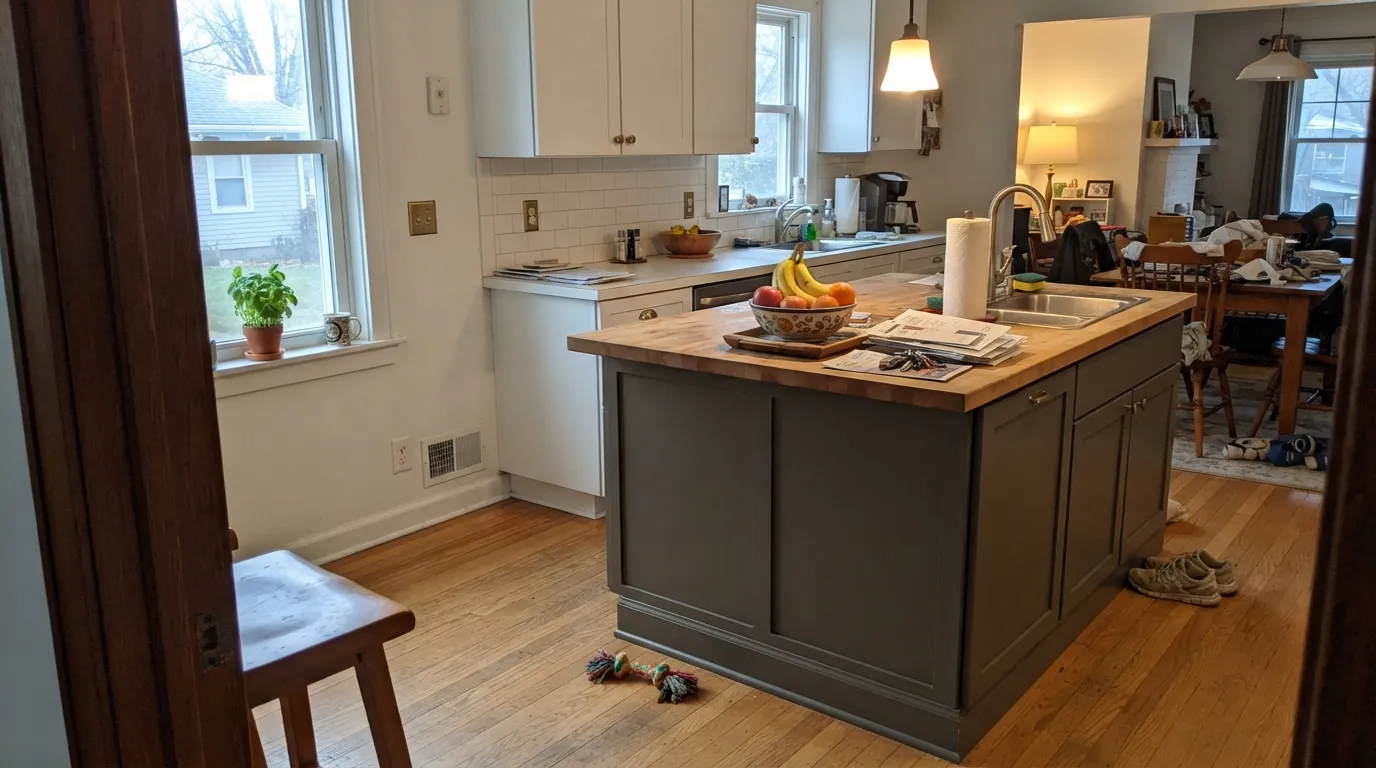
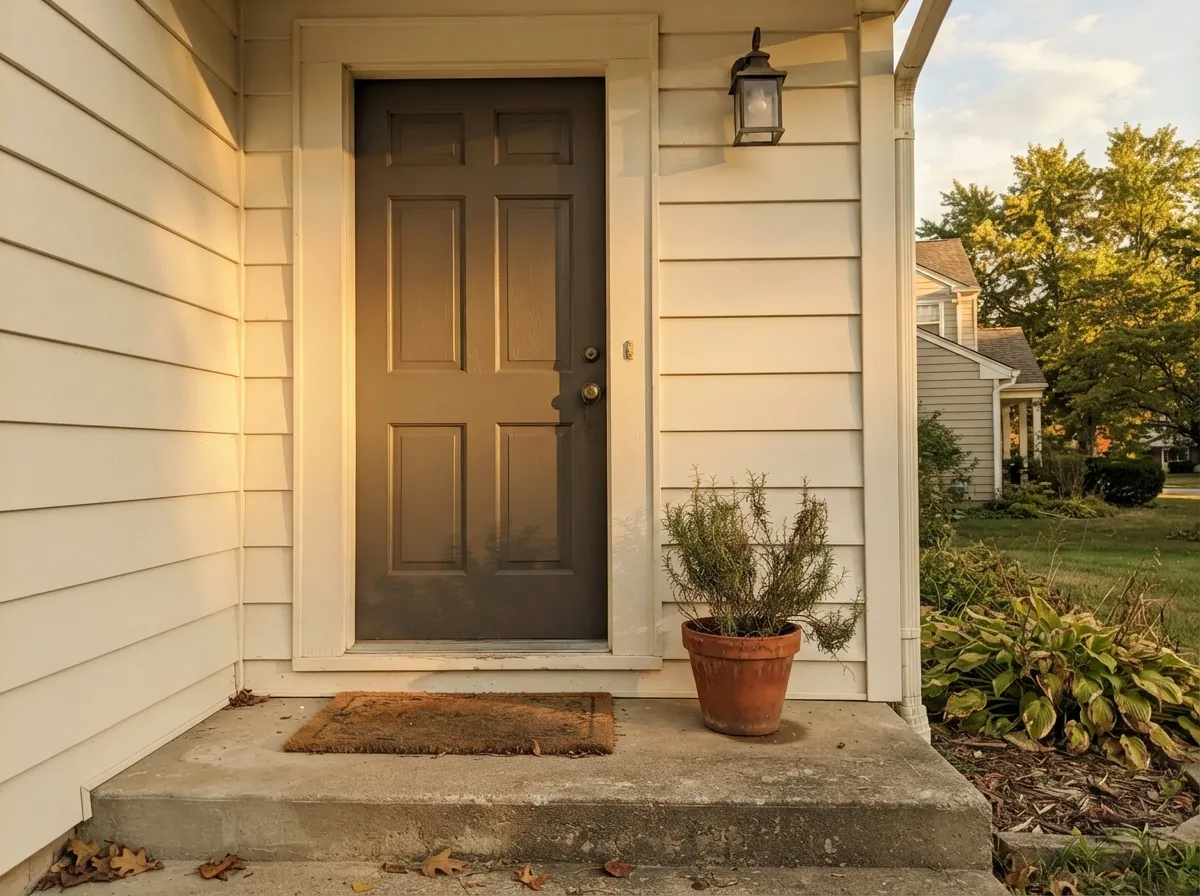
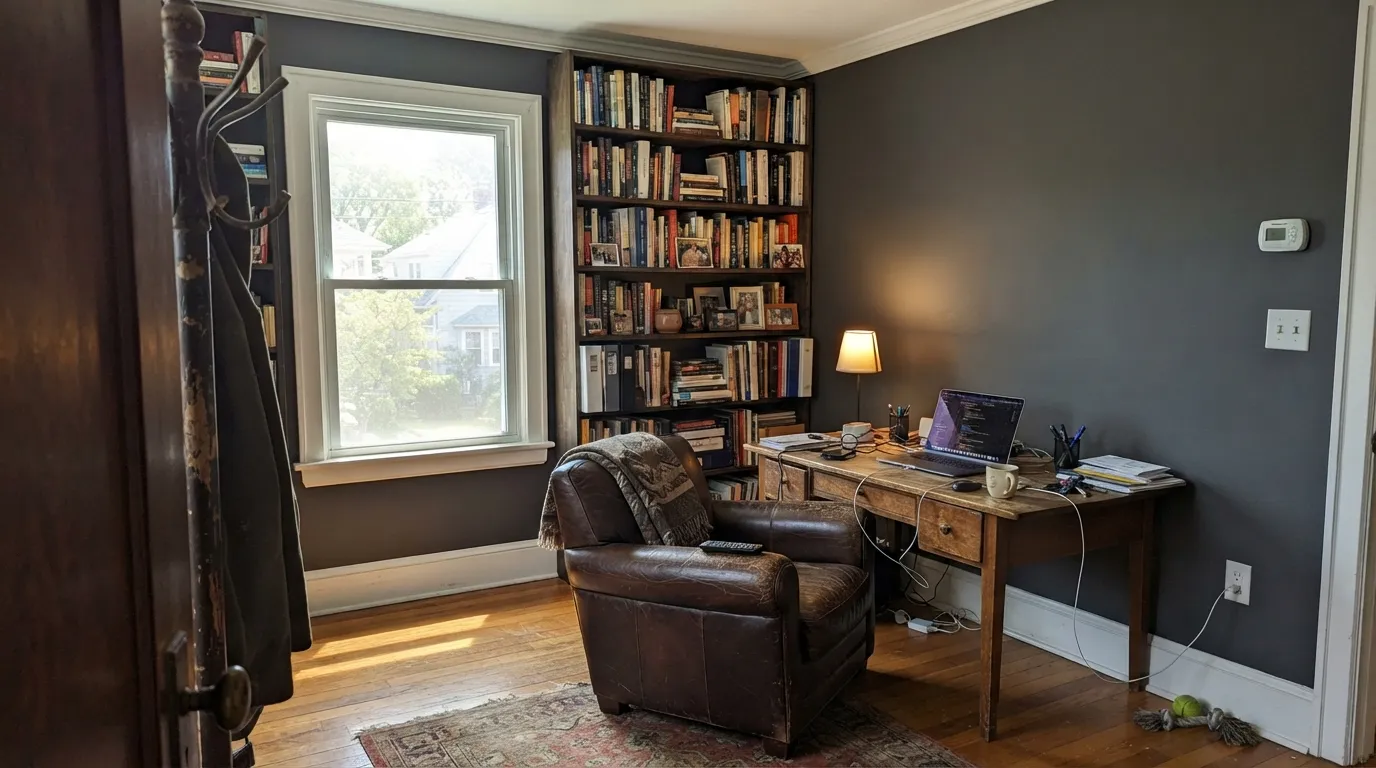
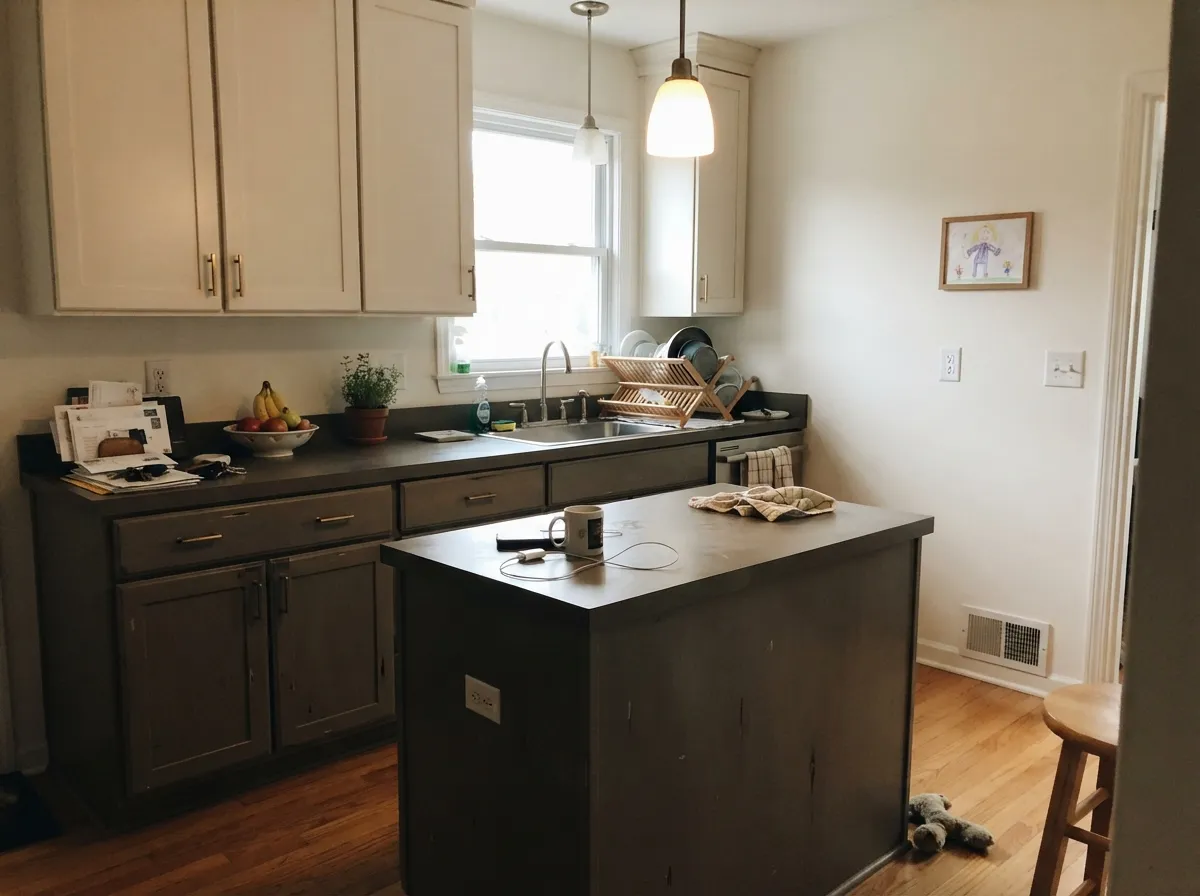
When to Pick Which
Kitchen islands and cabinets · whole-house exteriors and front doors · a single moody accent wall · powder rooms and vanities · anyone who wants "gray" with visible depth, not a flat neutral
You want a true, undertone-free gray with zero personality · your home is a cool-light, north-facing box with no warm materials · you are painting a whole interior's base wall color, not an accent · your countertops or siding are already cool blue-gray
Studies, libraries and moody offices with real daylight · kitchen islands and lower cabinets · front doors and shutters · anyone who finds true black too harsh
Your only window faces north and the room stays dim · you want a cool blue-slate charcoal · your stone, tile and metals are all cool-toned · you want a cabinet color that hides dust
No comparison page can see your light. Upload one photo of your room and try both colors on the same walls, seconds apart.
Chelsea Gray vs Kendall Charcoal FAQ
Which is lighter, Chelsea Gray or Kendall Charcoal?
Chelsea Gray is lighter: LRV 23 vs 15. Chelsea Gray is slightly lighter (LRV 23 vs 15, 8-point delta).
Which is warmer, Chelsea Gray or Kendall Charcoal?
They share the same undertone family — both read true neutral. The difference between them is lightness and depth, not temperature.
How similar are Chelsea Gray and Kendall Charcoal?
Chelsea Gray and Kendall Charcoal are clearly different colors (ΔE 12.06). Don't substitute one for the other. The only reliable test is seeing both in your own room and light — a side-by-side on a screen or chip flattens the difference.
Can I use Chelsea Gray and Kendall Charcoal together in one house?
Yes — at ΔE 12.06 they are clearly different colors, so they can work as an intentional pair: the lighter Chelsea Gray in main spaces, Kendall Charcoal as the deeper accent room or feature wall.
Ask a Question